







Which Coffee Grades Separate Real Blue Mountain No. 1?
Authentic Jamaica Blue Mountain No. 1 is a specific coffee grade, and labels reading "Blue Mountain flavor" or "Blue Mountain blend" do not meet it. The CIB certification system verifies origin and processing, and the beans are washed. For pour-over, use 15 grams of grounds at a 1:15 ratio, 88°C water, a coarse granulated sugar grind, and a three-stage pour with a KONO dripper.
Coffee cultivation on Jamaica dates to 1723, when Arabica seedlings arrived via Martinique; five years later seeds were planted in St. Andrew, and plantings later extended to the Blue Mountains. Rugged high-altitude terrain, year-round mist and rain, and volcanic ash soil there create the conditions behind the balanced cup.
Jamaica Blue Mountain coffee is recognized as one of the top coffees, but the market is flooded with misleading labels such as "Blue Mountain flavor" and "Blue Mountain blend." From Front Street's perspective, this article systematically sorts out the Blue Mountain coffee region's history, the CIB certification system, the washed processing flow, and the grading standards, helping readers identify genuine Jamaica Blue Mountain No. 1. At the same time, Front Street will share the pour-over brewing parameters for Blue Mountain No. 1—including 15 grams of grounds, a 1:15 coffee-to-water ratio, 88°C water temperature, coarse granulated sugar grind size, and the three-stage pouring technique with the KONO dripper—and provide flavor descriptions and key points for distinguishing authenticity, allowing coffee lovers to fully experience the balanced charm of this top-grade Blue Mountain coffee.
Jamaica Blue Mountain coffee is recognized as one of the top coffees, but precisely because it is so famous, many merchants on the market use terms such as "Blue Mountain flavor" and "Blue Mountain blend" to confuse consumers, making them mistakenly believe they have bought authentic Blue Mountain. Below, Front Street will start with the Blue Mountain region and help everyone understand what真正的 Jamaica Blue Mountain coffee is.
A Brief History of Coffee Cultivation in Jamaica
On the island of Jamaica in the Caribbean Sea, the history of coffee cultivation can be traced back to 1723. French military officer Gabriel Mathieu de Clieu carried several Arabica coffee seedlings from the Jardin des Plantes in France and, after a long voyage, planted them on the Caribbean island of Martinique. Five years later, Nicholas Lawes, then governor of Jamaica, introduced seeds from that island and conducted trial plantings on a private estate in the St. Andrew area of Jamaica. After that, Jamaicans gradually became familiar with coffee as a crop, and before long they extended it to the Blue Mountains, beginning large-scale cultivation.
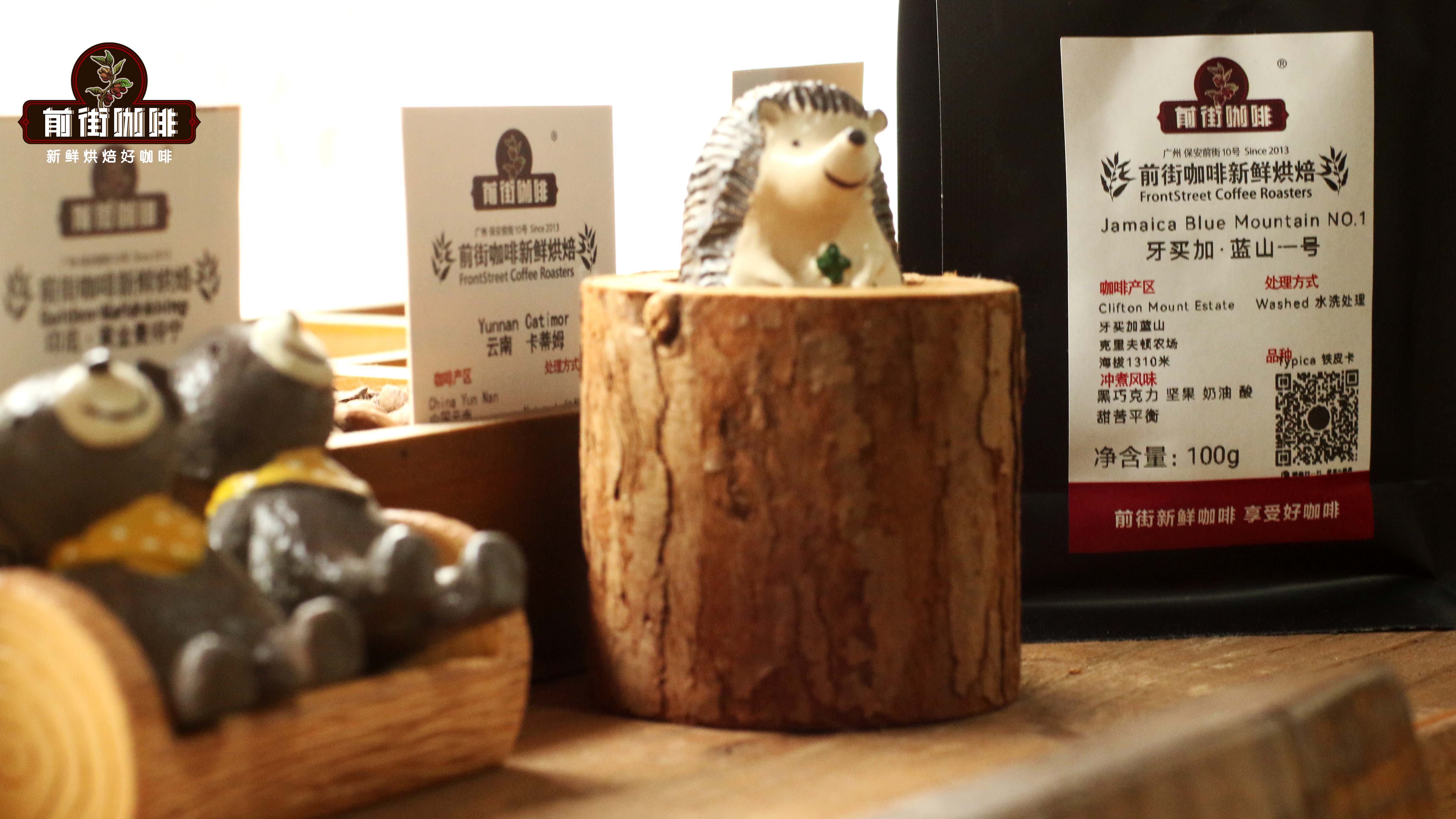
The Blue Mountains are located in eastern Jamaica and have the high-altitude conditions of the Caribbean's highest peak. Together with the rugged, undulating terrain, they create a rich diversity of microclimates. Here there is fog and rain year-round, and the climate is cool and pleasant. The volcanic ash soil is fertile, providing an exceptional environment for crop growth. Local people have a habit of interplanting coffee trees with banana trees. In addition to coffee, Jamaica mainly grows bananas and sugarcane.
Main Producing Areas of the Blue Mountains
In 1948, the Jamaican government established the Jamaica Coffee Industry Board (CIB) to regulate the cultivation, production, and sales of Blue Mountain coffee, in order to improve coffee quality, unify processing procedures, and coordinate market sales. The CIB is also responsible for grading and quality inspection of coffee produced in the Blue Mountains. In other words, all Blue Mountain coffee sold around the world must pass CIB certification and carry its label.
According to Jamaica's Coffee Industry Regulation Act, the cultivation areas for Blue Mountain coffee are mainly distributed across four administrative parishes: St. Andrew, St. Thomas, Portland, and St. Mary. The law clearly stipulates that only Typica grown at an altitude of 910–1,700 meters may be named Jamaica Blue Mountain coffee. The four producing areas cover a total of about 6,000 hectares, accounting for one-third of the entire Blue Mountain growing region; another 1,200 hectares are used to grow Jamaica High Mountain coffee and Jamaica Prime coffee. In recent years, less than 15% of the coffee beans produced in Jamaica can bear the Blue Mountain label.
Production of Blue Mountain Coffee Beans
As Front Street mentioned earlier, Blue Mountain coffee trees are mainly planted on steep high-altitude slopes, and both cultivation and harvesting involve a certain degree of danger. Moreover, the coffee cherries must reach just the right ripeness—overripe or underripe will affect the final quality. Therefore, experienced women are arranged to go up the mountain to pick. Every harvest season, you can see them deftly picking fully red coffee cherries.
According to Front Street's observations, mainstream Blue Mountain coffee on the market all uses the washed processing method, a processing method that uses clean water and wet fermentation to control green bean quality. During processing, defective beans are first removed by flotation, then the skin and pulp are removed, and the beans are left to ferment for 12–18 hours. After fermentation is complete, the beans are placed in a tank and pushed back and forth, using friction between the beans and running water to wash the coffee beans until they are smooth and clean. After washing, the coffee beans are still wrapped in the parchment layer, with a moisture content of about 50%, and must be dried in the sun to reduce the moisture content to 12–14%; otherwise, fermentation will continue, leading to mold and spoilage. Every step must be strictly controlled, or the coffee quality will be affected. Washing can highlight the aroma of the coffee beans themselves, make the layers clearer, and also ensure the stable quality of Blue Mountain coffee.
Blue Mountain Coffee Grades
Once dried, Blue Mountain coffee beans are packed and sent for inspection, and are graded according to screen size and defect rate after processing, in order: Blue Mountain No. 1, Blue Mountain No. 2, Blue Mountain No. 3, and Blue Mountain Peaberry. Bean size is measured using screens with different hole sizes; coffee beans that do not pass through the holes meet the corresponding size standard.
Blue Mountain No. 1: More than 96% of beans reach 17/18 screen, defect rate less than 2%;
Blue Mountain No. 2: More than 96% of beans reach 16 screen, defect rate less than 2%;
Blue Mountain No. 3: More than 96% of beans reach 15 screen, defect rate less than 2%;
Blue Mountain Peaberry: More than 96% are single round beans sized 10 screen, defect rate less than 2%. It is a rare Blue Mountain coffee variety and is classified as a separate grade;
Top-grade Blue Mountain No. 1 green beans must meet specifications of 17 screen or above, a defect rate below 3%, and a moisture content of about 13%, and in cupping they present a rich coffee aroma, a smooth and balanced mouthfeel, low acidity, and a lasting sweet aftertaste.
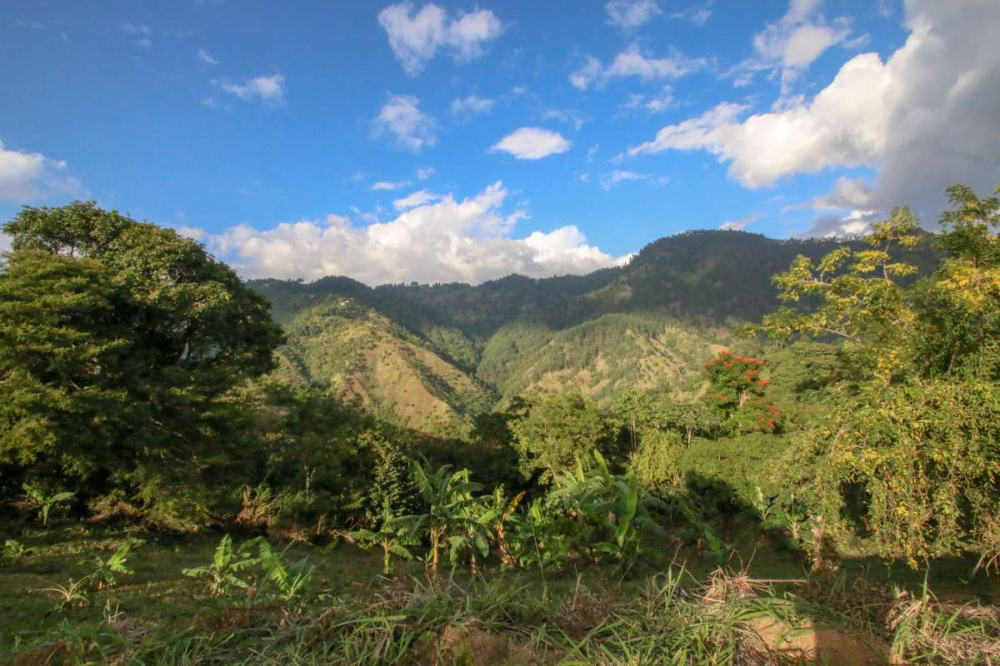
To ensure that Blue Mountain coffee beans maintain better quality before roasting and to prevent moisture from seeping in during transport, Jamaicans insist on using handmade wooden barrels as containers for Blue Mountain green beans. The wooden barrel has therefore become one of the important symbols of Jamaican Blue Mountain coffee.
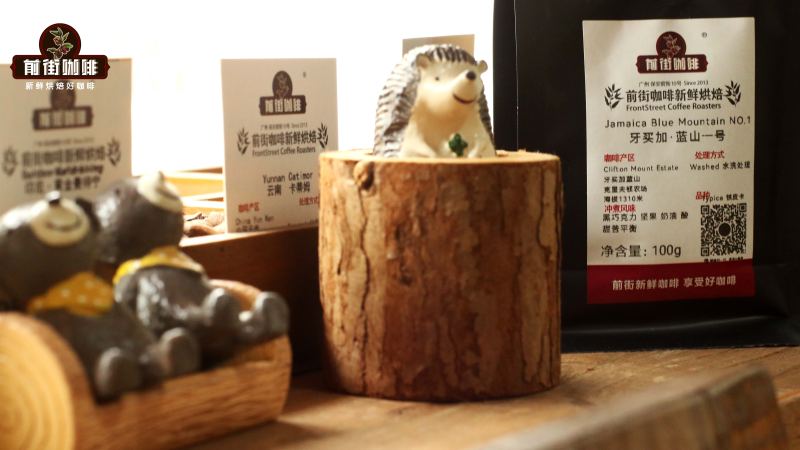
Front Street hopes everyone can taste Blue Mountain coffee of the highest quality, so it has added the highest-grade Blue Mountain No. 1 coffee to its bean list. When Front Street received the Blue Mountain No. 1 green beans, the beans were uniform, plump, and consistent in size, with an overall translucent blue-green color. After roasting, Front Street conducted a cupping. The dry aroma had nuts, melon, and chocolate; after hot water was poured in, oolong tea, caramel, honey, and dark chocolate were detected. In the cup, it tasted of rich dark chocolate, roasted hazelnut, cream, and brown sugar. The flavor was clean and clear, the mouthfeel mellow, and the aroma long-lasting.
How to Identify Real vs. Fake Blue Mountain?
As Front Street said above, top-grade Blue Mountain coffee with such a rare output will naturally not sell at a low price. When we receive a bag of roasted Blue Mountain coffee beans, we can identify it based on the following points from Front Street:
In terms of aroma, Blue Mountain coffee has a rich, dense, and lasting roasted aroma.
In terms of taste, real Blue Mountain coffee is balanced in acidity, sweetness, bitterness, and aroma, with no single flavor standing out too much, and the body and sweetness are just right.
If you cannot distinguish it by the above two points, then ask the merchant to show Blue Mountain-related certificates and the wooden barrel used for packaging the Blue Mountain green beans. This Blue Mountain No. 1 coffee from Front Street also comes with a quality certificate issued by the Jamaica Coffee Board, an authorized sales certificate issued by the Blue Mountain coffee producer, and a certificate of origin for Jamaican Blue Mountain coffee. When you come to Front Street's Dongshankou store to drink coffee, pay a little attention to the wooden barrel—you can see it on the right-hand side of the entrance~
What Water Temperature Should Be Used to Brew Blue Mountain Coffee?
First, before brewing, Front Street will confirm the freshness of the coffee beans. If the roast date is more than a month ago, Front Street will choose fresher coffee beans. This is because coffee beans have a best-tasting window after roasting, and the aroma accelerates away with storage time, making it difficult to present the original flavor during brewing. This is also why Front Street insists on shipping only coffee roasted fresh within 5 days. Front Street hopes every customer can enjoy coffee beans at their most complete best-tasting stage.
Pour-Over Reference for Blue Mountain No. 1 Coffee
Dose: 15 grams of coffee grounds
Coffee-to-water ratio: 1:15
Water temperature: 88°C
Grind size: coarse granulated sugar (75% passing a No. 20 standard sieve)
Dripper: KONO dripper
Brewing technique: three-stage pouring
First, wet the KONO dripper with water so the filter paper adheres better to the dripper. Pour out the water in the server and add the 15 grams of ground coffee. Use 30 grams of 88°C hot water to evenly wet the coffee bed, and start the timer, letting it bloom for 30 seconds. The purpose of this step is to release carbon dioxide gas from the coffee, which helps with subsequent stable extraction and also releases aroma.
After 30 seconds, pour the second stage of hot water, pouring in a small stream in a circular motion around the center until 125 g, trying to keep the stream steady and avoiding the edge of the filter paper. When the coffee bed drops to halfway down the dripper, begin pouring the third stage using the same technique until 225 g. Once all the dripping is complete, remove the dripper, swirl the coffee liquid in the server to mix it, and it is ready to taste. Counting from the start of pouring, the extraction time is 2'00".
The flavor and mouthfeel of Front Street's pour-over Blue Mountain No. 1 coffee: on the palate there are flavors of dark chocolate, roasted nuts, and toffee, with caramel sweetness and a soft, elegant acidity. Each flavor is balanced with the others, and the mouthfeel is smooth, rich, and mellow. As the temperature drops, the aroma becomes clearer, with rich layers of various aromas.
The above content is compiled by CoffeeHunters, a coffee news website.


