







Why does Brazilian coffee bean process favor low acidity?
Brazil produces roughly 30 percent of the world's Arabica supply each year, and its output swings move international futures prices. Typica first arrived in 1727, Bourbon varieties later took over, and the specialty regions of Minas, Bahia, and São Paulo took shape. The pulped natural coffee bean process helps explain the low acidity and full body.
Coffee cultivation began poorly, since climate and altitude limited early plantings until a Belgian missionary succeeded in warmer southern Brazil in 1774 and the crop spread from there. South American Typica traces back to a single European source. Medium-dark roasting parameters and the country's variety mix round out the flavor logic behind Brazilian coffee.
Brazil is the world's largest producer of Arabica coffee, contributing about 30% of the global Arabica supply each year, and its production changes directly affect international futures prices. From the first landing of Typica in 1727, to the full replacement by Bourbon varieties, and then to the formation of the three major specialty regions of Minas, Bahia, and São Paulo, Brazilian coffee has traveled a unique path of evolution. This article will systematically review the history of Brazilian coffee cultivation, the differences among major varieties, and the unique pulped natural processing method, and will also include detailed information on two Brazilian beans currently sold by Front Street Coffee along with medium-dark roast brewing parameters, to help coffee lovers fully understand the flavor logic behind Brazilian coffee's low acidity and full body.
For more specialty coffee knowledge, please follow our WeChat official account: Front Street Coffee (FrontStreet Coffee)
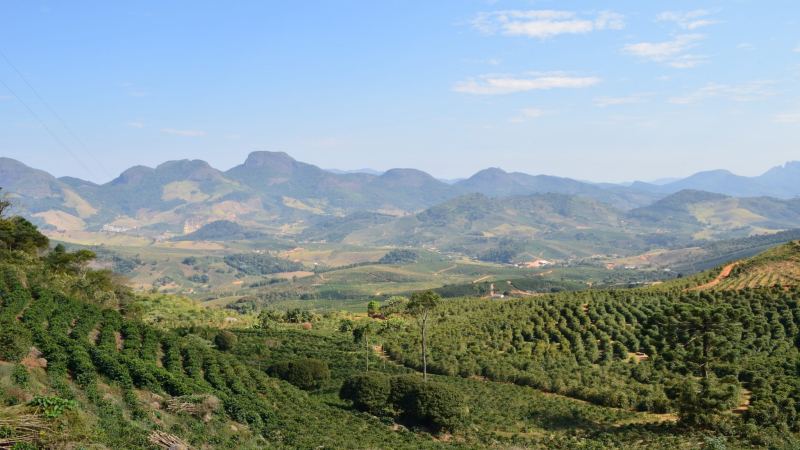
Brazil has long been known as the kingdom of football, and it is also a country surrounded by palm trees and coffee trees. Many people compare Brazil to a giant and powerholder in the coffee world. Brazil's annual Arabica coffee output accounts for 30% of the global Arabica total, and its production fluctuations are also a key force influencing Arabica futures markets.
Brazil ranks first in the world in coffee production, and it is also one of the places with the longest history of coffee cultivation. So where exactly did Brazilian coffee come from? In this article, Front Street Coffee (FrontStreet Coffee) will talk with you about the world's number one Arabica-producing country.
A Brief History of Coffee Cultivation in Brazil
According to legend, in 1727, Portuguese officer Palheta gave a batch of coffee seeds as a gift to win favor with the wife of the governor of French Guiana. Limited by climate and altitude conditions, early cultivation results were not ideal. It was not until 1774 that a Belgian missionary conducted trial planting in a warmer area of southern Brazil and finally succeeded, after which coffee gradually spread throughout Brazil.
By 1727, Typica had already been planted in Pará in northern Brazil. Because Typica adapted to the local terroir, it soon spread to the more fertile regions of southern Brazil. However, South American Typica all originated from the "European mother plant," with highly consistent genetics, so once pests or diseases struck, they could be wiped out over large areas.
After 1860, Brazil introduced round Bourbon from the island of Bourbon to replace Typica, which had relatively low yields. This was the first time Bourbon coffee entered Central and South America, and with Brazil as its starting point it quickly spread northward to other parts of South America and Central America. After that, coffee took root rapidly in Brazil, extending from the north all the way to São Paulo in the southeast and Paraná in the south—although the latter is at a higher latitude, and winter frosts often caused heavy losses for coffee farmers.
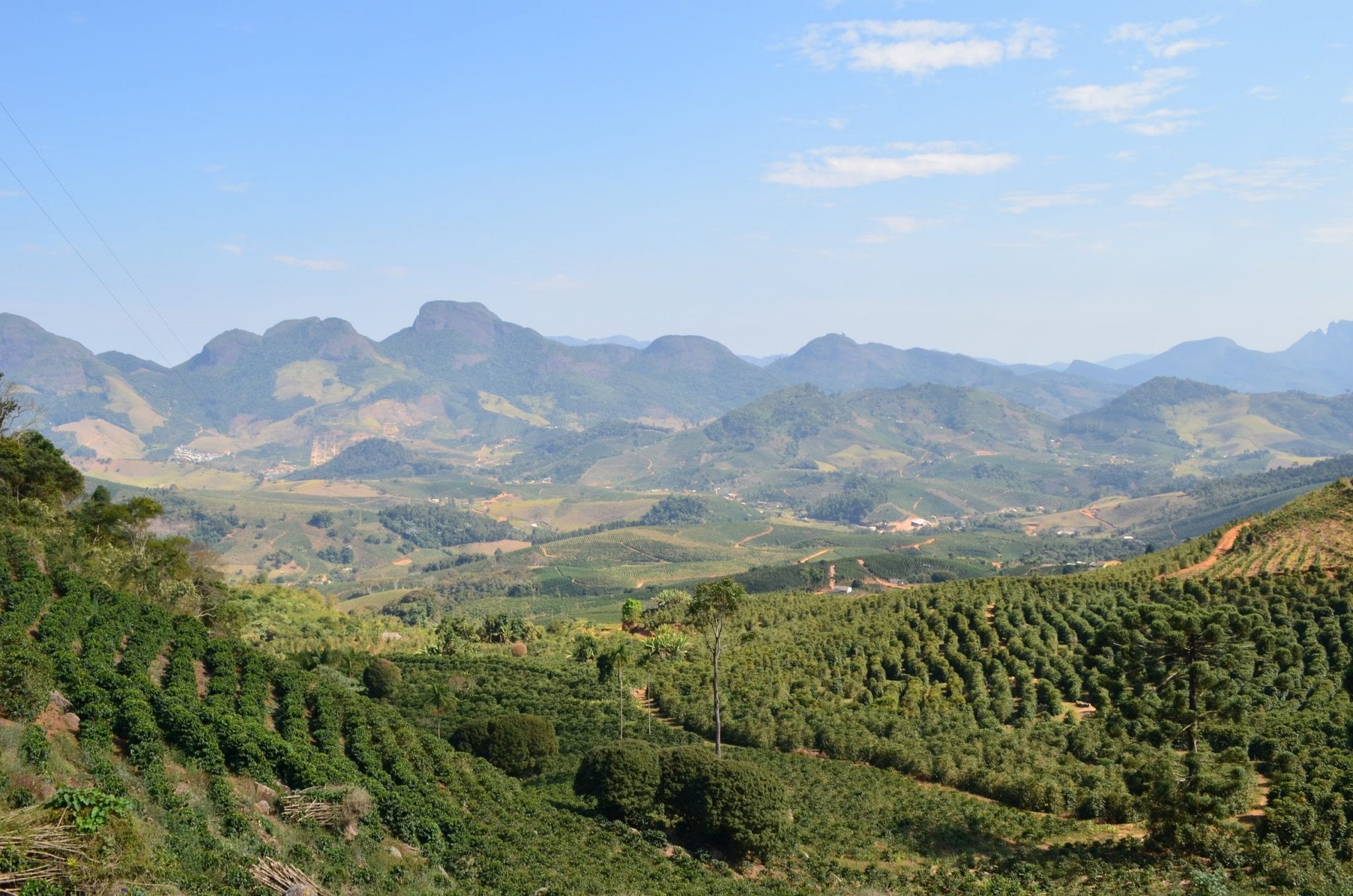
Therefore, between 1970 and 1980, Brazilian farmers shifted to developing the warmer climates of Minas, Bahia, and the São Paulo region in northern São Paulo, where winters are warm and frost does not occur. To this day, these three states remain the core specialty coffee regions of Brazil.
Brazilian Coffee Varieties
At present, Brazil's specialty coffee regions mainly cultivate Bourbon-family varieties, such as Red Bourbon, Yellow Bourbon, and Caturra, among which Bourbon occupies a dominant position.
The difference between Red Bourbon and Yellow Bourbon is that Red Bourbon displays the color of fully ripe Bourbon fruit. The Bourbon variety has relatively broad leaves and grows densely. Although its fruit-bearing capacity is higher than that of Typica, its harvest cycle is also two years, so it still belongs to the lower-yield varieties. After cupping comparisons, Front Street Coffee (FrontStreet Coffee) found that Red Bourbon coffee beans have excellent taste, with slight fermented fruit acidity and a good sweet finish.
Yellow Bourbon is a natural mutation of Red Bourbon that occurred in São Paulo, Brazil. After the fruit ripens, it does not turn red but instead shows an orange-yellow color, and it can only be found in the São Paulo region of Brazil. After cupping comparisons, Front Street Coffee (FrontStreet Coffee) concluded that Yellow Bourbon coffee beans taste cleaner than Red Bourbon, with balanced and gentle acidity, weak and clean bitterness, an overall bright and refreshing profile, and a more prominent sweetness.
Brazilian Coffee Bean Processing Method — Pulped Natural
Pulped natural is one of Brazil's unique coffee processing methods. Based on the local relatively dry climate conditions, Brazil created this regionally distinctive pulped natural method to process green coffee beans.
Pulped natural processing can control the degree of fermentation of mucilage-covered beans after depulping and demucilaging. This processing method does not go through tank fermentation and clean-water washing, omitting the fermentation step, and the flavor of the coffee beans is therefore completely different.
Front Street Coffee (FrontStreet Coffee) tested multiple coffee beans using the same processing method but from different regions, and found that their common feature was a full-bodied, low-acid flavor expression, accompanied by a creamy, smooth texture.
Recommended Brazilian Coffee Beans
Front Street Coffee (FrontStreet Coffee) currently offers two Brazilian coffee beans. In order to highlight the low-acid, full-bodied flavor characteristics of Brazilian coffee, Front Street Coffee (FrontStreet Coffee) roasts Brazilian coffee beans to a medium-dark level and ships within 5 days after roasting is completed. No matter which coffee bean it is, Front Street Coffee (FrontStreet Coffee) insists on the principle of selling only freshly roasted coffee beans, simply so everyone can taste the best coffee flavor.
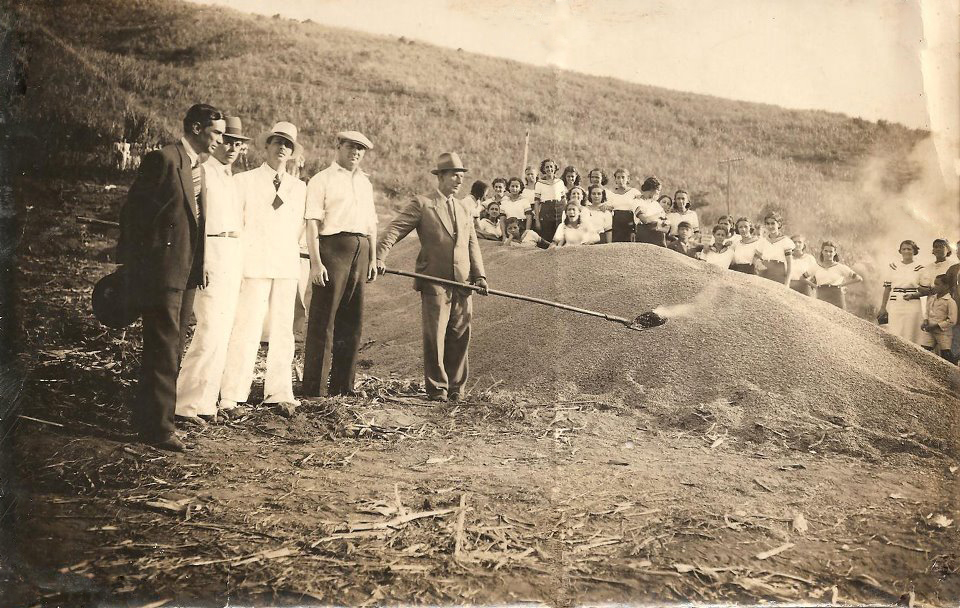
Front Street Brazil Red Bourbon Coffee Beans
Country: Brazil
Region: South Minas
Altitude: 1000m
Variety: Red Bourbon
Processing Method: Pulped Natural
Flavor: Nuts, Chocolate, Cream, Peanut, Caramel
Front Street Brazil Queen Estate Coffee Beans
Country: Brazil
Region: São Paulo, Queen Estate
Altitude: 1400-1950m
Variety: Yellow Bourbon
Processing Method: Pulped Natural / Natural
Flavor: Nuts, Cream, Peanut, Fermented Fruit, Cane Sugar
Tips for brewing Brazilian coffee deliciously~
Because medium-dark roasted coffee beans are roasted for a longer time, their bean structure is looser, and coffee substances are released faster. Therefore, Front Street Coffee (FrontStreet Coffee) recommends using a medium-coarse grind when brewing medium-dark roasted coffee beans, and not using too high a water temperature, in order to reduce extraction in the later stage of brewing and lessen bitterness.
The extraction parameters used by Front Street Coffee (FrontStreet Coffee) stores are as follows: Dose: 15g, Coffee-to-water ratio: 1:15, Water temperature: 88°C, Grind size: medium-coarse (white sugar size / 75% passing through China No. 20 sieve), Dripper: Kono dripper, Pouring method: three-stage
For the first stage, pour 30ml and bloom for 30 seconds; for the second stage, pour 100ml in a circle from the center outward; after the water level drops slightly, begin the third stage and pour 95ml; after the coffee liquid finishes dripping, extraction is complete, with a total time of 2 minutes.
Front Street Brazil Cerrado Coffee Bean Flavor: Obvious sweetness on entry, with a faint lemon aroma, containing rich nutty flavors, and a pronounced dark chocolate note in the finish; the overall impression is relatively round.
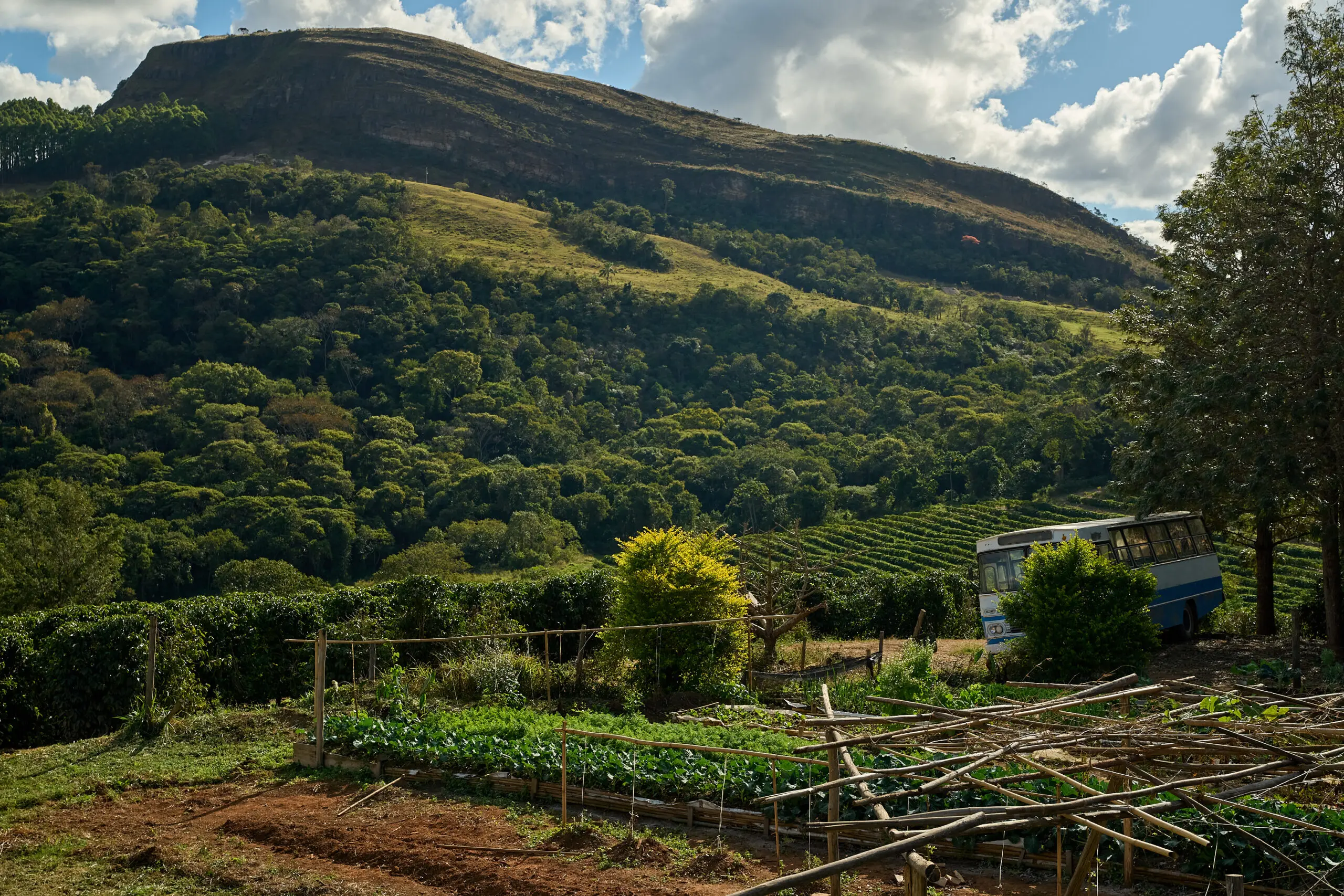
Front Street Brazil Queen Estate Coffee Brewed Flavor: The fresh sweetness of sugarcane juice, black tea, soft and smooth fruit sweetness, obvious nutty flavors, balanced and gentle acidity, weak and clean bitterness, rich chocolate aroma and nutty flavors, a bright and refreshing taste, and a silky, delicate mouthfeel.
The above content is compiled by CoffeeHunters, a coffee news website.


