








How do you make froth for coffee in a flat white?
A flat white uses thin microfoam held within 0.3 cm so the surface stays flat, served in a 150 to 180 ml cup over a double shot of Ristretto. That thin foam and small volume concentrate the coffee flavor, setting it apart from a latte's roughly 0.5 cm foam and a cappuccino's 1 to 2 cm layer.
To make froth for coffee this fine, steam milk to a dense, glossy texture and keep the layer shallow so foam and liquid stay united in each sip. A cafe latte, or italian cafe latte, uses more milk and a taller cup, so the coffee note is softer. Drink a flat white soon, before the foam separates.
In the large family of milk coffees, lattes, cappuccinos, and flat whites each have their own fans. Front Street Coffee suggests that if you prefer a hot milk drink with a stronger coffee flavor, you can start with a hot latte; if you love a thick, dense layer of milk foam, cappuccino is the only choice; and if you want to experience a more concentrated, richer coffee flavor, flat white is worth a try. The biggest difference between a flat white and a latte or cappuccino lies in the thickness of the milk foam—it must be controlled within 0.3 cm to present a flat liquid surface. At the same time, to highlight the coffee as the main note, a flat white usually uses a small cup size of 150 to 180 ml and is based on a double shot of Ristretto. Starting from Front Street's production practice, this article will break down the milk foam standards, cup size logic, extraction plan, and tasting points of a flat white, helping you understand the professional know-how of this "small latte."
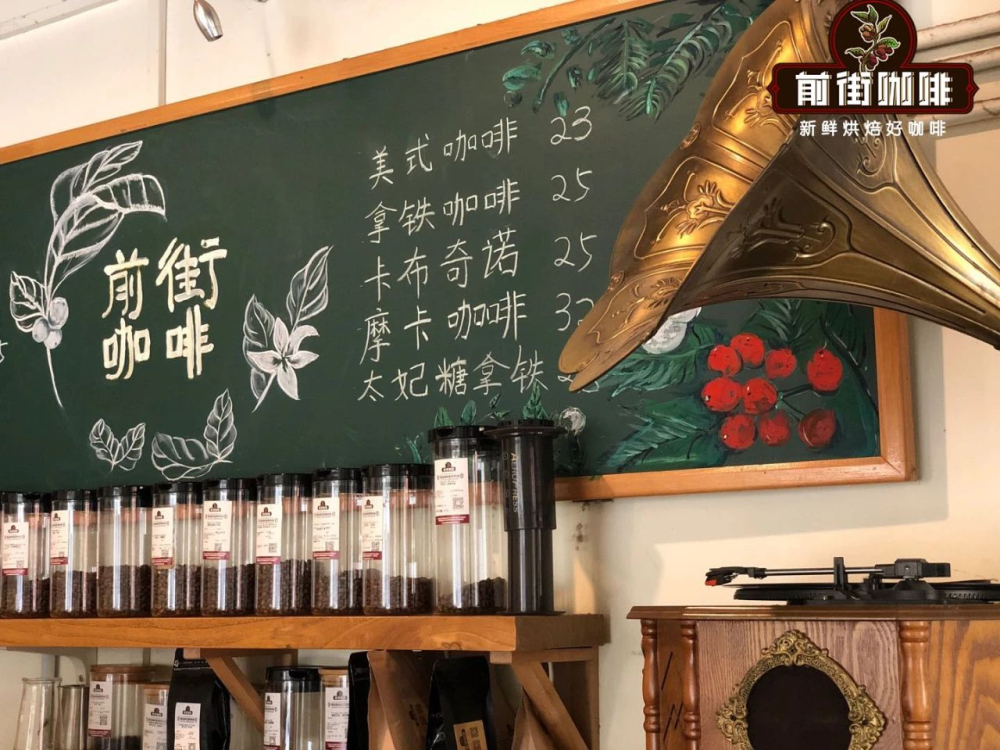
At Front Street, when drinking milk coffee, if you want a hot milk drink dominated by coffee flavor, Front Street recommends a hot latte; if you want to feel a thick layer of milk foam, you can choose a cappuccino; and when you want a more intense and concentrated coffee flavor, Front Street suggests ordering a flat white coffee.
The milk foam of a flat white is thinner
The original intention of baristas in creating the flat white was to let people taste the fusion of milk foam and the milk coffee below in every sip, and to finish drinking it as soon as possible before the milk foam separates. To achieve this, the premise is that the milk foam is dense enough, thin enough, and at a temperature just right for drinking.
Generally speaking, a cappuccino is made from one shot of espresso plus a thick milk foam, and the foam layer often appears as a 1 to 2 cm "hamburger-style" layer; before drinking, you have to take a big sip of the foam first. A latte's milk foam is slightly thinner, about 0.5 cm; while a flat white's milk foam is the thinnest and must be controlled within 0.3 cm, otherwise the liquid surface cannot achieve a "flat" state. As for the specific thickness of the milk foam, practices vary from coffee shop to coffee shop. Some baristas, in order to let customers experience the upper layer of coffee oils to the greatest extent, simply do not froth the milk and only heat it before pouring it into the espresso. Front Street hopes that the flat white customers drink will have a creamy, smooth texture without being too "watery," so it retains a 0.3 cm milk foam layer.
Flat white smaller cup
In Italy, "Caffè Latte" refers to a drink made from espresso brewed with a moka pot plus milk; Latte means milk. A latte pursues a balance between coffee and milk, allowing you to taste both the coffee flavor and the sweet, rich mellowness of the milk, with the two complementing each other without masking one another. A flat white, on the other hand, uses milk to highlight the coffee flavor; coffee is the protagonist, and milk only plays a supporting role, so the coffee flavor of a flat white is more intense.
To present a stronger coffee flavor, New Zealand baristas use a small cup size of 150 to 180 ml when making a flat white. The amount of coffee remains unchanged, the amount of milk is reduced, and the coffee ratio therefore increases, so the taste is naturally stronger. That is why a flat white is also called a "small latte."
The base of flat white coffee is Ristretto
The espresso blend used by Front Street is its own roasted "Sunflower Warm Sun Blend," composed of 70% Honduras Sherry coffee and 30% Yirgacheffe natural red cherry coffee. The whiskey, vanilla, and cream flavors of the Sherry coffee, together with the tropical fruit and fermented notes of the red cherry, make the coffee in the cup rich yet soft. When producing a flat white, Front Street retains the characteristics of a small cup size, thin milk foam, and a double shot of Ristretto as the base.

Ristretto means "restricted" in Italian. Espresso can be understood as the "restricted" version of espresso, taking only the front and middle sections of the Espresso extraction. Since most espresso drinks in stores are based on Espresso, the baristas at Front Street Coffee (FrontStreet Coffee) use a standard Espresso extraction as a reference before business hours. There are slight differences in the extraction plan for each coffee bean, and this plan is a set of extraction parameters adjusted before daily business according to the Warm Sun Blend used in the store.
Front Street Espresso extraction plan: extract 40 grams of coffee liquid from 20 grams of coffee grounds, taking 28 to 30 seconds. Ristretto does not change the grind setting or dose; it also uses 20 grams of coffee grounds but extracts 27 grams of coffee liquid, taking 20 to 25 seconds. Because Ristretto takes only the front and middle sections of the espresso, its concentration is higher than Espresso, its taste is stronger, and its caffeine content is actually lower. In terms of flavor, it shows more intense berry acidity, wine aroma, and caramel notes.
Pour the extracted coffee liquid into a pre-prepared cup with a capacity of about 200 ml, then measure 150 ml of milk and pour it into a milk pitcher to froth. When frothing the milk, incorporate less air than for a latte, and make the foam layer thinner and denser. The temperature is best controlled at 55 to 60 degrees Celsius, making it easier to drink. Finally, evenly integrate the frothed milk into the coffee liquid; whether or not you pour latte art is fine.
Front Street's Flat White presents aromas of vanilla, chocolate milk, and whiskey-filled chocolate, along with the sweet-tartness of berries. It is smooth, fragrant, and mellow on the palate, with a very long-lasting finish.

For professional coffee knowledge exchange and more coffee bean information, please follow Coffee Workshop (WeChat public account: cafe_style)
For more specialty coffee beans, please add the private WeChat of Front Street Coffee (FrontStreet Coffee), WeChat ID: qjcoffeex
The above content is compiled by CoffeeHunters, a coffee news website.


