







Can Coffee Beans Past Peak Flavor Still Be Brewed?
Coffee beans past their peak flavor period can usually still be brewed and drunk. The peak window for single-origin pour-over beans runs about one month, and some dark roasts hold closer to 45 days. Beyond that, flavor weakens and defective notes may appear, but the beans remain drinkable as long as they are within their six-month to one-year shelf life.
Adjusting the brew helps offset the decline. Lower the water temperature, change the grind size, and alter the pouring technique to limit negative flavors. Beans past the shelf life itself are no longer safe to drink, but they can still serve in cleaning, deodorizing, and as plant fertilizer, so few beans need to go to waste.
Buying too many coffee beans and not finishing them before they pass their peak flavor window is a problem many coffee lovers run into. What exactly is the difference between the peak flavor period and the shelf life? Can beans past their peak flavor still be brewed into a decent cup of coffee? Besides throwing expired coffee beans away, what other practical ways are there to reuse them? This article starts with a brewing demonstration of a Kenya AA coffee bean from Front Street Coffee, explaining in detail how to avoid negative flavors after the peak flavor period by adjusting water temperature, grind size, pouring technique, and other parameters. It also compiles various uses for expired coffee beans in cleaning, deodorizing, and plant fertilizer, helping you make the most of every single bean.
Many coffee lovers have had a similar experience: on a whim they buy too many coffee beans, and before they can finish them, they've already expired. Throwing them away outright seems wasteful, so this time Front Street Coffee is here to talk about what you can still do with coffee beans after they expire.
Peak Flavor Period vs. Shelf Life
To understand this issue, you first need to distinguish between two concepts: the peak flavor period and the shelf life of coffee beans. When we say that freshly roasted coffee beans have a short storage time, we actually mean that the peak flavor period is short. Taking single-origin beans for pour-over as an example, the optimal peak flavor period is usually around one month, and some dark-roasted single-origin beans can be stretched to about 45 days. Exceeding this time does not mean they are undrinkable; it just means the flavor will noticeably weaken or some unpleasant defective notes will emerge. What people commonly call "expired coffee beans" mostly refers to the peak flavor period having ended.
Coffee shelf life, on the other hand, refers to the limit from a food safety perspective. Once this time is exceeded, the coffee genuinely can no longer be consumed. The shelf life of roasted coffee beans is generally between six months and one year. However, even coffee beans past their shelf life can absolutely be turned into something useful and put to many purposes.
What to Do with Coffee Beans Past Their Peak Flavor Period
In fact, coffee past its peak flavor period can still be brewed and drunk. Although the flavor is not as full as it once was, adjusting the brewing technique can help you avoid some negative tastes. Freshly roasted coffee beans are in a very active state, slowly releasing gases and volatile compounds, gradually becoming more stable. This is also why coffee beans usually need a resting period of about a week before their flavor is fully expressed.
Once the gases are completely released, most of the aromatic compounds inside the coffee beans are lost along with them, and what remains is mostly a woody note. During brewing, the particles also lose their "liveliness," which means this bean's peak flavor period has come to an end. The peak flavor period for medium-light roasted coffee is usually about one month after roasting, and if storage conditions are ideal (cool, dark, sealed, and dry), it can be extended to around 45 days.
It should be noted that "past the peak flavor period" refers to a state where most of the aromatic compounds have dissipated and the gases inside the beans have basically been fully released, not that there is completely no flavor left and only a sawdust taste remains.
In this state, adjusting the brewing parameters a bit can still "rescue" this coffee bean. Here is one method to share:
1. The demonstration uses a Kenya AA coffee bean from Front Street Coffee, light roast, day 50 after roasting. Suggested parameters: still use 15 grams of coffee grounds, a coffee-to-water ratio of 1:15, water temperature of 91°C, and a grind size slightly coarser than normal (to avoid too many fines clogging the drainage hole, with a 75% pass rate through a No. 20 standard sieve).
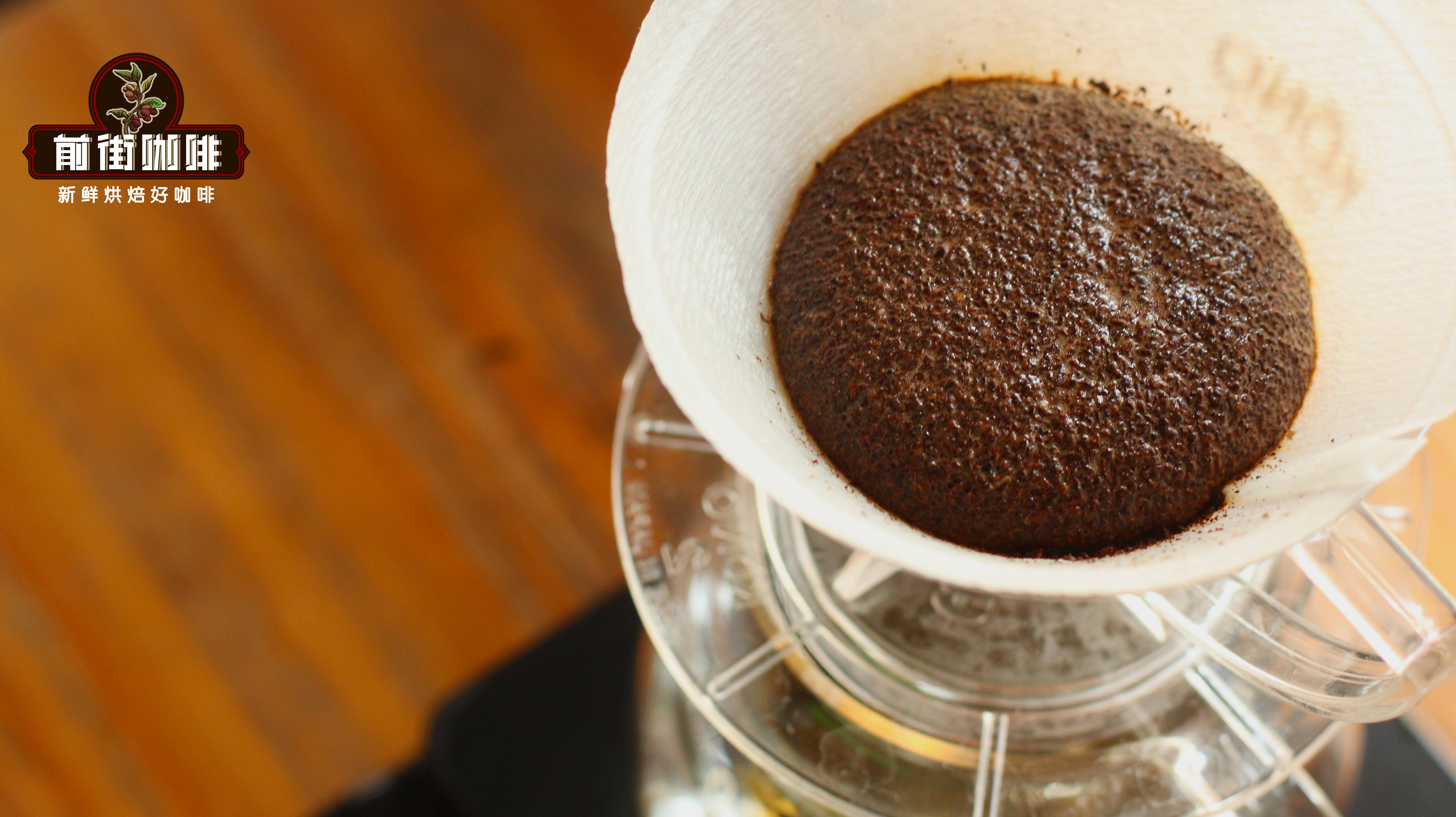
2. For the first pour, bloom with 25 grams of water for 18 seconds. You can see that after the water contacts the coffee grounds, no "hamburger dome" forms, and the water easily seeps into the coffee particles. This is because the coffee beans have essentially already released all their gases during storage, so an overly long blooming and degassing time is not needed.
3. For the second pour, start from the center and spiral outward in small circles to push the coffee bed higher, letting the fines cling to the filter cup wall and preventing them from settling at the bottom and clogging the drainage hole. You can see fine bubbles being washed out. Pour up to 150 grams in this stage.
4. When the water level drops to the halfway point, pour the final stage, using a medium flow and quickly circling to create a whirlpool to "activate" the coffee bed and draw out flavor compounds. Stop pouring at 225 grams, and once the coffee liquid in the dripper has flowed into the server, remove the dripper to end extraction. Total extraction time is 1 minute 44 seconds.
Throughout the brewing process, there is very little coffee foam, and the coffee bed almost sinks to the bottom. When this happens, a relatively strong stirring force is generally needed to lift the coffee bed, increase extraction yield, and at the same time prevent the drainage hole from clogging. Sometimes it is also necessary to cut off the negative flavors from the final stage.
What to Do with Coffee Beans Past Their Shelf Life
If they are already past their shelf life, please don't just throw them away.
1. You can grind expired coffee beans into powder and use them to scrub copper items and polish floors; wrap the ground coffee powder in gauze and wipe stoves and pot lids to effectively remove stains; use boiled expired coffee to rinse sinks and toilet pipes for a cleaning effect. Similar items can all be cleaned using expired coffee beans. 2. Deodorizing Placing coffee grounds in an ashtray can remove the smell of smoke; when you stub out a cigarette, there will be a coffee aroma. Many coffee shops do this, and it also helps extinguish cigarette butts. You often use an oven to bake delicious food here, right? After many uses, the inside of the oven is already covered in grease and filled with all kinds of strange odors. Put a plate of coffee grounds into the oven and bake them, and it can effectively remove the lingering food smells inside the oven.
For pet owners, the most headache-inducing thing is nothing other than cleaning up pet feces with their unbearable odor. In fact, as long as you put some coffee grounds down after cleaning up the feces, you can reduce the trouble caused by the odor. 3. Plant Fertilizer Coffee beans contain nutrients needed for plant growth. Just crush expired coffee beans and pour them into a flower pot; they can serve as fertilizer and have no unpleasant odor. If you spread them in a ring around the base of the plant, you can also keep pests away.
The above content is compiled by CoffeeHunters, a coffee news website.


