







Where Is Mandheling Coffee Grown and Why Does It Taste Herbal?
Mandheling coffee comes from the Lintong region of Sumatra, Indonesia, and is a staple for dark roast drinkers. The PWN company buys beans from the Gayo Mountain area in Aceh, then applies one mechanical sorting plus three rounds of hand sorting to reach Indonesia's G1 grade. The wet-hulled process gives the cup its herbal and dark chocolate flavors.
The mechanical screen keeps only beans of 18 mesh or larger, and the manual rounds remove irregular defective beans, which lowers the defect rate and improves roast uniformity. Classic Mandheling is mostly medium-dark roasted. For anyone comparing growing regions, Mandheling is a useful contrast to other origins, much as people ask where is coffee grown in australia.
Mandheling coffee is a favorite among dark roast lovers, but its charm goes far beyond bitterness. Starting from the Lintong region of Sumatra, Indonesia, this article takes you through the origins of the Mandheling G1 grade, the rigorous sorting process behind PWN Golden Mandheling, the unique herbal and dark chocolate flavors imparted by the wet-hulled process, and why classic Mandheling is mostly medium-dark roasted. Front Street Coffee will also share the brewing parameters and techniques for PWN Golden Mandheling, so you can recreate that cup of rich, clean, long-finishing Sumatra classic at home.
Mandheling coffee As one of the representatives of dark-roasted coffee, some people love it for a lifetime because of its richness, while others repeatedly say no because they find it too bitter.
To make Mandheling coffee taste good, you need high-quality coffee beans, a roaster who can grasp and take care of the details, and a suitable extraction method for the beans.
Today, many coffee-growing regions have more scientific cultivation or more advanced sorting technologies to enhance coffee quality, and Mandheling coffee is no exception. For example, the Golden Mandheling coffee beans from Indonesia's PWN (Pawani) company can be said to be the highest-grade Mandheling coffee in all of Indonesia and the best representative of specialty Mandheling coffee.
Why is Golden Mandheling coffee so famous?
The reason Front Street PWN Golden Mandheling coffee stands out among Mandheling coffees is that PWN takes Mandheling coffee beans purchased from the Gayo Mountain region in Aceh, Sumatra, and applies one mechanical sorting plus three rounds of manual hand sorting to ensure each batch reaches Indonesia's highest G1 grade. The mechanical sorting first screens for beans that must be 18 mesh or larger, and the subsequent multiple manual rounds remove irregular defective beans; lowering the defect rate greatly improves the quality of Mandheling coffee.
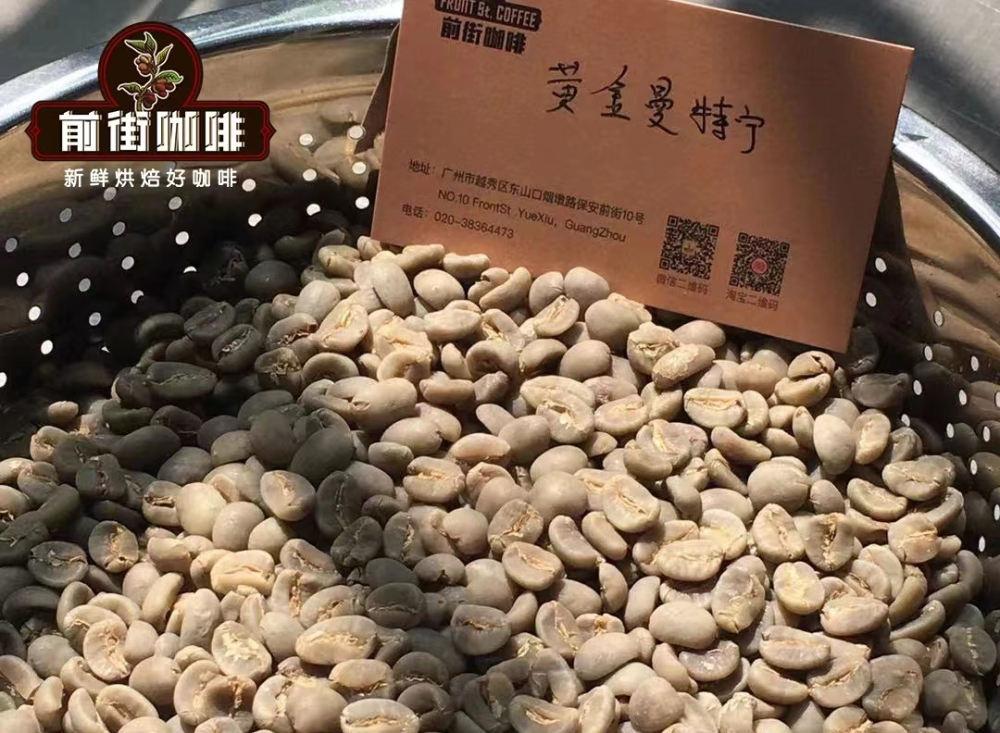
The Golden Mandheling coffee currently sold by Front Street Coffee (FrontStreet Coffee) all comes from PWN. In the physical store, you can see the certification certificate issued by PWN, as well as the jute bags containing Golden Mandheling green beans and printed with the PWN logo.
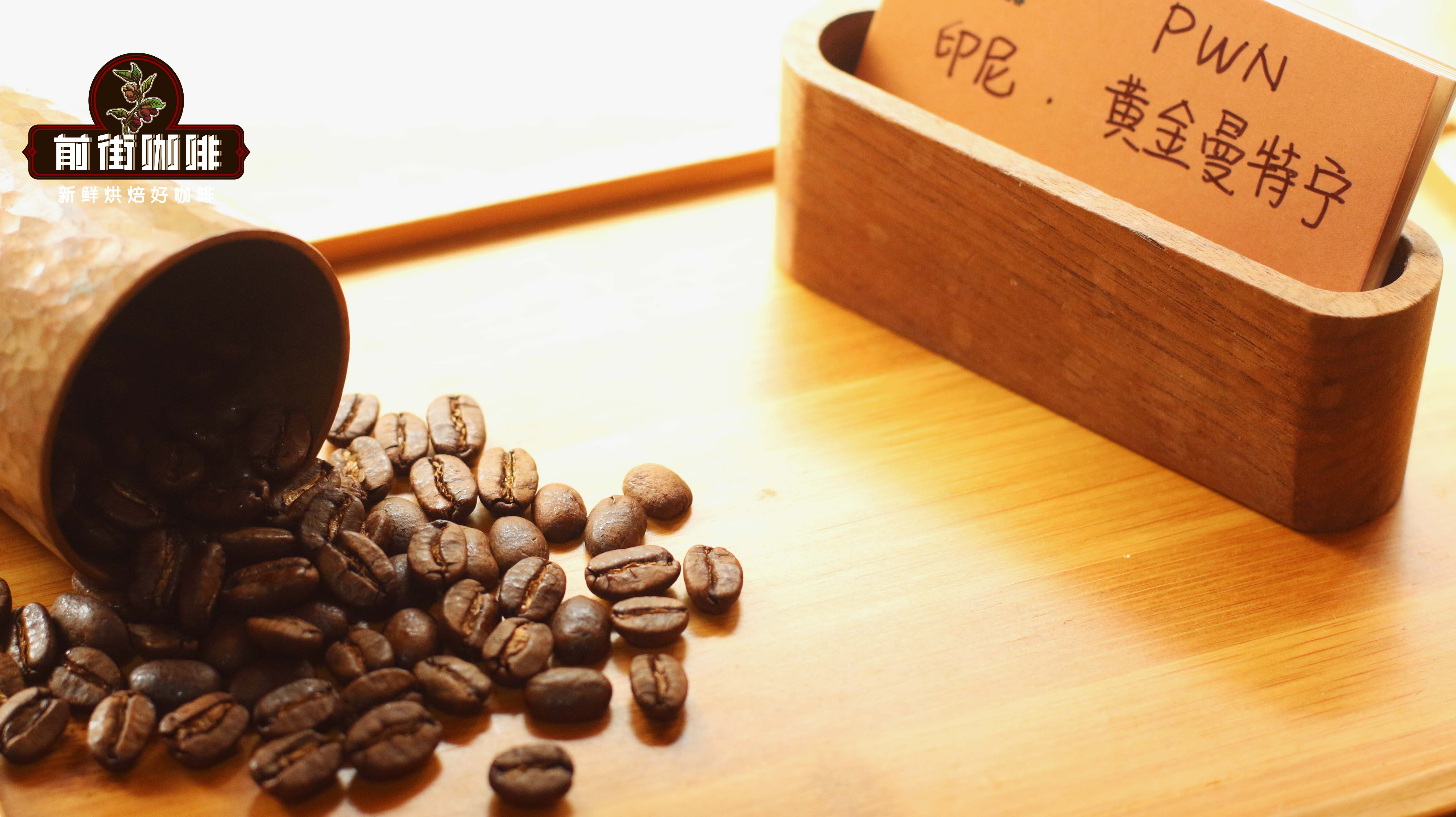
Because it has undergone repeated careful selection, the consistency of Golden Mandheling coffee beans also improves roasting uniformity and makes the coffee's flavor performance cleaner and more consistent. Through Front Street Coffee's cupping comparisons, compared with ordinary Mandheling coffee beans, the overall performance of Golden Mandheling allows you to taste the characteristic flavors of Sumatra's herbal notes, spices, and dark chocolate; while it is rich, the coffee's cleanliness and finish are better, and the sweetness is higher as well.
Where does Front Street PWN Golden Mandheling coffee come from?
Indonesia mainly grows Robusta varieties, with Arabica coffee production accounting for less than one-tenth. Among these, Mandheling coffee produced on Sumatra Island is the most famous, so it is also called Sumatra coffee. Traditionally, Sumatra Mandheling mainly comes from the Lake Toba area in the Lintong region of North Sumatra and the Lake Tawar area in the northernmost Aceh region.
Front Street PWN Golden Mandheling comes from the Gayo Mountain area by Lake Tawar in Aceh, where the average growing altitude in the production area is between 1,110 and 1,600 meters. The coffee is grown by smallholders under shade trees, and the wet-hulled coffee beans show unusual flavors along with a deep yet lively richness.
Is Golden Mandheling dark roasted or light roasted?
Front Street has noticed that in the past, Mandheling coffee on the market was almost uniformly medium-dark roasted, presenting the classic rich black coffee flavor profile. With the development of specialty coffee culture in recent years, people have begun pursuing more unique coffee tastes, and many merchants have launched medium-roasted or even medium-light-roasted Mandheling coffee. The lighter the roast, the more acidity the coffee beans retain, with flavors dominated by fruit, floral notes, and tea-like qualities, and lower richness. We might think: since medium-light-roasted Mandheling is so fresh, why not roast it lighter?
Friends who often drink Mandheling should know about Sumatra's wet-hulled method. Before the final drying stage, wet-hulled coffee is poured into a huller, where greater friction is used to tear open the semi-dry parchment layer clinging tightly to the green beans. Through the friction and stirring, the green beans are easily crushed or bruised. The "naked beans" stripped of parchment dry very quickly, and at the same time are directly exposed to a humid environment, becoming susceptible to the growth of various microorganisms.
Although wet hulling indeed gives Mandheling its unique herbal and woody aroma, it also causes a higher defect rate in green beans, and dark roasting can perfectly mask this flaw. In addition, Mandheling's rise to fame came from its early development by the Japanese, and given their taste preferences, they favored Japanese-style dark roasting above all, which is why most Mandheling is roasted so dark. Front Street hopes everyone can taste the classic Mandheling flavor, so the two Mandheling coffees Front Street sells daily are both medium-dark roasted, including the Lintong region Mandheling everyday drinking beans and the Aceh region Front Street PWN Golden Mandheling coffee.
How to brew Front Street PWN Golden Mandheling coffee ?
In order to let Mandheling coffee beans show their rich characteristics while also clearly displaying their unique herbal flavors, Front Street Coffee (FrontStreet Coffee) roasts Mandheling coffee beans by dropping them shortly before the second crack, so they are at a medium-dark roast level. Good coffee needs to be freshly roasted, and the coffee beans shipped by Front Street Coffee (FrontStreet Coffee) are all dispatched 5 days after roasting is completed~
For brewing Front Street PWN Golden Mandheling coffee, Front Street Coffee (FrontStreet Coffee) recommends medium-coarse grinding (coarse sugar size, 70% passing through a Chinese No. 20 standard sieve), 88°C water temperature, a 1:15 coffee-to-water ratio, and a KONO dripper.
The KONO dripper's feature is that its short-rib design slows the speed at which water passes through the coffee grounds, making the coffee's mouthfeel fuller. The reason for using medium-coarse grinding is that as roasting time increases, the bean structure becomes denser and substances are released more easily, so dark-roasted coffee beans require a combination of medium-coarse grinding plus slightly lower water temperature for brewing.
Specific brewing method: first pour 30g of water and bloom for 30s; for the second stage, pour in a small stream in circles up to 125g, wait until the water level in the coffee bed drops to half before pouring again, then continue pouring in a small stream in circles up to 225g, and after all dripping is complete, the total extraction time is about 2 minutes 10 seconds.
Front Street Coffee (FrontStreet Coffee) - Front Street PWN Golden Mandheling coffee flavor performance: the coffee has varied layers overall, rich yet clean. Intense nut and caramel aromas, with chocolate notes, a long finish, and high balance.
The above content is compiled by CoffeeHunters, a coffee news website.


