







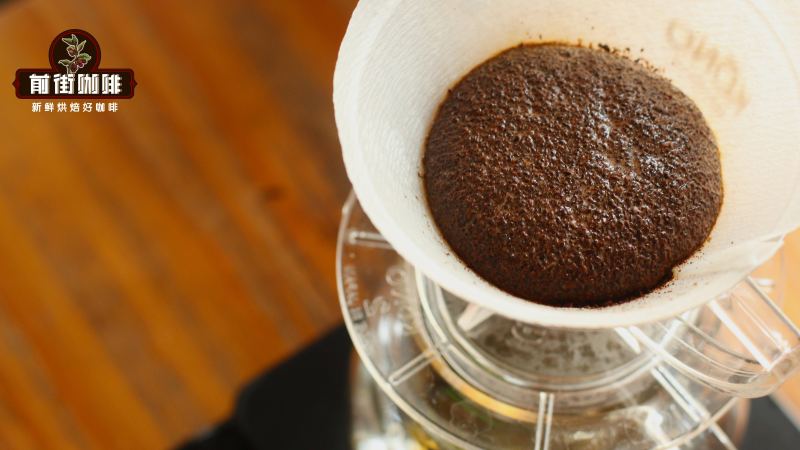
What makes coffee particles puff up into a full bloom dome?
Coffee bed expansion during the bloom comes from carbon dioxide. When coffee particles meet hot water, the gas inside is released first; once the grounds are saturated, the water does not drain away at once, so the carbon dioxide forms bubbles that push the bed upward. Roast level and bean freshness largely decide whether a pronounced dome forms.
Dark-roasted and fresh beans release more gas, so the dome is bigger, but overly fresh beans can disrupt extraction and cost you clarity. Grind size and water temperature also shape the bloom, and those same variables inform the words to describe coffee smell in a brewed cup. Reading the bed state tells you how the beans are behaving.
During the blooming phase of pour-over coffee, whether the coffee bed can puff up into a full "hamburger" is a topic many enthusiasts care about. Some people use the same parameters yet always end up with a flat, deflated bed, and can't help but wonder if their bloom has failed. In fact, the principle behind coffee bed expansion isn't complicated: when coffee grounds contact hot water, they release carbon dioxide, and the bubbles accumulate within the bed, pushing it upward. Whether a pronounced dome forms depends mainly on the roast level and freshness of the beans, as well as whether the brewing parameters are appropriate. This article, drawing on Front Street's brewing experience, breaks down the mechanism of coffee bed expansion, explains the advantages of dark-roasted and fresh beans, while also cautioning about the extraction problems that overly fresh beans can bring, and offers recommendations on grind size, water temperature, and other parameters to help you read bean information through the state of the bloom.
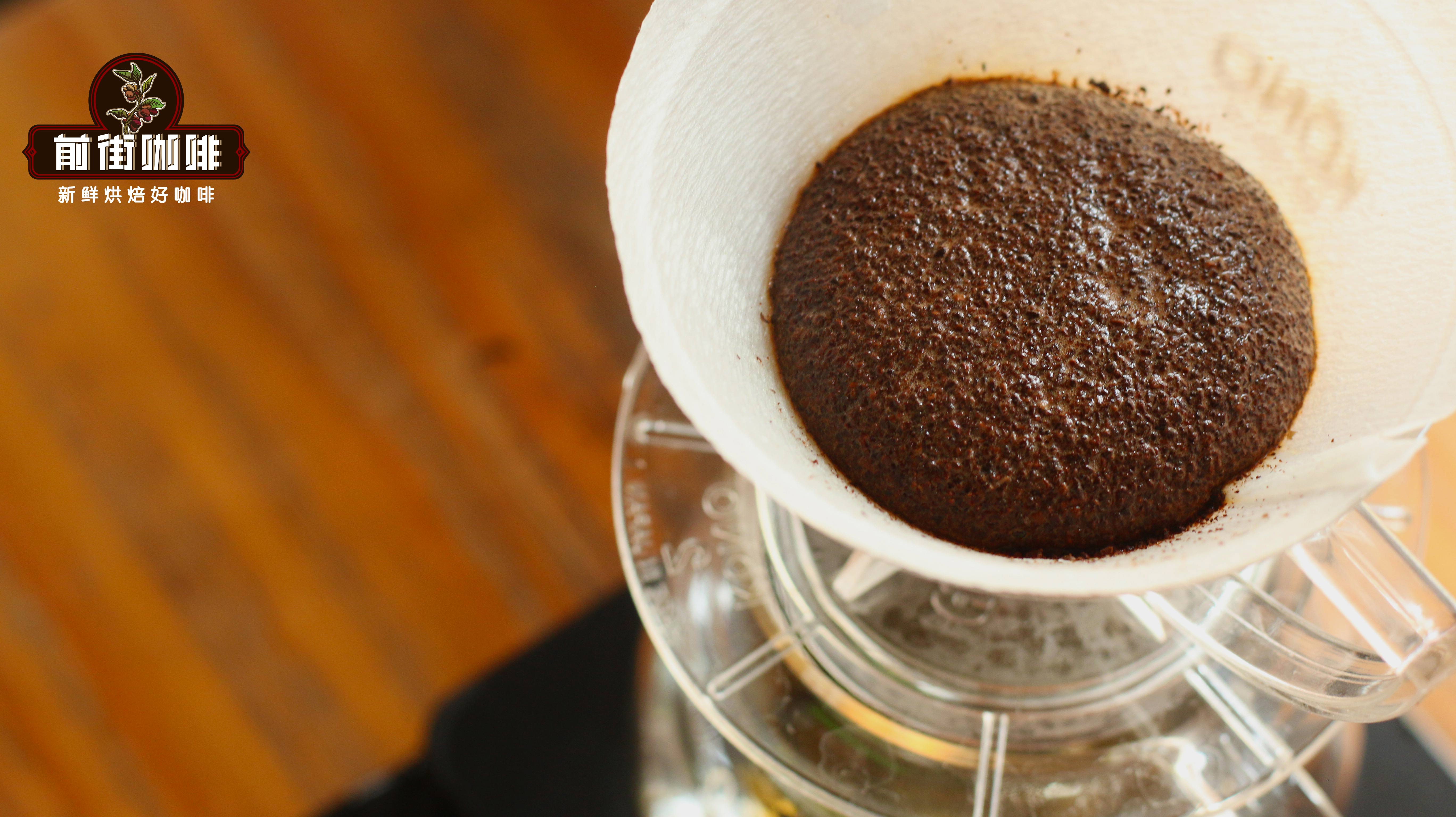
"Boss, why does your coffee bed puff up so high during the bloom? How do you actually do it?"
Every time customers see the coffee bed rising high in the dripper during Front Street's bloom, quite a few of them ask this. The subtext is really: when I brew, my coffee bed doesn't expand nearly as much.
For those just getting into pour-over, this is indeed worth discussing. Because even if you copy the parameters exactly, your coffee bed still comes out flat, looking like it's lacking a bit of life.
Actually, getting the coffee bed to puff into an exaggerated "hamburger" isn't hard—you could even say it's simple. As long as you understand why the coffee bed rises, you'll know how to make it expand big and full.
Why does the coffee bed expand?
The coffee bed doming happens during the bloom phase. Everyone probably knows the purpose of blooming: to release the carbon dioxide inside the coffee beans and improve the efficiency of subsequent pouring and extraction. And it's precisely this carbon dioxide being released that is the key factor making the coffee bed dome.
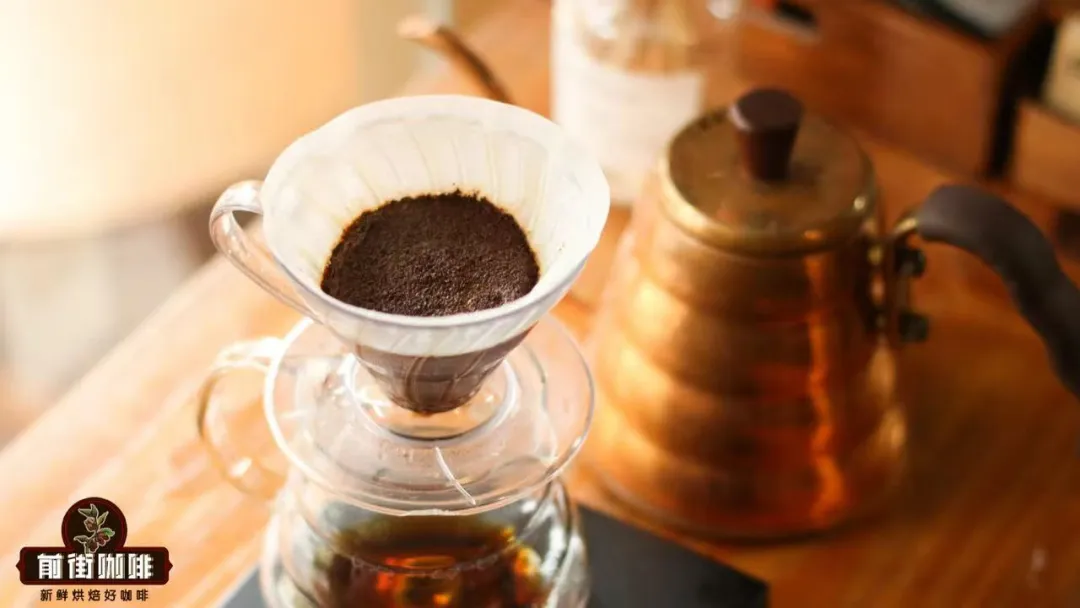
The moment coffee grounds touch hot water, the carbon dioxide inside them is the first to be released. After a large amount of hot water saturates the grounds, it doesn't flow away immediately, so this released carbon dioxide combines with the water to form bubbles that surge upward.
However, the surface tension between water molecules and the capillary forces between coffee particles together form a sturdy "cage," leaving the bubbles nowhere to escape and forcing them to continuously accumulate inside the bed. On top of that, carbon dioxide isn't released all at once but continuously, so the large dome we see is actually filled up little by little.
Taken together, the reason the coffee bed domes during blooming is mainly the accumulation of water bubbles formed by carbon dioxide pushing it up. Therefore, to bloom a large "hamburger," you need the coffee grounds to contain enough carbon dioxide, while also ensuring the extraction parameters can "stimulate" this carbon dioxide out.
How do you bloom a large "hamburger"?
There are two main factors determining the carbon dioxide content in coffee beans: roast level and freshness.
During roasting, coffee beans generate carbon dioxide due to high temperatures—the darker the roast, the more carbon dioxide is produced. So if you want to bloom a large "hamburger," dark-roasted coffee beans are absolutely the best choice. This also explains why dark-roasted coffee expands more noticeably during blooming, while light-roasted coffee barely reacts.
If you prefer this visual "hamburger," you can choose Front Street. Front Street PWN Golden Mandheling (spice, caramel), Front Street. Jamaica Blue Mountain (nut, chocolate), Front Street. Queen's Estate (roasted peanut, toasted bread).
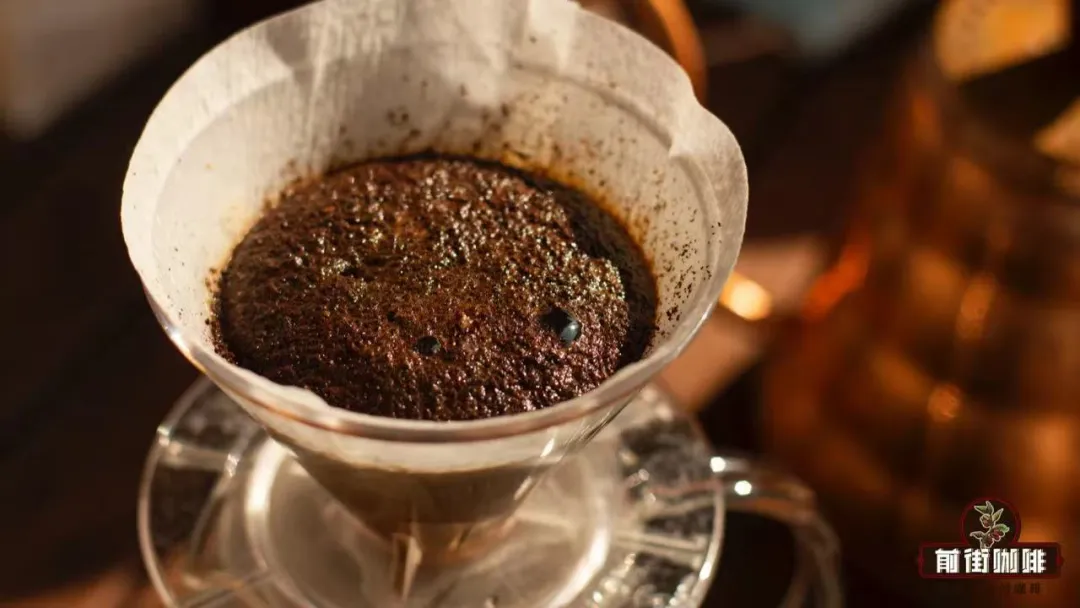
But often, even with dark-roasted beans, you won't necessarily get a large "hamburger." This is because carbon dioxide only remains inside the coffee beans for a limited time—that is, the second factor mentioned earlier: the freshness of the beans.
After coffee beans finish roasting, the internal gases continuously escape due to pressure changes, so the carbon dioxide content gradually decreases over time. In other words, the fresher the beans, the higher the carbon dioxide content and the bigger the dome, and vice versa. If you want to bloom a large dome, freshly roasted beans are undoubtedly the best choice.
However, freshly roasted coffee carries a certain dryness, and too much carbon dioxide severely hinders extraction, making it easy to brew a cup with heavy off-flavors and under-extraction. So Front Street does not recommend choosing overly fresh coffee beans just to chase a dome—it's completely unnecessary.
Interestingly, when the beans used aren't so fresh, the coffee bed will still expand early in the bloom, but it quickly sinks back down due to an insufficient "supply" of carbon dioxide.
Besides bean selection, Front Street found through asking around that many friends can't brew a "hamburger" because their parameters aren't dialed in correctly. Factors like too coarse a grind or too low a water temperature all prevent brewing a sufficiently large "hamburger." This is because the coffee grounds aren't "stimulated" enough to release a large amount of carbon dioxide in a short time. Even if the beans are fresh and dark-roasted, if the carbon dioxide isn't released in time, the coffee bed can't form a sufficiently large "hamburger" during the bloom.
That's roughly it—isn't it simple? As long as you use the right beans and parameters, you can get a sufficiently large "hamburger" during the bloom phase. Conversely, this is also a way to read bean information through the state of the coffee bed dome. The freshness and roast level of the beans can all be judged from the state of the coffee bed during blooming, based on what Front Street described above. Congratulations—you're one step closer to becoming a coffee master.
The above content is compiled by CoffeeHunters, a coffee news website.


