







How Do You Brew Jamaican Coffee in a French Press?
A French press is one of the simplest ways to brew Jamaican coffee at home, because full immersion preserves the bean's original flavor layers. The method works with Front Street Jamaica Blue Mountain No. 1, a washed Typica grown at 1,310 meters on Clifton Farm. Coffee-to-water ratio, grind size, water temperature and plunging technique each shape the creamy chocolate and caramel sweetness in the final cup.
Blue Mountain beans come only from four eastern Jamaican parishes at 1,000 to 1,700 meters; lower elevations are downgraded to Jamaica High Mountain or Jamaica Prime. That grading system is why fresh, well-sourced beans matter. Similar sourcing standards appear in rainforest alliance certified coffee beans, which trace farms and growing practices so the green coffee behind your brew is verifiable.
Want to easily make a rich, full-bodied black coffee at home? A French press might be the most effortless choice and the one that best preserves the coffee's original flavor. It's simple to operate and highly forgiving, preserving almost the complete layers of coffee flavor—of course, this also means it demands higher quality and freshness from the beans. This article uses Front Street Jamaica Blue Mountain No.1 coffee beans as an example, first introducing you to the authentic Blue Mountain coffee region's certification, grading standards, and the background of Clifton Farm, then breaking down the French press brewing process step by step. From coffee-to-water ratio, grind size, to water temperature control and plunging technique, every detail will be explained clearly, so you can consistently recreate a cup of Blue Mountain coffee interwoven with creamy chocolate and caramel sweetness at home.
For more specialty coffee knowledge, please follow the WeChat official account: Front Street Coffee (FrontStreet Coffee)
The French press can be said to be one of the coffee tools with the lowest barrier to operation in home settings, and it is also an extraction method that best preserves the coffee's original flavor—both merits and flaws are presented faithfully, thus it demands relatively high quality and freshness from the coffee beans themselves. Today we use Front Street Jamaica Blue Mountain No.1 coffee beans to demonstrate how to make a cup of full-bodied black coffee.
What grade does Front Street Blue Mountain No.1 coffee belong to?
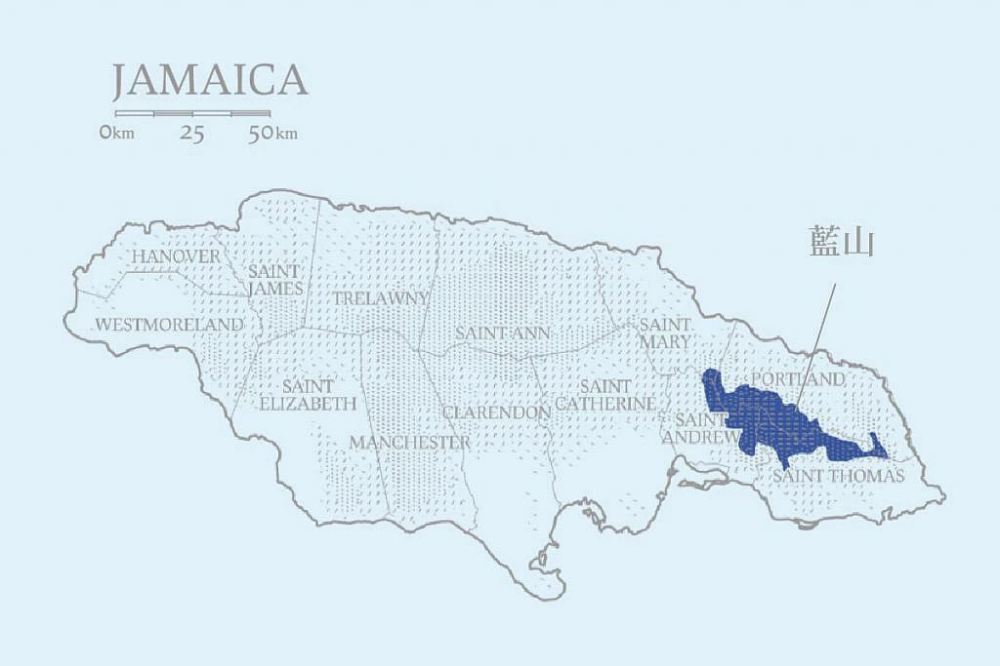
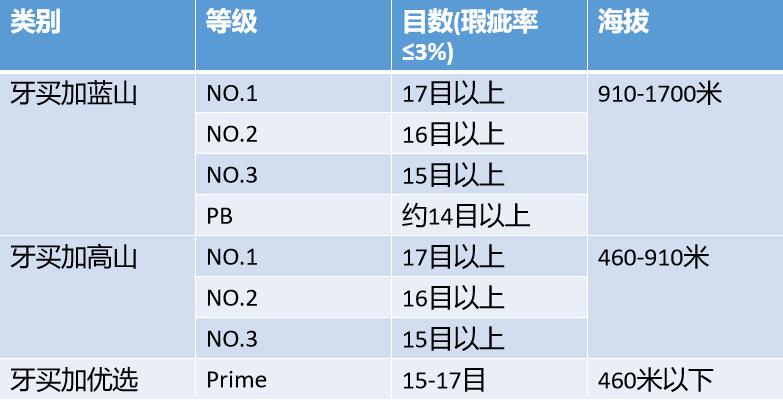
Jamaica-certified authentic Blue Mountain coffee The production region refers to four administrative parishes in the east: St. Andrew, St. Thomas, St. Mary, and Portland, which happen to be the foothill areas the Blue Mountains span. At an elevation of 1000-1700 meters, with an area of only about 6100 hectares, only coffee cultivated in this region and meeting the 1000-1700 meter elevation is authentic Blue Mountain. Even if planted within these four administrative parishes but at an elevation of only 500-1000 meters, it must be downgraded to Jamaica High Mountain Coffee; below 500 meters, it becomes the lower grade Jamaica Prime Coffee; the other 1.21 hectares outside this region cannot even be called Blue Mountain coffee. The Jamaican government has strict regulations for Blue Mountain coffee; at most only 25% of Jamaican coffee qualifies as Blue Mountain coffee.
Coffee grading
Jamaica Blue Mountain region coffee has three grades: Blue Mountain Coffee, Jamaica High Mountain Supreme Coffee Beans, and Jamaica Prime Coffee Beans.
Among them, Blue Mountain Coffee and High Mountain Coffee each have two sub-grades. By quality, from high to low: Blue Mountain No.1, Blue Mountain No.2, High Mountain No.1, High Mountain No.2, Jamaica Coffee. By quality, from high to low: NO.1, NO.2, NO.3, and PB, where PB is peaberry. According to CIB standards, the basic standard for NO.1 Blue Mountain green beans is beans of 17 mesh or above, defect rate below 3%, moisture content around 13%, etc.
Blue Mountain No.1, No.2, No.3, and Blue Mountain Peaberry are the only coffees in the world exported in wooden barrels, with three specifications: 70 kg, 30 kg, and 15 kg. Other grades of Jamaican coffee are all exported in 60 kg burlap sacks. Front Street Coffee's Blue Mountain coffee is all NO.1 grade, commonly known as Blue Mountain No.1 coffee.
Clifton Farm
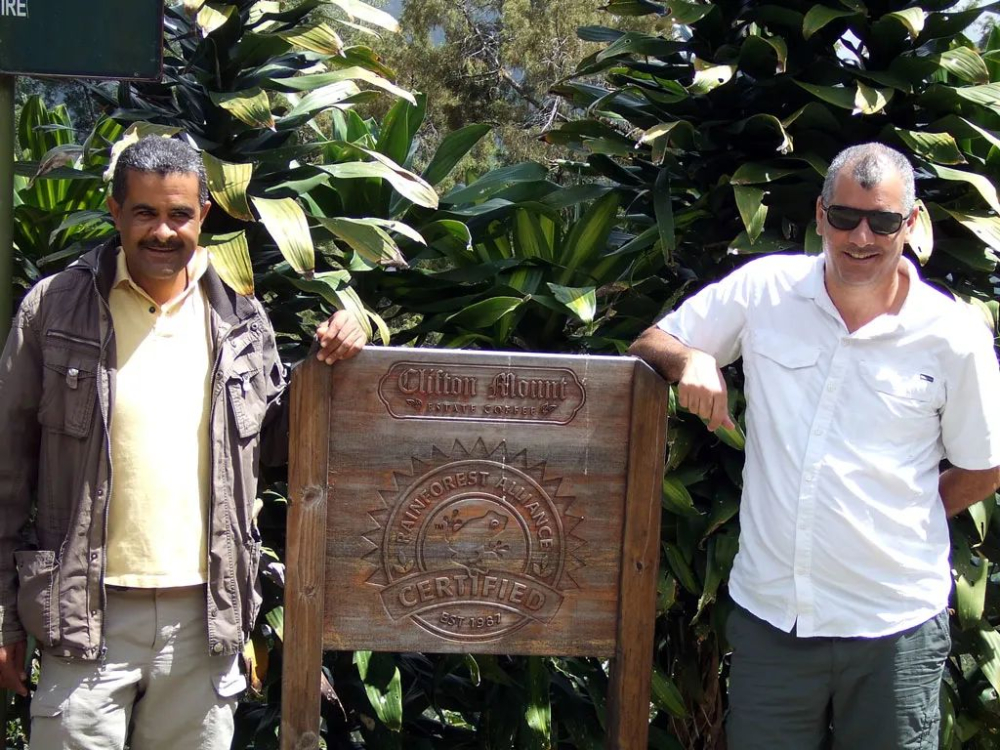
Jamaica Clifton Mount Estate
Estate owner: The Sharp family
Certification: Rainforest Alliance Certified
Location: Newcastle area
Total area: 250 acres
Coffee planting area: 180 acres
Average elevation: 4300 feet (1310.64 meters)
Processing method: Washed
Variety: 100% Arabica Typica
Flavor: A perfect and balanced combination of acidity, body, and aroma
Clifton Farm is the largest estate in this region, though by international standards it still counts as small-scale farming. Many of the estate owners are small landowners whose families have worked this land for two centuries. Through comparison, Front Street Coffee believes that Clifton Farm's Blue Mountain No.1 performs exceptionally well and can serve as one of the outstanding representatives of Blue Mountain coffee.
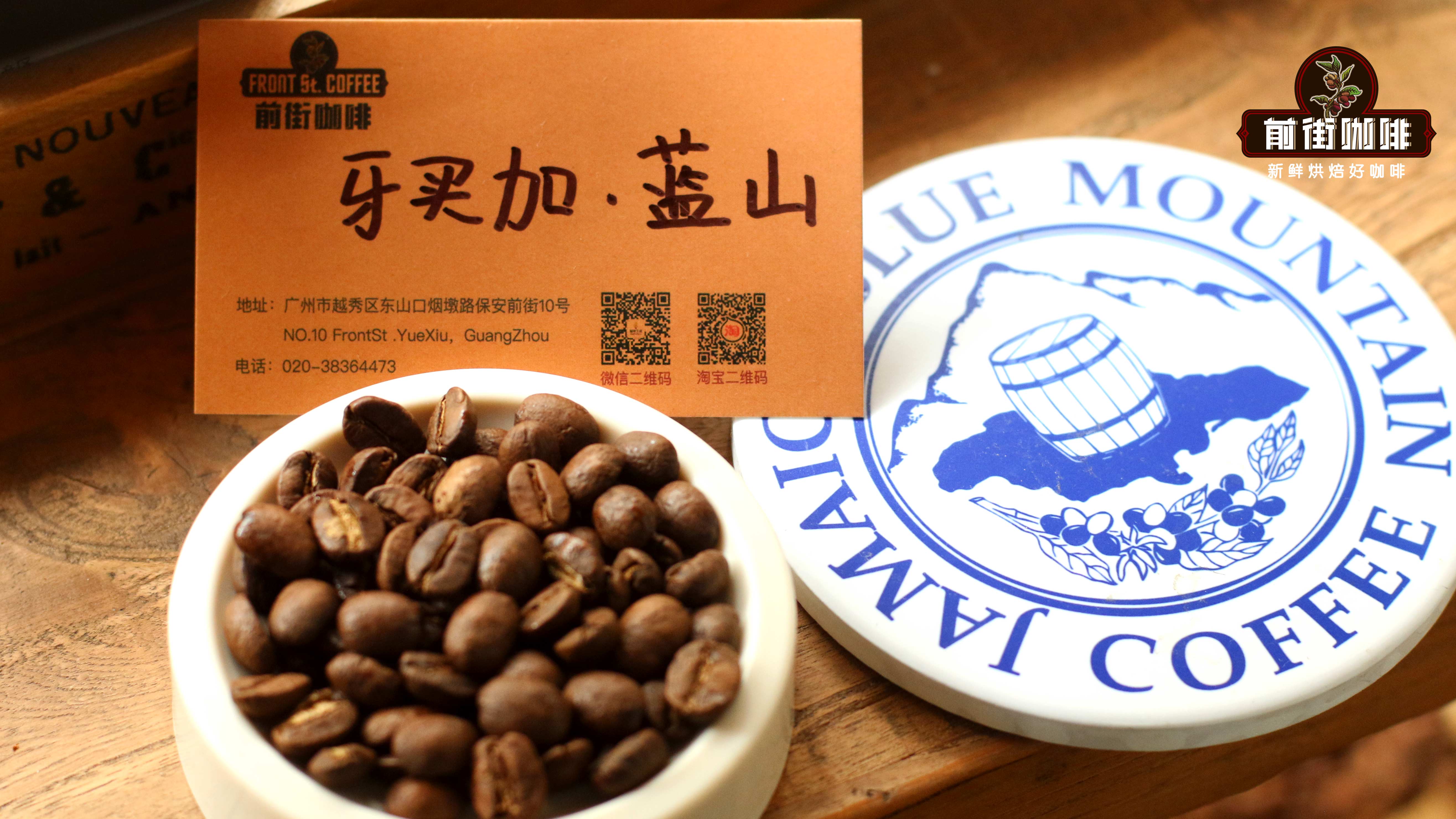
To highlight the classic flavor of Front Street Blue Mountain No.1, Front Street's roasters, drawing on experience, use a medium-dark roast to present the character of this "Coffee Emperor." When grinding, one can smell dense roasted aromas, first evoking roasted nuts and cream. When extracted as black coffee by pour-over, it shows more flavors of dark chocolate, caramel, and slight citrus acidity, with a soft mouthfeel and very rich layers.
How to use a French press to brew Front Street Blue Mountain coffee?
The French press is also the easiest method among those we know to reproduce the same cup of coffee. With the same French press, same coffee beans, same water temperature, same water amount, and same brewing time, different people can almost reproduce the same cup of coffee—this is something pour-over and siphon brewing methods cannot achieve, so it is also the most recommended method for beginners to learn.
French Press: also known as French filter press, French press pot, tea maker, and lazy person's pot, it is a simple brewing device originating in France around 1850, consisting of a heat-resistant glass body (or transparent plastic) and a metal filter mesh with a plunger. It was initially mostly used for brewing black tea, hence also called a tea maker.
Below let's learn about this simplest French press coffee-making method:
We use a two-person French press to make two servings of coffee. The usual ratio of grounds to added water is 1:14–18. Some French presses have water level markings, some don't; we can just measure with a gram scale. For French presses with markings, you need to pour water first and then add the coffee grounds, so the coffee-to-water ratio is accurate.
☆The coarseness of French press coffee grounds is about the size of brown sugar (coarse grind), and relatively uniform in size. This relates to the French press's extraction and filtration method: the metal filter mesh has low density and easily lets fine particles through, and hot water directly contacts the coffee grounds, so grinding too fine easily leads to over-extraction.
Equipment needed: French press, gooseneck kettle, grinder, thermometer, gram scale, timer, fresh coffee beans, coffee cup.
Front Street French press coffee operating steps:
1. Weigh 20g fresh coffee beans.
2. Generally, the water temperature for French press can be controlled between 85–95°C, depending on the roast level of the beans. For light-roasted beans, to highlight aroma, you can use a slightly higher water temperature; for dark-roasted beans, to suppress bitterness, you can use a lower water temperature. This needs to be controlled based on experience and personal preference.
3. Pour the ground coffee into the French press.
4. Pour water, similar to pour-over, in even circular motions.
5. Pour in about 300g hot water, coffee-to-water ratio about 1:15. As mentioned earlier, the French press coffee-to-water ratio is roughly 1:14–18, adjustable to personal taste. This French press has no scale markings, so we use a gram scale to measure the water amount. After adding the coffee grounds, tare the scale to zero, then weigh the hot water. Although the weight and volume of hot water have some discrepancy compared to cold water, under home conditions this discrepancy can be ignored.
6. Stir.
7. Put the lid on, but do not press the filter down. Let it sit for 4 minutes. Shorter time results in a lighter taste, longer time results in a stronger taste, so the time is also set according to personal taste.
8. Filter: press down on the plunger, slowly pressing down to the bottom of the pot (this action should be slow to prevent fine particles from passing through the metal filter mesh; stop when close to the bottom, don't wait until it can't be pressed any further).
9. Pour out the coffee, slowly tilting the French press to prevent the coffee grounds at the bottom from floating up due to vigorous shaking and affecting the taste.
10. Enjoy the French press coffee. Flavor: creamy chocolate, toffee, nuts, caramel, with a lasting sweet aftertaste.
The above content is compiled by CoffeeHunters, a coffee news website.


