







How Does the Coffee Association of America Define Specialty Coffee?
The Specialty Coffee Association of America, founded in 1982 by Ted Lingle, Donald Schoenholt, and 48 others, set the cupping standard that still separates specialty coffee from ordinary commercial beans: a score of 80 points or higher. That definition traces back to Erna Knutsen, who coined the term in a 1974 Tea & Coffee interview to describe beans with distinct regional flavors.
Meeting that bar matters when selecting pour-over beans, because single-origin coffee is not automatically specialty grade. A brand qualifies only if everything it sells reaches specialty level. Tasting across origins such as Ethiopian Yirgacheffe, Costa Rican honey process, Indonesian Mandheling, Brazilian, and Jamaican Blue Mountain shows how altitude, soil, climate, and processing shape flavor and mouthfeel in the cup.
Facing an increasingly rich specialty coffee market, how do you find pour-over coffee beans that truly suit you? Starting from the definition of specialty coffee, this article traces the journey from Erna Knutsen's proposal of the concept to the SCAA's establishment of the 80-point cupping standard, and emphasizes that single-origin coffee is not the same as specialty coffee. With over a decade of accumulation, more than 50 single-origin beans, and a fresh-roasting philosophy, Front Street Coffee has selected 10 representative coffee beans for enthusiasts with different taste preferences, covering classic origins such as the Ethiopian Yirgacheffe series, Costa Rican honey process, Indonesian Mandheling, Brazilian coffee, and Jamaican Blue Mountain, introducing their flavor characteristics and mouthfeel one by one.
Customers often ask Front Street's baristas point-blank: which brand of specialty coffee beans is suitable for pour-over? As domestic coffee consumption continues to grow, the specialty coffee sector is also expanding, and the number of brands available for choice has become quite considerable. Relatively professional creators on various platforms share the specialty coffee brands they think are worth recommending, and consumers might as well try them with an open mind, finding the one that matches their taste or the quality they recognize.
That said, Front Street has always believed that if a brand truly deserves the title of specialty coffee, it must meet one basic premise—all the coffee it sells reaches specialty grade. This sounds like an empty platitude, but do you really know what specialty coffee is? The first person to use the word "specialty" to define coffee was Ms. Erna Knutsen, honored by the industry as the godmother of specialty coffee. In 1974, in an interview with Tea & Coffee, she first proposed the concept of specialty coffee, aiming to distinguish high-quality coffee beans from mediocre commercial commodity beans. She particularly pointed out that the essence of specialty coffee lies in the distinctive regional flavors that different origins present due to differences in altitude, soil and water, climate, processing methods, and the care taken in cultivation. It is worth noting, however, that the term specialty coffee did not spread widely around the world until after the Specialty Coffee Association of America was founded.
In 1982, inspired by the coffee godmother's ideas, Ted Lingle, Donald Schoenholt, and 48 others jointly founded the Specialty Coffee Association of America (SCAA). By 2009, the evaluation criteria for specialty coffee were further refined: only coffee scoring above 80 points in cupping qualifies to be called specialty coffee. As for the specific scoring method, readers can look it up on this website or on the Front Street Coffee official account.
Today many cafés and coffee bean brands have begun to focus on single-origin coffee, but Front Street wants to remind everyone that single origin merely means the coffee's origin is transparent and its source traceable; it is not enough to guarantee high quality. By contrast, specialty coffee pays attention both to the influence of terroir on coffee cultivation and to the flavor and mouthfeel characteristics of the coffee itself.
The above can only be considered the entry threshold for a specialty coffee brand. Front Street believes that for a brand to truly do well, it also needs to be able to guide consumers and bring them tangible benefits; only such a shop can establish itself in the market for the long term, or rather, be loved by the public. Front Street Coffee was founded in 2013 and has been around for more than ten years now. Through years of continuous accumulation, Front Street's bean list has kept expanding and currently covers more than 50 single-origin coffee beans. That way, every customer can find the one that suits their taste on Front Street's bean list. But Front Street does not believe that more choice is always better—too many options can intimidate coffee novices, and information overload can actually hinder consumers from finding the coffee beans that truly suit them. Therefore, every bean Front Street selects strives to represent the classic flavor of its origin, or to carry some special significance.
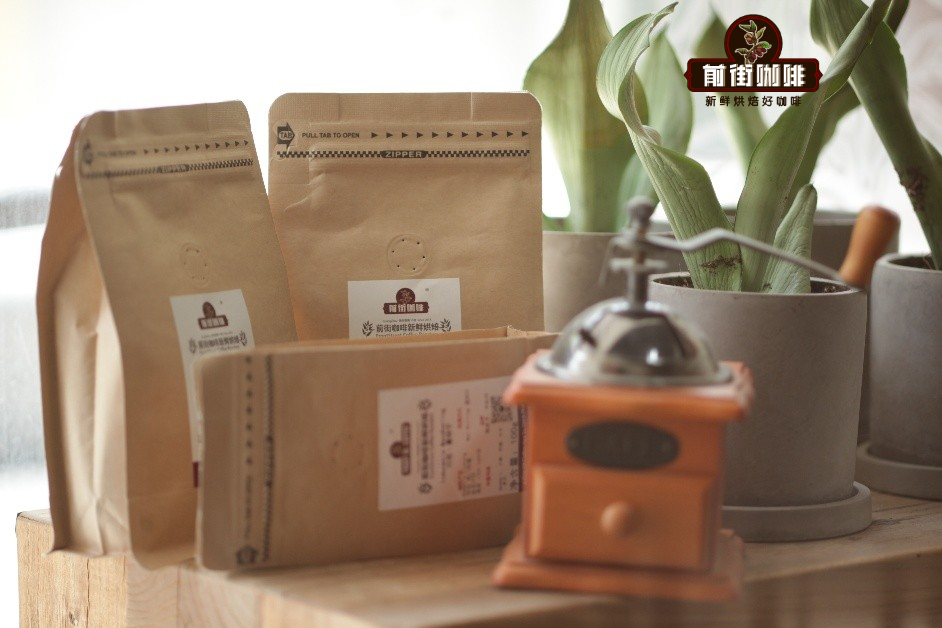
Fresh roasting is also a key promotional focus for Front Street. Even beginners just getting into coffee should understand that freshness is crucial for coffee beans. After roasting, coffee beans continue to release gases such as carbon dioxide produced during roasting for a period of time; when release reaches a certain level, the coffee's flavor peaks, and that is when it tastes best. For this reason, Front Street places great importance on fresh roasting. Usually, after customers place an order on Taobao, Front Street's roasters complete the roasting the same day and ship it the same day, ensuring that when it reaches the customer's hands, the roast date is no more than 5 days earlier.
You can probably feel it too—there are countless high-quality coffee beans, and only the one that suits you best is the best. Some people prefer coffee beans with floral and fruity notes, some are fond of fermented winey aromas, and others lean toward traditional, rich coffee flavors. For different consumer groups, Front Street briefly introduces 10 coffee beans here.
Let's start with Front Street Yirgacheffe, suitable for coffee enthusiasts who are just starting out. Note that many coffee beans are named after their origin, place name, estate, or variety, and Yirgacheffe is no exception—it is an administrative center district in Ethiopia's Sidama Province. Because the coffee from this area has a strongly identifiable terroir flavor, it was separately designated as the Yirgacheffe origin. The Yirgacheffe Coffee Farmers' Cooperative Union was also established here, currently with 28 cooperatives covering more than 45,100 farmers. Front Street currently sells four Yirgacheffes in its stores: Front Street Natural Red Cherry, Front Street Gutingding, Front Street Worka, and Front Street Konga.
Front Street recommendation: Front Street Yirgacheffe Red Cherry
In 2007, the Dutch trader Trabocca launched the Red Cherry project to incentivize coffee farmers to produce the finest coffee and to reward their efforts, regardless of whether washed, semi-washed, sun-dried, or semi-sun-dried processing was used (about 1,500 to 3,000 kg). The coffee must be carefully hand-picked in batches, 100% ripe red cherries (hence the name Red Cherry project). Front Street's Natural Red Cherry participates in this program, and its green beans are of outstanding quality, with citrus and berry flavors in the cup, mixed with a hint of fermented fruit.
Front Street recommendation: Front Street Yirgacheffe Gutingding
Gutingding Cooperative is located in the Worka region at the southeastern end of Yirgacheffe and was originally part of the Worka region cooperative under the Yirgacheffe Union. As the market's demand for traceability of green coffee increased, independent single origins were discovered one by one, and Gutingding Cooperative became independent as a result. It is one of the earliest village areas to be processed separately, and many smallholder farmers are also members of the Worka cooperative, so the coffee cultivation techniques are quite solid. Gutingding Cooperative is hailed as the last pure land of Yirgacheffe, and the processing methods it uses are quite traditional.
Front Street recommendation: Front Street Yirgacheffe Worka
Worka Cooperative was founded in 2005 and joined the famous Yirgacheffe Coffee Farmers' Cooperative Union (YCFCU) the same year, becoming known for producing high-quality natural Yirgacheffe. Worka Cooperative has about 300 coffee farmers under it. Front Street Worka coffee shows lemon-like acidity, jasmine aroma, and a finish with a faint black tea note and sucrose sweetness.
Friends who like coffee beans with prominent sweetness, please look here too. Honey processing is a method of sorting coffee cherries after picking; like other processing methods, it first removes the skin and pulp, then dries the beans with the mucilage layer rather than washing the mucilage off. As a result, the fermentation degree is lower, and not much of the sugar in the fruit is converted into acid. Costa Rican honey-processed coffee is relatively common, and here are two for you:
Front Street recommendation: Front Street Costa Rica Blackberry
Front Street Costa Rica Blackberry is a bean many friends particularly love, with sweet floral notes accompanied by berry flavors such as dried blueberry and grape, a distinct fermented aroma, and a finish reminiscent of blackcurrant juice that is utterly addictive. According to Front Street, this Blackberry coffee grows in Costa Rica's Tarrazú region, where the environment is very suitable for coffee cultivation: abundant rainfall, fertile volcanic soil, and an average altitude of 1,700 to 1,800 meters. In addition, Front Street also offers coffee beans presented through honey processing in the Front Street Costa Rica Musician series.
Front Street recommendation: Front Street Costa Rica Mozart
This is a bean from Front Street's Musician series, from Costa Rica's Tarrazú region. Costa Rican coffee is mainly divided into 8 major regions, and this coffee is grown at Canet Estate. It has complex floral and fermented aromas, and the raisin sweetness and berry notes have won this coffee the affection of many customers. Of course, the same goes for the other Musician series coffee beans Front Street has acquired—you might as well try them and look for the differences among them.
For those who prefer traditional coffee flavors, the next two beans can be called good news for lovers of bold tastes. As is well known, influenced by the coffee culture in textbooks, traditional Japanese coffee most推崇 dark roasting, while light-roast coffee with richer flavor expression, although it has not been popular in China for very long, quickly captured half the market. At present, Front Street's young consumers almost all prefer light-roast coffee beans with richer flavors. If you happen to be the exception, then you must not miss Front Street PWN Golden Mandheling on Front Street's bean list. Compared with other Mandhelings, Front Street Golden Mandheling has a stronger sweet aftertaste and sucrose aroma.
But did you know? Not all Mandheling can be called Golden Mandheling; only Mandheling purchased by PWN can be called truly Front Street Golden Mandheling. So how do you prove that the Golden Mandheling you bought is authentic? Front Street offers two ways here: ask the seller for two things—the PWN mark on the coffee jute bag and the factory certificate for Front Street PWN Golden Mandheling.
Front Street's baristas believe that Front Street Golden Mandheling has a fine herbal note, more prominent caramel sweetness, calmer and more elegant fruit acidity, rich sweetness, a full body, and wild spice flavors. Usually Front Street Lindong Mandheling is best roasted until after second crack before being released, which can reduce off-flavors; but Front Street Golden Mandheling can show good transparency and sweetness when released before second crack, leaving broader room for roasting interpretation.
If you find Front Street Mandheling's mouthfeel too intense for you, then we recommend trying Front Street Brazilian coffee. Its difference from Mandheling is that Brazilian coffee beans lack the natural herbal flavor of Indonesian coffee and present more nutty flavors and mouthfeel. What they have in common is that both are low in acidity; the difference is that Brazilian coffee develops a slight acidity after the temperature drops.
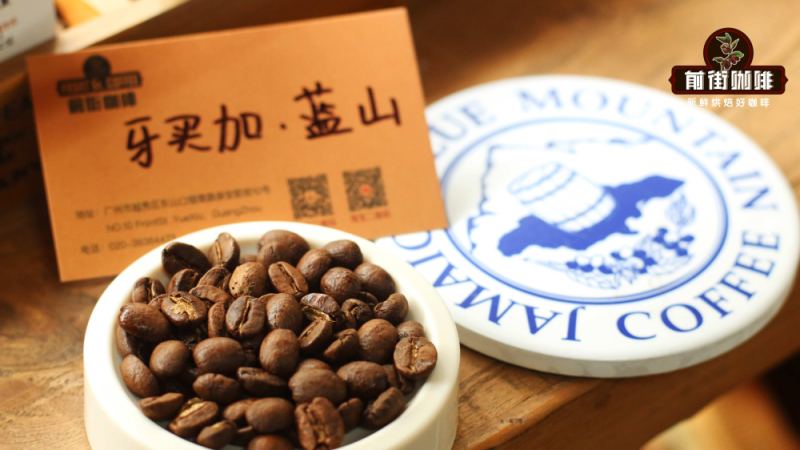
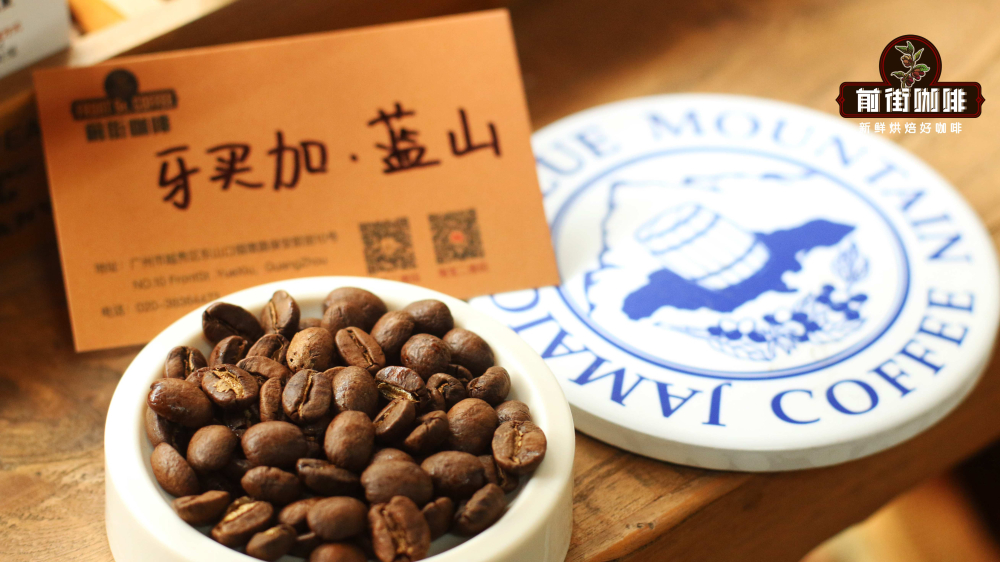
If you are looking for coffee beans with balanced flavor, then Front Street Blue Mountain coffee is your best choice. The Blue Mountain coffee Front Street has acquired is a Front Street Blue Mountain No. 1 coffee bean from Jamaica's Blue Mountain Clifton Estate, with an elegant flavor and a very balanced sweet, sour, and bitter profile. It's just that for many coffee lovers, the price of 198 yuan for 100 grams is a bit unfriendly. But don't worry, Front Street has prepared Front Street Paradise Bird coffee beans, known as "Little Blue Mountain." This coffee comes from Papua New Guinea, and Front Street's price is 88 yuan for 227 grams. Like Front Street Blue Mountain coffee, it belongs to the Typica variety; the difference is that its acidity is a bit higher than Blue Mountain coffee, but it still has that tongue-coating feel and sufficient body.
The above are the ten most suitable and most popular single-origin coffees that Front Street has selected and recommended based on regional flavors. We hope they can help you on the screen get started with specialty coffee and drink delicious coffee that matches your taste.
The above content is compiled by CoffeeHunters, a coffee news website.


