







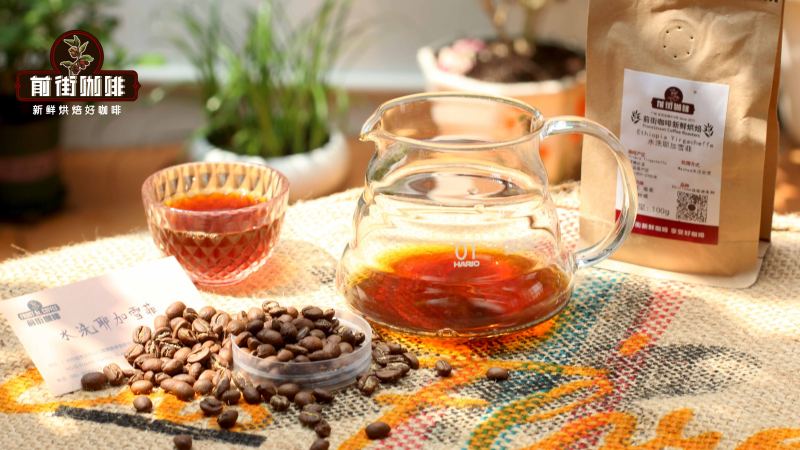
What makes the washed Yirgacheffe coffee beans process stand out?
Yirgacheffe, a region in Ethiopia, is known for coffees with a floral aroma and citric, lemon-like acidity that many drinkers find fresh and clean. Washed processing uses water and fermentation to remove the fruit before drying, which is what gives these beans that bright, clean character and makes them a common entry point for people new to specialty coffee.
The region sits in Ethiopia, the birthplace of the arabica coffee bean, and was once part of the Sidama area before being separated out for its distinct cup. For pour-over at home, expect light-bodied, tea-like brews; published guidance suggests using a medium grind and moderate water temperature to keep the floral notes intact.
In the coffee world, Yirgacheffe's status, to put it in Front Street's words, is like a cup of nectar that blends flowers and fruit. Its signature floral aroma and citric acidity are so fresh and clean that one momentarily struggles to find suitable words to describe it. Front Street has always believed that this bean is very suitable for friends who are just getting into specialty coffee—it clearly sets itself apart from espresso, and is like a "coffee that doesn't taste like coffee," capable of breaking people's fixed preconceptions about coffee and awakening both taste buds and sense of smell with a flower-like aroma. This article will start from the origin story of Yirgacheffe, gradually break down the complete process and flavor characteristics of the washed processing method, and provide Front Street's specific brewing plan for Washed Gudingding, helping you consistently reproduce that bright, clean washed Yirgacheffe at home.
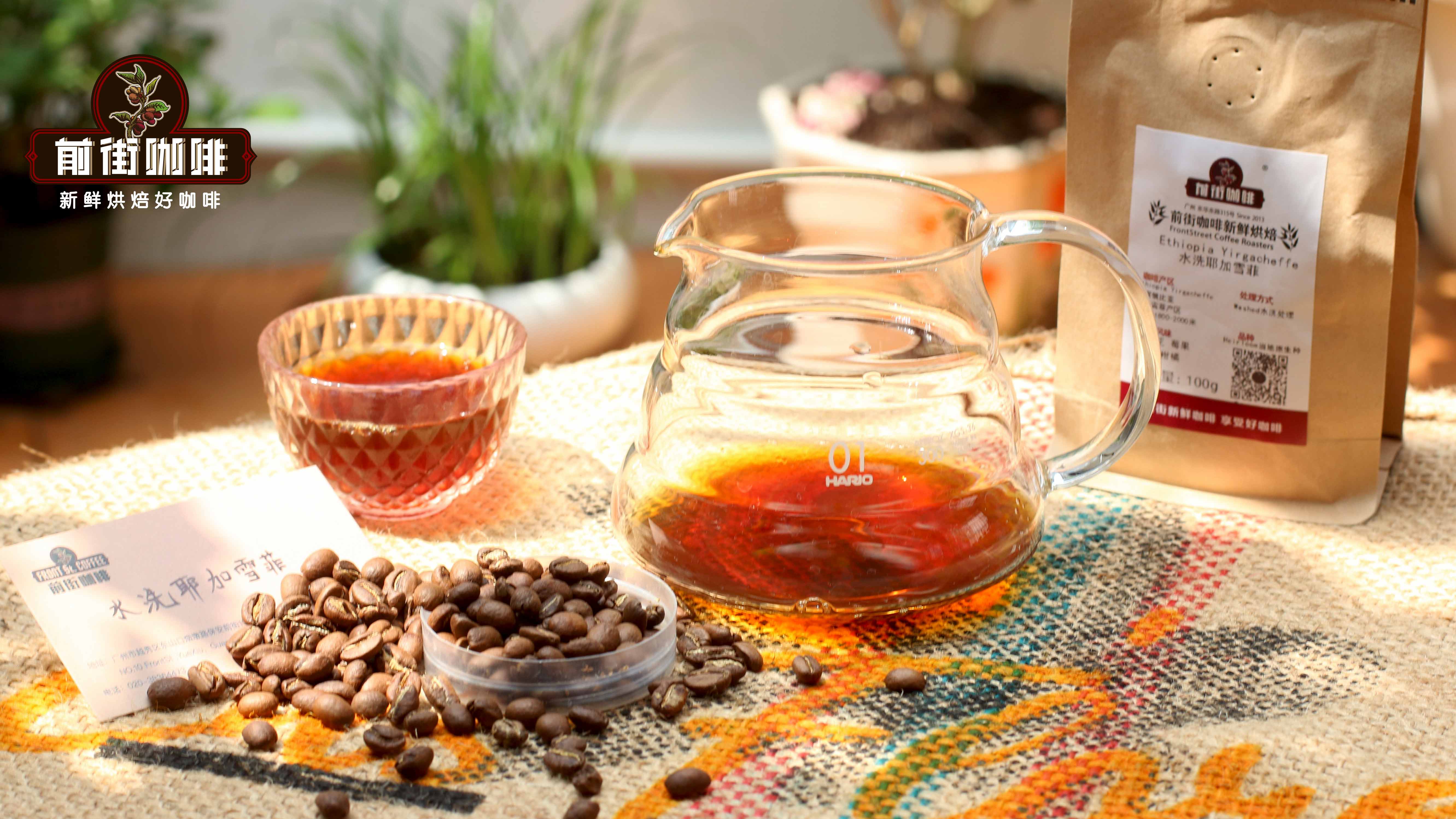
Front Street Washed Yirgacheffe Birthplace Brewing Introduction Flavor and Mouthfeel Characteristics
What kind of existence exactly is Ethiopia's Yirgacheffe? Front Street's answer is: a fine brew woven from flowers and fruit. The most impressive thing about Front Street Yirgacheffe is that floral aroma and lemon-like acidity, a fresh and clean flavor experience that is hard to describe precisely with ready-made vocabulary. Front Street thinks it is suitable as a beginner's entry option for two reasons: first, it is clearly different from espresso; second, it is like a "coffee that doesn't taste like coffee," able to overturn the public's existing impression of coffee and bring you that relaxed, exhilarated feeling when flowers lightly touch your taste buds and nasal cavity.
Yirgacheffe's producing area is located in Ethiopia, the birthplace of Arabica coffee beans. This place was originally a natural wetland, so the name Yirgacheffe originally means "let us take root and live on this wetland." It originally belonged to the Sidama producing area, and only later, because coffee beans produced around Yirgacheffe town had a unique floral aroma and citrus notes, was it separated out and became an independent famous producing area in Ethiopia. Today, very few people still search for Yirgacheffe coffee beans using "Yirgacheffe Sidama."
Washed Method
The washed method is a processing method that uses water and fermentation to remove the skin, pulp, and mucilage. Farms using the washed method must build washing channels and be able to continuously introduce flowing fresh water. During operation, the fermented beans are put into the channel and repeatedly pushed, relying on friction between beans and the scouring force of the water flow to wash the coffee beans until they are smooth and clean. After washing, the coffee beans are still wrapped in the parchment layer, with a moisture content of about 50%. At this point they must be dried to reduce the moisture content to 12%, otherwise the beans will continue to ferment and then mold and rot. The more ideal processing method is sun drying. Although the process is cumbersome and takes 1 to 3 weeks, the flavor performance is exceptionally outstanding and highly popular.
What steps does the washed processing method include?
Washing Collection/Flotation/Rinsing—Depulping/Pulping—Fermentation/Demucilaging—Washing—Drying—Storage
What are the specific procedures for each step:
Washing Collection/Flotation/Rinsing: After coffee cherries are picked, they are immediately sent to processing, usually within 6 to 12 hours after harvest. The cherries are first weighed and classified, then poured into a water tank to soak, with the purpose of picking out fruits that float on the surface due to poor quality.
Depulping/Pulping: Next, the coffee cherries are sent into a pulper to remove the outer skin. This step is to separate the outer skin and pulp part of the coffee cherry.
Fermentation/Demucilaging: The coffee fruit with the pulp and skin removed is transferred to a fermentation tank or fermentation barrel and left to ferment for 18 to 36 hours, depending on the temperature during fermentation. During fermentation, yeast produces enzymes, and lactic acid bacteria break down the sugars in the coffee mucilage. Lipids, proteins, and acids in the sugars degrade and are converted into alcohol acidic acids. The coffee's smell, color, and pH value change accordingly, and the composition of the mucilage also changes.
Washing: After fermentation and demucilaging, the coffee cherries are washed in a tank with an appropriate amount of water. During washing, stirring removes the mucilage decomposition products attached to the bean surface. After washing is completed, what remains is the coffee parchment layer, silver skin, and green beans.
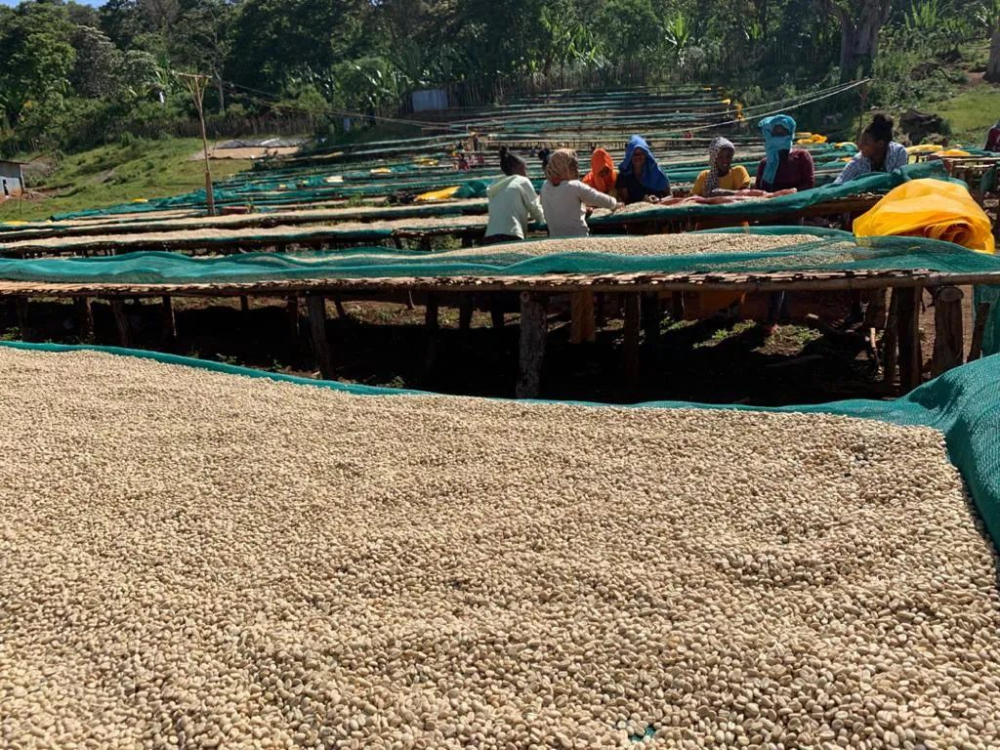
Drying: After washing, the coffee beans are sorted to remove defective beans. They are then sent to a drying place (tarpaulin, concrete ground, raised beds, etc.) for drying. The drying time is affected by factors such as the environmental climate, generally ranging from 5 to 14 days. At this point, the moisture content of the coffee beans drops from 55% to 11%.
Storage: The dried coffee beans are called parchment coffee—that is, green coffee beans with the parchment layer still attached. Parchment coffee is sent to a warehouse for storage and is hulled before export.
What are the characteristics of coffee beans processed by the washed method?
Front Street Coffee believes that washed coffee has more prominent acidity, better cleanliness, moderate mouthfeel, and the most consistent green bean quality. African coffee producing areas generally use the washed processing method, and washing allows coffee beans from African producing areas to better display citrus-like bright acidity. To taste washed coffee, Front Street recommends Front Street Washed Gudingding as the first choice. After multiple processing steps, besides having the white floral aroma and lemon-like sweet acidity unique to Yirgacheffe, it also has honey-like sweetness, a nutty and creamy smooth texture, and a green tea-like finish.
How to brew coffee beans processed by the washed method?
When roasting washed coffee beans, Front Street Coffee generally uses a medium-light roast. A medium-light roast can retain more of the acidity in the coffee beans, allowing the beans to clearly present a clean and bright acidity after roasting. Therefore, when brewing medium-light roasted coffee beans, Front Street Coffee recommends controlling the water temperature at 90-91°C. If the water temperature is too high, medium-light roasted beans will extract unpleasant flavors such as woodiness; if the water temperature is too low, the acidity flavors cannot be fully extracted. Below, taking Front Street Ethiopia Gudingding from Front Street's bean list as an example, here is a brewing demonstration.
Front Street Washed Gudingding Yirgacheffe Coffee Beans
Country: Ethiopia
Producing Area: Yirgacheffe
Altitude: 1800-2000 meters
Processing Method: Washed processing
Variety: Local heirloom varieties
Front Street Coffee Brewing Parameters
Grind setting: Fuji Royal 3.5 Water temperature: 90°C Pour in 25g of water for a 30-second bloom, pour to 120g of water for a staged pour, and finish brewing at 226g. Total time: 2 minutes 05 seconds.
The V60 conical dripper has a relatively large opening, and together with its unique spiral curved ribs, air is more easily released, thereby improving extraction quality. The mouthfeel may not be thick enough, but its high concentration brings bright acidity and a distinct aroma, which is a major highlight. It can also be paired with different pouring methods, as well as the Kalita three-hole trapezoidal dripper 0 transparent resin.
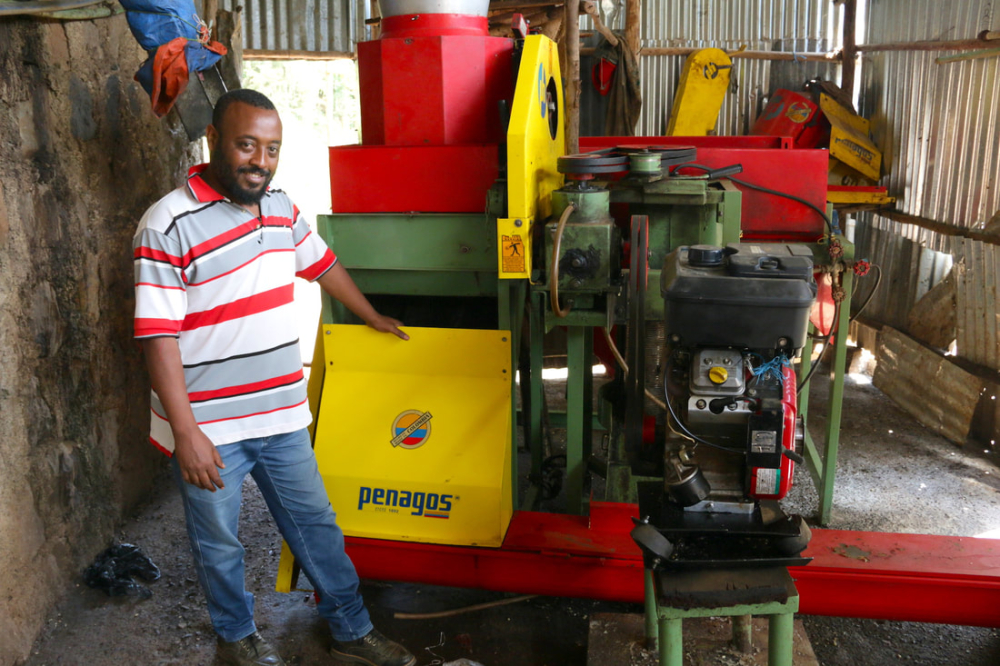
Flavor: The aroma is lemon and nuts; on the palate there is lemon acidity, clear sugarcane sweetness, with a faint floral aroma, and a oolong tea-like finish.
The above content is compiled by CoffeeHunters, a coffee news website.


