








Which Spanish coffee names are worth knowing?
Café Bombón comes from Valencia and uses a simple 1:1 ratio of espresso to condensed milk, poured so the two stay layered. The Spanish latte, despite the name, has no real link to Spain; it is a latte with condensed milk added. Vietnamese drip coffee is the other well-known condensed milk drink, built on Robusta.
Condensed milk is milk with sucrose added, then concentrated, so it is far sweeter and thicker than regular milk and contains real dairy, unlike non-dairy creamer. For a Spanish latte, full-bodied Italian-style beans work well; a blend of Brazil and Colombia with a little Robusta gives nutty aroma and a low-acid, full-bodied cup. Coffee from Spain follows similar sweet, milk-heavy habits.
Adding sugar or milk to coffee has long been commonplace, but pairing coffee with condensed milk is equally distinctive. This article starts with the basic concept of condensed milk, first introducing the condensed milk way of drinking Vietnamese drip coffee, then focusing on Café Bombón from Valencia, Spain, explaining its simple 1:1 recipe of espresso and condensed milk and the layering principle, before extending to the familiar Spanish latte—which actually has no connection to Spain, but is simply a latte with condensed milk added. The article also explains that to make a Spanish latte, you should choose full-bodied Italian-style beans, and recommends Front Street Coffee's commercial blend, which combines Brazil and Colombia with a small amount of Robusta, presenting nutty aromas and a low-acid, full-bodied taste.

For more specialty coffee knowledge, please follow the WeChat public account: Front Street Coffee (FrontStreet Coffee)
Adding sugar or milk to coffee is a fairly common practice—after all, not everyone can happily accept coffee's bitterness, and adding sugar or milk can weaken the bitterness and make coffee easier to drink. Of course, coffee can be paired with more than just sugar and milk; as long as you dare to experiment, even ice cream can be added (such as affogato). Today, Front Street would like to talk with everyone about the way of drinking coffee paired with condensed milk.
First, let's explain what condensed milk is. Generally speaking, condensed milk is a product made by adding sucrose to milk and then concentrating it. Its sweetness and viscosity are far higher than ordinary milk, and it is completely different from creamer. Creamer is actually non-dairy creamer, which contains no milk ingredients.
Vietnamese Drip Coffee
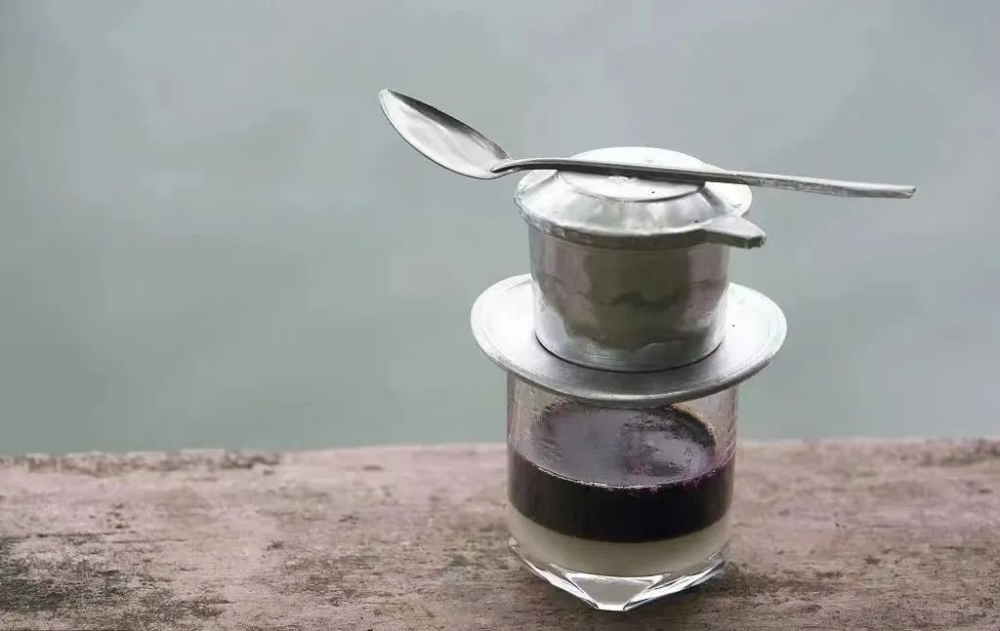
When "coffee + condensed milk" is mentioned, most people first think of Vietnamese drip coffee. Vietnam is a major coffee-producing country, but what it produces is Robusta beans. During roasting, substances such as cream and butter are added, and the roasted coffee beans come out shiny and oily with a rich milky aroma. This type of coffee bean is rich in oils, but its burnt bitterness is also quite prominent. Therefore, a local specialty drink is made by first putting an appropriate amount of condensed milk into the cup, then placing the drip filter over the mouth of the cup, pouring in hot water and covering it with the lid, and waiting quietly for the coffee liquid to finish dripping naturally.
When drinking, you need to use a spoon to stir together the condensed milk settled at the bottom of the cup and the black coffee on top. The sweetness and richness of the condensed milk offset the strong bitterness of the Robusta black coffee, ultimately producing a cup of milk coffee that has both coffee flavor and the sweet fragrance of lactose.
Café Bombón
"Coffee + condensed milk" is not a way of drinking unique to Vietnam. Far away on the Iberian Peninsula, Spain also has this pairing. In Valencia, Spain's third-largest city, you can order a coffee called "Café Bombón," which is actually a small cup of drink made by combining espresso and condensed milk.
The method is very simple. Choose a 90 to 120 ml glass cup; using a glass cup is for a more beautiful final product. Pour in condensed milk according to a 1:1 ratio of espresso to condensed milk. For example, if the espresso liquid used by Front Street is 40 grams, then add 40 grams of condensed milk as well. Then pour espresso on top of the condensed milk. Because condensed milk has a higher density, without external stirring it is difficult for the espresso to mix with the condensed milk, thus forming a very beautiful "black-and-white pairing" effect.
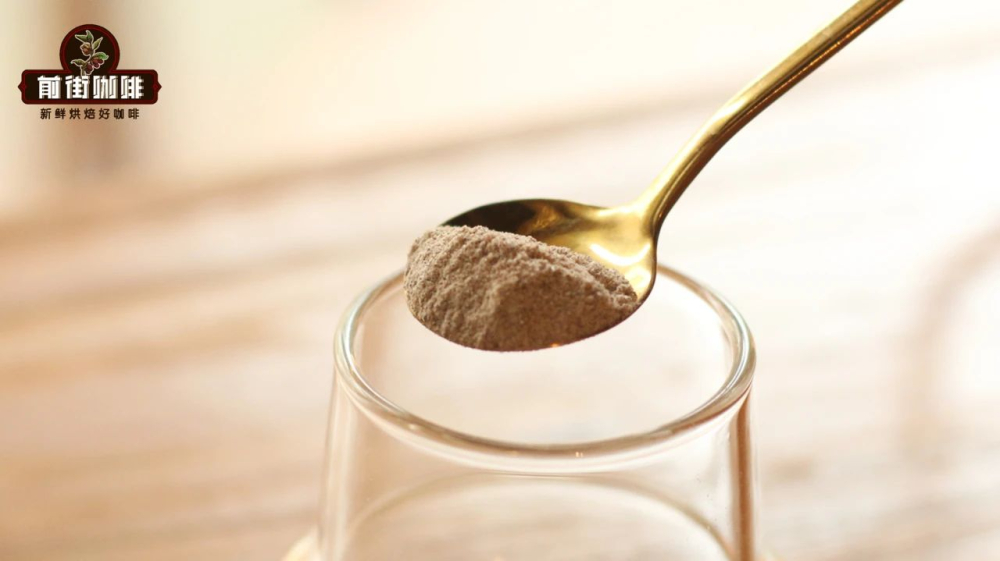
When drinking, you still need to gently stir it evenly with a spoon. The first sip feels like "turtle jelly paired with condensed milk." The mouthfeel is much thicker than drinking espresso directly, and there is no longer any bitterness.
Spanish Latte
The Spanish latte should be a "coffee + condensed milk" drink that everyone is relatively familiar with. However, apart from having the word "Spanish" in its name, the Spanish latte actually has nothing to do with Spain.
The Spanish latte is made up of espresso, milk, and condensed milk. Simply put, it is an ordinary latte with condensed milk added.
Because condensed milk is added, full-bodied Italian-style beans should be chosen to make a Spanish latte. If you want to make a taste consistent with coffee shops, or aspire to become a shop owner, then Front Street's commercial blend is the first choice. Compared with other Italian-style coffees, Front Street's commercial blend uses the classic combination of Brazil and Colombia, then adds a small amount of Robusta, adding the finishing touch to the original flavor layers. The coffee presents complex nutty aromas such as almonds, apricot kernels, and walnuts, with good crema flow, a low-acid and full-bodied taste, and combined with its price advantage, it is undoubtedly the best choice for opening a shop.
For friends who cannot quite accept coffee's bitterness, the Spanish latte is undoubtedly a good choice. Adding condensed milk can cover more of the coffee's bitterness while highlighting the sweetness of lactose and sucrose. Compared with adding syrup for flavoring, the method of adding condensed milk is more natural and more comfortable.
The above content is compiled by CoffeeHunters, a coffee news website.


