








What happens when green coffee beans ferment in rum barrels?
Barrel fermentation began at Finca San José in Colombia, where the estate's third-generation female owner first placed green coffee beans into rum oak barrels for low-temperature fermentation. The farm sits at 1,750 meters in Caldas, spans 18 hectares with 16.5 under coffee, and grows Castillo, processed as refined washed and then rum barrel fermented. The lot is graded Supremo.
The method echoes barrel-aged lots from Finca Mocha in Honduras, but San José came first. Brewing trials at three water temperatures show how extraction shifts the cup, from brighter fruit to deeper rum-and-spice notes. For home brewers, water temperature and grind are the main levers when dialing in a barrel-fermented coffee like this one.
In the specialty coffee world, barrel fermentation has drawn much attention in recent years, and the origin of this technique can be traced back to Finca San Jose in Colombia. The third-generation female owner of the estate was the first to try placing green coffee beans into rum oak barrels for low-temperature fermentation, pioneering a distinctive processing method. This article will provide a comprehensive introduction to Finca San Jose's growing region background, the development of the Castillo variety, the specific process of refined washed processing combined with rum barrel fermentation, and compare its flavor differences with the barrel-aged beans from Finca Mocha in Honduras. At the same time, Front Street Coffee will share the optimal extraction parameters and flavor performance of this bean through brewing experiments at three different water temperatures, helping coffee enthusiasts gain a deeper understanding of this unique Colombian coffee.
In today's specialty coffee market, the two barrel-fermented coffee beans produced by Finca Mocha in Honduras have won the favor of many coffee lovers. However, barrel fermentation was not pioneered by Finca Mocha—the true inventor of this technique was the female owner of Finca San Jose in Colombia. Next, Front Street Coffee will take everyone to learn more about the rum barrel-fermented coffee beans from Finca San Jose.
Front Street Coffee: Colombia Finca San Jose Coffee Beans
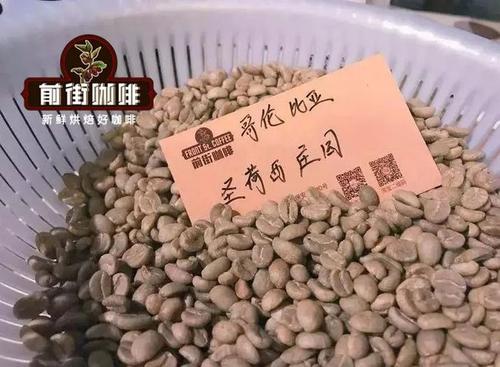
Region: Caldas, Colombia Estate: Finca San Jose Altitude: 1,750 meters Grade: Supremo Variety: Castillo Processing Method: Refined Washed Rum Barrel Fermentation
Finca San Jose
Finca San Jose Estate has a century-long history and is located in the Caldas region of Colombia. This area enjoys abundant sunshine, with an average annual temperature maintained between 21°C and 25°C. The estate covers a total of 18 hectares, of which 16.5 hectares are dedicated to coffee cultivation.
In recent years, with the rise of the specialty coffee trend, Finca San Jose has always actively sought breakthroughs, striving to carve out a distinctive path of development. This also created the opportunity for the later emergence of barrel fermentation.
The Birth of Barrel Fermentation
According to Front Street Coffee, the barrel fermentation method at Finca San Jose was developed by the third-generation female owner of the estate. The story began with an accident: while accompanying her husband (who was engaged in making rum oak barrels and brewing rum) in filling rum distillate to prepare for fermentation, the lady Monsalve Botero suddenly had an idea—if green coffee beans were placed in oak barrels to ferment, could they produce a different flavor?
Driven by this idea, Monsalve Botero began in 2013 placing green beans into rum barrels of different ages for wine-style low-temperature fermentation, and compared the fermentation flavors at different time periods. Through repeated experiments, she screened out the most suitable barrels and fermentation duration, and finally succeeded in finding the best combination, obtaining a unique and satisfying flavor, thus creating a rum barrel-fermented coffee different from traditional washed coffee. So what is the specific process of this processing method? Front Street Coffee will share the details with fellow coffee fans below.
Refined Washed Processing + Rum Barrel Fermentation
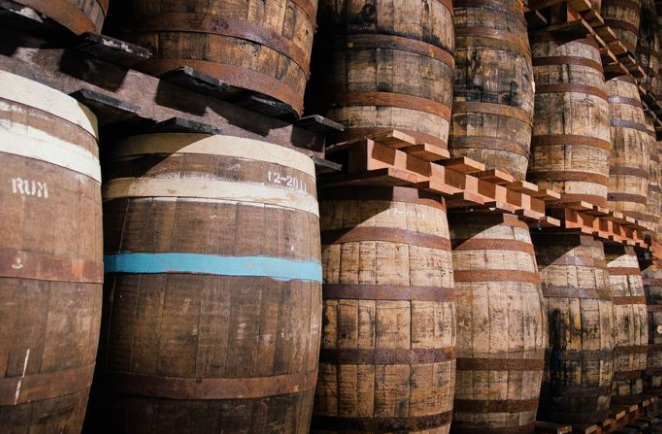
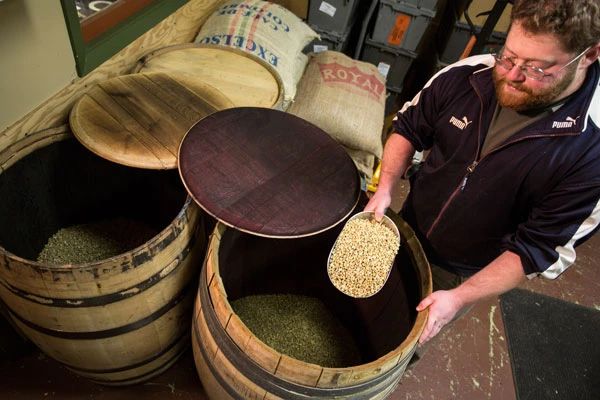
The owner of Finca San Jose selects Castillo variety coffee beans, hand-picks fully ripe coffee cherries, ferments them for 20 hours after full washing, then places them into rum oak barrels aged over 8 years, letting the beans rest for three months, turning them once a day so they evenly absorb the aroma of the liquor.
During barrel fermentation, samples of the coffee beans in the barrel are taken every 30 days to confirm the degree of fermentation and whether the liquor aroma absorption is complete, avoiding under-absorption or over-absorption, and ensuring that the coffee beans' characteristics are more distinct and complete when finally finished. After fermentation ends, the coffee beans with rum flavor are sent to a greenhouse for drying. The greenhouse has an even temperature, which prevents secondary fermentation of the coffee beans caused by the high temperatures of sun-drying on African raised beds.
Since this Colombian Finca San Jose coffee bean uses the same processing method as the two Honduran coffee beans at Front Street Coffee, Front Street Coffee conducted a cupping comparison between them. The results showed that the flavor presentation order of the two Honduran barrel-fermented coffee beans is: first the liquor aroma, then soft fruit acidity, and finally a creamy mouthfeel along with nutty and cocoa flavors.
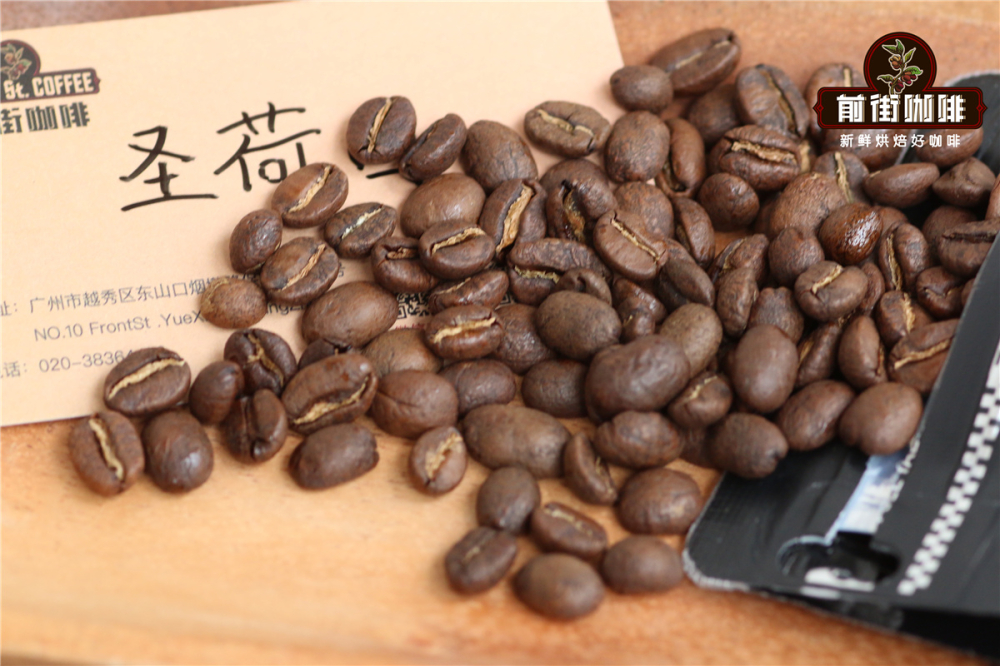
While this Finca San Jose rum barrel-fermented coffee bean presents first nutty and cocoa flavors with a creamy mouthfeel, immediately followed by rum aroma, then tropical fruit acidity and maple syrup sweetness appearing one after another.
Colombia Finca San Jose Coffee Bean Variety
Unlike the varieties of Honduras Sherry and Lychee Orchid coffee beans, Finca San Jose uses the Castillo variety, which is widely grown in Colombia. This variety was developed by Colombia's coffee research institute in 2005 based on enhancing plant disease resistance, and is currently the main cultivated variety in Colombia. The green beans of this coffee are blue-green in color and smell of rich fermentation and ripe fruit aromas.
The Development History of the Castillo Variety Coffee
According to Front Street Coffee, the origin of this variety can be traced back to 1961, when CENICAFE began researching the Timor variety, which has Robusta lineage. Subsequently, CENICAFE continued to advance its research and development, releasing its second disease-resistant variety Tabi (a cross of Typica, Bourbon, and Timor) in 2002.
In 2005, they released a new coffee seed named Castillo, taken from the name of the scientist who led the research, Jaime Castillo Zapata. Finally, after the large-scale outbreak of coffee leaf rust in 2008, Colombia began vigorously promoting the cultivation of the Castillo variety.
Colombian Coffee Bean Grades
Of course, according to Front Street Coffee, Colombia also has its own unique coffee bean grading system, and this Finca San Jose coffee bean from Front Street Coffee is made from the highest-grade local coffee beans. The following are Colombia's coffee bean grading standards:
The above is the relevant information about Finca San Jose coffee beans compiled by Front Street Coffee. We hope this article can help coffee fans gain a deeper understanding of related coffee bean knowledge. In addition, Front Street Coffee conducts extensive brewing tests before launching each new coffee bean. Next, Front Street Coffee will share what flavors Finca San Jose coffee beans present when brewed at different temperatures.
Front Street Coffee Finca San Jose Coffee Bean Pour-Over Parameters Sharing
Front Street Coffee chose three water temperatures for brewing: 92°C, 90°C, and 88°C. This experiment only changed the water temperature, keeping other parameters and techniques as consistent as possible.
Parameters: Dripper: Hario V60, dose 15 grams, medium-fine grind (BG 6M: 58% passing through China standard No. 20 sieve), coffee-to-water ratio 1:15, staged extraction.
[Water Temperature: 92°C] Bloom with 25 grams of water for 30 seconds, pour in a small stream in circles around the center until reaching 126 grams, then pause; when the water level drops and is about to expose the coffee bed, continue pouring with a slightly larger stream until reaching 226 grams; when the water level drops and is about to expose the coffee bed, remove the dripper. (Timing starts from the beginning of the bloom.) Extraction time is 1 minute 40 seconds. Flavor: It smells of rich fermentation aroma, and tastes of chocolate, caramel flavors with soft fruit acidity, with a slight smoky note.
[Water Temperature: 90°C] Bloom with 27 grams of water for 30 seconds, pour in a small stream in circles around the center until reaching 125 grams, then pause; when the water level drops and is about to expose the coffee bed, continue pouring with a slightly larger stream until reaching 226 grams; when the water level drops and is about to expose the coffee bed, remove the dripper. (Timing starts from the beginning of the bloom.) Extraction time is 1 minute 43 seconds.
Flavor: It smells of rich fermented liquor aroma, and tastes of rum, nuts, tropical fruit, dark berries, cream, and an oolong tea sensation, with obvious sweetness and an overall balanced profile.
[Water Temperature: 88°C] Bloom with 28 grams of water for 30 seconds, pour in a small stream in circles around the center until reaching 125 grams, then pause; when the water level drops and is about to expose the coffee bed, continue pouring with a slightly larger stream until reaching 226 grams; when the water level drops and is about to expose the coffee bed, remove the dripper. (Timing starts from the beginning of the bloom.) Extraction time is 1 minute 42 seconds.
Flavor: It smells of a light fermentation aroma, and tastes of chocolate, nuts, citrus, jackfruit, and tropical fruit flavors. The overall flavor leans more toward a fruity profile.
Front Street Coffee Pour-Over Summary
Comparing the Finca San Jose brewed at three different water temperatures, the coffee brewed at 88°C leans toward fruity acidity, while 90°C better showcases this bean's sweetness and balance. Therefore, Front Street Coffee recommends choosing a water temperature of 88°C-90°C for brewing this bean. Why not recommend brewing at a higher temperature? Because this bean is a medium roast, and with its deeper fermentation, the bean structure is relatively porous, so too high a water temperature during brewing can easily lead to over-extraction.
The above is the pour-over sharing compiled by Front Street Coffee. We hope it can help coffee fans make pour-over coffee at home.
The above content is compiled by CoffeeHunters, a coffee news website.


