







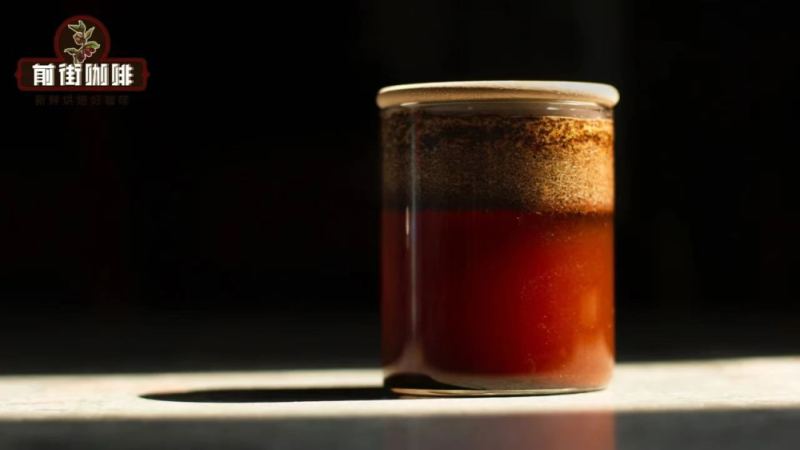
How Do Grind Size and Steep Time Change Cold Brew Flavor?
Sour or weak cold brew usually comes from too coarse a grind, too short a steep, or too much water. The working range is a coffee-to-water ratio of 1:12 to 1:13, a grind close to pour-over coarseness with a 70 to 85 percent pass rate through a No. 20 sieve, and a steep of 8 to 24 hours. Moving grind finer or extending time adds sweetness.
Cold brew is immersion extraction at low temperature, so time sits fully under the brewer's control. Above 1:13 the cup turns flat and thin; below 1:12 it becomes too concentrated to drink comfortably. Because the three variables interact, adjust one at a time. Fine coffee ground too coarsely is the most common reason a home batch tastes sour instead of sweet.
Cold brew has a high extraction fault tolerance, so even without professional equipment, you can easily make a delicious iced coffee at home. However, the coffee-to-water ratio, grind size, and steeping time are interrelated, and even a slight deviation can push the flavor toward blandness or bitterness. This time, Front Street Coffee combines experimental data to clearly explain the logic behind cold brew parameter selection: the recommended coffee-to-water ratio is between 1:12 and 1:13; for grind size, you can refer to pour-over coarseness, and a 70-85% pass rate through a No. 20 sieve is suitable; a steeping time of 8-24 hours is relatively safe. The article will also provide specific flavor performances under different grind and time combinations, along with the complete steps for making Front Street Strawberry Candy Cold Brew.
For more specialty coffee knowledge, please follow the WeChat public account: Front Street Coffee (FrontStreet Coffee)
In Front Street Coffee's view, cold brew is the most suitable type of iced coffee to make at home. Its extraction tolerance is quite high, and even without professional equipment, you can still produce a good-quality result. Recently, a friend happened to ask Front Street Coffee how to determine the grind size and steeping time for cold brew, so today we'll take this opportunity to discuss it in one go.
Although this friend did not mention the ratio issue, the parameters in an extraction plan are inherently interdependent, so the coffee-to-water ratio still needs to be addressed first. Front Street Coffee recommends keeping the cold brew coffee-to-water ratio between 1:12 and 1:13. In Front Street Coffee's tests, when the ratio was higher than 1:13, some coffee beans performed as weak and flat in flavor; when it was lower than 1:12, the concentration became too high and it was not smooth enough to drink.
Next, Front Street Coffee will talk about how to choose the grind size and time. To figure out this issue, you first need to understand the extraction principle of cold brew. Cold brew is essentially immersion extraction, which means the time variable is entirely under our control—steep it as long as you want, and end it whenever you want.
But cold brew has another characteristic: low-temperature extraction. The extraction temperature is like a fixed constant, and if we want the cold brew to be more bright and refreshing or more full-bodied, the two parameters we can adjust are grind size and time. Compared with other extraction methods that require dealing with multiple variables at once, cold brew is the simplest and most friendly.
The principle of grind coarseness is not hard to understand: the finer the coffee grounds are ground, the faster substances are released; the coarser they are, the slower the release. However, Front Street Coffee wants to remind you that cold brew is a long-standing static extraction. If the coffee grounds are too fine, the particles tend to clump together and stick, which instead makes it harder for cold water to contact the coffee substances.
Therefore, overly fine coffee grounds are not suitable for cold brew. After multiple tests, Front Street Coffee found that a coarseness close to pour-over grind size (measured with a No. 20 sieve, with a pass rate between 70-85%) can all be used to make cold brew coffee.
The logic of time is even easier to understand: the longer it steeps, the more total substances the coffee releases, and the stronger the final product naturally becomes. But coffee substances are not better the more they are dissolved. Through experiments, Front Street Coffee found that after steeping for more than 24 hours, cold brew tends to develop bitter flavors like nuts and wood shavings; while at less than 8 hours, the amount of substances released is insufficient, and it will most likely be a weak, coffee-flavored water. So the relatively safe cold brew steeping range is 8-24 hours.
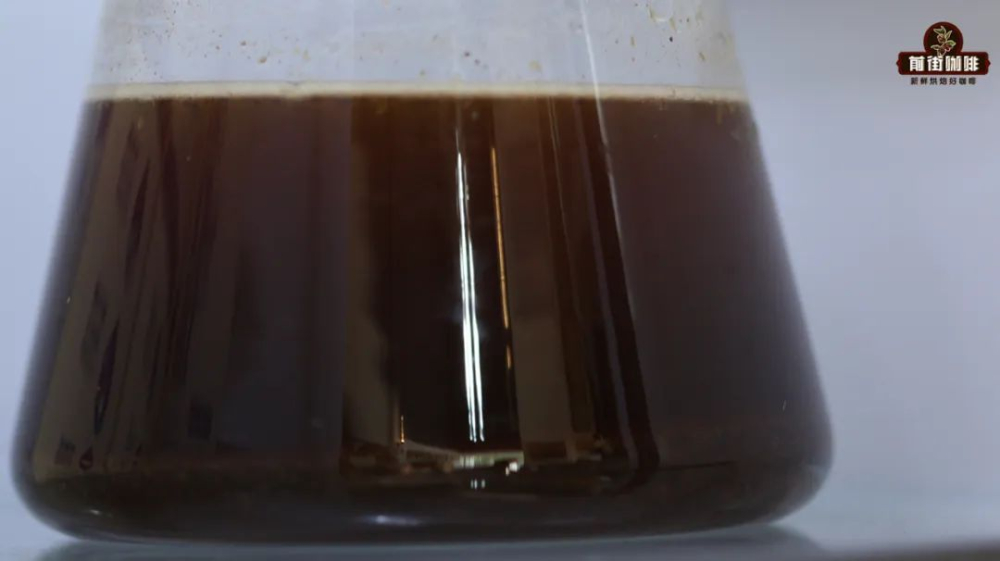
At this point, someone might ask: from 8 to 24 hours, there is a 16-hour difference in between—wouldn't the flavor difference be huge? When we make espresso, a 1-second difference can already make the flavor noticeably different; when brewing pour-over, a 20-second difference can also be distinguished. That is because espresso uses high-temperature pressure extraction, and pour-over also uses high temperature plus agitation to improve extraction efficiency. But cold brew's water temperature averages only 4-10 degrees Celsius, so the extraction efficiency is very low. In addition, the coffee grounds and water are basically static, with no external force driving them, so the flavor substances the coffee grounds can release are quite limited.
Steeping for 8 hours: the coffee flavor is bright in acidity and refreshing.
Steeping for 16 hours: the coffee flavor is relatively round and full, with plenty of sweetness and acidity.
Steeping for 24 hours: the coffee flavor and mouthfeel are relatively thick, rich, and balanced.
If the grind size range (70-85% pass rate through a No. 20 sieve) is divided into three levels—coarse, medium, and fine—and the time range (8-24 hours) is divided into three levels—short, medium, and long—then reasonable cold brew plans can be paired as follows:
The safest approach is coarse grind with long extraction, suitable for people who cannot be bothered with calculations. For example, if you are free at this time today, you will most likely also be free at the same time tomorrow, saving the trouble of calculating and making it harder to forget that you still have cold brew steeping.
If you want to save time, you can use medium-fine grind with medium-long time, which can shorten the extraction time accordingly, and the coffee will also perform a bit more refreshingly.
Finally, Front Street Coffee will share its own cold brew making method.
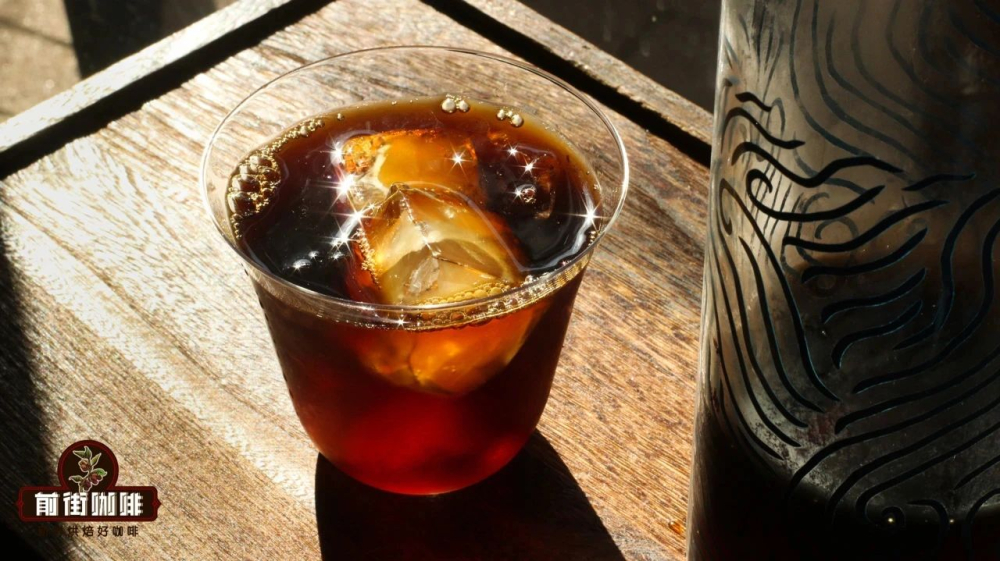
As for coffee beans, Front Street Coffee tends to choose light to medium roast beans. This time we used Front Street Strawberry Candy coffee beans, which are full of juicy fruitiness. For the container, you only need a clean, sealable vessel. Prepare 40 grams of coffee grounds, grind them fine (85% pass rate through a No. 20 sieve), pour them into the container, then add 480 milliliters of cold water, stir evenly with a wooden stick, and cover with the lid.
Refrigerate for 12 hours, then take it out and strain the grounds. The coffee liquid with the grounds filtered out can be drunk directly. You can also pour the filtered coffee liquid into a bottle and continue refrigerating for 4 hours, and the flavor and mouthfeel will be even better.
The Strawberry Candy Cold Brew made this way has a moderately sweet-and-sour taste, with a soft aroma of berries and roses when you drink it, an orange-like sensation filling the mouth, and after swallowing, it is accompanied by the round sweetness of almonds and candied fruit.
The above content is compiled by CoffeeHunters, a coffee news website.


