







What Does Bright Coffee Meaning Have to Do With Yirgacheffe?
Yirgacheffe pours as a bright, tea-like cup with citrus, lemon, and berry acidity plus strong floral aromas, which is what bright coffee meaning points to: clean, transparent acidity rather than bitterness. The Gotiti Cooperative washed beans in this guide show that profile clearly. Brewing uses a V60, 92°C water, 15 grams of coffee, a 1:15 ratio, and medium-fine grind across three pours.
Gotiti sits in the Worka area at the southeastern end of Yirgacheffe and became independent from the Worka Cooperative in 2012 with about 300 farmer members, a shift driven by rising demand for green coffee traceability. Washed processing here involves fermentation, channel washing, and African raised-bed drying, giving the tutorial meaning coffee drinkers need: a reusable pour-over framework.
Yirgacheffe is known for its bright, tangy sweetness of citrus, lemon, and berries, along with rich floral aromas. It is usually roasted to a medium-light level and brewed as pour-over. This article takes Front Street Yirgacheffe Gotiti Cooperative washed beans as an example, breaking down everything from the growing region background and washed processing flow to brewing parameters and blooming technique. You will see how Gotiti became independent from the Worka Cooperative in 2012 and became a representative of Yirgacheffe's specialty micro-regions; you will also learn the details of fermentation, channel washing, and African raised-bed drying in washed processing. The brewing section covers the complete setup of a V60 dripper, 92°C water temperature, 15 grams of coffee, a 1:15 coffee-to-water ratio, and medium-fine grinding, with a three-pour schedule of timing and water distribution to help beginners build a reusable pour-over framework.
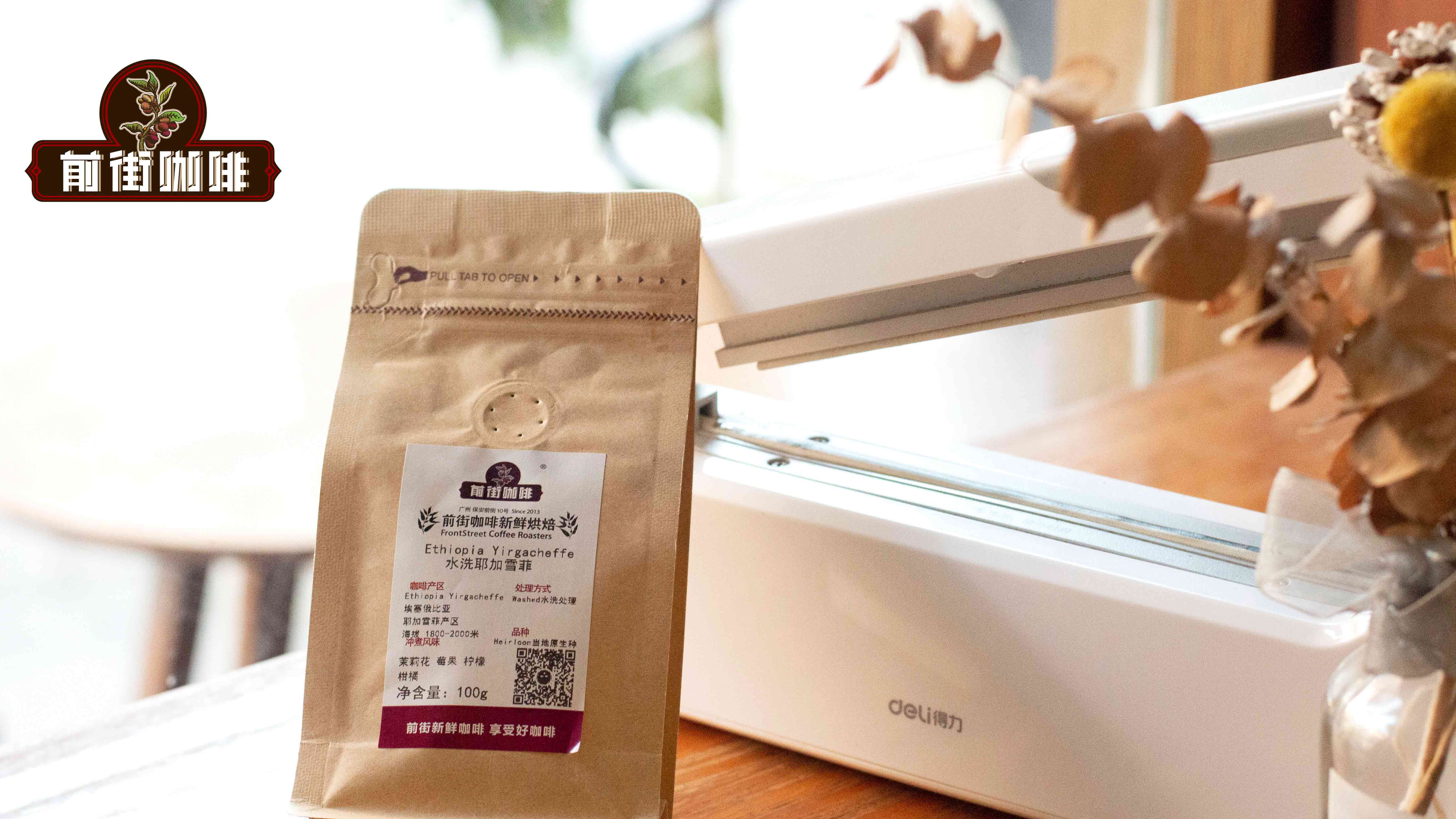
Yirgacheffe has elegant citrus, lemon, and berry acidity, intense floral aromas, and a pleasing tea-like quality, so it is mostly roasted to a medium-light level and enjoyed as a single-origin pour-over. Coffee lovers who have tried Front Street Yirgacheffe know clearly that its flavor is clean, transparent, and bright, with a clean entry and a dry lemon-citrus profile and gentle floral notes. These characteristics are in fact inseparable from the processing method it uses.
The Yirgacheffe region has more than forty cooperatives under its jurisdiction, and coffee farming is mainly based on family operations. The region also includes many well-known micro-regions, such as Kochere, Misty Valley, and Gedeb, all of which have outstanding cooperatives. The Front Street Yirgacheffe coffee beans they produce each have delicate individual personalities, and among them, the one favored by lovers of floral and fruity aromas is Front Street Gotiti Cooperative.
Gotiti Cooperative Banko Gotiti
Gotiti Cooperative is located in the Worka region at the southeastern end of Yirgacheffe and was originally part of the Worka Cooperative under the Yirgacheffe Coffee Farmers Cooperative Union (YCFCU). As the industry's demand for traceability of green coffee beans continued to rise, "single-origin" was gradually uncovered one by one by coffee hunters around the world.
In 2012, Gotiti, with about 300 farmer members, formally became independent and established "Gotiti Cooperative." Gotiti Village was the first village area to be separately delineated, and many smallholders were originally members of the Worka Cooperative, so their coffee production techniques were quite mature. Gotiti Cooperative is hailed as the last pure land of Yirgacheffe, and its green bean processing still follows traditional methods, namely washed and natural.
Yirgacheffe Processing Methods
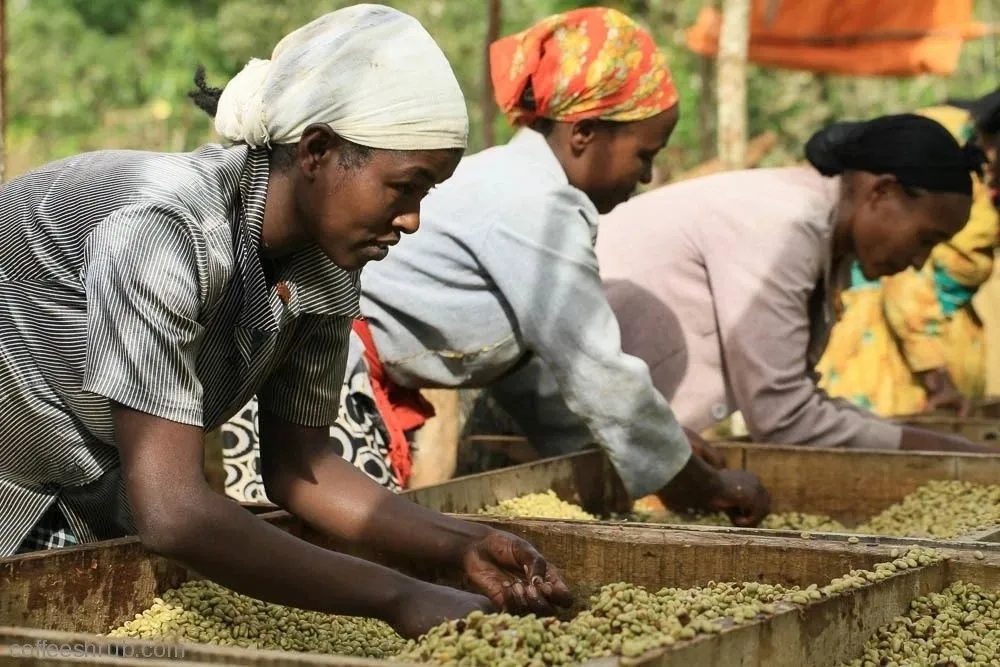
Front Street Yirgacheffe Gotiti Cooperative coffee beans use the washed process. First, a depulper removes the skin and pulp of the cherries, then they are left to rest in fermentation tanks for 18 to 36 hours to break down the mucilage layer, with the specific duration depending on local temperature and humidity. Next, the parchment beans are scrubbed in washing channels for 30 to 60 minutes.

During this process, the channel design works together with the flowing water to remove low-density, poor-quality beans. High-quality parchment beans are placed on African raised beds to dry for about 14 days. After drying is complete, they are first stored in the processing plant warehouse; before export, the parchment beans are sent to a Dry Mill for hulling and undergo a series of complex screening steps such as foreign matter removal, silver skin polishing, gravity sorting, and color sorting, and only then are they bagged for export.
Front Street Washed Gotiti Coffee Beans
Country: Ethiopia
Region: Yirgacheffe Gedeo Zone
Altitude: 1900-2300m
Variety: Heirloom
Processing Method: Washed Grade: G1 Flavor: Berries, cream, honey, citrus, juicy
Before brewing, first gather the following equipment: pouring kettle, dripper, server, grinder, filter paper, electronic scale, thermometer, and a bag of Front Street Gotiti Yirgacheffe coffee beans at their best flavor. Coffee is all about freshness. All coffee beans shipped by Front Street are roasted within 5 days, and 24-hour shipping is supported, so that everyone receives them at their optimal tasting period.
Front Street Yirgacheffe Gotiti Cooperative Pour-Over Parameters
Dripper: Hario V60
Water Temperature: 92°C
Coffee Dose: 15 grams
Coffee-to-Water Ratio: 1:15
Grind Size: Medium-fine (80% passing rate on Chinese standard No. 20 sieve)
The grinder plays a decisive role in pour-over. The coarseness and uniformity of the coffee grounds directly affect the taste of a cup of pour-over coffee. If the grounds are too coarse, it is easy to underextract and produce a weak flavor; if the grounds are too fine, it is easy to overextract and produce a bitter, astringent taste.
When adjusting grind size, Front Street uses a tool—the Chinese No. 20 0.85mm standard sieve. For medium-light roasted coffee beans, Front Street usually uses a 75-80% passing rate, corresponding to fine granulated sugar particles; for medium-dark roasted coffee beans, it uses 70-75%, corresponding to coarse granulated sugar particles. Yirgacheffe is a high-altitude coffee bean roasted to medium-light, and Front Street hopes to extract richer aromatic substances, so it chooses a coarseness with an 80% passing rate on the No. 20 standard sieve. In stores using an EK43s grinder, the setting is 10.
Based on past brewing experience, Front Street recommends that beginners use a three-pour method. Three-stage extraction helps dissolve flavor substances more fully during brewing, increases mouthfeel layers, and avoids overextraction caused by steeping too long. Taking 15 grams of coffee grounds, a 1:15 coffee-to-water ratio, and 225ml total water as an example, the three pour amounts are: 30ml, 95ml, and 100ml, and the weights shown on the electronic scale are: 30g, 125g, and 225g.
First place the folded filter paper into the dripper and fit it snugly, then wet it with water so it adheres better. Prepare hot water and a thermometer, and at the same time pour 15 grams of ground coffee into the dripper, then tare the electronic scale.
For the first pour, add 30g of water to bloom for 30 seconds, and start timing as you begin pouring. Use a small stream throughout, pouring from the center point and spiraling outward, making sure to wet the entire coffee bed.
After 30 seconds, switch to a slightly larger stream and steadily pour the second stage of 95g of water, with the goal of lifting the entire coffee bed. The stream should be poured vertically and evenly. At this point the scale shows 125g, and the pour is finished at around 55 seconds.
When the liquid level drops to halfway, begin pouring the third stage of 100 grams with a smaller stream in a small spiral. Try to keep the spiraling from becoming too wide, otherwise it is easy to disturb the coffee bed and cause underextraction. The final total water amount is 225 grams, and the drip completion time is about 2 minutes. After removing the dripper, swirl the coffee liquid in the server to mix it evenly, and then you can begin tasting.
The water amount for each pour is not fixed and unchanging. We can adjust it based on our accumulated pour-over experience and our understanding of the coffee beans. Front Street understands coffee brewing as an experiment grounded in science. To learn pour-over well, you need to dig into and understand the true meaning behind each brewing parameter. Only then is it easy to find an experimental method and build a brewing framework that suits you.
The above content is compiled by CoffeeHunters, a coffee news website.


