







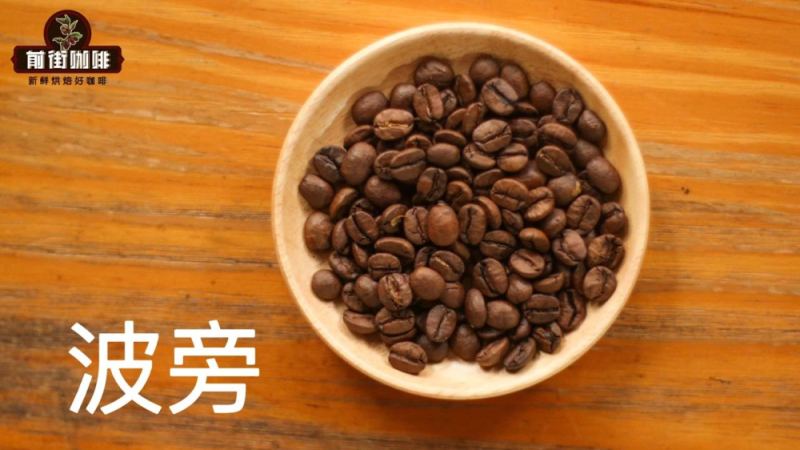
How Do Bourbon Coffee Beans Fit Into the Arabica Family?
Bourbon is one of the oldest varieties within the Arabica species, named after Bourbon Island, now Réunion Island, though it originated in Yemen. Its cherries are short, round, and dense, producing high sweetness, bright acidity, and flavors of cocoa and brown sugar. Bourbon yields roughly 20 to 30 percent more than Typica yet remains a low-yield variety, and it shares Arabica's susceptibility to leaf rust.
The Bourbon family is usually sorted by ripe fruit color: Red, Yellow, Orange, and the rare Pink Bourbon and Bourbon Pointu. Orange Bourbon tends toward richer sweetness, while Yellow Bourbon shows higher acidity. Brazil's Cerrado region grows a well-known Red Bourbon with cocoa and brown sugar notes. Arabica accounts for about 70 percent of global coffee consumption, and coffee seeds of these sub-varieties carry its delicate constitution.
Bourbon coffee is one of the oldest varieties of the Arabica species, sharing fame with Typica yet boasting broader leaves and higher yields. It originated in Yemen and takes its name from Réunion Island; its fruit is short, round, and dense, with prominent sweetness, bright acidity, and flavors reminiscent of cocoa and brown sugar. From the Cerrado of Brazil to Central America, from Red Bourbon and Yellow Bourbon to the rare Pink Bourbon and Bourbon Pointu, this variety occupies an important place in the global specialty coffee landscape. Among Front Street Coffee's everyday beans is a Red Bourbon from Brazil. This article will systematically trace the origins, spread, flavor profile, and main producing regions of Bourbon coffee, giving you a comprehensive understanding of this classic bean in the Arabica family.
Arabica is one of the three original coffee species and is widely recognized as the highest-quality variety, accounting for about 70% of global consumption. Over its long evolution, Arabica has branched into numerous sub-varieties, among which Typica and Bourbon are the most renowned. Both inherit Arabica's excellent flavor expression as well as its weaknesses—delicate constitution and susceptibility to disease. Bourbon coffee beans are usually named according to the color of the fruit when ripe, such as Red, Yellow, Orange, and Pink Bourbon. In Front Street Coffee's everyday bean lineup, there is a classic Red Bourbon from the Cerrado of Brazil, with flavor notes of cocoa and brown sugar.
Bourbon coffee also originated in Yemen and is a natural mutation. Its name comes from the place where it was first cultivated, Bourbon Island, known today as Réunion Island. Historically, during the French colonial period, this coffee was often exported overseas, especially to the United States. Bourbon coffee cherries are short and round, with high density in both pulp and seed. Its flavor typically features high sweetness and bright acidity. In terms of yield, Bourbon produces 20–30% more than Typica, but it is still classified as a low-yield variety and is equally susceptible to leaf rust. Most Bourbon fruits are red, though two natural mutations present different colors: Orange Bourbon and Yellow Bourbon. Orange Bourbon has richer sweetness, while Yellow Bourbon has higher acidity.
Bourbon coffee, like Typica, belongs to the Arabica species, and both are old varieties with long histories. Bourbon coffee was first planted on Réunion, which was called Bourbon Island (le Bourbon) before 1789, hence the variety's name. Compared with Typica, Bourbon has broader leaves, denser growth, and higher yields.
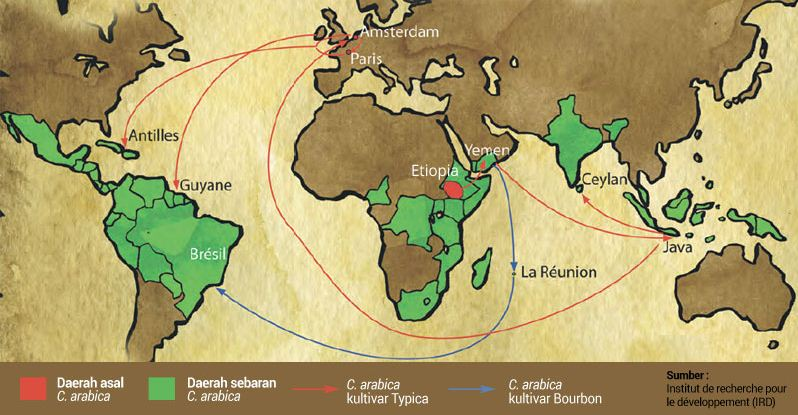
Early Typica, after being transplanted to Yemen, mutated, with the bean shape changing from slender and pointed to round. In 1715, the French transplanted the round-bodied beans of Yemen Mocha to Bourbon Island off the east coast of Africa (renamed Réunion after the French Revolution), and the name Bourbon derives from this. In 1727, the round-bodied beans made their way to Brazil and Central and South America; in 1732, the British transplanted Yemen Mocha to Saint Helena (later the place of Napoleon's imprisonment), which was also Bourbon round-bodied bean. In short, Bourbon is a branch of the Arabica species, usually bearing red fruit, known as Red Bourbon; there are also Yellow Bourbon and Orange Bourbon, among which Yellow Bourbon has relatively lower yields but superior quality.
Bourbon is a sub-variety resulting from a mutation of Typica, and together with Typica it is one of the oldest extant coffee varieties, with bright red fruit when ripe. Compared with Typica, Bourbon has broader leaves, higher planting density, and increased yield, though the harvest cycle is still two years; it remains a low-yield variety but offers excellent cup quality, with wine-like acidity and a sweet finish. The beans are relatively large, uniform in size, and even and lustrous in color. For ease of harvesting, farmers usually prune the plants to no more than 150 cm.
The Spread of Bourbon
Typica, introduced to Brazil in 1727, had low yields and was susceptible to disease, so Bourbon was introduced to Brazil around 1860 via Campinas in the south and quickly spread northward to other parts of South America and Central America. Today in Latin America, most Bourbon has been replaced by its mutations (especially Caturra, Catuai, and Mundo Novo), but it is still grown in El Salvador, Guatemala, Costa Rica, Peru, and other countries.
[French Missionary Bourbon]
In Africa, French missionaries known as Spiritans (from the Congregation of the Holy Spirit) played a key role in the spread of Bourbon. In 1841, the first mission was established on Réunion, and in 1859 a branch was set up in Zanzibar; from Zanzibar, branches were established in 1862 at Bagamoyo (on the coast of Tanzania, then called Tanganyika) and St. Augustine (Kikuyu, Kenya), and in 1893 another branch was established at Bura (Taita Hills, Kenya). Each establishment of a mission was accompanied by coffee seeds brought from Réunion being planted locally.
In 1899, seedlings cultivated at Bura were taken to another French mission at Saint Cruz (near Nairobi), and in 1900 they were introduced to the Kilimanjaro region of Tanzania, where seeds were distributed to local residents willing to grow coffee; this is the origin of "Missionary Bourbon." The Kent variety was subsequently introduced in 1920. As a result, Tanzanian coffee to this day is still dominated by Bourbon and Kent.
[Red Bourbon]
After Red Bourbon flowers and fruits, the fruit color changes in sequence: green > slightly yellow > slightly orange > ripe red > riper dark red, so some also call it [Red Bourbon]. In fact, Red Bourbon is what is commonly called Bourbon. Bourbon grown at high altitudes tends to have better aroma and brighter acidity, even tasting somewhat like red wine.
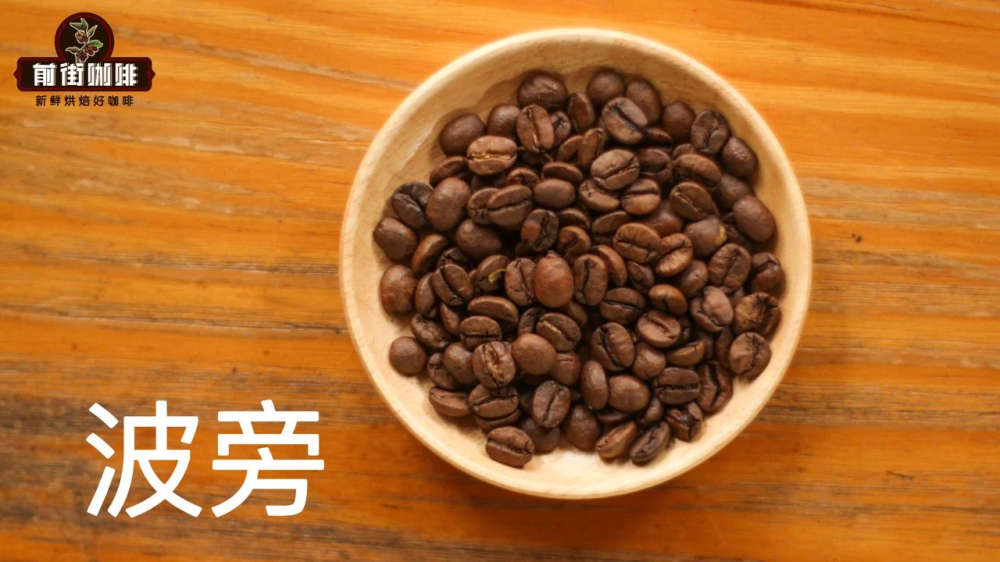
[Brazilian Red Fruit]
On some estates in the Cerrado region of Minas Gerais in southeastern Brazil, old Bourbon coffee is grown. The Cerrado plateau of western Minas and southern Minas are mostly above 1,100 meters in elevation, with diverse terrain, distinct wet and dry seasons, large day-night temperature differences, and rich microclimates, making them suitable for cultivating elegant Red Bourbon and Yellow Bourbon and naturally positioning them as Brazil's main specialty coffee producing regions.
[Yellow Bourbon]
Yellow Bourbon is a cross between Bourbon and other varieties. Because of its lower yield and poor resistance to wind and rain, it has not been widely planted. However, when grown at high altitudes, it performs exceptionally well in flavor and has gradually become more common in recent years.
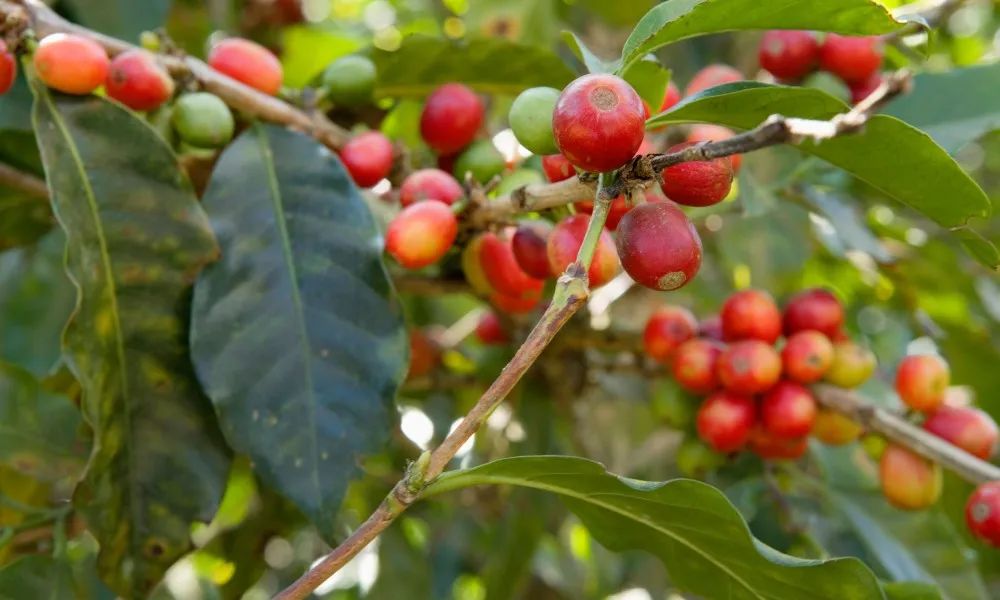
Yellow Bourbon, namely huang bo bang, has yellow fruit when ripe. It was first discovered in Brazil and is currently mainly grown there. It is generally believed to have originated from a mutation after crossing red-fruited Bourbon with a yellow-fruited Typica mutation called "Amerelo de Botocatu."
[Brazil Queen's Farm]
From Fazenda Rainha (Queen's Farm), the estate covers 280 mu and is located in Vale da Grama, an ancient volcanic valley in Brazil. Queen's Farm belongs to the renowned and respected Carvalho Dias family. The four major estates under this family have won awards every year since the first Brazil COE competition in 1999, with more than 12 awards over seven years; in 2004, they even swept the champion, 9th place, and 11th place, standing out among Brazil's many estates large and small.
[Pink Bourbon]
Pink Bourbon, as the name suggests, has romantic pink coffee cherries when ripe. It is a very rare new variety bred by crossing Red Bourbon and Yellow Bourbon. The rarity of Pink Bourbon lies mainly in the extreme difficulty of maintaining this beautiful pink color; sometimes some orange Bourbon is harvested, because the color of the coffee fruit is ultimately determined by recessive genes in the pollen grains. Among the pollen grains selected for crossing, there are both yellow genes favoring Yellow Bourbon and red genes favoring Red Bourbon, and these are all recessive genes that very easily interfere with each other.
[Colombia Huila Isabella]
Bourbon Pointu
Bourbon Pointu: discovered on Bourbon Island in 1810, its bean shape changed from round to pointed, and its caffeine content is only half that of ordinary Bourbon; however, it has low yields and a weak constitution, making it extremely precious (mostly cultivated in laboratories).
Bourbon Pointu also has two other names, Laurina and Leroy, but neither is as widely known as Bourbon Pointu. It is called Pointu because the bean is narrow and elongated with sharp ends, whereas native Bourbon (sometimes called Round Bourbon) has a shorter bean body with a slightly oval outline.
Because of its good flavor and low caffeine content (less affecting sleep), Bourbon Pointu was much loved as early as the 18th century, and many famous people were its devotees, such as King Louis XV of France and the novelist Balzac. During the two hundred years from the 18th to the 19th century, Bourbon Pointu was planted on a large scale on Bourbon Island, even reaching a peak annual output of 4,000 metric tons in 1800, but then a series of disasters followed—hurricanes, fire ants, leaf rust, and so on—and cultivation gradually declined. Finally, in 1942, the last shipment back to France amounted to only 200 kilograms; after that, Bourbon Pointu disappeared without a trace, and even official documents no longer mentioned it. After the 1950s, no one on Réunion Island grew coffee, and the island's agriculture shifted entirely to sugarcane and other crops; coffee no longer had any connection with Réunion Island, and Bourbon Pointu was widely recognized in the coffee world as "extinct."
This bean vanished for half a century and only reappeared eight years ago, causing Bourbon Pointu from its place of origin, La Reunion Island, to sell on the international market for more than 500 yuan per 100 grams. Since then, Colombia has also begun growing this bean, and only Camilo Merizalde, the source of beans for multiple WBC champions, dared to take on the transplant, so this coffee, with global annual production of only a few tons, commands a very high price.
[Laurina Bourbon Pointu Coffee]
Pacas
Pacas is a natural mutation of Bourbon, similar to Brazil's Caturra and Costa Rica's Villa Sarchi. Like other widely planted Bourbon mutations, Pacas is a new variety formed by a single-gene mutation, which also gives it a key characteristic: the plant can be planted more densely, ultimately resulting in higher yield per unit area.
Pacas was first discovered in 1949 by the Pacas family in the Santa Ana producing region of El Salvador. Fernando Alberto Pacas Figuero found some plants with different morphology on his family estate, Finca San Rafael, then began collecting seeds and selecting them, and also developed about 3/4 hectare of a Pacas "pioneer nursery." The discoverer of Pacas is Fernando Alberto Pacas Figuero.
In 1956, Francisco de Sola and Fernando's son Fernando Alberto Pacas Trujillo began studying Pacas with the help of Florida professor William Cogwill. They compared San Ramon Bourbon with an "unknown" new variety that showed completely different characteristics, with plant morphology also different from Bourbon, shorter internode spacing, and a larger fruiting area, and it was ultimately named "Pacas." For example, the very popular Sherry coffee beans at Front Street include the Pacas variety from Honduras, with rich vanilla cream and whiskey aromas.
Summary
Overall, among Bourbon varieties, [Red Bourbon] and [Yellow Bourbon] are fairly similar in flavor, both with pronounced notes of dark chocolate, cocoa, nuts, and caramel, smooth acidity, and low bitterness; [Pink Bourbon] has more prominent acidity.
For more specialty coffee beans, please add the private WeChat of Front Street Coffee (FrontStreet Coffee), WeChat ID: kaixinguoguo0925
The above content is compiled by CoffeeHunters, a coffee news website.


