







How does Brazil Santos coffee taste compared with other regions?
Brazil Santos coffee tastes low in acidity, with prominent nut and chocolate aromas and a balanced bitterness. Santos is a port and trading name tied to the São Paulo growing region rather than a single estate. Brazilian coffee grows at lower altitudes on flatter terrain, often without shade, which produces a heavier body and milder cup than many Central American origins.
Brazil accounts for about 30 percent of global coffee consumption as the largest Arabica producer, with specialty areas concentrated in Minas Gerais, São Paulo, Paraná, and Mogiana. Grading combines the defect deduction method, screen size sorting, cup quality evaluation, and taste classification. Two examples are Cerrado semi-washed Red Bourbon and Mogiana semi-washed Yellow Bourbon, both suited to pour-over and French press.
Brazil, as the world's largest producer of Arabica coffee, accounts for about 30% of global coffee consumption. Its coffee industry relies not only on exceptional geographical and climatic conditions but also on industrialized operating models that generate considerable economic benefits. Brazilian specialty coffee is mainly rooted in Minas Gerais, São Paulo, Paraná, and Mogiana. Compared with other producing regions in Central and South America, Brazilian coffee-growing areas have lower altitudes, flatter terrain, a lack of microclimates, and are mostly planted without shade, which shapes a unique regional flavor profile: low acidity, prominent nut and chocolate aromas, balanced acidity and bitterness, and good body. This article will systematically review Brazilian coffee bean grading methods—including the defect deduction method, screen size sorting, cup quality evaluation, and taste/flavor classification—and highlight two specialty beans sold by Front Street Coffee: Cerrado semi-washed Red Bourbon and Mogiana semi-washed Yellow Bourbon. It will also share recommended extraction parameters for pour-over and French press to help coffee enthusiasts fully appreciate the charm of Brazilian coffee.
For professional coffee knowledge exchange and more coffee bean information, please follow Coffee Workshop (WeChat official account cafe_style)
For more specialty coffee beans, please add the personal WeChat of Front Street Coffee (FrontStreet Coffee), WeChat ID: qjcoffeex
Brazil is the country with the highest production of Arabica coffee in the world. If both commercial-grade and specialty-grade are included, Brazilian coffee accounts for about 30% of global consumption. In addition to inherent advantages such as climate and land area, Brazil's industrialized approach to coffee is also an important reason it has gained substantial national revenue and industrial benefits.
Brazilian Specialty Coffee Beans Producing Regions
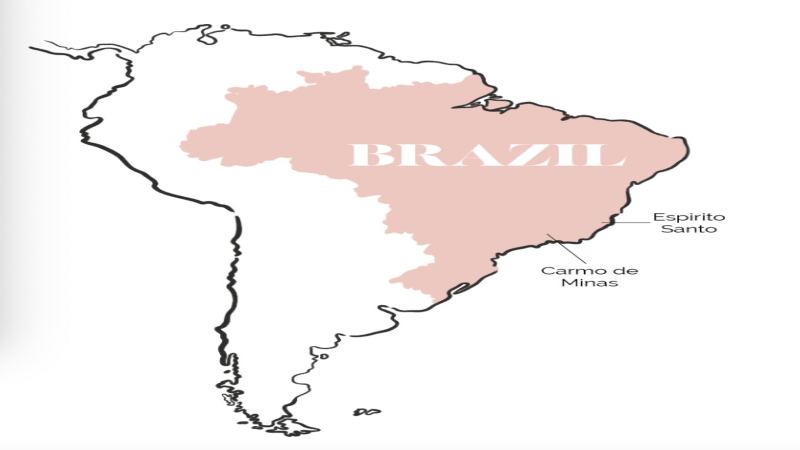
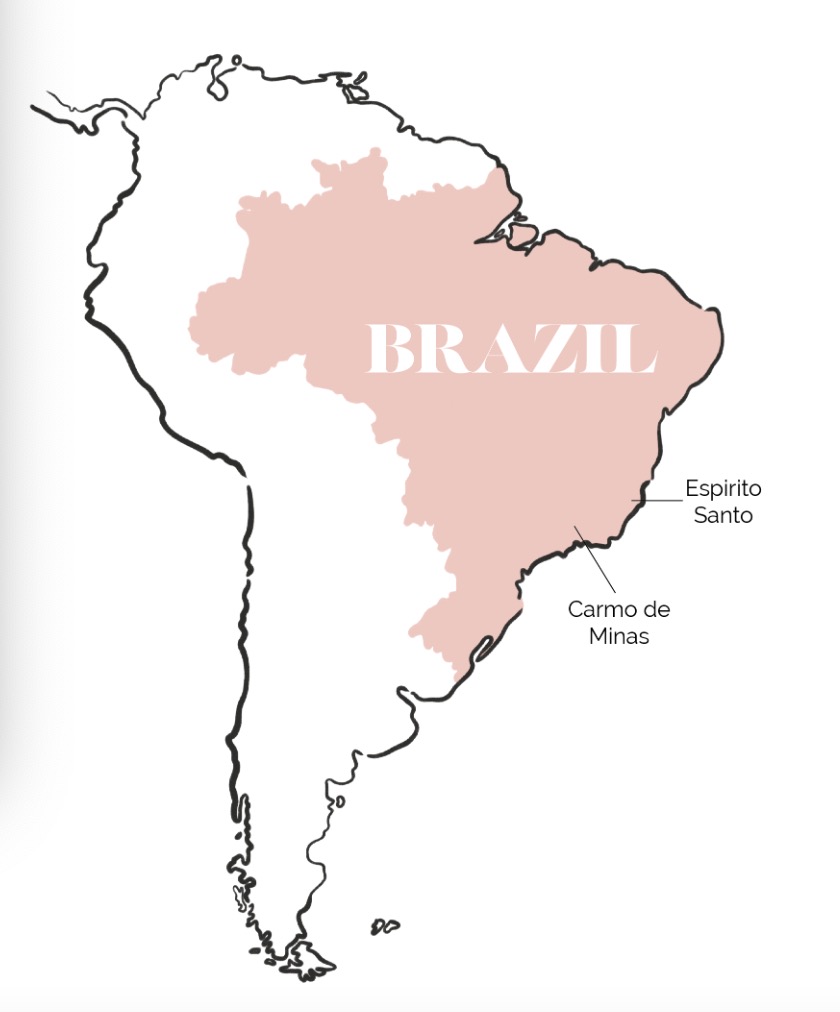
There are approximately 220,000 coffee plantations in Brazil, with a total coffee plantation area of nearly 27,000 square kilometers nationwide [4]. Specialty coffee cultivation areas are mainly concentrated in Minas Gerais, São Paulo (Santos coffee comes from this producing region), Paraná, and Mogiana. The natural environment and climatic conditions in these places provide an ideal hotbed for coffee bean growth.
Brazilian Coffee Producing Region Flavor
Compared with other countries in Central and South America, the altitude of Brazilian coffee-producing areas is noticeably lower, the terrain is mainly flat, there is a lack of microclimate variation, and coffee trees are mostly planted without shade. Front Street Coffee (FrontStreet Coffee) has cupped many coffee beans from different Brazilian producing regions and found that they generally have a distinct regional flavor—lower acidity, nutty notes, chocolate-like sweetness, a balance between acidity and bitterness, and good body. This forms a clear contrast with the prominent floral and citrus notes of African beans.
Brazilian Coffee Bean Grading Methods
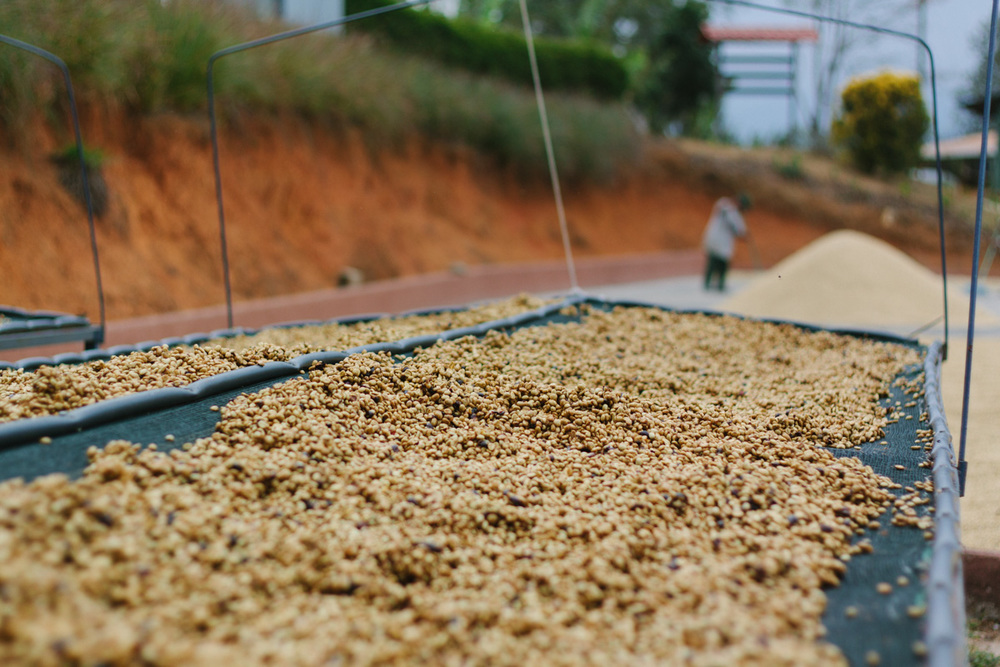
Because the growing altitude is not high, Brazilian coffee beans are relatively softer in texture, so multiple methods are used to grade coffee beans within Brazil.
1. Grading by Defect Rate
The evaluation method for Brazilian coffee is the "deduction system," classifying grades based on how many defective beans are contained in every 300 grams of primary beans, with seven levels from No.2 to No.8. If the deduction is below 4, it can be classified as No.2. Of course, having no defective beans at all can be called No.1, but this situation is extremely rare and stable supply cannot be guaranteed, so Brazil sets No.2 as the highest grade rather than No.1.
2. Grading by Screen Size
Screen number: Screening is performed using screens based on 1/64 inch, and screen sizes are usually between 14 and 20. It should be noted that the screen number corresponds to the short side of the coffee bean, that is, the width of the bean. The largest screen number for Brazilian coffee beans is 19, but the yield is scarce, so 17/18 is listed as the highest grade.
3. By Cup Quality
fine cup|fine|good cup|fair cup|poor cup|bad cup|FC (Fine Cup) and GC (Good Cup) are relatively common. Many companies or platforms also additionally indicate the processing method (natural/washed/honey) and estate information.
4. By Taste and Flavor
Strictly Soft→ very smooth, Soft→ smooth, Softish→ slightly smooth, Hardish→ not palatable, Rioy→ iodine-like harsh taste.
Brazilian Specialty Coffee Beans Recommendations
Front Street Coffee (FrontStreet Coffee) promises to ship within five days after roasting is completed, ensuring coffee beans are 100% fresh. Currently, Front Street has listed two Brazilian specialty coffee beans: one is semi-washed Red Bourbon coffee beans from the Cerrado producing region, and the other is semi-washed Yellow Bourbon coffee beans from Mogiana. Both beans can fully showcase the flavor characteristics of Brazilian producing regions.
The difference between the two coffee beans is that Cerrado coffee beans are highly representative of the nutty, caramel, low-acid, and full-bodied style of Brazilian producing regions, with very good value for money, and are one of the representatives of the selected producing-region daily coffee beans from Front Street Coffee (FrontStreet Coffee).
Because the Brazilian Queen Estate has more meticulous cultivation and management, and Yellow Bourbon coffee beans themselves have balanced, smooth acidity, weak bitterness, and cleanliness, the overall presentation is bright and refreshing. After brewing, it releases rich chocolate aroma and nutty flavor, with a bright, refreshing taste and a smooth, delicate mouthfeel.
How to Brew Brazilian Coffee Beans for a Delicious Cup?
Front Street Coffee (FrontStreet Coffee) recommends drip filtration (pour-over coffee) or immersion extraction (French press coffee) to highlight the flavor characteristics of Brazilian coffee. In order to give Brazilian coffee beans a full-bodied mouthfeel, Front Street Coffee (FrontStreet Coffee) uniformly roasts to medium-dark. Therefore, whether using drip filtration or immersion extraction, Front Street Coffee (FrontStreet Coffee) recommends using lower-temperature hot water with a coarse grind.
Recommended pour-over coffee extraction parameters: Kono dripper (the feature of this dripper is that the filter paper fits tightly against the dripper, creating an immersion-style extraction effect during pour-over, thereby increasing coffee strength), 88C water temperature, 1:15 coffee-to-water ratio, 15g coffee dose, grind size: white sugar consistency (70% pass rate on a No. 20 standard sieve).
The extraction method is as follows: pour 30 grams of water in the first stage for blooming, with a blooming time of 30 seconds; in the second stage, pour to about 125 grams of water, then wait for the coffee liquid to drop; when it has dropped by half, pour the final stage of water to 225 grams; after all the coffee has dripped through, end the extraction. The total extraction time is generally about 2 minutes 10 seconds.
After extraction with a French press, press down the plunger and pour out all the coffee liquid before tasting. This is because the coffee grounds in the pot are still continuously being extracted, and over time they can easily over-extract, bringing a bitter taste.
Front Street - Brazilian Queen Estate Coffee Flavor: the fresh sweetness of sugarcane juice, black tea, soft and smooth fruit sweetness, obvious nutty flavor, balanced and smooth acidity, weak and clean bitterness, containing rich chocolate aroma and nutty flavor, with a bright, refreshing taste and a smooth, delicate mouthfeel.
Front Street - Brazilian Cerrado Coffee Flavor: obvious sweetness on entry, accompanied by a faint lemon aroma, containing a rich nutty flavor, with an obvious dark chocolate note in the finish, and an overall relatively rounded impression.
The above content is compiled by CoffeeHunters, a coffee news website.


