







What makes the geisha coffee variety at Gesha Village distinct?
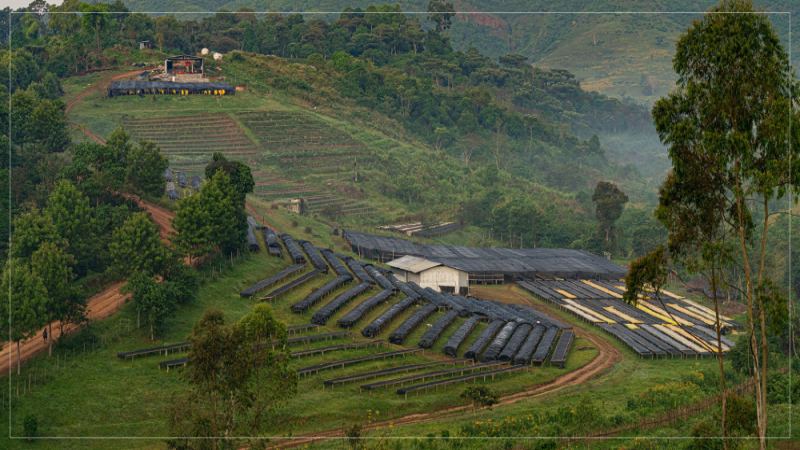
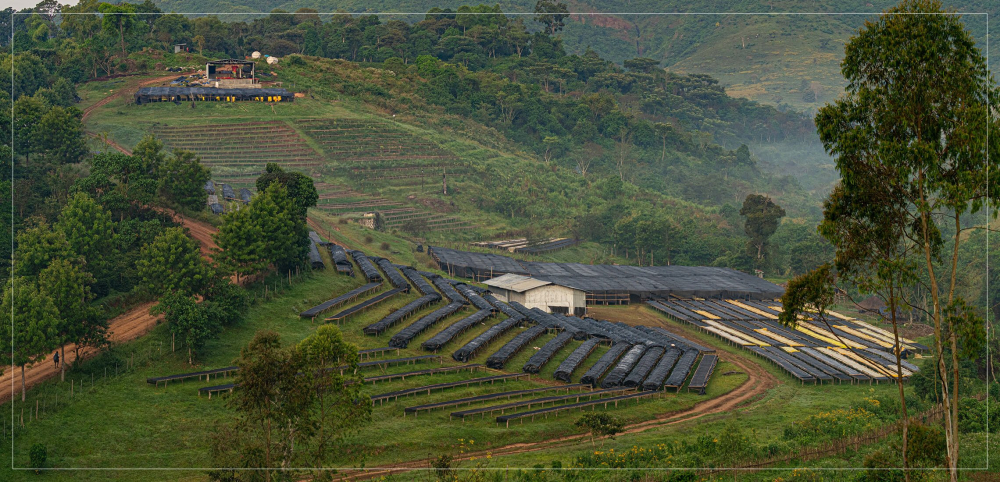
Gesha Village Coffee Estate sits in Ethiopia's Bench Maji zone, home to the Gori Gesha forest where the Geisha variety was first discovered. In 2011, owner Adam and consultant Willem Boot collected seeds from wild Geisha trees, had them genetically tested, and confirmed the site as the original collection point of the Panamanian Geisha variety.
The estate cultivates three Geisha varieties: Gori Gesha, Gesha 1931, and Illubabor. To keep quality consistent, Adam set a grading system of Auction, Gold, Red, Green, and Chaka labels. High altitude and abundant rainfall support the floral, fruit-forward profile that panamanian geisha became known for worldwide.
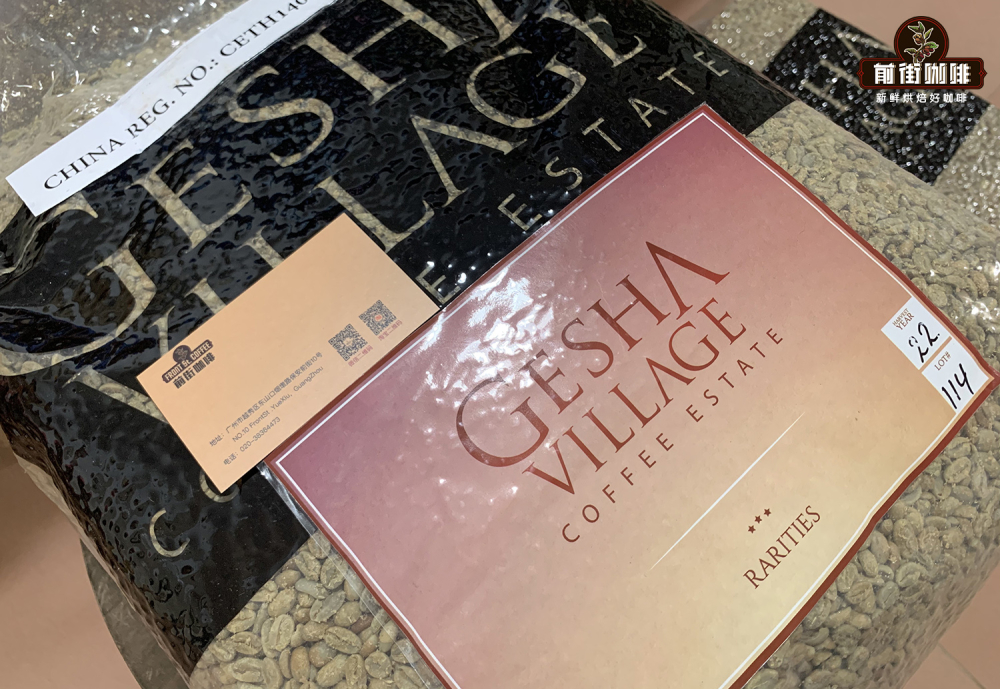
Located in the Bench Maji zone of Ethiopia, Gesha Village Coffee Estate is home to the Gori Gesha forest, where the Geisha variety was first discovered. With the assistance of consultant Willem Boot, estate owner Adam selected and bred varieties from wild Geisha trees that are closest to Panamanian Geisha, and established a strict grading system including Auction, Gold, Red, Green, and Chaka. This article will guide you through the three varieties at Gesha Village—Gori Gesha, Gesha 1931, and Illubabor—analyzing the yield proportions, flavor characteristics, and traceability information of each grade, and sharing Front Street Coffee's cupping experience with the Gold, Red, Green, and Chaka lots. Finally, we will demonstrate the pour-over parameters and three-stage extraction steps for Red Label Geisha, helping you recreate the signature floral and complex fruit notes of Gesha Village at home.
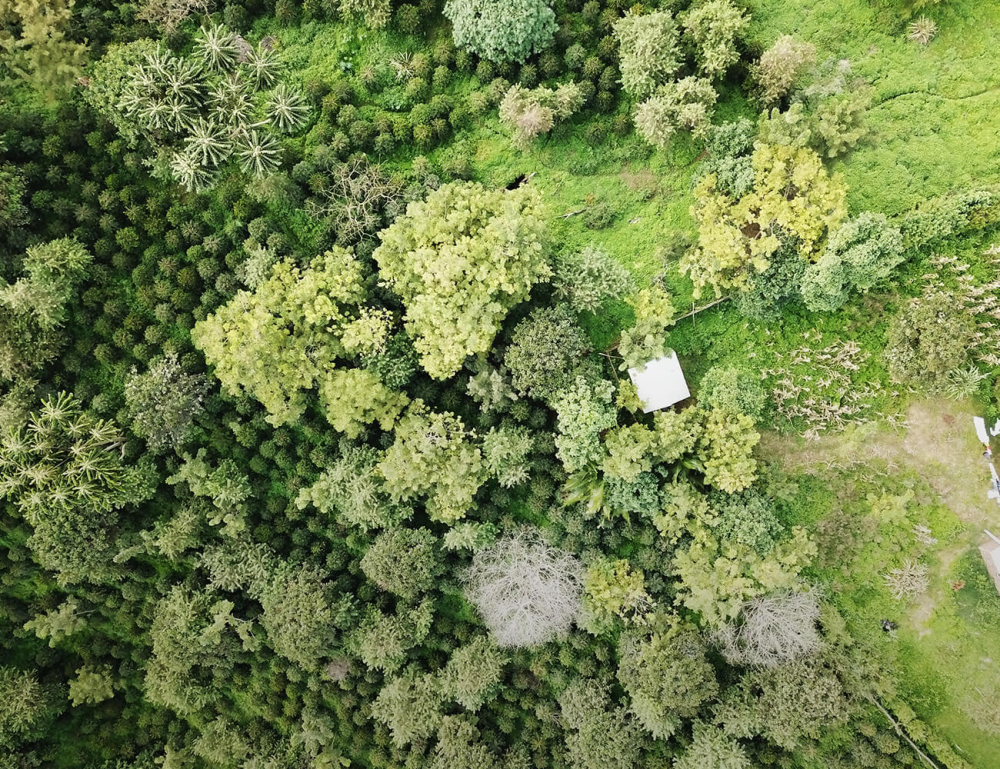
In 2011, Adam, led by consultant Willem Boot, ventured deep into the forested areas surrounding the estate. That jungle, covered in dense forest, concealed many wild tree species, and the most exciting discovery was wild Geisha. It was only afterward that they realized this was the Gori Gesha forest—the very origin where the Geisha coffee variety was first discovered by the outside world.
They harvested seeds from the native Geisha plants, carefully selected them, and sent them to professional institutions for genetic testing, confirming that this location was the original collection site of the Panamanian Geisha variety. Subsequently, the team combined the plant morphology, green bean appearance and size, and cupping performance of the coffee trees to select the Geisha variety closest to today's Panamanian Geisha, and officially began seedling cultivation. From that moment on, the legend of Gesha Village Coffee Estate began on this land in Ethiopia.
Gesha Village is situated at high altitude with abundant rainfall, and its temperate climate combined with various key natural conditions provides an ideal environment for producing high-quality coffee. However, unlike many estates in Panama, Gesha Village cultivates three Geisha varieties: Gori Gesha, Gesha 1931, and Illubabor Forest. Additionally, to ensure consistent quality of the coffee produced, estate owner Adam established a strict grading system, classifying Geisha into Gold Label, Red Label, Green Label, CHAKA, and Auction lots.
Looking at the estate owner's plot planning, the western part of Gesha Village is generally at higher elevations, especially the three plots OMA, SURMA, and SHEWA-JIBABU, which range between 1,900 and 2,069 meters, with SHEWA-JIBABU having the highest average elevation. The southern side of the estate has relatively more shade, while the northern side receives longer sunlight hours. Among all eight plots, Adam matched the most suitable variety to each plot based on differences in microclimate such as altitude, soil conditions, and shade, with the goal of allowing each plot to develop its own unique flavor profile.
Gesha Village Auction lots account for only 3.7% of the total annual production. The green bean information is fully traceable, the flavors are outstanding and complex, and these are the top-tier lots that have undergone rigorous层层 screening. Buyers can only obtain them through Gesha Village Coffee Estate's global auction channel.
Gesha Village Gold Label Geisha is a lot frequently purchased by competition participants and roasters with high quality standards around the world, accounting for about 10% of the estate's annual production, with detailed traceability information. The Gold Label lot Geisha purchased by Front Street presents complex and rich flavors. During cupping, one can fully appreciate the charm of this lot—whether it's the distinctiveness of the dry aroma or the flavors and mouthfeel lingering on the palate when sipping, it leaves a deep and lasting impression.
Thanks to its exceptional geographical conditions, the primary processing method at Gesha Village is natural (sun-dried) processing. The harvest season at Gesha Village Coffee Estate is concentrated from December to March of the following year, coinciding with the dry season in the region when there is very little rainfall, allowing the estate to make full use of natural drying methods to process coffee beans.
Gesha Village's traditional natural method involves spreading freshly harvested coffee cherries on traditional African raised drying beds, allowing them to be evenly exposed to sunlight. During this period, they need to be turned at irregular intervals to avoid over-fermentation that could impart negative flavors to the coffee. The drying period is approximately 21 to 40 days, and only after the moisture content drops to 12% are the dried beans hulled.
Front Street Coffee (FrontStreet Coffee): Ethiopia Gesha Village Coffee Estate Gold Label Geisha
Region: Ethiopia Bench Maji Zone
Estate: Gesha Village Coffee Estate Oma Plot
Altitude: 1,900-2,040 meters
Variety: Gesha 1931
Processing Method: Natural
Flavor: Citrus, Berries, Cream, Caramel, Melon, Honey
Unlike the Gold Label grade, Gesha Village Red Label accounts for 15% of total annual production. It uses the Gori Gesha variety and is selected from high-quality Geisha coffees that score 88 points or above according to SCA cupping standards. Although the flavor intensity and complexity are not as high as the Gold Label and Auction lots, Red Label still possesses a very classic Gesha Village flavor profile. Front Street considers this a Geisha lot with excellent value for money, well worth purchasing for Geisha enthusiasts.
Front Street Coffee (FrontStreet Coffee) Ethiopia Gesha Village Coffee Estate Red Label Geisha
Region: Ethiopia Bench Maji Zone
Estate: Gesha Village Coffee Estate Shewa-Jibabu Plot
Altitude: 1,973-2,069 meters
Variety: Gori Gesha
Processing Method: Natural
Flavor: Lemon, Plum, Citrus, Tropical Fruits, Floral Tea
Gesha Village Green Label lots refer to single-plot, single-variety lots. Each lot number provides complete traceability information, including farm plot name, coffee variety, and processing date. Compared to Red Label and Gold Label lots, Green Label has no cupping score threshold and can be considered an entry-level single-plot Geisha lot.
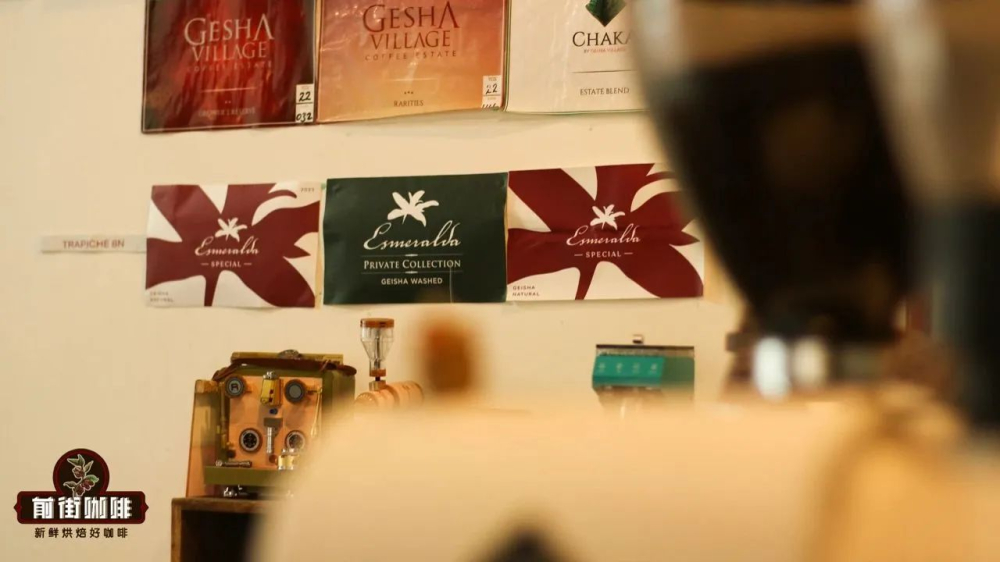
Front Street Coffee (FrontStreet Coffee) Ethiopia Gesha Village Coffee Estate Green Label Geisha Region: Ethiopia Bench Maji Zone Estate: Gesha Village Coffee Estate Bangi Plot Altitude: 1,900-2,100 meters Variety: Gori Gesha Processing Method: Natural
Gesha Village Chaka CHAKA
Unlike other lots from the estate, Chaka is a blend of Geisha coffee beans from all plots within the estate and all production periods throughout the year, covering the three varieties grown at Gesha Village: Gesha 1931, Gori Gesha, and Illubabor. This coffee is available in both washed and natural processing methods, and Front Street purchased the natural processed lot.
First, impurities and unripe cherries are removed through flotation, then the cherries are spread in thin layers on African-style raised beds covered with plastic sheeting for sun drying. During the drying process, they need to be turned regularly, and hand-sorting is also performed to pick out unevenly colored beans. The total drying time is 18-30 days. To retain more fruit acidity, Front Street chose a medium-light roast. Through cupping, Front Street perceived quality flavors of citrus, berries, cream, oolong tea, and cane sugar from this Chaka Geisha.
Front Street Coffee (FrontStreet Coffee) Ethiopia Gesha Village Coffee Estate Chaka Region: Ethiopia Bench Maji Zone Estate: Gesha Village Coffee Estate Altitude: 1,900-2,100 meters Variety: Gori Gesha, Gesha 1931, Illubabor Processing Method: Natural
As is well known, Geisha coffee is famous worldwide for its rich floral aroma and complex fruit notes. Front Street aims to retain more of Geisha's quality acidity, so we choose a medium-light roast (with slight adjustments for different lots). This roast level doesn't significantly alter the high hardness of beans grown at high altitude, so brewing requires a certain increase in extraction rate to present a fuller flavor hierarchy. Here we use a higher water temperature and a finer grind size to extract more aromatic compounds.
Below, Front Street demonstrates the brewing steps for our shop's Gesha Village Red Label, which you can use as a reference and compare with your own brewing approach.
Pour-over recommendations for Gesha Village Red Label coffee:
Dripper: V60
Water Temperature: 91-92°C
Dose: 15g
Coffee-to-Water Ratio: 1:15
Grind Size: Fine granulated sugar (80% passing through a No. 20 sieve)
Three-Stage Extraction: First, pour 15 grams of coffee grounds into the dripper and tare the scale. For the first stage, pour 30g of water for blooming for 30 seconds, starting the timer at the same time. Use a slow, small stream, starting from the center and spiraling outward, making sure to saturate the entire coffee bed.
For the second stage, use a slightly larger stream to pour 120g of water, aiming to lift the entire coffee bed. The water stream should be poured vertically and evenly. At this point, the scale should read 150g, and this should be completed in about 55 seconds.
When the water level drops to about halfway, begin the third stage by pouring 90g of water in a slow, small stream in a tight spiral. Try to control the stream so it doesn't spiral too widely, as this can disturb the coffee bed and cause under-extraction. The total water poured will be 240g, and the drawdown should be completed in about 2 minutes and 10 seconds. Remove the dripper, swirl the carafe to mix the coffee evenly, and it's ready to taste.
The above content is compiled by CoffeeHunters, a coffee news website.


