







How long does drip bag coffee keep its flavor after roasting?
Drip bag coffee may carry a shelf life of 12 to 18 months, but that refers to food safety, not flavor. Comparative tests by Front Street Coffee found that drip bags made from beans within four days of roasting lose noticeable aroma after about three weeks, while anaerobic-process beans hold on for roughly a month. Drinking within 20 days is the practical window.
That short window explains why the shop makes drip bags to order instead of stocking them in advance; each portion holds 10 small packets, about a day's pace. For brewing, use a staged pour with the right water volume to extract evenly. When choosing beans, classic coffee profiles with steady sweetness and body work well, and an american coffee pot can serve as a simple hot-water source.
Although drip bag coffee is labeled with a shelf life of up to 12 to 18 months, the period during which it truly tastes good is very short. Through comparative experiments, Front Street Coffee found that drip bags made from freshly roasted beans typically lose their aroma noticeably after three weeks, while anaerobic-process types can last about a month. Therefore, we insist on making them fresh to order and recommend that consumers drink them within 20 days. This article will also explain the right amount of water and staged pouring method for brewing drip bags, and recommend three classic coffee beans suitable for making drip bags, helping enthusiasts easily enjoy a good cup of coffee at home.
Customers often walk to the entrance of Front Street Coffee and ask whether the shop sells drip bag coffee. Front Street usually replies: "The shop doesn't keep ready-made drip bags in stock. If you need some, we can only make them for you on the spot." Many customers find this puzzling—why would a coffee shop not stock even something as small as drip bags in advance and insist on making them on site, when it would be easier to just buy them off a supermarket shelf?
Time Is the Greatest Enemy of Delicious Coffee
Drip bag coffee on the market often has a shelf life labeled as 12 to 18 months, but this period only concerns food safety and has nothing to do with flavor quality. What really determines whether a cup of coffee tastes good is the so-called peak flavor period, and in the realm of roasted coffee beans or ground coffee, that period is astonishingly short.
Front Street once conducted a series of comparative tests on drip bag coffee. Drip bags made from coffee beans within 4 days after roasting largely lost their flavor after about three weeks from the roast date (this refers to aroma and flavor; basic tastes such as acidity, sweetness, and bitterness still remain). Anaerobically processed beans tend to keep longer, about a month or so, though certain beans may also "stay in good condition" for an unusually long time.
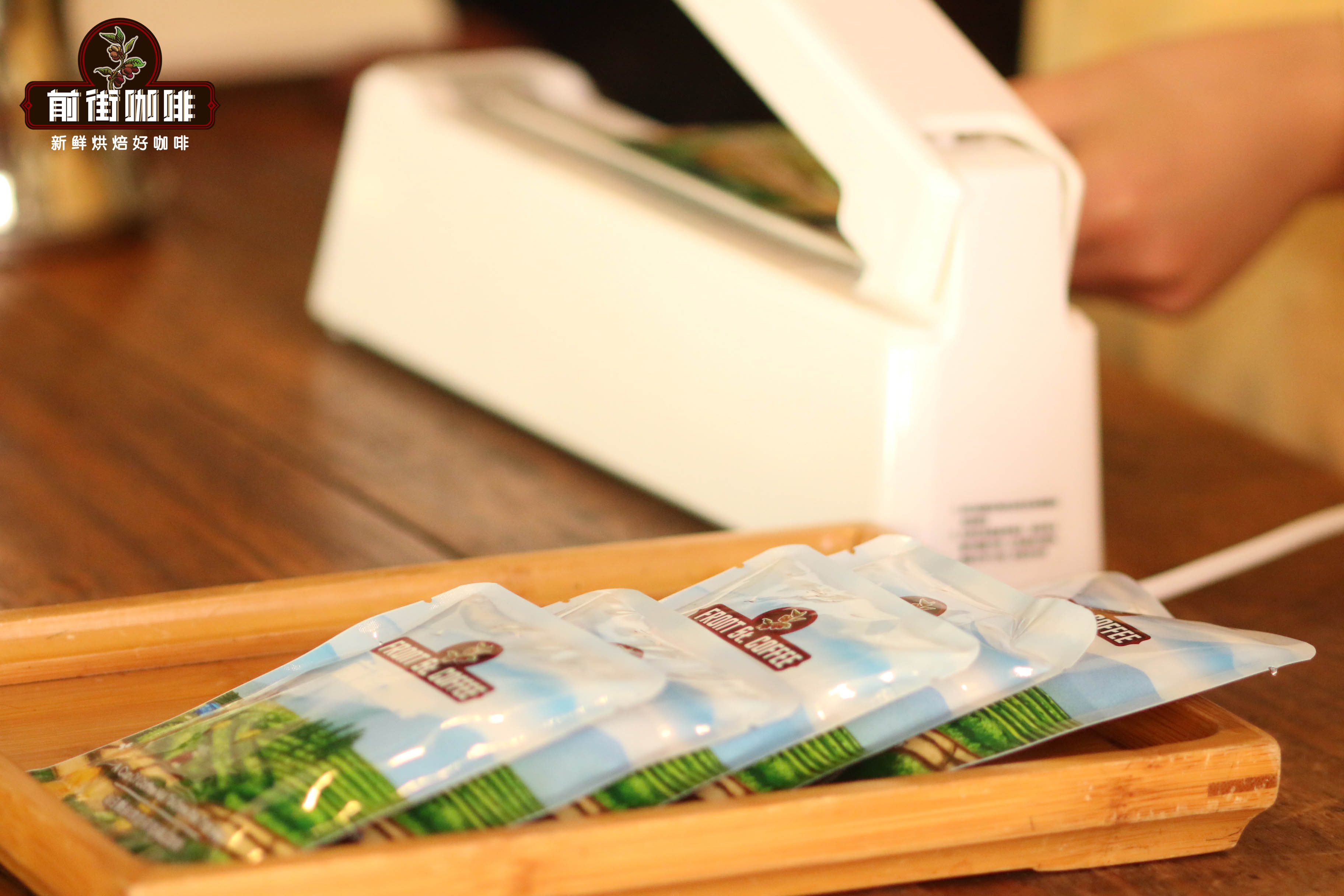
This shows that the window in which drip bag coffee can truly let you enjoy a good cup is only about 20 days. This is also why Front Street refuses to stock up in advance and only starts making them after receiving an order. Front Street also sets each portion of drip bags at 10 small packets, so at a pace of one packet per day, they can just be finished within the peak flavor period.
Why Is the Peak Flavor Period of Drip Bag Coffee So Short?
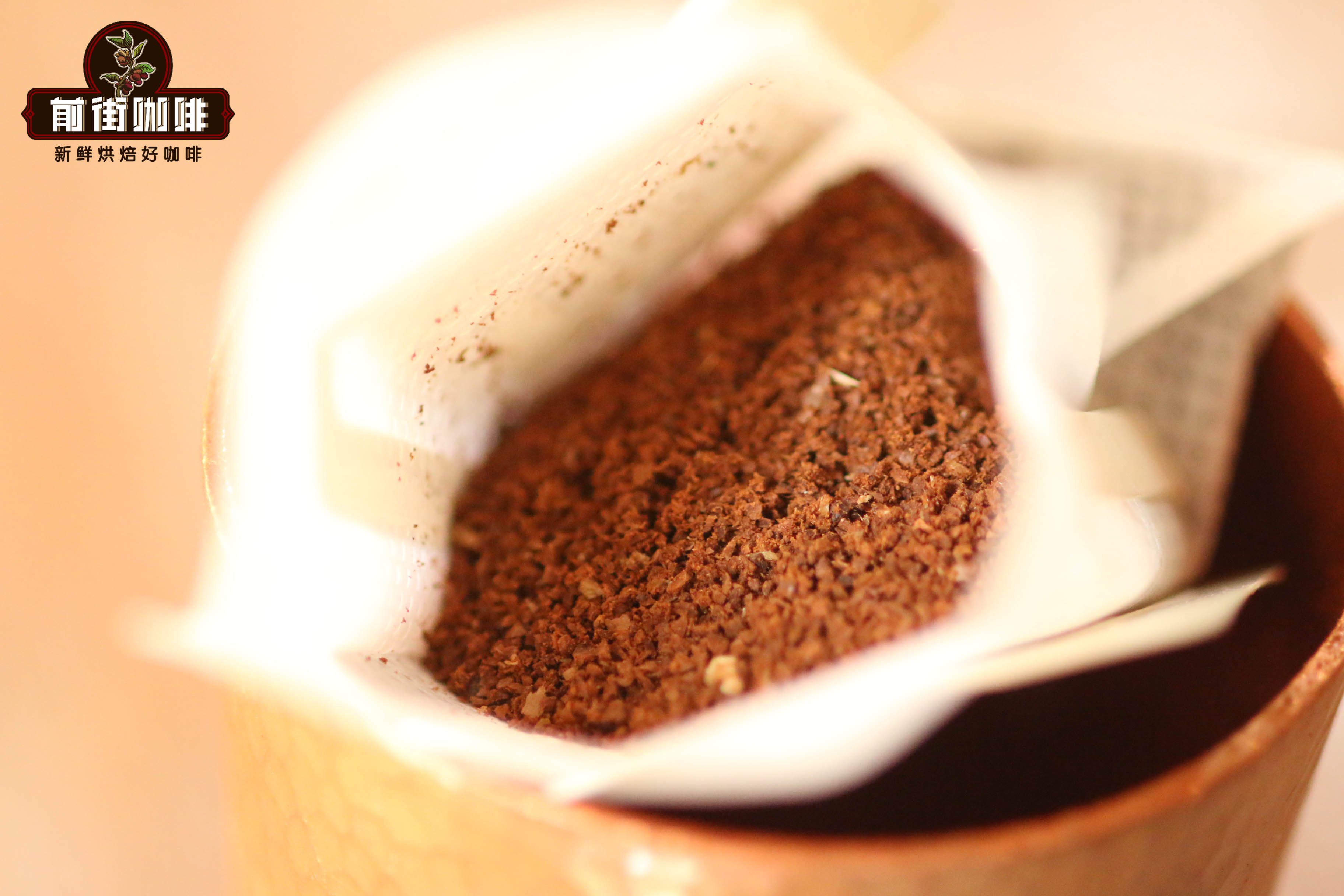
This has to start with the production process of drip bag coffee. Usually, the coffee beans must first be ground into powder, then the coffee powder is put into the drip bag inner pouch and heat-sealed. After that, the inner pouch is placed into the outer packaging bag and heat-sealed again, and only then is one small packet of drip bag coffee finished.
The first factor leading to the short peak flavor period is pre-ground coffee powder. With the spread of specialty coffee knowledge, more and more people realize how crucial fresh grinding is to flavor. Once coffee beans are ground into powder, carbon dioxide and aroma dissipate much faster. Friends who have bought drip bags can pay attention and observe: when they first arrive, the drip bag is flat and there is no extra air in the pouch; after a few days, the outer bag bulges, which is precisely a sign of carbon dioxide and flavor loss.
Therefore, when making drip bags on site, Front Street tries to speed up the process as much as possible to minimize flavor loss. After consumers receive them, they should also drink them as soon as possible.
Recommended Coffee Beans Suitable for Making Drip Bags
Many office workers ask Front Street to recommend some coffee beans suitable for making drip bags. In fact, all of the more than fifty single-origin beans from different regions on Front Street's bean list can be made into drip bags. Below are a few drip bag coffees with relatively classic flavors.
1. Front Street. Washed Gedeb Gotiti Cooperative Drip Bag Coffee
This Gedeb Gotiti Cooperative coffee bean comes from the renowned Yirgacheffe region of Ethiopia and is washed after harvest. Traditionally, Yirgacheffe mostly used the oldest natural drying method, but early naturally processed beans were often spread on the ground to dry, inevitably picking up earthy and dusty notes, and because sorting was not fine enough, quality was often average. In 1972, Ethiopia introduced Central and South American washing techniques to improve coffee quality, making Yirgacheffe's jasmine floral notes and bright citrus-lemon acidity clearer and more transparent, and from then on it joined the ranks of the world's representative specialty coffees.
Front Street. Yirgacheffe Gedeb Gotiti Drip Bag Coffee Region: Yirgacheffe Gedeo Zone Producer: Gedeb Gotiti Cooperative Altitude: 1900-2300m Variety: Local heirloom varieties (Heirloom) Processing Method: Washed
Grade: G1
Flavor: Citrus, berries, lemon, cane sugar, green tea
2. Front Street. Brazil Queen Estate Drip Bag Coffee
Queen Estate is located in the Mogiana region of São Paulo State, Brazil. Unlike many large production regions in Brazil that rely on volume, this area has a higher altitude, forming a unique microclimate. In addition, the estate insists on hand-picking ripe fruit of suitable maturity, and each batch uses small, refined processing methods, so most of the coffee beans produced reach specialty grade. Queen Estate is proudest of its Yellow Bourbon variety, which has won awards multiple times in Brazil's COE competition thanks to its refined and delicate flavor. Front Street's Queen Estate coffee beans use a medium-dark roast, highlighting the classic rich aroma of Brazilian coffee while also showcasing the sweetness of the Bourbon variety itself. You can taste a rich coffee aroma, and the mouthfeel also carries a clear, sweet aftertaste.
Front Street. Brazil Queen Estate Drip Bag Coffee
Region: Brazil Mogiana Region
Estate: Queen Estate
Altitude: 1400–1950m
Variety: Yellow Bourbon
Processing Method: Natural
Flavor: Dark chocolate, cream, peanut, sugarcane, nuts
3. Front Street. Natural Huakui Drip Bag Coffee
Front Street Natural Huakui coffee beans were the champion of the natural group in Ethiopia's 2017 TOH coffee competition, stunning with their unique strawberry cream flavor. That year, this batch of green beans was introduced to China by Beijing green bean trader Hongshun, and in the same year Li Jianfei used this bean to win second place in the China region of the 2017 World Brewers Cup. Among the many Geisha competition beans, this Ethiopian bean stood out especially, and thus was named Huakui.
Front Street · Natural Huakui Drip Bag Coffee
Country: Ethiopia
Region: Sidamo
Altitude: 2250-2350m
Variety: Local heirloom varieties
Processing Method: Natural
Flavor: Berries, floral tea, honey, lemon, black tea
Teaching You to Easily Brew a Delicious Cup of Yirgacheffe Coffee with Drip Bags
Next, Front Street will use Yirgacheffe Gedeb Gotiti Drip Bag Coffee as an example to demonstrate the brewing process for drip bag coffee and explain the details to pay attention to.
First, prepare a cup for the coffee (any clean container will do, whether a server or a drinking glass), a pouring kettle, and enough boiling hot water.
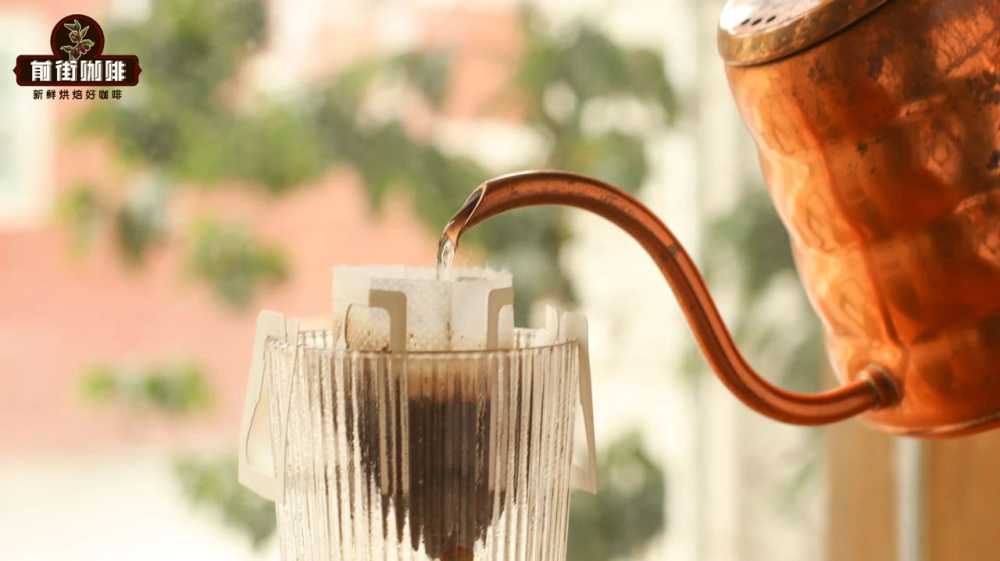
Tear open the sealed packaging, take out the drip bag, and tear open the non-woven pouch along the dotted line. Pull open the ears on both sides, spread the entire drip bag open, and then hang it on the rim of the cup or server.
For the first stage, use a small amount of hot water to wet all the coffee grounds and let it bloom for about ten seconds or so. For the second stage, pour steadily in a small stream until the liquid level is nearly full, then wait for the coffee liquid to drop. After the coffee liquid has drained and the grounds at the bottom are exposed, pour in the final stage of water, also bringing the hot water level even with the filter bag. Wait for all the coffee liquid to drip into the cup, gently swirl to mix evenly, and it is ready to enjoy.
The above content is compiled by CoffeeHunters, a coffee news website.


