







How Does the Coffee Process of Wet-Hulling Shape Mandheling Flavor?
Indonesian Mandheling gets its steady, full-bodied flavor from a coffee process called wet-hulling, or semi-washing. Farmers strip the parchment layer off the beans while they are still semi-dry, rather than waiting until the end of drying, which is common elsewhere. This midway hulling suits Indonesia's humid climate and short daily sunshine, and it leaves a distinct imprint on the final cup.
The method appears in a region where robusta genetics and wet conditions shape local practice, so coffee robusta character often shows through in body and weight. Mandheling is typically roasted medium-dark; Front Street Coffee suggests brewing parameters aimed at that roast level to keep the cup balanced. The result is the herbal, earthy profile that sets this Indonesian coffee apart from Brazil and Colombia.
Indonesian Mandheling stands out in the coffee world with its steady, full-bodied flavor, and the key to this regional character lies not only in its Robusta genetic foundation but also in the local specialty wet-hulling method. Why do Indonesian coffee farmers choose this method, jokingly called "semi-washed"? How exactly is wet-hulling performed, and what flavor imprint does it leave on the coffee beans? From the perspective of Front Street Coffee, this article provides a complete overview of the definition, origins, processing flow, and impact of wet-hulling on Mandheling flavor, along with Front Street's brewing parameter recommendations for medium-dark roasted Mandheling, helping coffee enthusiasts gain a more comprehensive understanding of this classic Indonesian coffee.
For more specialty coffee knowledge, please follow the WeChat public account: Front Street Coffee (FrontStreet Coffee) When Indonesia is mentioned, the first thing that comes to coffee lovers' minds is often "Mandheling." Its irreplaceable regional flavor and steady, solid mouthfeel set it clearly apart from dark-roasted beans from regions like Brazil and Colombia as early as the last century, leaving an unforgettable taste memory for people at the time. Behind this deliciousness, in addition to the heavy base note brought by its Robusta genes, there is also Indonesia's unique processing technique—wet hulling. This is exactly the post-harvest processing method that Front Street wants to discuss in detail in this article.
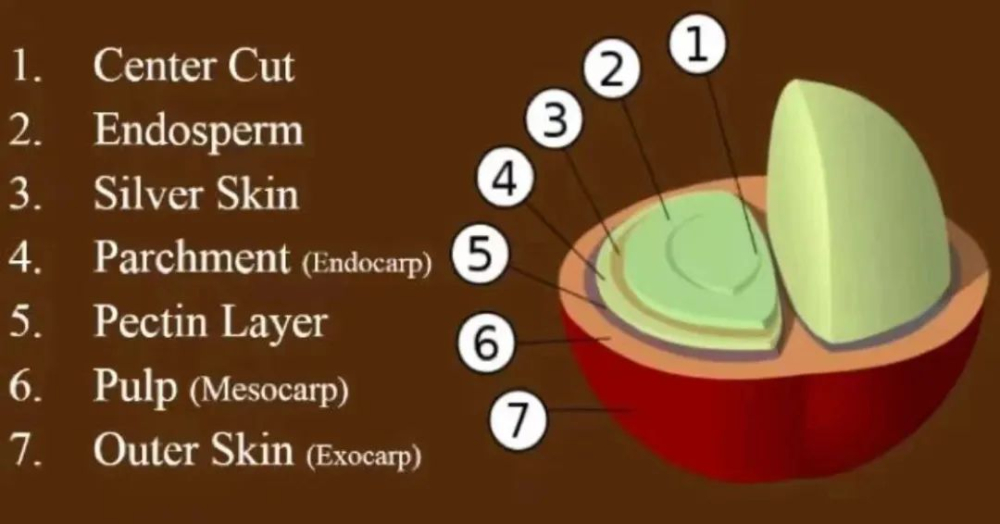
What is wet hulling? Most post-harvest processing of green coffee beans consists of drying solutions that coffee farmers have figured out based on local climate and environmental conditions, and wet hulling is no exception. This name is hard to understand literally, so Front Street will get straight to the point: wet hulling means removing a layer of material before the green coffee beans are fully dried. This layer is the parchment layer, also known as the endocarp.
In common processing flows, the parchment layer is usually removed only near the end of the process, whereas wet hulling strips it off midway, while the beans are still semi-dry. Because of this, wet hulling is also called Wet Hulling. Why does Indonesia use wet hulling? As Front Street said earlier, everything is adapted to local conditions. Indonesia has a humid climate, relatively short daily sunshine hours, and year-round air humidity maintained between 70% and 90%. This means the region cannot rely, as other producing areas do, on long sun-drying to thoroughly dry coffee cherries in one go—insufficient sunlight actually makes the cherries more prone to mold, that is, mildew.
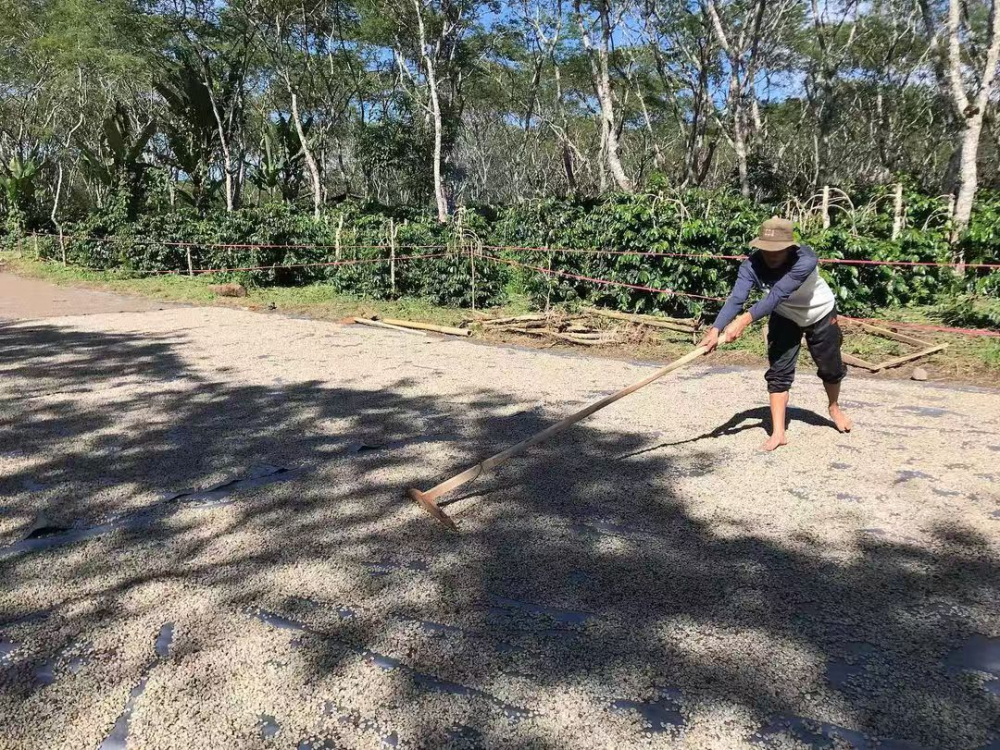
At the same time, the changeable climate also makes washed processing difficult to carry out, because after the coffee beans complete fermentation in water, it is hard to get enough sunlight to dry them. Thus, wet hulling emerged. Wet hulling is often jokingly called "semi-washed processing" because its operation is close to washed processing, yet not completely washed. Specifically, wet hulling first borrows the first half of the washed process, allowing the green coffee beans to ferment, then lays the beans, still with their parchment layer, out in the sun to dry. After drying to a certain degree, the parchment layer is removed and drying continues. In this way, the coffee beans can be dried in the shortest possible time, reducing the chance of mold growth. Now let Front Street show you the complete steps of wet hulling.
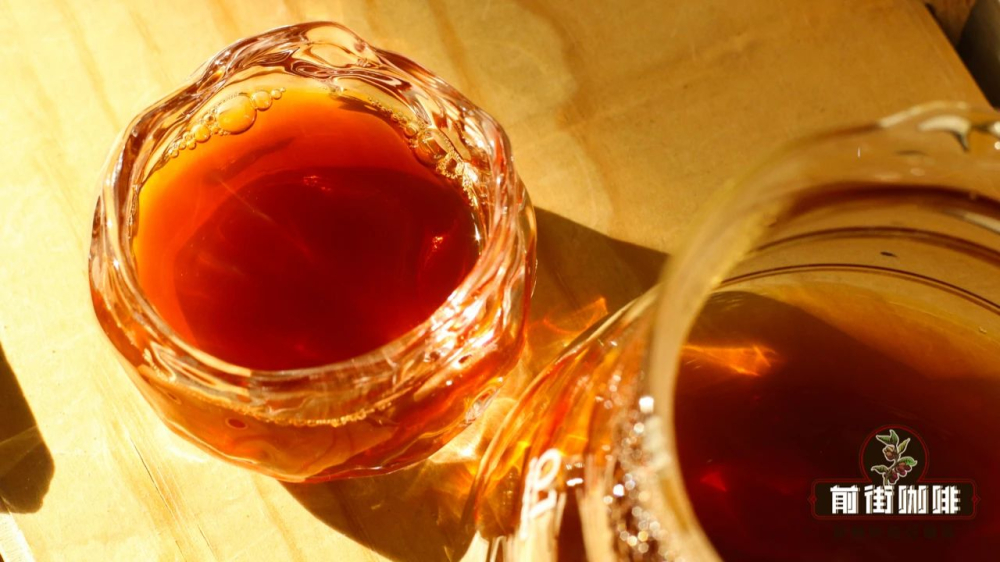
The processing flow of wet hulling The first half of wet hulling is the same as washed processing. After the fresh cherries are picked, they are first floated in clean water to remove defective cherries floating on the surface; then the skin and pulp are removed by machine to take out the green coffee beans still covered with mucilage and parchment layer; afterward, the beans are placed in a tank to ferment, breaking down the mucilage layer attached to the surface. The fermentation time depends on the specific situation, roughly between 12 and 36 hours; after the immersion fermentation is complete, the washing stage comes to an end, and the second half of wet hulling begins. Coffee farmers spread the fermented green coffee beans, still with their parchment layer, out in the sun to dry. If the weather remains sunny, the moisture content of the beans can quickly drop to between 30% and 50%; at this point drying is paused, and a huller is used to remove the parchment layer; finally, drying continues until the moisture content drops to about 12%.
The product of wet hulling—goat hoof beans Because the huller used to remove the parchment layer is quite forceful, while stripping the parchment layer it easily crushes or damages the green coffee beans. Especially at the two ends of the beans, friends who have seen Mandheling green beans will notice that some beans have cracked lines resembling goat hooves, so they are called "goat hoof beans."
(The bean on the right is a goat hoof bean) Thus a saying spread that it is these goat hoof beans that create Mandheling's signature flavor. But this is not the case—goat hoof beans are merely the product of mechanical damage and have no substantial effect on flavor. What does wet-hulled coffee taste like? This seemingly time-saving and efficient wet-hulling process, if not strictly controlled, is extremely prone to moisture and mold in Indonesia's hot and humid environment. However, besides Sumatra, Sulawesi in Indonesia and Papua New Guinea also commonly adopt this method. The reason is that Indonesia has a tropical rainforest climate, with air humidity as high as 70% to 90%, making it impossible to dry green beans through long sun exposure, while the cost of washed processing is relatively high, so coffee farmers can only figure out this semi-washed alternative. Although each step is greatly shortened in time, the green beans after removal of the parchment layer still absorb moisture from the hot and humid air, so the resulting Mandheling often carries a stuffy aroma of wood, herbs, and spices. Flavor characteristics of medium-dark roasted Golden Mandheling coffee
Front Street's flavor descriptions for every coffee are based on freshly roasted beans. If coffee beans are stored for more than a month, much of the aroma may already have been lost, and it is difficult to reproduce the original performance during brewing. Front Street deeply understands the importance of freshness, so it insists on shipping only coffee beans freshly roasted within 5 days, allowing everyone to enjoy the fullest optimal tasting period upon receipt. When brewing medium-dark roasted coffee beans, Front Street uses different parameters from light-roasted beans to bring out a richer chocolate tone in the coffee. Medium-dark roasted beans undergo more complete caramelization than light-roasted beans and more easily release bitter large-molecule substances. To avoid extracting too many off-flavors, Front Street appropriately lowers the water temperature—the brewing water temperature for light-roasted coffee is 91 to 93°C, while for medium-dark roasted coffee beans Front Street recommends 87 to 88°C.
The grind size is also made coarser, paired with a Kono dripper for staged extraction. The Kono dripper has fewer ribs and they are positioned lower, allowing the filter paper to fit closely against the wall, thereby restricting airflow and extending the contact time between water and coffee grounds, so the coffee grounds are fully extracted and the body is enhanced. Dripper: Kono dripper Water temperature: 88°C Coffee dose: 15 g Coffee-to-water ratio: 1:15 Grind size: 70-75% passing through a No. 20 standard sieve
Front Street uses staged extraction: first bloom with 30 g of water for 30 seconds, then pour in a small stream in circles until 125 g for a stage break, and when the water level drops and is about to expose the coffee bed, continue pouring until 225 g and stop. When the water level drops again and is about to expose the coffee bed, remove the dripper. (Starting timing from the beginning of the bloom) The extraction time is 2 minutes 00 seconds.
The above content is compiled by CoffeeHunters, a coffee news website.


