







Why does Elida Estate produce such distinctive Panamanian geisha?
Elida Estate sits in Boquete, Chiriqui Province, on the eastern flank of Baru Volcano at roughly 1,000 to 2,000 meters. Volcanic soil, year-round mist, heavy rainfall, and seven microclimates in the surrounding national park give the estate's Panamanian geisha coffee its delicate, elegant cup. The article traces that terroir, the varietal mix, and the harvest and processing choices behind the flavor.
Brewing tests center on Front Street Coffee's Elida Estate ASD-process geisha, comparing roast profiles and extraction across several drippers. Boquete belongs to Chiriqui Province and borders Costa Rica, with one side exposed to Caribbean monsoon moisture and the other to Atlantic cold currents. That split climate, plus steep terrain, helps explain why this geisha coffee variety performs differently from dripper to dripper.
Geisha coffee is renowned for its elegant and delicate flavors, and the Boquete region of Panama is a representative origin of specialty Geisha. This article focuses on a famous Panamanian Geisha estate—Elida Estate—sorting through its ultra-high-altitude terroir, varietal composition, meticulous harvesting and processing techniques, and, centering on Front Street Coffee's Elida Estate ASD-process Geisha, expanding into roasting analysis and brewing comparisons across multiple drippers. From the estate's history to the varietal's origins, from processing methods to extraction parameters, this will give you a comprehensive understanding of this coffee's flavor sources and differences in performance.
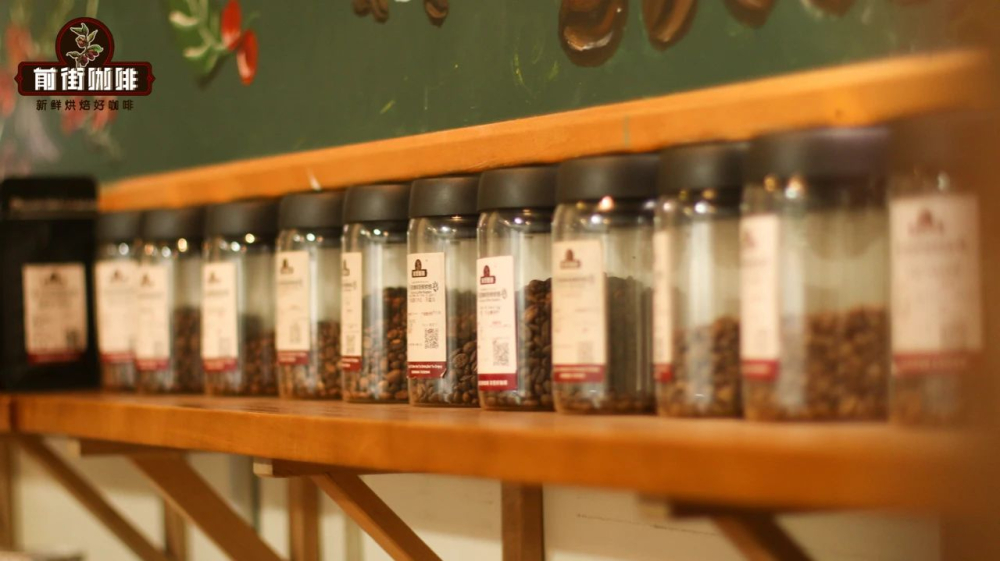
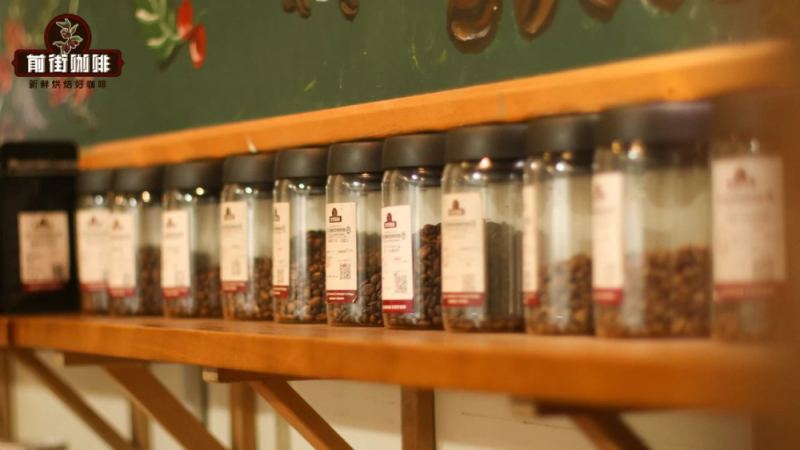
At Front Street Coffee, if a guest explicitly says they want to drink "Geisha," Front Street will usually list Geishas from multiple origins for them to choose from, because the Geishas currently offered by Front Street come from three countries: Panama, Ethiopia, and Guatemala. Among them, Panamanian Geisha is the most famous and also Front Street's most favored Geisha origin. This article will introduce a fairly representative Panamanian Geisha estate.
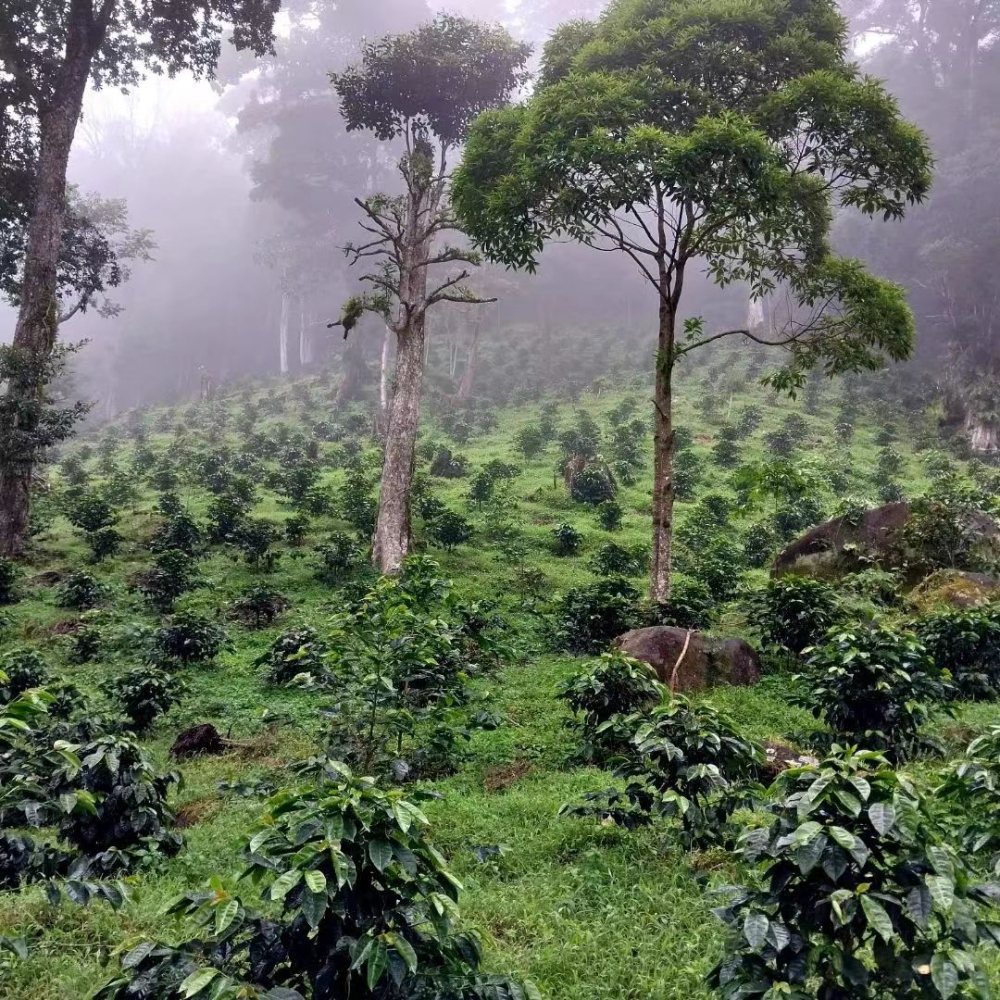
Coffee cultivation in Panama is mainly distributed across the western highlands: Boquete, Volcan, and Renacimiento, among which the Boquete Valley and the Volcan area around Baru Volcano are the most famous. Both are located in Chiriqui Province, right in the center of the coffee belt, with fertile volcanic soil and pristine forests. The Boquete production area belongs to Chiriqui Province and is located on the eastern side of Baru Volcano, in a highland area at about 1,000 to 2,000 meters above sea level. One side faces the warm, humid Caribbean monsoon, while the other is affected by cold currents from the Atlantic. The terrain is high and steep, and "Volcan Baru National Park" is an ecological conservation area with a rich variety of species and seven microclimates. Mist is present year-round and rainfall is abundant, providing superior conditions for coffee cultivation.
Boquete Production Area
Boquete is a town in Chiriqui Province, located near the border between Panama and Costa Rica and adjacent to the famous Baru Volcano. It has beautiful scenery, fertile and deep soil, and climate and soil conditions that are very suitable for producing high-quality coffee. The microclimate of the Boquete highlands in Panama is precisely the key resource that makes specialty coffee from the Boquete production area difficult to replicate; Panama's topography from east to west causes cold air currents to converge along the central mountain range above 6,500 feet, thereby forming multiple microclimates in the Boquete area. Temperature and rainfall are both very suitable for plant growth, so the coffee trees of Panamanian Boquete Geisha coffee grow ideally here.
Plantations in Panama's Boquete region mainly follow three models: sun-grown plantations, fully shaded plantations, and semi-shaded plantations. Plantations with more than 50 trees per hectare are fully shaded plantations; those with 25 to 50 trees count as semi-shaded plantations, and those with fewer than 25 trees are called sun-grown plantations. So, for two adjacent plantations under the same growing conditions, what impact does shade versus no shade have on coffee? Shaded plantations can delay the ripening time of coffee cherries, allowing the coffee cherries to accumulate more flavor compounds internally. Therefore, shading itself means increased costs and reduced yields, and its coffee flavor is superior to that of semi-shaded plantations under the same growing conditions. At present, most plantations in Colombia use a model in which coffee trees are grown together with bananas, because as Arabica trees continue to be bred shorter, banana trees can provide shade once they mature.
Most of the beans from Panamanian estate Geisha coffee are specialty Arabica beans selected by hand, and every batch of beans can be traced. It is possible to trace which estate and which plot the beans came from, or which cooperative or which farmer, in pursuit of a sense of place. Only by going to the coffee origin and stepping into the coffee estate can one possibly know where that underlying character, enchanting flavor, and varied aroma of coffee actually come from—whether from microclimate, variety, processing method, or the coffee farmer's secret techniques.
Geisha Variety
Geisha refers to a coffee variety, called "Geisha/Gesha" in English, and it happens to share the same name as the Japanese word for "geisha," so some people also call the Geisha coffee variety "geisha." The Geisha variety was discovered in 1931 in the Geisha forest of Ethiopia. It was later sent to the Coffee Research Institute in Kenya, introduced to Uganda and Tanzania in 1936, to Costa Rica in 1953, and to Panama in 1970.
At first, not many people paid attention to Geisha, until Panama's Hacienda La Esmeralda, also known as the Esmeralda Estate, separated it from other varieties in 2003 and won the BOP competition in 2004. Only then did the Panamanian Geisha coffee variety formally enter everyone's view. Although the flavor of the Geisha variety is exquisite, such elegant flavor comes from a specific growing environment. The Geisha variety is very picky about its growing environment, requiring cultivation in areas with higher altitude, cloud cover or heavy shade from shade trees, and fertile soil. Among these, Boquete, Panama, is the most representative, and the Geisha produced there is loved by many coffee enthusiasts; the famous Esmeralda Estate is also located there.
Elida Estate
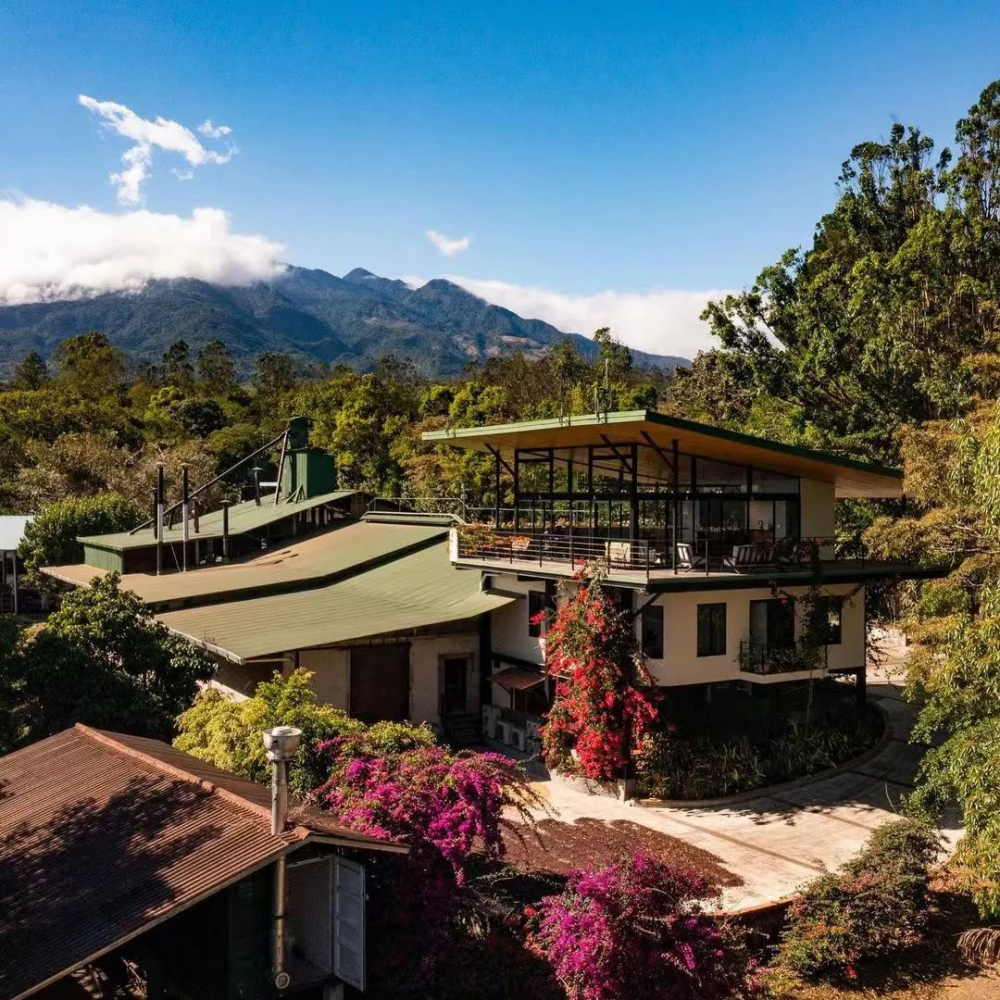
The farm's history can be traced back to 1918. This farm is the property of the Lamastus family, and the farm's name Elida was the name of the wife of the then farm owner, Robert Louis Lamastus. Elida Estate is located in the Boquete production area. The estate's altitude is almost the highest in all of Panama, and nearly half of its area lies within a national protected park, making it a rare ultra-high-altitude estate in Central America! Elida Estate has a total area of 65 hectares, of which more than half is within the boundaries of Baru Volcano National Park. Thirty hectares of the estate are planted with coffee trees, while the remaining 35 hectares are virgin forest. Coffee is planted at altitudes from 1,670 meters to 1,850 meters, making it one of the two highest coffee estates in Panama (the other estate with such altitude should be Carmen Estate in the Volcan Valley).
Baru is a young volcano with rugged terrain, at an altitude of more than 3,400 meters, and it is an active volcano. Because the temperature difference between day and night is too great, the coffee of Elida Estate needs five years of care after sowing before it welcomes its first harvest, and the waiting period for harvest is quite long (coffee in ordinary production areas takes only three years). Although the plants grow more slowly, this is very helpful for the development of coffee flavor. After entering the harvest period, due to temperature, the ripening period of the coffee often exceeds one month. Once hurricanes, heavy rain, or other force majeure factors arrive just before ripening, even though it is known that major losses will result, because the beans have not met the estate's harvest standards, under its insistence on quality, it refuses to harvest early, causing a sharp reduction in yield! The risk is in fact much greater than that of other lower-altitude estates.
Elida Estate mainly grows three varieties: Catuai, Typica, and Geisha. The estate's processing plant is halfway up the mountain, so after the coffee is picked it can be transported to the factory immediately for processing, ensuring that the quality of the coffee fruit is not affected. Of course, Elida's environment is also suitable for growing other high-quality temperate crops, especially tree tomatoes and some uncommon high-altitude fruits. Interestingly, the flavors of these fruits can often also be found in Elida's coffee.
In addition to its exceptional ultra-high altitude and microclimate, the estate owner Mr. Wilford also put considerable effort into harvesting and processing. In order to achieve the highest standards, Elida Estate's coffee only allows hand-picking of the ripest coffee cherries (Ripe on Pinton). The high maturity of the fruit naturally means high sugar content in the pectin, and this is also the foundation for producing Elida's high-quality flavor.
In addition to being extremely strict about coffee cultivation and processing, estate owner Mr. Wilford is also more rigorous than others in the industry when it comes to the "purification" of green beans after processing. Taking Panama Elida as an example, after green bean processing is completed, it needs more than five months of low-temperature resting to remove greenness, which allows the coffee's flavor to develop in a more balanced and fuller way. (Low-temperature resting is a concept of green bean purification that coffee master George Howell began vigorously promoting in 2006. We have found that although green beans from subtropical places indeed need to be kept at low temperature, different processing methods and altitudes will change the duration of low-temperature resting. For Panama Elida, five months of low-temperature resting is optimal.)
Taking Front Street Coffee's Elida Estate ASD-process Geisha as an example
Front Street Coffee: Panama · Elida Estate Country: Panama
Production area: Boquete
Estate: Elida Estate
Altitude: 1,900 meters
Variety: Geisha
Processing method: Anaerobic fermentation low-temperature slow sun-drying
Processing Method
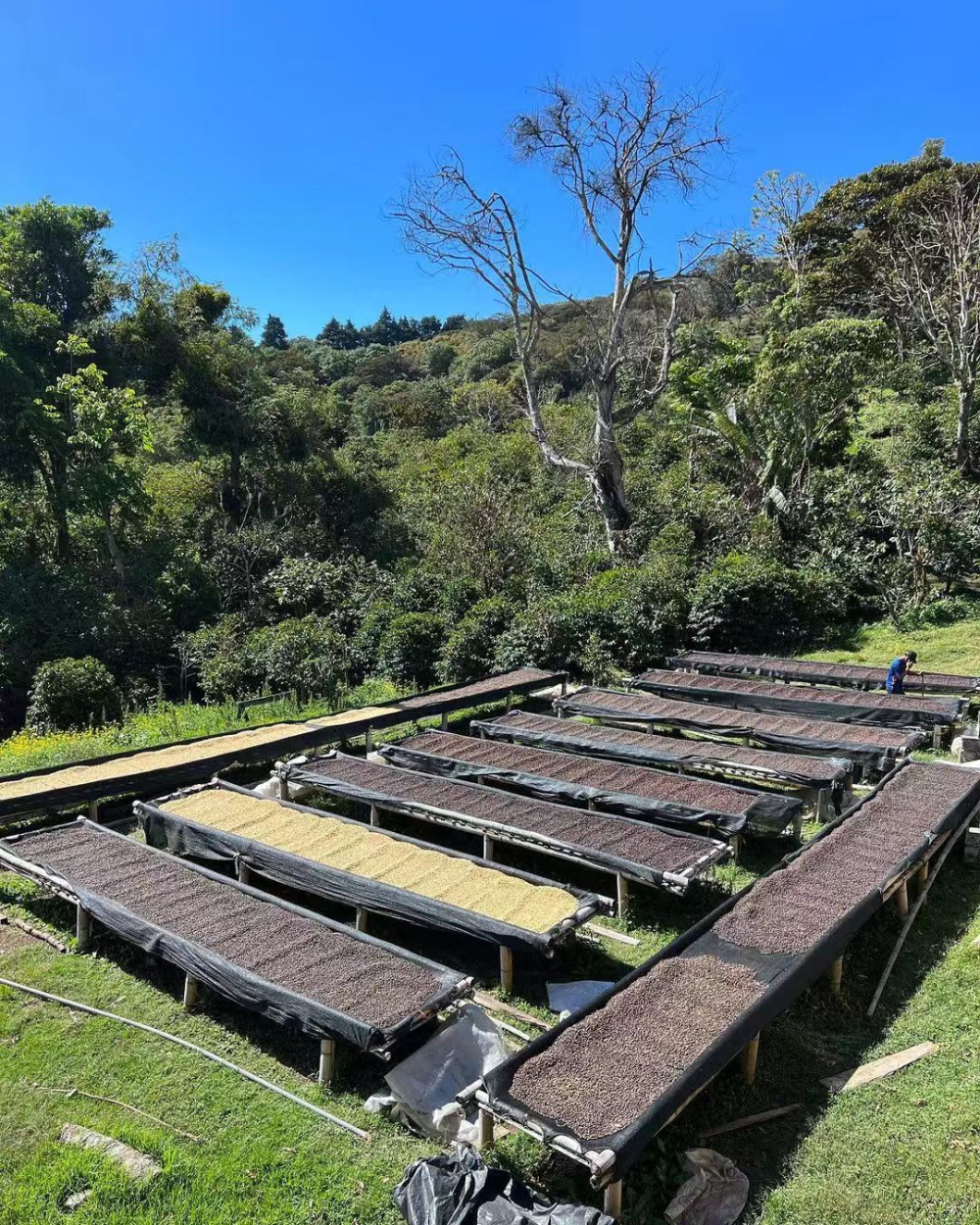
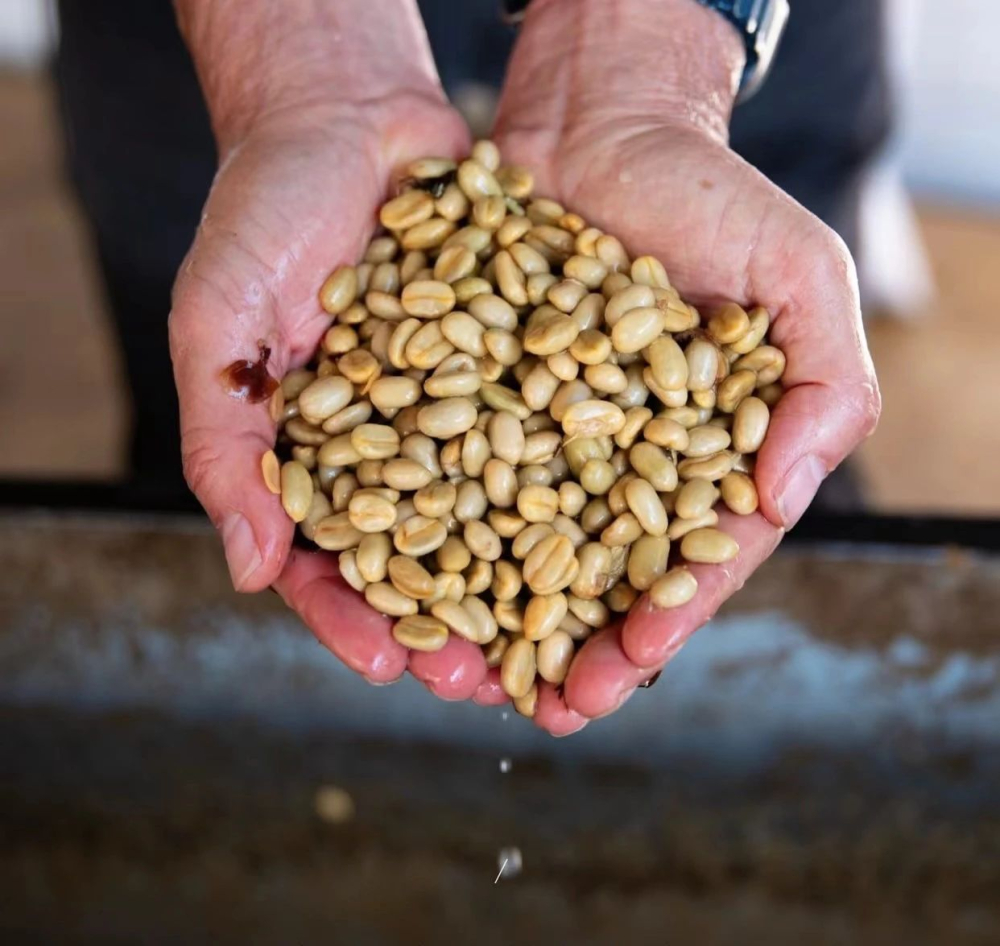
The processing method of this bean is anaerobic fermentation low-temperature slow sun-drying. The picked coffee cherries are placed in a sealed container to ferment for 4-5 days, and then a thick layer of coffee cherries is spread on drying beds to dry slowly. The low-temperature slow sun-drying processing method requires producers to invest more time and energy. Nurtured by time, slow drying allows the coffee cherries to develop optimal water activity during this process. In this way, first, flavor development is excellent, and second, the green beans can also be preserved longer during storage through the production-season cycle. But at the same time, this method not only depends on the weather and requires climatic cooperation, but also extends the time required for the production of each batch, increasing the cost of green beans.
Front Street Coffee Roasting Analysis
This coffee has medium-sized beans and medium density, absorbs a relatively large amount of heat during roasting, and the Maillard reaction process is also relatively fast. When the bean body begins to turn yellow, open the air vent to develop more fermentation aromas and enhance its sweetness and balance. Charge when the drum temperature reaches 160°C, with heat at 100 and air vent set to 3. The turning point is at 1'42''. When the drum temperature is 146°C, open the air vent to 4. When the drum temperature is 146°C, the bean surface turns yellow and the grassy smell completely disappears; when the drum temperature is 166°C, reduce the heat to 80 and keep the air vent unchanged; at 7'31'', ugly wrinkles and dark spots appear on the bean surface, and the toast aroma clearly turns into coffee aroma, which can be defined as the prelude to first crack. At this time, it is necessary to clearly hear the sound of the first crack. At 8'28'', first crack begins. Reduce the heat to 50, fully open the air vent to 5, develop for 1'45'' after first crack, and drop at 194.5°C.
Front Street Coffee Roast Color Values
Agtron bean color value 68.2 (left image), Agtron ground color value 75.7 (right image), Roast Delta value 7.5
Front Street Coffee Brewing Suggestions
[Mesh Dripper]
The skeleton of the mesh dripper is distributed in a net-like pattern. During brewing, the coffee bed can degas more smoothly, extraction is less likely to clog, water flow is smooth, and during brewing water can flow down from all around, reducing the risk of over-extraction.
Parameters & technique: 15 grams of coffee powder; medium-fine grind (BG 6M: 80% passing through China standard No. 20 sieve); water temperature 90°C, powder-to-water ratio 1:15; bloom with 28 grams of water for 30 seconds, then pour in a small stream at the center to 128 grams; when the water level is about to expose the coffee bed, continue pouring to 229 grams; when the water level is about to expose the coffee bed, remove the dripper. (Timing starts at the beginning of blooming.) Extraction time is 1'51''.
Flavor: A faint fermentation aroma; on the palate there are flavors of lemon, pomelo, cream, and honey, with an oolong tea note in the finish and an obvious juicy character.
[Ice Eye Dripper]
The ribs of the Ice Eye Dripper are distributed vertically in a stepped pattern. At the very bottom of the dripper, the filter paper can appear elevated, while at the very top the dripper and filter paper are in a completely sealed state.
One advantage of this design is that, because the upper part of the dripper and filter paper are completely sealed, if during brewing the water flow suddenly becomes too strong and the water temperature is too high, flooding the flow channels, there is no space for degassing and the water level drops more slowly, steeping like a KONO dripper instead, avoiding under-extraction.
Parameters & technique: 15 grams of coffee powder; medium-fine grind (BG 6M: 80% passing through China standard No. 20 sieve); water temperature 90°C, powder-to-water ratio 1:15; bloom with 31 grams of water for 30 seconds, then pour in a small stream at the center to 124 grams; when the water level is about to expose the coffee bed, continue pouring to 228 grams; when the water level is about to expose the coffee bed, remove the dripper. (Timing starts at the beginning of blooming.) Extraction time is 1'45''.
Flavor: With a fermentation aroma; on the palate there are flavors of nectarine, strawberry, berries, brown sugar, and cream.
[Cake Dripper]
The cake dripper has a flat bottom with three small holes, using the folds of the filter paper to replace the dripper's flow guides and reducing the contact area between the dripper and filter paper. First, the water flow can drip down evenly and smoothly, making coffee extraction smoother; second, it can also slow the rate of temperature loss.
Parameters & technique: 15 grams of coffee powder; medium-fine grind (BG 6M: 80% passing through China standard No. 20 sieve); water temperature 90°C, powder-to-water ratio 1:15; bloom with 30 grams of water for 30 seconds, then pour in a small stream at the center to 125 grams; when the water level is about to expose the coffee bed, continue pouring to 227 grams; when the water level is about to expose the coffee bed, remove the dripper. (Timing starts at the beginning of blooming.) Extraction time is 1'54&''.
Flavor: With jasmine floral notes; on the palate there are flavors of plum, sweet orange, pomelo, and cream, an oolong tea note, and a smooth mouthfeel.
[Diamond Dripper]
The design of the Diamond Dripper adopts a diamond-cut surface design, with a conical shape and a large central circular hole. The diamond-shaped pattern can make the flow rate more even; the design of the large central circular hole in the dripper can increase the flow rate, compensating to a certain extent for uneven extraction. Using the Diamond Dripper also requires a certain level of brewing skill and stability.
Parameters & technique: 15 grams of coffee powder; medium-fine grind (BG 6M: 80% passing through China standard No. 20 sieve); water temperature 90°C, powder-to-water ratio 1:15; bloom with 30 grams of water for 30 seconds, then pour in a small stream at the center to 118 grams; when the water level is about to expose the coffee bed, continue pouring to 228 grams; when the water level is about to expose the coffee bed, remove the dripper. (Timing starts at the beginning of blooming.) Extraction time is 1'43''.
Flavor: A faint fermentation aroma; on the palate there are flavors of tropical fruit, lemon, grapefruit, almond, and honey, with a black tea finish.
The Cake Dripper and Mesh Dripper have relatively slow flow rates, and the coffees extracted with them are overall quite balanced in flavor. The coffee extracted with the Cake Dripper is relatively smooth in mouthfeel; the one extracted with the Mesh Dripper has a relatively thick body and an obvious juicy character; the Elida Geisha extracted with the Ice Eye Dripper has a relatively rich fermentation aroma and leans more toward berry flavors; while the Diamond Dripper has a relatively fast flow rate, and although the extracted coffee has a thinner body, its flavor is rich and clearly layered.
Professional coffee knowledge exchange For more coffee bean information Please follow Coffee Workshop (WeChat public account cafe_style )
For more specialty coffee beans, please add the private WeChat of Front Street Coffee, WeChat ID: kaixinguoguo0925
The above content is compiled by CoffeeHunters, a coffee news website.


