







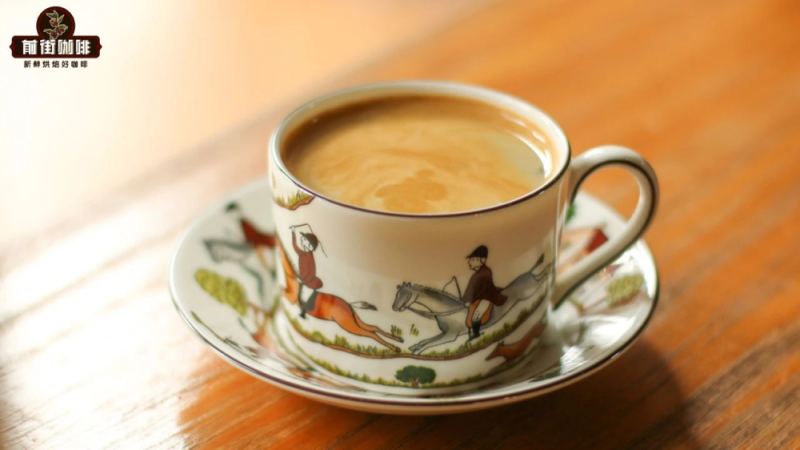
How Does Americano Coffee Differ From Espresso?
Americano is not simply espresso with water in every case. It can be made by brewing directly in a drip coffee maker, or by pulling espresso and adding hot water. The two versions differ in brewing method, flavor expression, and history, with the espresso-based route giving a denser base that water then lightens.
The name traces to World War II, when American officers in Europe diluted the strong espresso they found there to mimic the drip coffee they knew at home. A proper espresso shot is pulled on a machine with pressure capability, commonly around 20 grams of grounds, a 1:2 ratio, 9 bar, and 40 grams of liquid in the cup.
What exactly is the difference between Americano and Espresso? Many people assume that Americano is simply espresso with added water, but in fact the two differ noticeably in brewing method, flavor expression, and historical origins. Starting from the actual practices at Front Street Coffee, this article sorts out the two ways of making Americano and their historical origins, introduces the extraction conditions and flavor standards of authentic espresso, and breaks down the steps of making espresso in detail. It also shares the reasons for recommending Front Street specialty espresso blend coffee beans, as well as specific recipes for iced Americano and hot Americano, helping you fully understand the essential differences between these two coffees.

Americano can be made in two ways: one is by brewing directly with a drip coffee maker, and the other is by using espresso as a base and then adding hot water. To understand the difference between these two methods, it helps to start with the history of Americano. Drip coffee makers were first widely popularized in American households, and Americans had long been accustomed to the style of drip coffee—lighter in taste, thin in body, and with a pronounced watery quality. During World War II, the coffee American officers encountered in Europe was almost exclusively espresso, which tasted strong and sharp.
To recreate the familiar taste of drip coffee, they added water to dilute the espresso, and as a result the sharpness was greatly reduced, making it smooth and easy to drink. Because Europeans at the time did not drink coffee this way, this method came to be called "Americano." In fact, the name carried a hint of mockery—it was a way for Europeans to tease Americans for not being able to handle espresso. The French even privately called Americano "sock coffee" to ridicule its poor taste.
Espresso
A proper cup of espresso must be extracted using an espresso machine with pressure capability. The parameters during extraction are not fixed; they need to be adjusted flexibly according to the specific espresso machine, grinder, and coffee beans being used.
Front Street Coffee previously provided a set of initial reference extraction data for espresso: use 20g of grounds (with a double espresso filter basket), at a 1:2 coffee-to-liquid ratio and 9 bar pressure, extract 40g of coffee liquid, with the time controlled between 25 and 30 seconds. After extraction is complete, make corresponding fine adjustments based on the actual flavor performance.
A qualified cup of Espresso should meet several conditions: the surface is covered with golden crema, the crema layer is complete without holes, and the coffee liquid below cannot be seen through it, while it also gives off a rich aroma. High-quality espresso is smooth on entry with no grittiness; within its intense coffee flavor there is a slight acidity, strong but not burnt or bitter, and it finishes with excellent sweetness, allowing both the throat and tongue to clearly perceive sweetness.
The Production Steps of Americano and Espresso
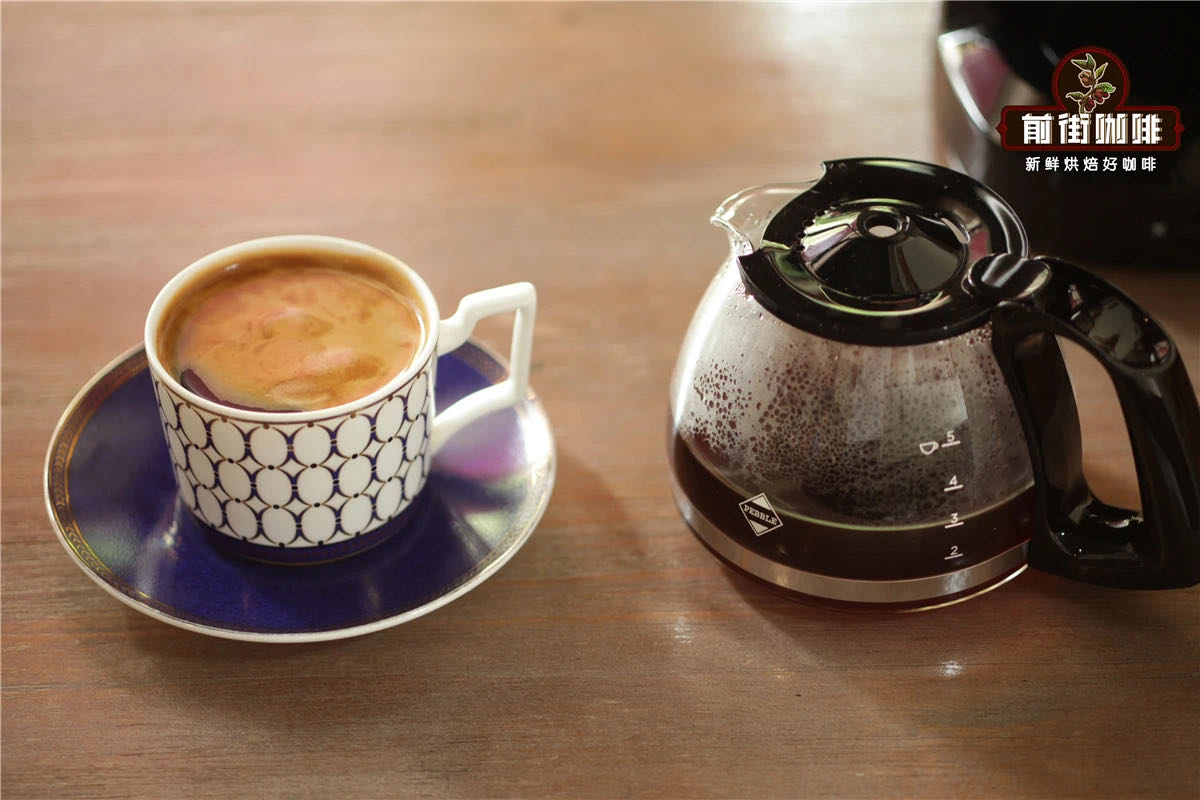
For bean selection, Front Street Coffee recommends using coffee beans specifically designed for espresso extraction, and suggests purchasing [Front Street Specialty Espresso Blend Coffee Beans]. This blend combines recipes from two major producing regions, Brazil and Colombia. Whether making espresso or Americano, the taste performs quite well, with rich chocolate aroma, alluring nutty flavors in the middle, and a lasting sweet finish, making it very enjoyable.
Many coffee lovers who come to Front Street and see the baristas operating the espresso machine behind the counter feel admiration and wonder how they manage this seemingly complex equipment. In fact, what baristas master are only the detailed steps for making espresso; as for how the machine operates internally, most baristas do not know. Today, Front Street will walk everyone through the complete process of making espresso, using the standard operating procedure at Front Street Coffee as an example:
Step 1: Wipe the filter basket to ensure the coffee filter basket is dry with no water
Step 2: Weigh the coffee grounds, use an electronic scale to weigh an appropriate amount of coffee grounds, keeping the error within plus or minus 0.1 grams
Step 3: Distribute the grounds
Step 4: Tamp the grounds
Step 5: Knock the portafilter into place
Step 6: Press the button to extract
Step 7: Knock out the portafilter and clean the brew head.
Front Street espresso extraction recommendation: 20g dose, extract 40g coffee liquid, time 30 seconds
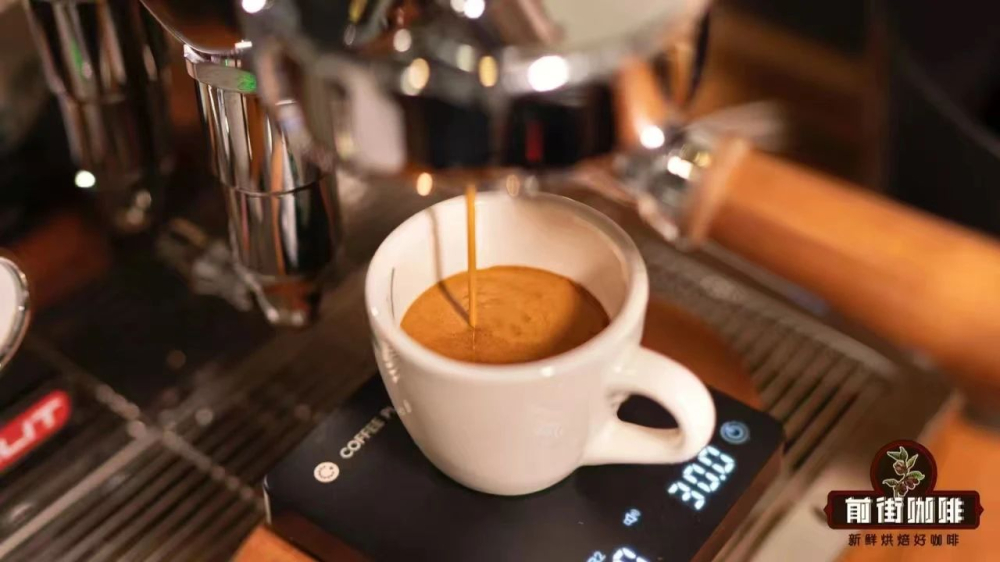
At this point, a shot of espresso is fully extracted. However, for most people, its concentration is ultimately too high, and drinking it directly is quite difficult, so milk or drinking water is usually added to make a latte or Americano before enjoying it, which makes the taste much friendlier.
At Front Street, the standard way to make iced Americano is: first prepare 100g of ice cubes, then pour in 120g of drinking water, and finally drizzle in Front Street specialty blend espresso. A standard iced Americano is then complete. If making hot Americano, simply replace the ice water with 160g to 200g of warm water, then drizzle in Front Street specialty blend espresso, and it is done.
The above content is compiled by CoffeeHunters, a coffee news website.


