








Is Kilimanjaro Coffee Bitter or Sweet and Floral?
Tanzanian coffee is not simply bitter. Beans from the Kilimanjaro region, introduced by missionaries with the Bourbon variety, carry sweetness, acidity and floral-fruity aromas when roasted and brewed with attention. Cupping and pour-over parameters decide whether those notes come forward or whether the cup reads dull and harsh, which is why the same bean can taste very different between setups.
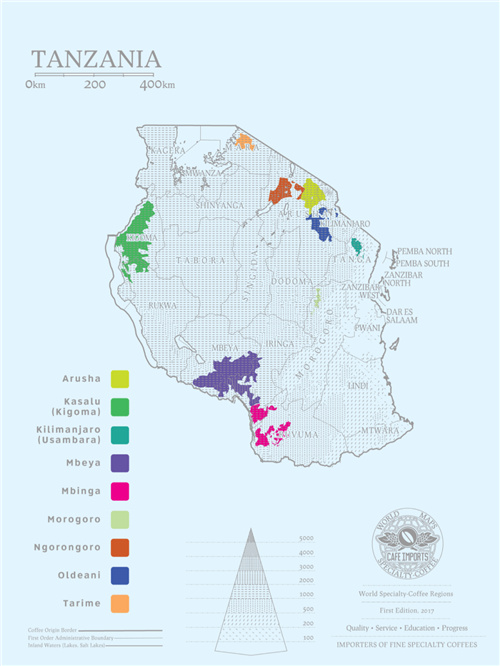
Mount Kilimanjaro sits in northeastern Tanzania and is the highest range in Africa, with snow at the summit while valleys stay warm. Rainfall ranges from roughly 800 to 900 mm in the river valleys to 1,600 to 1,800 mm on windward slopes. That range of altitude and moisture shapes kili coffee, and comparing it with southern Bourbon lots shows how processing and roast shift flavor.
On the African coffee map, Tanzania is often overshadowed by the brilliance of Ethiopia and Kenya. In this article, Front Street Coffee takes you deep into the Kilimanjaro producing region, breaking down everything from varieties and processing methods to roasting, cupping, and pour-over parameters. Is Tanzanian coffee actually bitter? How do its sweetness, acidity, and floral-fruity aromas perform? And how can you brew it to maximize its strengths and minimize its weaknesses? We'll also compare the flavor differences with the Bourbon variety from the southern region, helping you fully understand this East African origin known as the "coffee gentleman."

To learn more about specialty coffee, welcome to follow: Front Street Coffee
When it comes to African coffee-producing countries, which one first comes to mind? Is it Ethiopia, the earliest birthplace of coffee? Or Kenya, known for its bright fruit acidity? Or perhaps Rwanda, nestled between the two? So, have you heard of Tanzania coffee, squeezed in among them? Today, Front Street is here to introduce a coffee bean from Mount Kilimanjaro in Tanzania.
Tanzania is a quintessential representative of East Africa, and when Tanzanian coffee is mentioned, one cannot help but bring up the coffee produced in the Kilimanjaro region. Coffee cultivation in Tanzania was first introduced by missionaries, who brought the Bourbon variety at the time. Mount Kilimanjaro sits in northeastern Tanzania and is the highest mountain range in Africa. The coffee produced in this region is considered the benchmark of Tanzanian coffee, and Front Street's bean list includes this coffee bean from Mount Kilimanjaro.
Front Street has found that many people have a stereotypical impression of African countries as hot and arid, but the Kilimanjaro region of Tanzania is an exception. Why does Front Street say this? Because although temperatures in the Kilimanjaro highlands can reach as high as 59 degrees Celsius, the summit is covered in snow year-round, with temperatures dropping to as low as minus 34 degrees Celsius, earning it the name "Equatorial Snow Peak." In terms of precipitation, the river valleys can receive 800 to 900 mm of annual rainfall, while the highlands are cool and rainy, with windward slopes receiving 1,600 to 1,800 mm of annual precipitation. Coffee grown under the climatic and geographical conditions created by this "Equatorial Snow Peak" is highly conducive to the accumulation of flavor compounds.
In Front Street's view, this unique climate makes it a prime location for growing coffee. The volcanic soil of the Kilimanjaro highlands is fertile, slightly acidic, and well-draining. The combination of climate and geology makes the coffee's flavor even richer. That's why this Tanzanian coffee bean listed by Front Street has excellent sweetness and a red wine character, with the typical characteristics of African Ethiopian coffee beans.

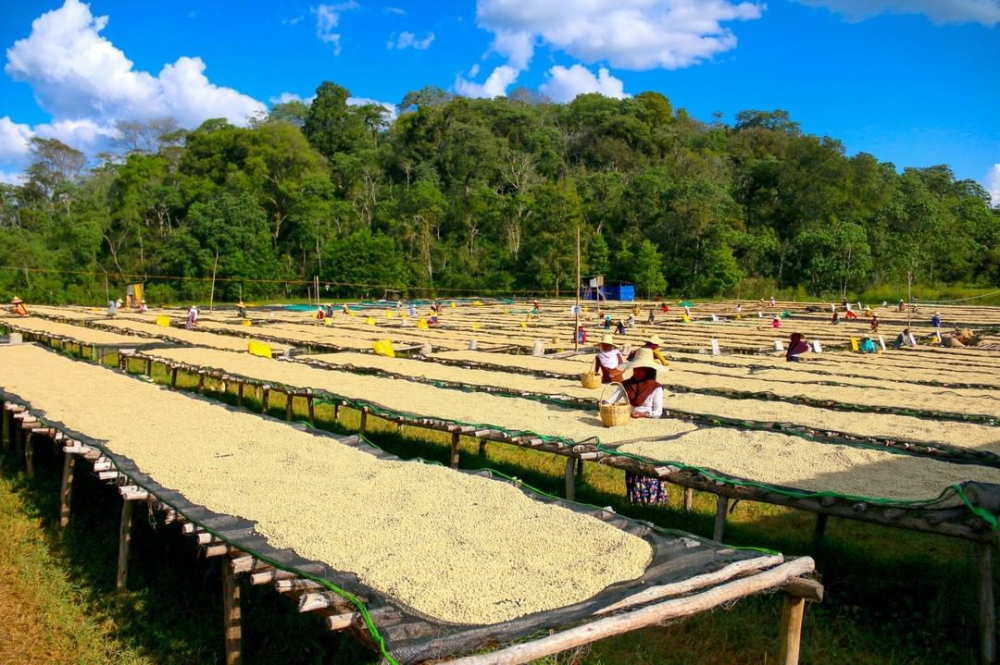
Due to Tanzania's abundant rainfall, the washed processing method is commonly used locally to process coffee beans. This Kilimanjaro coffee from the northern highlands of Tanzania, listed by Front Street, is indeed washed processed. Coffee farmers send the harvested cherries to the nearest processing station for processing. The general washed processing procedure is as follows:
1. First, screen and remove impurities mixed in with the coffee cherries. 2. Remove the coffee pulp and outer skin. 3. Send to fermentation tanks to remove the mucilage layer adhering to the parchment through fermentation. 4. After washing clean, dry the beans until moisture content drops to around 11%, then they can be stored. Because of the washed processing, the silver skin center line is preserved in Front Street's Tanzanian Kilimanjaro coffee beans. However, too much silver skin on coffee beans is not a good thing, because after grinding into powder, the silver skin mixes into the coffee grounds and affects the extraction of coffee compounds.
Front Street's Tanzanian Kilimanjaro green coffee beans are uniform in size, slightly elongated in shape, and plump, which is the typical Ethiopian Typica bean shape. The coffee varieties commonly grown in Tanzania include Bourbon, Typica, and Kent. The variety of Front Street's Tanzanian coffee is Typica, one of the ancient varieties, with excellent flavor performance and widely recognized as a specialty coffee variety. Its only shortcomings are low yield and susceptibility to leaf rust disease.
The new-season Tanzanian Kilimanjaro coffee beans have relatively high moisture content, so the dehydration time needs to be extended to allow the bean surface and core to heat evenly. At the same time, to highlight the sweetness, acidity, and floral-fruity aromas of this Tanzanian coffee, Front Street decided to use a medium-light roast, extending the caramelization reaction after first crack to make the sweetness more pronounced.
Front Street then cupped this roasted coffee bean. The dry aroma of this Tanzanian Kilimanjaro coffee carries a faint orange freshness and caramel notes, which become more prominent in the wet aroma. Throughout Front Street's cupping process, when the coffee liquid was hot, the flavor leaned toward citrus, nuts, honey, and cream; after cooling, it shifted to acetic acid, cocoa, and a spicy peppery spice sensation similar to black pepper.
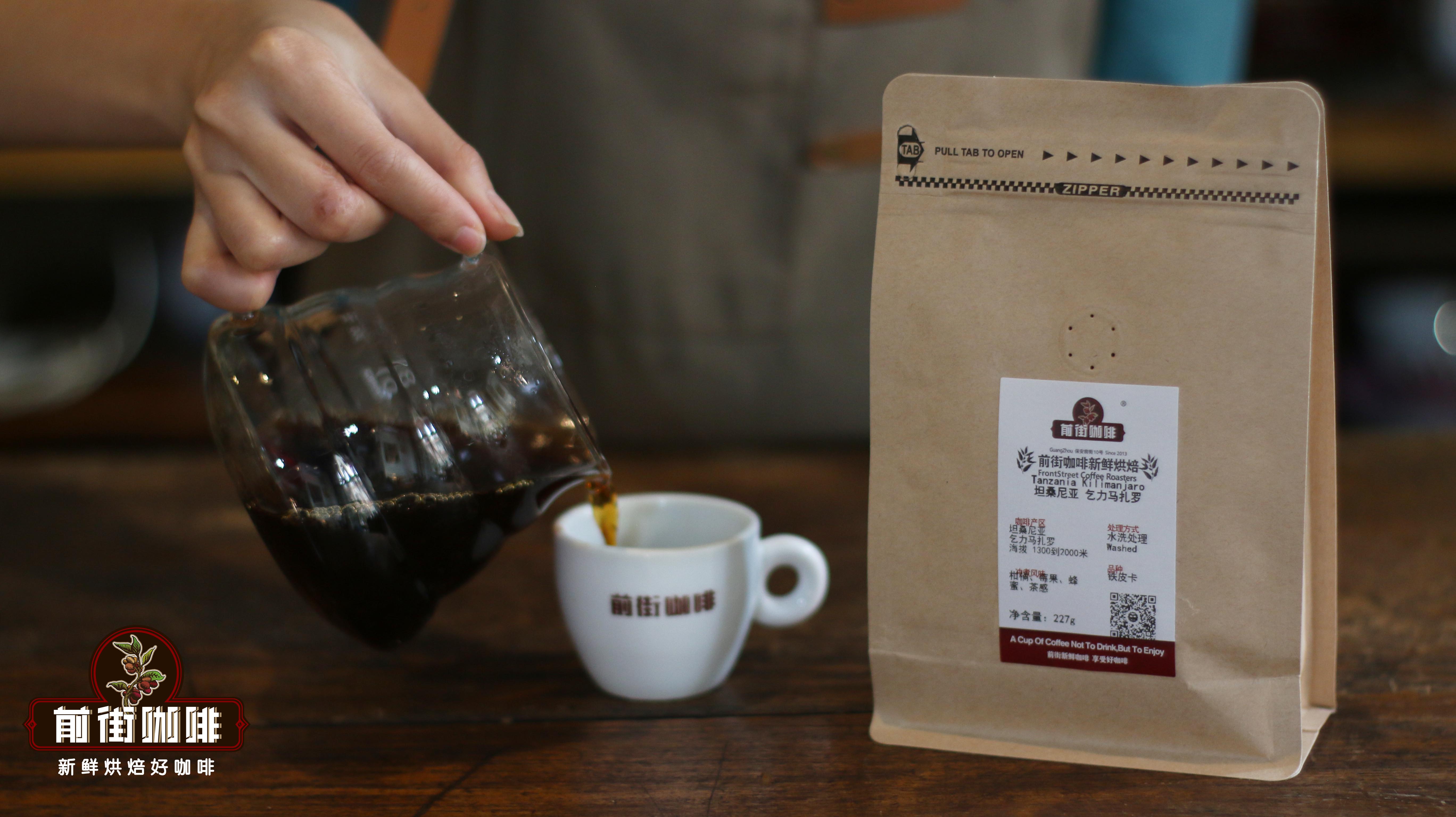
After summarizing the cupping performance of this Tanzanian coffee, Front Street found that its strengths are a medium-high sweetness resembling honey and overall balance; its weaknesses are medium-low acidity, not as prominent as Kenyan coffee, and a slight astringency after cooling. Therefore, the brewing plan needs to maximize strengths and minimize weaknesses. Front Street's brewing parameters for this coffee are: 15 grams of coffee beans, 1:15 coffee-to-water ratio, 90 degrees Celsius water temperature, BG grinder #6M grind setting, and V60 dripper.
Using Front Street's commonly used three-stage pouring method: bloom with 30 grams of water for 30 seconds, then pour in a slow circular stream until reaching 125 grams and pause, then continue pouring until reaching 225 grams when the water level is about to expose the coffee bed, and remove the dripper when the water level is about to expose the coffee bed again. (Timing starts from the beginning of the bloom.) The total extraction time is 2'00". The brewed Tanzanian coffee leans toward citrus and nuts, with a smooth mouthfeel and a dark cocoa finish. After cooling, it shows honey sweetness and spice notes, with less astringency.
This is the basic flavor profile of Tanzania's Kilimanjaro producing region. Tanzania's coffee-growing areas are mainly concentrated around Mount Kilimanjaro and the southern region. Front Street has already cupped the Kilimanjaro coffee beans, so how does the coffee flavor from the southern region differ from Kilimanjaro? Front Street was very curious, so we also compared coffee beans from southern Tanzania.
This southern region coffee bean, like the Kilimanjaro coffee bean, uses the washed method commonly used in Ethiopia's Yirgacheffe region, but the variety is Bourbon. Bourbon coffee also has high sweetness and bright acidity, with higher yield than Typica, but it is also susceptible to leaf rust disease.
This southern Tanzania coffee bean, like the Kilimanjaro coffee bean, uses a medium-light roast to highlight the southern region's coffee flavors. Its cupping results are: Dry aroma: berry, fermented Wet aroma: berry, floral Cupping: citrus, caramel, nuts, fermented aroma Flavor: Front Street used the same method to brew this southern region coffee bean. The floral aroma is very intense, with berry and citrus acidity, and a slight nutty flavor in the aftertaste.
These two Tanzanian coffees each have their own characteristics, and coffee beans from different altitudes show noticeably different flavors. Southern region coffee has rich floral and winey notes with soft acidity; Kilimanjaro region coffee has bright acidity and a full body, with a mineral water-like sweetness thanks to the fertile volcanic soil. It is precisely because Tanzanian coffee has a full-bodied texture, moderate acidity, and intense aroma that early Europeans called it the "coffee gentleman." You can choose based on your own taste preferences.
The above content is compiled by CoffeeHunters, a coffee news website.


