







How does coffee growth differ across Yunnan's regions?
Yunnan's four main coffee regions are Pu'er, Dehong, Lincang, and Baoshan, each with its own variety mix and flavor profile. Pu'er sits at roughly 1,000 to 2,000 meters with mountainous terrain, fertile soil, and a marked day-night temperature difference, conditions that closely resemble those of Colombia and fall within the global coffee belt.
Catimor dominates local planting, and washed processing has become the mainstream method. The article traces the cultivation history and variety distribution of each region and shares Front Street Coffee's experience growing Typica on its own Lintong estate, plus the water ratios and extraction parameters used for a three-stage pour-over of Yunnan small-bean coffee.
Yunnan coffee has seen continuously rising popularity within China's specialty coffee circle in recent years, with more and more enthusiasts beginning to pay attention to the true face of this domestic coffee-producing region. This article systematically sorts through the cultivation history, variety distribution, and flavor characteristics of Yunnan's four major producing regions—Pu'er, Dehong, Lincang, and Baoshan—and focuses on introducing Front Street Coffee's experience and gains from growing Typica on its own estate in Lincang. At the same time, the article also answers in detail why Yunnan mainly cultivates Catimor, why the washed processing method has become mainstream, and the specific water ratios and extraction parameters Front Street uses in its three-stage pour-over of Yunnan small-bean coffee, helping readers fully understand the complete thread of Yunnan coffee from origin to cup.
For more specialty coffee knowledge, please follow the WeChat public account: Front Street Coffee (FrontStreet Coffee)
Yunnan coffee has risen suddenly in China's specialty circle in recent years, constantly refreshing people's understanding of domestic beans. Who would have thought that China itself could also nurture coffee of no small quality? In fact, not many people in China know that Yunnan is a coffee-producing region. It was not until the release and rise in popularity of the film "Coffee or Tea" starring Liu Haoran that "Pu'er coffee" entered the public eye.
Front Street has learned that the natural conditions of the Pu'er producing region are quite similar to those of Colombia, and it happens to sit within the golden latitude belt for global coffee cultivation. Coffee-producing regions in countries such as Brazil, Vietnam, and Indonesia are likewise located in the area between the Tropic of Cancer and the Tropic of Capricorn.
Pu'er's altitude is on the high side within China, at roughly 1,000 to 2,000 meters. The terrain is mainly mountainous, with obvious undulations, fertile soil, abundant sunshine, plentiful rain, and a marked temperature difference between day and night. These natural advantages provide an ideal growing environment for Yunnan small-bean coffee. The Yunnan small-bean coffee produced there also performs notably well in flavor.
In addition to Pu'er, coffee cultivation is also distributed in other parts of Yunnan. Front Street offers a brief overview here for everyone.
Dehong Dehong Prefecture has a coffee cultivation history of more than a century and is one of the earliest regions in China where coffee was introduced. As early as 1914, the area introduced small-bean coffee from Myanmar for scattered planting. After a trial planting of 6 mu succeeded in 1953, it gradually shifted to commercial cultivation, successfully registered the "Dehong Coffee" geographical indication, and earned the title "Home of Chinese Coffee."
At present, coffee planting area in the entire prefecture reaches 275,800 mu, of which 140,000 mu is in production. Green coffee bean output is 28,000 tons, agricultural output value is 616 million yuan, and industrial output value is 800 million yuan. Dehong is also the core producing region of Hogood Coffee, the only national-level leading enterprise in agricultural industrialization in the coffee industry. Coffee farms in Dehong Prefecture are all above 1,000 meters in altitude, with 30,000 mu located on mountainous land above 1,600 meters. In addition, because local coffee cultivation mainly uses organic fertilizer and organic pesticides, the coffee produced is outstanding in quality and can be called one of the world's rare high-quality coffee origins.
Lincang With its unique geographical location and climatic conditions, Lincang has become a region that many coffee enterprises are racing to pay attention to. It has successively established high-quality coffee seedling bases of 200 mu and 100 mu in Mengding Town, Gengma Autonomous County, and Lincang Happiness Farm, and has promoted coffee cultivation in Gengma, Zhenkang, Yunxian, Cangyuan, Yongde, and other places. Up to now, Lincang has built 96 coffee nursery gardens citywide, covering 1,570 mu, with 67.19 million coffee seedlings raised, enough to plant 203,000 mu, and 260,000 mu of coffee planting area has been implemented. Front Street Coffee (FrontStreet Coffee) also has its own coffee estate in the Lincang area.
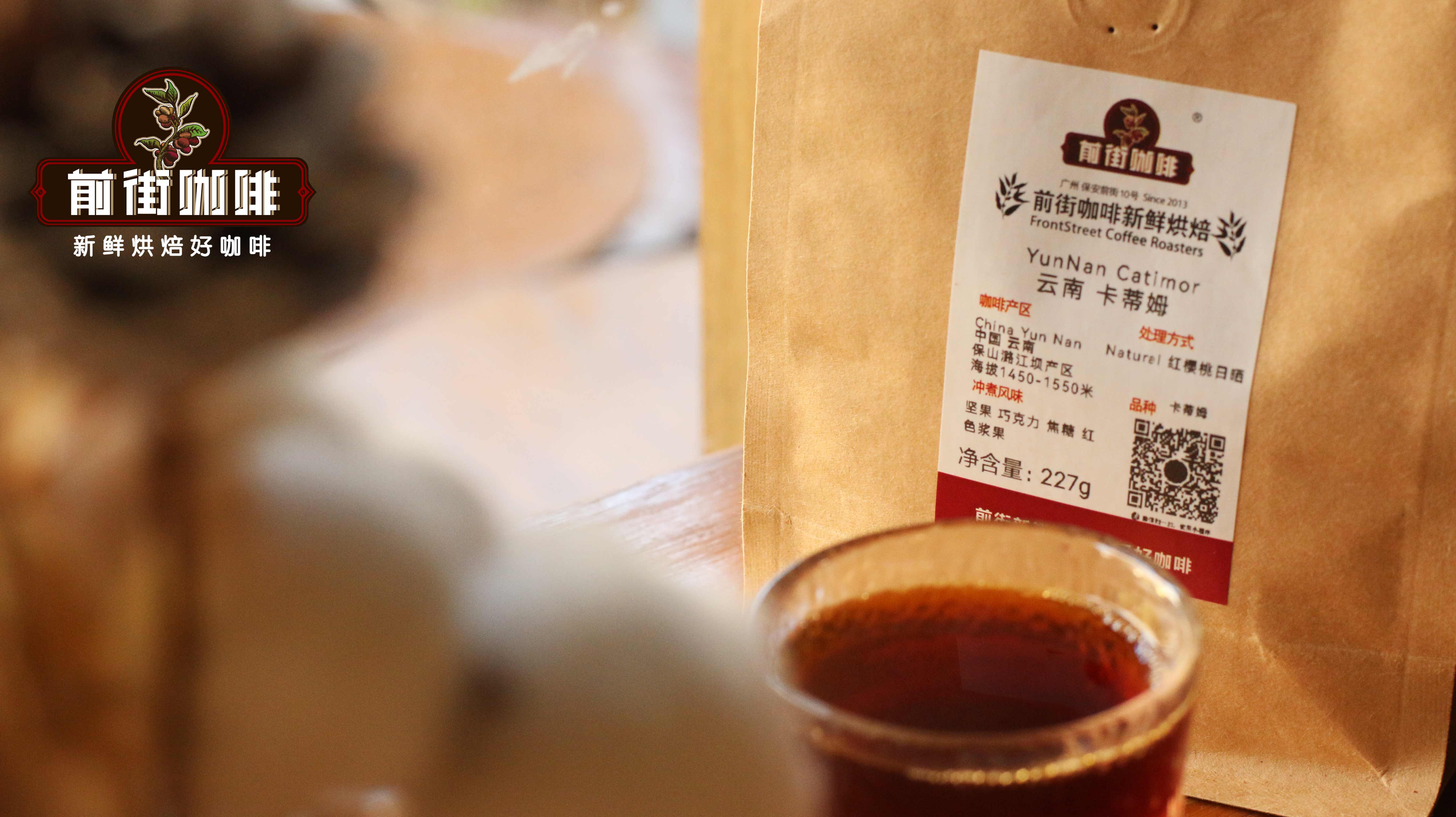
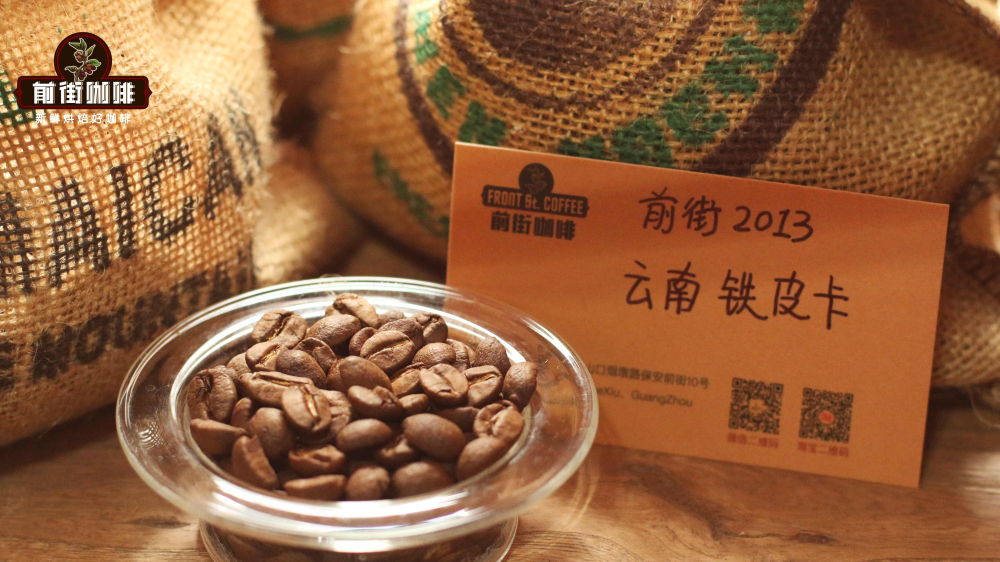
As early as 2013, Front Street launched coffee planting trials in Lincang, and the variety selected was Typica—the ancient superior Arabica variety first introduced to Yunnan. The agricultural cycle is long: from breeding to first fruiting takes 5 to 6 years. In 2018, the first batch of Typica trees planted by Front Street finally began to bear fruit. In 2020/21, Front Street harvested 200 kilograms of green beans. Because the quantity was limited, Front Street offered them as gifts for new and old customers to taste. By 2021/22, Front Street harvested 600 kilograms of green beans. Friends who want to taste coffee grown by Front Street can go to the store to drink it or buy it from the Taobao shop. This coffee bean is medium-roasted by Front Street, with flavors of plum, brown sugar, and nuts.
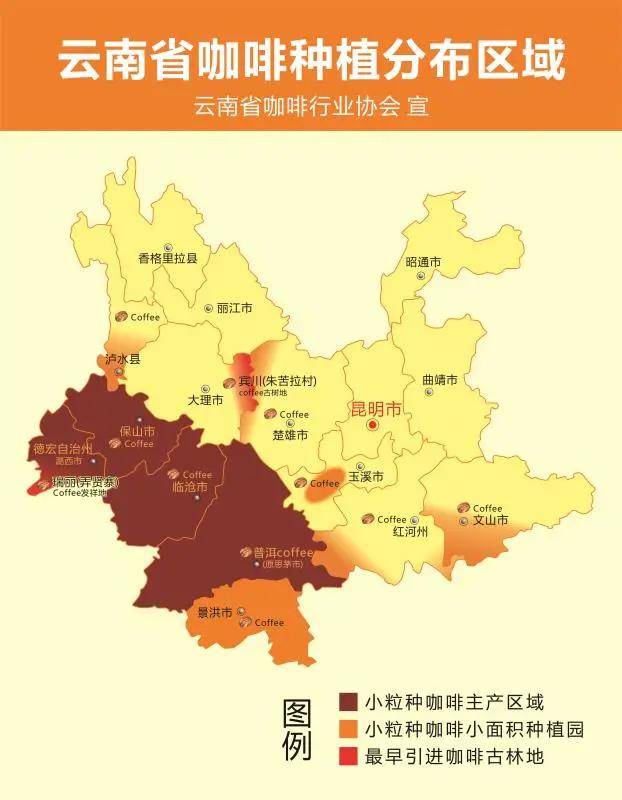
Baoshan Coffee cultivation in Baoshan began in the mid-1950s, and the first coffee seedling was introduced from Southeast Asia by the late patriotic overseas Chinese Mr. Liang Jinshan. The well-known Lujiangba small-bean coffee is relatively high in quality and was rated a first-class product in London as early as the late 1950s.
In recent years, with the continuous expansion of international trade, Lujiangba's small-bean coffee has become widely known. Merchants from European, American, and Arab countries, especially those from the UK, the US, Egypt, and Hong Kong and Macao, regard it as a top-grade coffee, and demand exceeds supply. In December 2010, after review by China's General Administration of Quality Supervision, Inspection and Quarantine, it was decided to implement national geographical indication product protection for "Baoshan Small-Bean Coffee."
If one were to choose a coffee that represents Yunnan's basic flavor, Front Street believes it is Baoshan washed Catimor. Baoshan is an outstanding coffee-producing region in Yunnan. Lujiangba is 1,300 meters above sea level and suitable for coffee growth. Catimor accounts for 99% of Yunnan's total output, and washed processing best presents the taste of the coffee bean itself. Therefore, Baoshan washed Catimor is also the representative of Front Street's Yunnan daily-drinking beans.
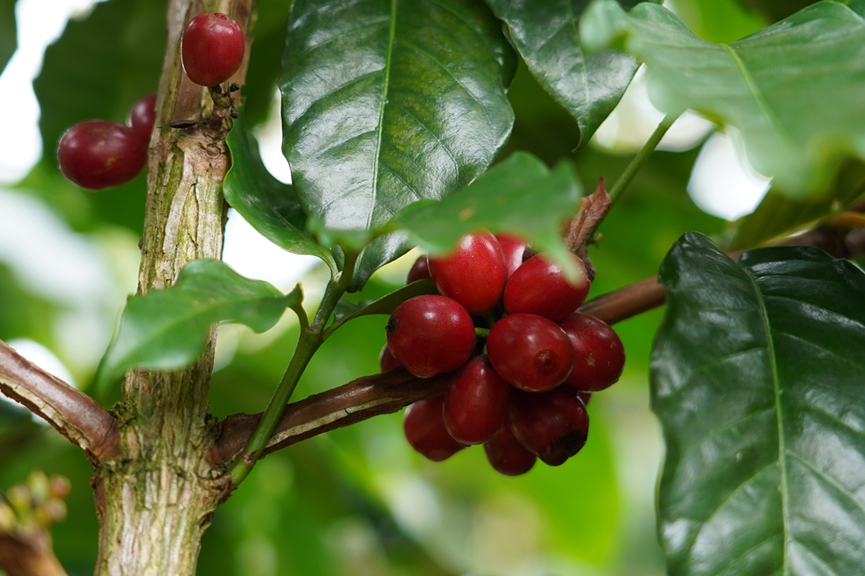
Because Yunnan coffee is mainly planted on steep slopes, harvesting only fully red cherries is extremely labor-intensive. Even if high prices are offered, it is hard to find workers willing to pick coffee cherries. After pruning reduces yield, fruit ripeness clearly improves, harvesting difficulty drops substantially, and coffee farmers are more willing to cultivate carefully in exchange for better returns.
There is another question that everyone is rather curious about: what varieties are suitable for planting in Yunnan's climate? Many regions in Central America plant Caturra and Catuai, Brazil plants Bourbon, and Jamaica Blue Mountain plants Typica.
According to what Front Street has learned, Yunnan currently mainly plants Catimor, but people who know more about Yunnan coffee will also find that a small amount of Typica and Bourbon is still retained locally. These two ancient varieties are the true elders of Yunnan's coffee varieties. Front Street has learned that Yunnan initially introduced Typica, but Typica is susceptible to leaf rust and has low yield, so coffee farmers are generally unwilling to plant it. Coffee trees need at least three to four years from planting to production, and the returns from low-yield Typica simply cannot sustain local people's livelihoods, so high-yield Catimor is naturally more favored by coffee farmers. In addition, Catimor has the genes of both Arabica and Robusta, inheriting Robusta's disease resistance while also producing quite rich coffee oils during extraction.
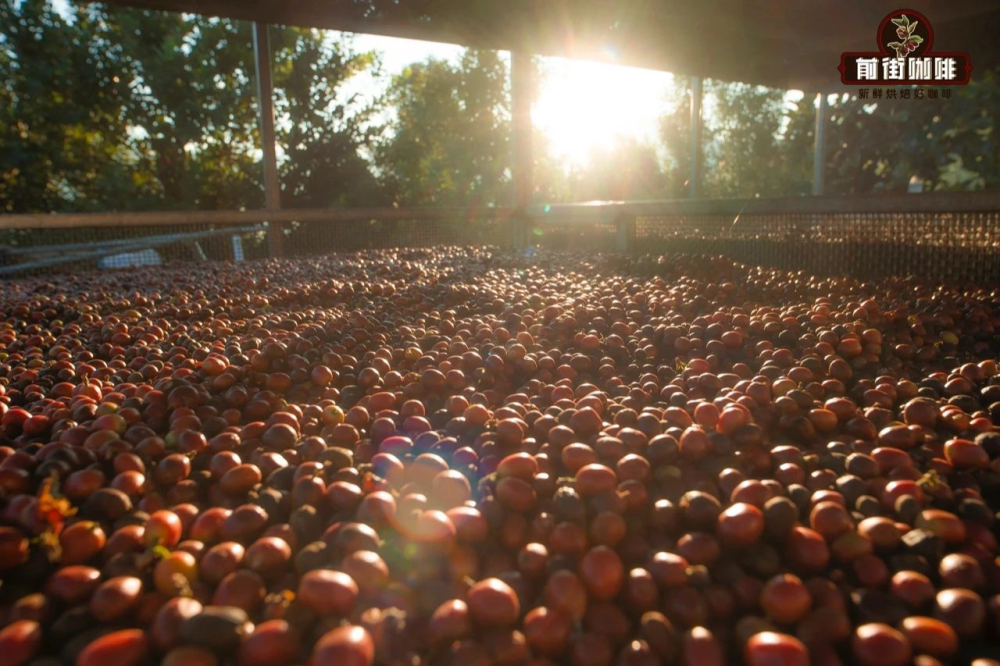
Regarding the processing methods for Yunnan coffee beans, because the local rainy season is long and the climate is unstable, Yunnan is not very suitable for sun-dried processing. More often, washed processing is used for green beans. In washed processing, defective beans and impurities are first removed from the coffee cherries, then the skin and pulp are removed through a depulper, after which they are placed in water to ferment for about 18 hours. The washed fermentation process is relatively easy to control, so in flavor it does not carry the off-flavors of sun-dried beans, but instead presents clear fruit acidity, though the richness of flavor will be somewhat weaker.
Front Street uses a three-stage method to brew this Yunnan coffee bean: first bloom with 30 grams of water for 30 seconds, then pour in a small stream in circles until 124 grams for the stage break, and when the water level drops and is about to expose the coffee bed, continue pouring until 227 grams and stop. When the water level drops again and is about to expose the coffee bed, remove the dripper (timing starts at the beginning of blooming). Total extraction time is 2 minutes.
The flavor impression Front Street obtained through brewing is: Front Street 2013 Typica coffee beans have a rich melon and fruit aroma and herbal notes on entry, with a smooth mouthfeel; the middle section presents nutty and chocolate flavors; the finish has a lively and bright plum acidity, with black tea and brown sugar notes in the latter part. Yunnan small-bean coffee, meanwhile, has bright, soft acidity, a good sense of body and balance, and rich layers. In the aftertaste, dark chocolate and caramel notes are obvious, and after it cools completely, it presents brown sugar flavors.
The craftsmanship of Yunnan specialty coffee continues to improve, and it has also attracted coffee people from all walks of life. More and more green coffee bean merchants are establishing raw material production bases in Yunnan, and coffee giant Starbucks has also joined the ranks of purchasing Yunnan coffee.
The above content is compiled by CoffeeHunters, a coffee news website.


