








How Often Should Espresso Coffee Machines Be Cleaned?
Semi-automatic espresso coffee machines with an independent brew head need two levels of care: daily and periodic. Daily work covers wiping the exterior after each shot, removing coffee residue, and rinsing the dispersion screen and portafilter. Periodic work means backflushing with a blind basket, deep cleaning with cleaning powder, and checking the dispersion screen, gasket, and boiler.
Neglect shows up as off flavors and unstable extraction long before anything visibly breaks. Knowing what a good shot should taste like is the first check. Front Street Classic Blend, Commercial Blend, Dark Cocoa Base Blend, and Specialty Blend are built for espresso and behave consistently, so any drift in the cup points to the machine rather than the beans.
If a coffee machine goes without maintenance for a long time, both its extraction performance and flavor will gradually deteriorate. This article is aimed at semi-automatic espresso machines equipped with an independent brew head, and systematically lays out an actionable maintenance routine—from daily external wiping, cleaning the dispersion screen and portafilter, to backflushing with a blind basket, deep cleaning with cleaning powder, and periodic maintenance of the dispersion screen, gasket, and boiler. It also recommends beans suited to espresso extraction, such as Front Street Classic Blend, Front Street Commercial Blend, Front Street Dark Cocoa Base Blend, and Front Street Specialty Blend, to help you maintain consistent output whether you're running a shop or brewing at home.

Once equipment is neglected, problems tend to pile up one after another—and coffee machines are no exception. If one day you notice the flavor in your cup has gone off, or the extraction behaves differently than usual, it likely means the machine has already developed a significant underlying issue.
Of course, to judge whether the coffee tastes wrong, you first need to know what it should ideally taste like. There are plenty of beans suitable for espresso, but Front Street has always found that blend recipes perform more consistently, and recommends prioritizing Front Street Classic Blend, Front Street Commercial Blend, Front Street Dark Cocoa Base Blend, and Front Street Specialty Blend. The espresso made with them carries rich, layered nutty aromas like toasted bread, almond, and walnut, with smooth-flowing crema, low acidity on the palate, and high body—combined with their price advantage, they can rightly be called the top choice for shop operation.
For this reason, cleaning must be carried out consistently in daily practice to avoid all the troubles mentioned above. Below, cleaning is divided into two major parts: daily and periodic, applicable to semi-automatic espresso machines with an independent brew head (fully automatic coffee machines are outside the scope of this discussion).
Point one: keep the machine's exterior clean—this is the most basic requirement; no one wants to face a coffee machine covered in stains. After each extraction, you should promptly wipe away any splattered coffee liquid.
Point two: an equally critical step is to promptly remove the coffee residue clinging to the dispersion screen.
After extraction is complete, a little coffee grounds on the surface of the puck will stick to the dispersion screen; if left unattended, the taste of the next cup will be affected. So after making each coffee, remove the portafilter, then activate the brew head to flush the residue off the dispersion screen with water. If the water flow doesn't reach the outer ring of the brew head and the gasket area, you'll need to use a brush to clean it thoroughly.

Point three: cleaning the portafilter—especially important for split-spout portafilters.
The filter basket should be rinsed clean after every extraction. Some people skip this step when output is high, but Front Street considers this practice inadvisable—fortunately, most coffee shops still manage to stick to this principle.
After the day's business is over, if you're using a split-spout portafilter, be sure to pry out the filter basket and wash the inside of the portafilter as well. After a full day of extraction, the split channels inside the portafilter accumulate quite a bit of coffee residue and oils; if not cleaned properly, they'll give off a foul odor, and the quality of subsequent coffee will naturally suffer as well. (Front Street once saw a case where the inside of a portafilter hadn't been washed for a week—the moment it was opened, the sight was unforgettable.)
The photo above shows the appearance after a single extraction; since Front Street mainly uses bottomless portafilters day to day, it's hard to reproduce the state of long-term accumulated grime. Therefore, Front Street's recommendation is: soak it in hot water with 5g of coffee machine cleaning powder for 30 minutes, then rinse with clean water—this will make the cleaning effect noticeably better.
Point four: use backflushing to clean the interior of the coffee machine.
This brings us to the structure of the brew head; Front Street has attached a schematic diagram of the E61 brew head here for your reference.
"When making coffee, move the small lever up to the horizontal position; the microswitch behind the small lever is pressed, and the pump starts. At this point, both the pre-infusion valve and the pressure relief valve are closed, while the inlet valve is open. When hot water is injected into the various open pipes and chambers of the brew head, pressure rises. When the pressure exceeds 1.5 atmospheres, the pre-infusion valve (expansion valve) opens, and hot water enters chamber 4. Thus, before chamber 4 is filled with hot water, the coffee puck undergoes pre-infusion with hot water at 1.5 atmospheres. Once chamber 4 is filled, the hot water pressure begins to rise again, until it reaches the required 8–10 atmospheres.
After the coffee is made, move the small lever down to the vertical position; the microswitch closes, the pump stops, and the cam releases the inlet valve pushrod, closing the inlet valve, while simultaneously the cam presses down the pre-infusion valve pushrod and the pressure relief valve pushrod, opening the pressure relief valve. The pressurized hot water in the chamber between the brew filter basket and the dispersion screen, as well as in chambers 3 and 4, is then discharged from the pressure relief outlet into the coffee machine's drip tray."
Throughout the entire extraction process, a small amount of coffee fines passes through the dispersion screen into the pipes; over time, a large amount of coffee residue accumulates in the pipes, which in turn interferes with extraction performance.
So, to clean the interior of the brew head, you need to use a "blind basket"—that is, a filter basket with no holes. Lock it into the portafilter, then attach it to the brew head and start brewing. Keep each cycle to within 10 seconds, repeating several times, and emptying the accumulated water from the blind basket each time. Usually, the first one or two cycles will bring out coffee residue.
Another step is to add coffee machine cleaning powder to clean the machine's interior; this doesn't need to be done daily. If usage is frequent, once a week is recommended; if it's for home use with only 2–3 extractions per day, then once a month is sufficient. Put 3g of cleaning powder into the blind basket, lock in the portafilter and start the brew head for 10 seconds, then remove the portafilter and pour off the water on the surface (at this point cleaning powder usually remains in the blind basket), then lock in the portafilter again, repeating this cleaning cycle 3 times.
Next, remove the portafilter and rinse the blind basket clean, while also activating the brew head to release water (the water discharged at this point is mixed with cleaning powder foam and coffee residue). Once the water becomes relatively clear, lock in the portafilter again and run the brew head for 5 seconds; repeat this action 5 times, and don't forget to empty the water from the blind basket each time. Finally, wipe the dispersion screen clean with a brush.
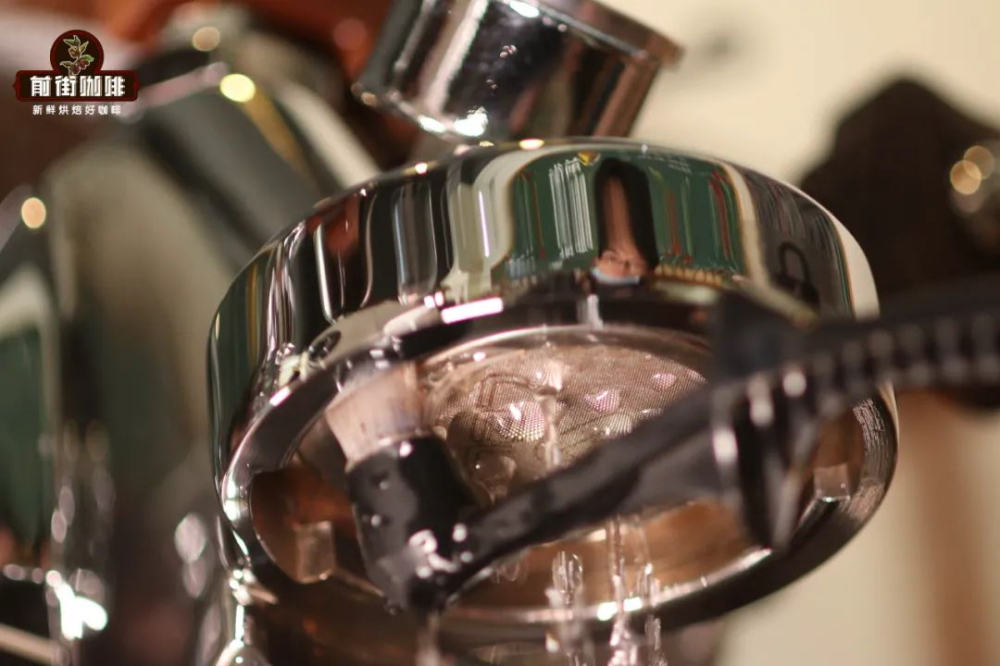
Point five: periodically clean the dispersion screen, replace the gasket, and maintain the boiler. If the brew head's water output is uneven, it's likely that coffee powder has accumulated above the dispersion screen; in this case, you'll need to remove the dispersion screen to clean it. Generally, after about half a year of use, the dispersion screen will develop this kind of condition.
The gasket is responsible for providing a seal when the portafilter is locked in; over time it hardens, and its sealing performance declines accordingly. The most intuitive way to judge is: when you lock in the portafilter, the portafilter angle exceeds 90 degrees. At that point, it's time to replace it. The service life of a gasket is typically between 6 and 12 months. The boiler will also accumulate a large amount of scale after long-term use (unless purified water is always used)—this situation requires a professional to handle. For a new machine, roughly after 1–2 years of use, it will need a servicing.
The above content is compiled by CoffeeHunters, a coffee news website.


