







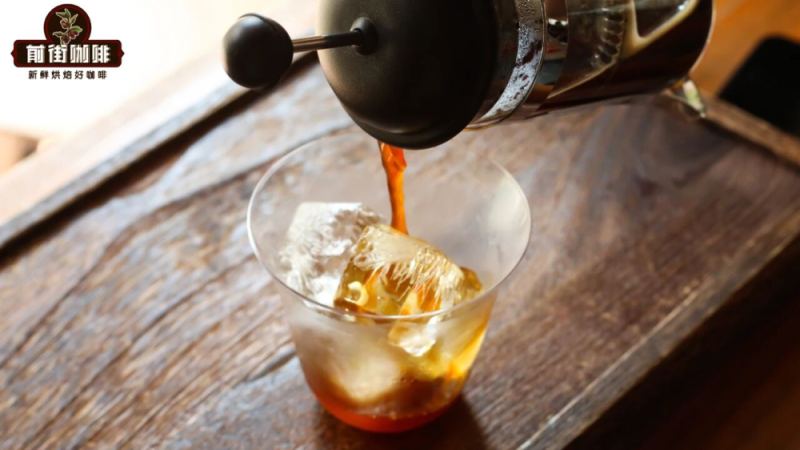
What are the extraction principles behind French press coffee?
French press brewing is immersion extraction: coffee grounds sit fully submerged in hot water, then a plunger with a metal filter separates the liquid from the grounds. This method produces strong body and a richer, oilier mouthfeel. Grind size, water temperature, and coffee-to-water ratio determine whether the result is clean or muddy.
The device's origins are debated. The earliest widely recognized patent for a similar brewer went to Attilio Callimani of Milan, one of eight beverage patents he held. Most modern French presses use borosilicate glass, which keeps them durable and affordable. A Front Street demonstration with an Ethiopian Floralsun natural bean shows the full process.
The French press is easy to use and affordable, making it the top choice for many coffee novices entering the world of specialty coffee. However, behind the seemingly simple immersion extraction, there are actually many considerations such as grind size, water temperature, and coffee-to-water ratio. This article will take you through the history of the French press, clarify its extraction principles, and provide a detailed analysis of the key points for brewing clean and rich coffee with a French press. At the same time, Front Street Coffee will use an Ethiopian Floralsun natural bean as an example to demonstrate the entire process from parameter setting to pouring and pressing, helping you easily master the correct way to use a French press.
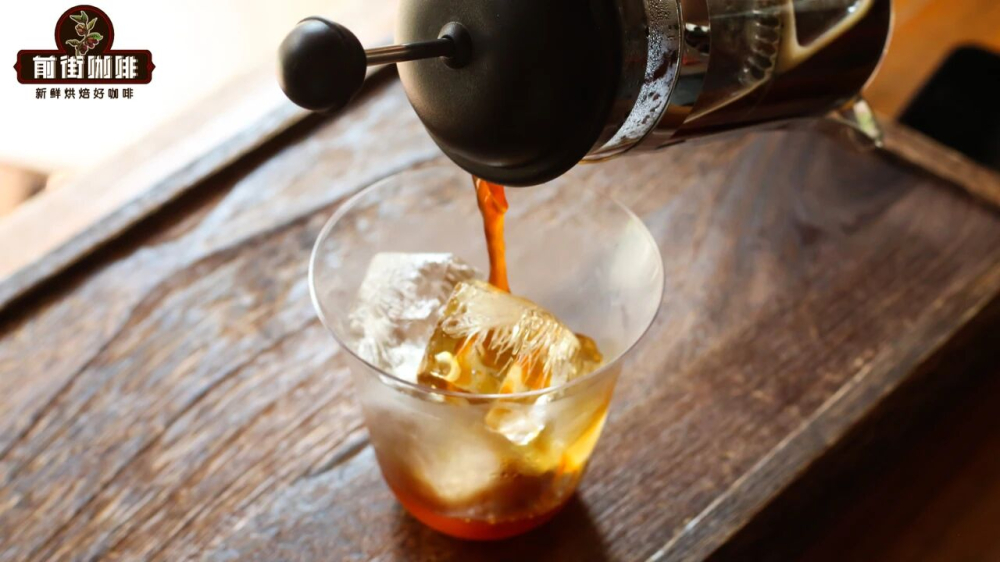
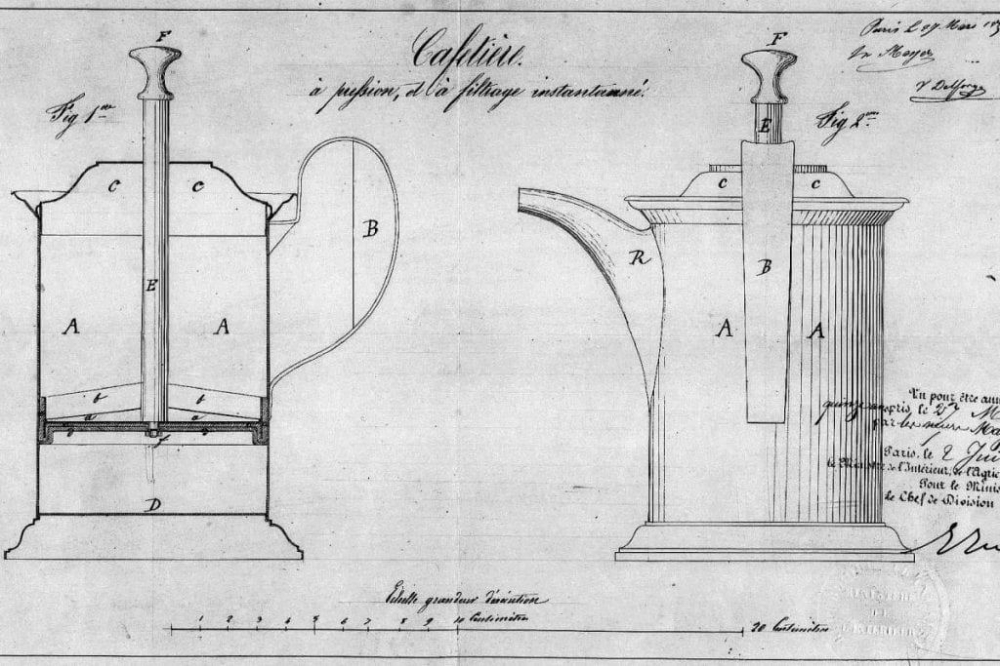
The origins of the French press can be traced back a long way, but who actually invented it first remains a matter of debate to this day. The earliest generally recognized patent for a coffee brewing device with a structure similar to the modern French press was granted to Attilio Callimani, a Milanese Italian.
Since it is called a French press, why is the patent holder not French? One theory holds that the prototype of the French press came from a Frenchman who added a filtering device to a coffee pot to intercept the coffee grounds, thereby obtaining a relatively clear cup of coffee. This brewing device was widely adopted across France around the nineteenth century and subsequently spread to other countries.
When the French press made its way to Italy, Callimani made some improvements to the device and successfully applied for a patent. This patent was just one of eight patents Callimani obtained in the field of beverage production.
Most French presses on the market today use borosilicate glass for the body, which is both sturdy and durable as well as affordable, and with a low barrier to operation and easy handling, it is arguably the most friendly entry-level choice for those new to specialty coffee.
What exactly is the extraction principle of the French press? And what should be noted when using it to make coffee?
The core of brewing coffee with a French press is to let the coffee grounds be fully submerged in hot water inside the pot, then separate the coffee liquid from the grounds using a plunger with a metal filter. This immersion extraction delivers excellent body, enhancing the texture and oiliness of the mouthfeel, and the resulting coffee is also quite clean.
Although the steps for using a French press are not complicated, there are still some details to pay attention to. Since the French press relies mainly on immersion extraction, the grind size should be coarser than for pour-over coffee. If it is ground too fine, or if the proportion of fine particles is too high, the metal filter cannot effectively intercept the coffee grounds, resulting in an unpleasant "gritty" mouthfeel that seriously affects the drinking experience.
Additionally, before brewing coffee with a French press, just like making tea, you need to first warm the glass pot with hot water. If you skip the step of preheating the pot, the water temperature will drop relatively quickly after the hot water is poured in.
For the coffee-to-water ratio, the most common range is between 1:13 and 1:15, which can be adjusted according to your own taste. The brewing water temperature also varies depending on the roast level of the coffee beans. For light-to-medium and medium roast coffee beans, Front Street recommends using a water temperature of 90°C to 93°C, using the higher temperature to extract the aromatic compounds and high-quality acidity from lighter-roasted coffee beans; for medium-dark roast coffee beans, use a water temperature of 86°C to 88°C, because dark-roasted coffee beans absorb water more efficiently and their flavors dissolve faster, so if the water temperature is too high, bitter and burnt flavors are likely to appear.
Next, Front Street Coffee (FrontStreet Coffee) will demonstrate using a Floralsun coffee from Ethiopia. As usual, Front Street will first introduce this coffee bean:
Front Street Coffee (FrontStreet Coffee) Floralsun Coffee Beans
Region: Hambela, Sidamo, Ethiopia
Altitude: 2050m–2300m
Variety: Local heirloom varieties
Processing method: Natural process
Front Street Floralsun coffee beans come from the Hambela sub-region under Guji in Sidamo. The Guji region is a common winner in many green coffee competitions. The Hambela sub-region is the coffee sub-region with the highest growing altitude in Ethiopia, separated from Kochere in the Yirgacheffe region by just one high mountain.
In 2017, Ethiopia's DW Company entered this natural coffee from the Buku Abel processing station in Hambela into the East Africa Green Coffee Competition and won the championship in the natural group of the 2017 TOH Ethiopia region. Later, Beijing green coffee trader Hongshun introduced the same batch of coffee beans into China and named it "Floralsun," meaning "chief of a hundred flowers," with high hopes.
Front Street Coffee (FrontStreet Coffee) parameters for brewing Floralsun coffee beans with a French press:
Water temperature: 91°C
Coffee dose: 15g
Coffee-to-water ratio: 1:15
Grind size: 75% passing through China standard No. 20 sieve
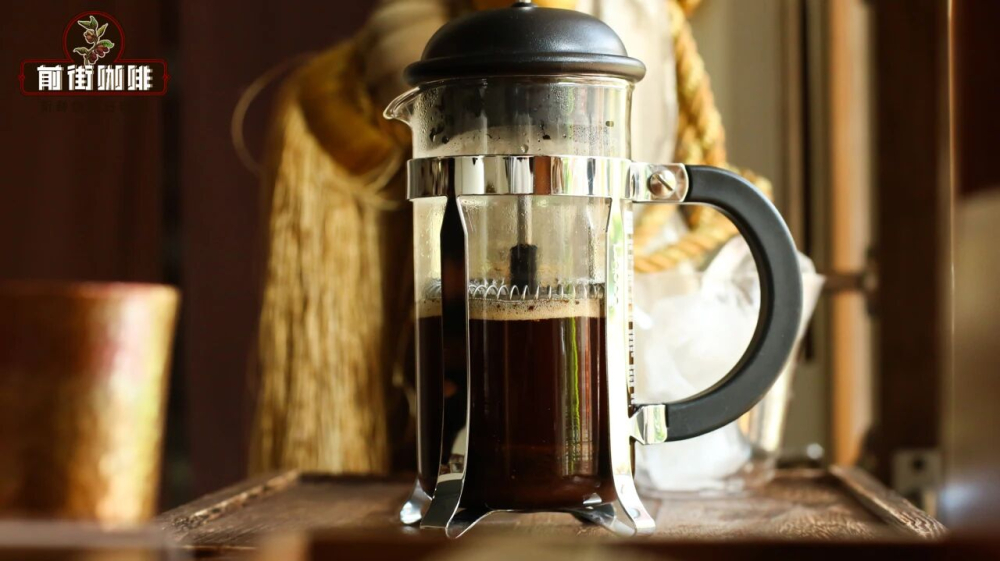
First, preheat the French press with warm water, then pour out the warm water, add 15g of ground coffee, then pour in 225g of 91°C hot water. The pouring can be done with a slightly larger stream to let the coffee grounds tumble, thereby improving extraction efficiency; you can also gently stir with a spoon. After pouring is complete, pull up the metal filter and put on the lid, then wait 4 minutes. After 4 minutes, gently press the plunger down to about 1/4 of the pot body. Finally, pour out the coffee liquid and it is ready to enjoy.
The Front Street Floralsun French press coffee brewed with the above parameters and steps has an obvious comprehensive berry aroma on the palate, a compound fruity juice sensation, a notably creamy and silky mouthfeel, and an overall full and rich body.
For more coffee bean information, please follow Coffee Workshop (WeChat official account cafe_style) For professional coffee knowledge exchange, please add WeChat ID kaixinguoguo0925
The above content is compiled by CoffeeHunters, a coffee news website.


