







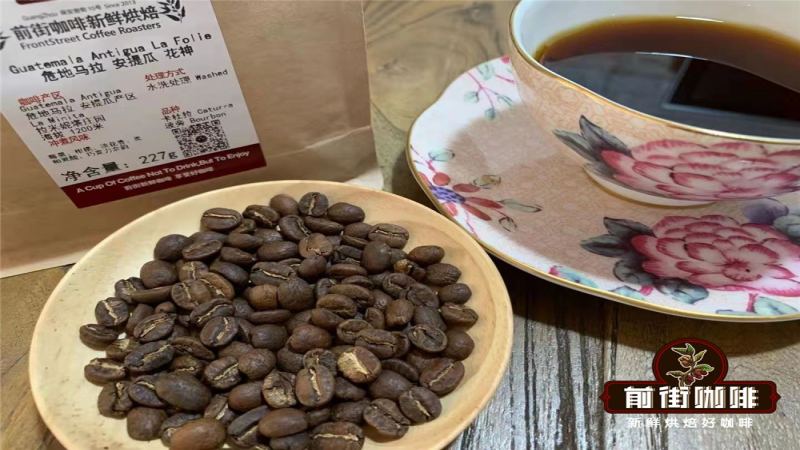
Does Antigua Coffee Really Have a Smoky Note?
Antigua coffee does carry a smoky note, and it comes from the growing environment rather than the roast. The beans grow in volcanic soil at high altitude in Guatemala's Antigua region, where ash-rich ground and a cool microclimate shape a cup with floral sweetness, bright berry-like acidity, citrus, and a light chocolate finish. The charred quality is often described as a soil imprint, which is why the coffee is sometimes called cigarette coffee.
Guatemala sits inside the coffee belt, and Antigua's volcanic terrain is one of the country's most representative producing areas, with strict green bean selection and quality control. Washed processing at estates such as La Minita keeps the profile clean. For brewing, a pour-over works well: watch the powder-to-water ratio, water temperature, grind size, and a three-stage pouring rhythm, and let freshly roasted beans rest before use.
The Flor coffee beans from Guatemala's Antigua region are often discussed for whether they carry a smoky note, a flavor that actually stems from the combined effect of local volcanic soil and the high-altitude microclimate. This article will outline the growing environment of the Antigua region, the cultivation and processing methods of the La Minita estate, the varietal composition and washed processing flow of Flor coffee beans, and provide Front Street Coffee's roasting approach and pour-over parameter suggestions, including powder-to-water ratio, water temperature, grind size, and the three-stage pouring rhythm. It will also explain the flavor profile of Flor coffee beans, such as berry acidity, citrus, and a slight chocolate note, as well as Front Street's recommendations on fresh roasting and resting period, helping coffee enthusiasts gain a more complete understanding of this bean's characteristics and brewing direction.
Many people wonder: does Antigua coffee carry a smoky aroma? To be precise, it does have a smoky quality, one that is closer to a flavor imprint bestowed by the local soil. The reason Guatemala Antigua Flor coffee is so special is closely tied to its volcanic terrain and high-altitude conditions; the unique soil and topographic environment together shape the flavor direction of this bean. The aroma is full and rich, with prominent floral notes and sweetness; on the palate it is smooth and balanced, and although it has a touch of acidity, it falls into the bright, easy-to-accept category.
It is precisely because of this unique charred aroma that Antigua coffee is also called "cigarette coffee," referring to the smoky fragrance that everyone talks about.
FrontStreet Coffee's everyday beans, Guatemala Huehuetenango, have always been quite popular, but when it comes to the performance of Guatemalan single-origin beans, Flor coffee's taste is even better.
The high-altitude zone of the Antigua volcanic region is one of Guatemala's most representative coffee-producing areas. The coffee here is produced by well-known processing facilities in the region, with strict standards from green bean selection to management and quality control, resulting in high and consistent quality.
As the saying goes, every place has its own way of nurturing its people, and coffee, being an agricultural crop, is naturally closely related to the local environment and climate. Front Street will take a look with everyone at just what kind of environment nurtures such a special flavor.
Guatemala's Growing Environment
Guatemala borders Mexico to the north, Honduras and El Salvador to the south, the Caribbean Sea to the east, and the Pacific Ocean to the west. Its geography of mountains and sea, combined with tropical rainforests, volcanic geology, highland valleys, and variable microclimates, makes it very well suited to growing Arabica coffee beans.
The northern and eastern coastal plains of Guatemala have a tropical rainforest climate, while the southern highlands have a subtropical climate, with a year divided into wet and dry seasons: May to October is the wet season, and November to April is the dry season. The narrow, fertile flatlands along Guatemala's Pacific coast have a tropical climate. The central highlands are also Guatemala's cultural center. According to FrontStreet Coffee, temperatures here at 1,300–1,800 meters are mild year-round, with daily temperatures between 18 and 28°C; at higher elevations, January and February tend to be relatively cold.
Annual precipitation in the northeast is 2,000–3,000 mm, while in the south it is 500–1,000 mm. Guatemala has a high average elevation, with the coffee belt distributed above 1,500 meters, between 14 and 16 degrees north latitude, where it is easiest to grow strictly hard beans, all of which are washed processed. Of these, 45% of the coffee beans are specialty grade, a fairly high proportion, and there is also a small amount of Robusta.
Antigua Region
Unlike countries such as Colombia and Brazil, Guatemala is not large in area, yet within its borders there are still many places growing coffee. Among them, Antigua, Huehuetenango, Cobán, Lake Atitlán, Fraijanes Plateau, San Marcos Volcano, and Acatenango are all important coffee-producing regions in Guatemala.
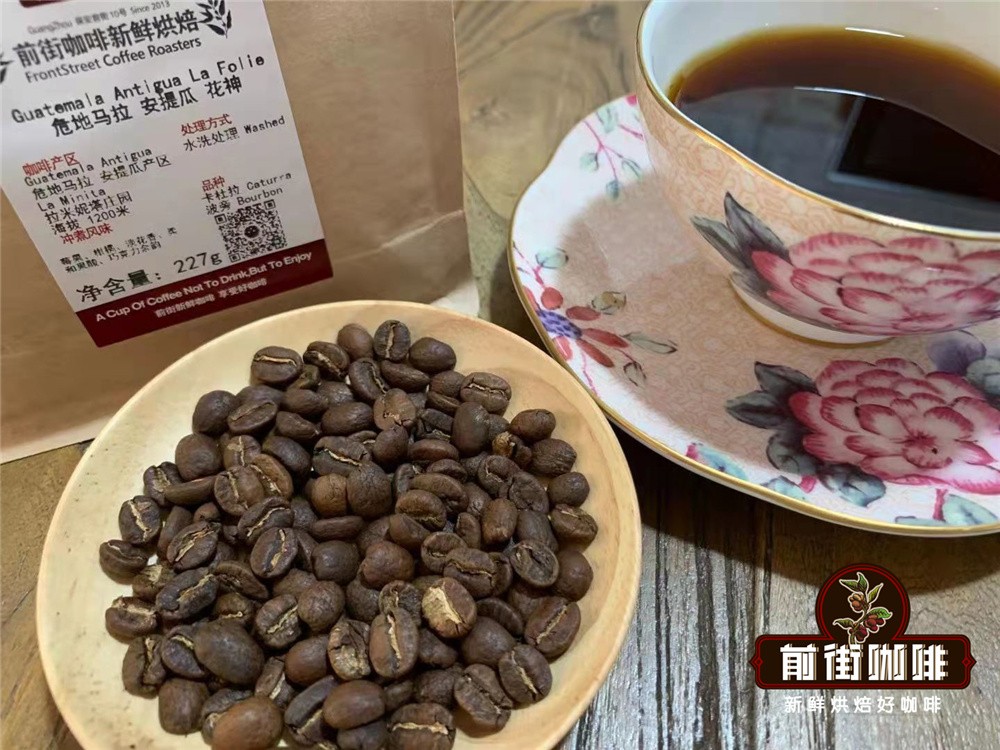
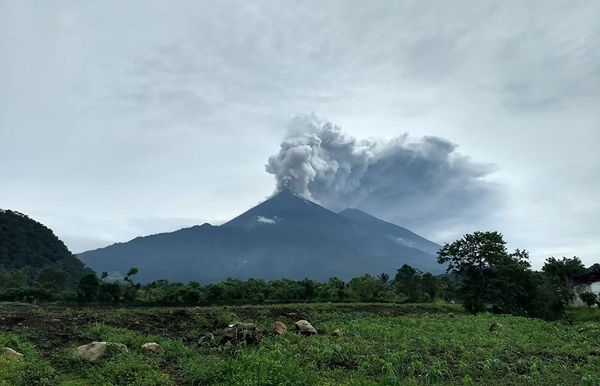
The Antigua region is surrounded by three volcanoes in southern Guatemala: Agua, Fuego, and Acatenango. Antigua has little rainfall in summer and occasional frost in winter, but fortunately it lies in an active volcanic zone, where volcanoes frequently erupt at irregular intervals, giving the soil in this region rich minerals; this is what Front Street often calls volcanic soil rich in organic matter. In addition, a large amount of primary forest is preserved in the Antigua department, which fills the soil with abundant potassium ions. The combination of rich organic matter and potassium ions allows the coffee plants of the Antigua region to grow healthily with an endless supply of nutrients. Moreover, the estate plants a large number of shade trees, protecting the coffee trees from cold damage in winter; the extreme day-night temperature difference brought by the high altitude creates a unique microclimate here. One of Front Street's Flor coffee beans comes from the Alaminita estate in the Antigua region and is washed processed.
La Minita Estate
Why is this estate's coffee so famous? Because La Minita Estate is known for its excellent cultivation and extremely strict quality management. For coffee bean processing, it entrusts the green bean processing to Las Pastores, the largest washed processing facility in Antigua, and names the coffee beans Flor. This is because the washed processing method allows the coffee beans to retain their original flavor, making the coffee flavor very clean and bright. When this Flor coffee bean is ground into powder, the dry aroma carries a strong floral and tea fragrance, and after brewing, the taste is not only clean and bright but also has lime-like acidity and berry notes, with a honey sweetness in the finish. It is precisely this excellent taste that led this coffee bean to be named Flor, and Front Street believes it truly deserves the name.
Flor Coffee Bean Varieties
The varieties of Guatemala Flor are mainly Bourbon, Caturra, and Catuai. Bourbon and Typica are both listed as ancient and high-quality coffee varieties, with pure flavor and moderate acidity and sweetness. Caturra has a lemon- or citrus-like acidity on the palate, but its sweetness is not as good as Typica and Bourbon; Caturra's sweetness depends on the number and dosage of fertilizations by the grower. It has high productivity, but to maintain productivity it must be continuously fertilized and pruned, so the tree is short with many branches. Although productivity increases, because the harvest period takes 2 years, the care cost is relatively high, which still limits production to some extent.
Flor Coffee Bean Processing Method
Most Guatemalan coffee beans use the washed processing method. Front Street believes that washed coffee beans have a cleaner taste than sun-dried ones and better reflect the local terroir, which is also why most of Front Street's everyday beans are chosen from washed coffees.
The steps of washed processing are: first, float the harvested coffee cherries in water to select cherries of sufficient density. Then use a machine to remove the skin and pulp of the coffee cherries. The coffee beans that complete this step are placed in a fermentation tank for fermentation, during which the pectin layer is broken down. Then clean water is used to wash away the decomposed pectin and remaining pulp. Finally, the coffee beans are dried in the sun until the moisture content is reduced to about 11%, after which they can be stored. The washed processing method also gives this Flor coffee higher acidity and a cleaner flavor profile.
Front Street's Approach to Roasting Flor Coffee Beans
In order to preserve more floral and fruity aromas and clean, bright acidity, while also enhancing richness and balance, Front Street uses a medium roast profile for Guatemalan coffee beans.
Front Street's Brewing Parameters for Guatemala Coffee:
Medium-roasted beans have a lower extraction rate of coffee solids than dark-roasted ones. Front Street recommends using a faster-flow V60 dripper, higher water temperature, and a finer grind. Front Street uses a medium-fine grind / fine sugar texture (80% passing through a Chinese No. 20 standard sieve). Use 15 g of coffee powder, then brew with a V60 dripper, 91°C water temperature, a 1:15 coffee-to-water ratio, and a three-stage pouring method.
Use three-stage extraction. Bloom with twice the coffee powder weight in water, that is, 30 g of water for a 30-second bloom. The reason a bloom is needed is to allow the coffee grounds to release internal carbon dioxide, thereby making the later extraction more stable. Pour in a small stream in circles until 125 g, then pause, continue pouring until 225 g and stop. After the water in the dripper has drained, remove the dripper. Start timing from the beginning of pouring; the extraction time is 2'00". Next, pick up the whole cup of coffee and swirl it to mix evenly, then pour it into a cup for tasting.
Guatemala Flor Coffee Flavor Characteristics: Berry acidity, citrus, slight chocolate, rich layering, smooth mouthfeel.
Some people may not be used to Guatemala's somewhat smoky coffee, but Front Street has over fifty single-origin coffee beans from different producing countries and regions—some acidic, some bitter, and some neither acidic nor bitter. It just depends on what kind of taste you like. As long as it is what you like, it is the best coffee to drink.
Front Street's Coffee Brewing Recommendations:
Regarding coffee brewing, Front Street has always believed that the freshness of coffee beans has a great relationship with coffee flavor. Therefore, the coffee beans shipped by FrontStreet Coffee are all within 5 days of roasting. Front Street's roasting principle is "freshly roasted good coffee," so that every customer who places an order receives the freshest coffee when they get it. The resting period for coffee is about 4–7 days, so when customers receive it, it is exactly at its best flavor.
For friends who need ground coffee, Front Street offers a warm reminder: once coffee beans are ground in advance, they no longer need to be rested, because during transportation the pressure from carbon dioxide inside the package can also make the coffee flavor rounder, so as soon as you receive the ground coffee, you can immediately brew a cup and drink it. However, ground coffee needs to be brewed promptly, because after contact with air it oxidizes relatively quickly; in other words, the coffee flavor dissipates relatively quickly and the coffee will not taste as good. Therefore, Front Street recommends buying whole beans and grinding fresh for each brew, so you can better taste the coffee's flavor.
For professional coffee knowledge exchange and more coffee bean information, please follow Coffee Workshop (WeChat public account: cafe_style)
For more specialty coffee beans, please add the private WeChat of FrontStreet Coffee: qjcoffeex
The above content is compiled by CoffeeHunters, a coffee news website.


