







Why Is Java Coffee So Full-Bodied and Earthy?
Sumatra, Indonesia's largest coffee-producing region, sits on the Pacific Ring of Fire, so volcanic ash soil and a tropical rainforest climate give Mandheling its rich, full-bodied character. Typica arrived during the Dutch colonial period, and after leaf rust struck the region, growers switched to more disease-resistant varieties. High-quality production is now centered near two lakes in Aceh Province.
Indonesia's humid, rainy conditions led to the wet-hulling process, which produces the woody and spicy notes and the java flavor associated with Mandheling. A medium-dark roast works for pour-over; the recipe covers dripper choice, water temperature, grind size and staged extraction parameters so a round, full-bodied cup can be brewed at home.
Sumatra, as Indonesia's largest coffee-producing region, nurtures the rich, full-bodied Mandheling coffee with its unique volcanic soil and tropical rainforest climate. From the introduction of Typica during the Dutch colonial period, to the switch to disease-resistant hybrid varieties after leaf rust, and now to the high-quality production areas around two major lakes in Aceh Province, Mandheling has undergone a complex historical evolution. Meanwhile, Indonesia's humid and rainy climate has given rise to the unique wet-hulling process, which gives the coffee its signature woody and spicy notes. This article will take you through the story of Sumatra's coffee-producing regions and processing techniques, and share Front Street Coffee's medium-dark roast Mandheling pour-over recipe, including dripper selection, water temperature, grind size, and staged extraction parameters, to help you brew a round, full-bodied cup of good coffee at home.
For more specialty coffee knowledge, please follow the WeChat official account: Front Street Coffee (FrontStreet Coffee)
Sumatra is the largest island in Indonesia, facing the Indian Ocean to the west, adjacent to the South China Sea to the east, with the equator running through it. This land also lies on the Pacific Ring of Fire, with numerous volcanoes, which has formed nutrient-rich volcanic ash soil. The mountainous areas are shrouded in clouds and mist year-round, with high altitudes, abundant rainfall, and pleasant temperatures, providing superior growing conditions for various crops, and coffee is precisely one of the most suitable crops to cultivate locally.
The history of Indonesian coffee can be traced back to the late 17th century. After the Dutch occupied Java, they made it the Asian headquarters of the Dutch East India Company, and subsequently brought Typica seedlings from India in two batches for trial planting on Java. By the 1870s, coffee-growing areas had been established in Sumatra, Bali, Sulawesi, and Timor, and quickly spread from Java to the entire Indonesian archipelago. But the good times did not last. In 1869, coffee leaf rust suddenly broke out, affecting coffee-producing areas across Asia, including Indonesia, and large areas of local Typica plants became diseased and died.
To save the severely damaged coffee plantations, the Indonesian government introduced the more disease-resistant Robusta variety from Africa and elsewhere, and to this day Robusta remains Indonesia's main cultivated variety. To ensure plant survival rates and increase coffee yields, Indonesia has continued to introduce various disease-resistant varieties from overseas, among which the Robusta-Arabica hybrids Tim Tim, Bor Bor, and the Ateng series (Catimor), due to their outstanding disease resistance, high yields, and adaptability to Sumatra's terroir, have been widely planted.
Afterward, Ateng and Tim Tim gradually replaced the original Typica and became the main varieties in Sumatra and other places, among which the most well-known specialty representative is Mandheling. The main producing areas of Mandheling are located around two major lakes in Aceh Province and North Sumatra Province: Lake Toba and Lake Tawar.
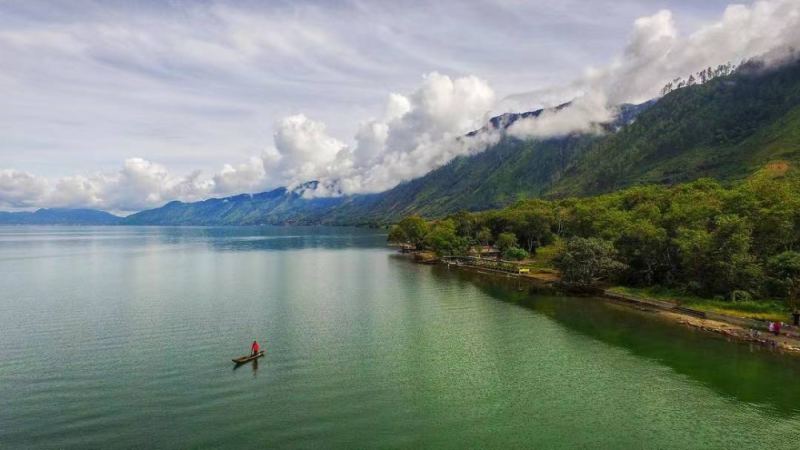
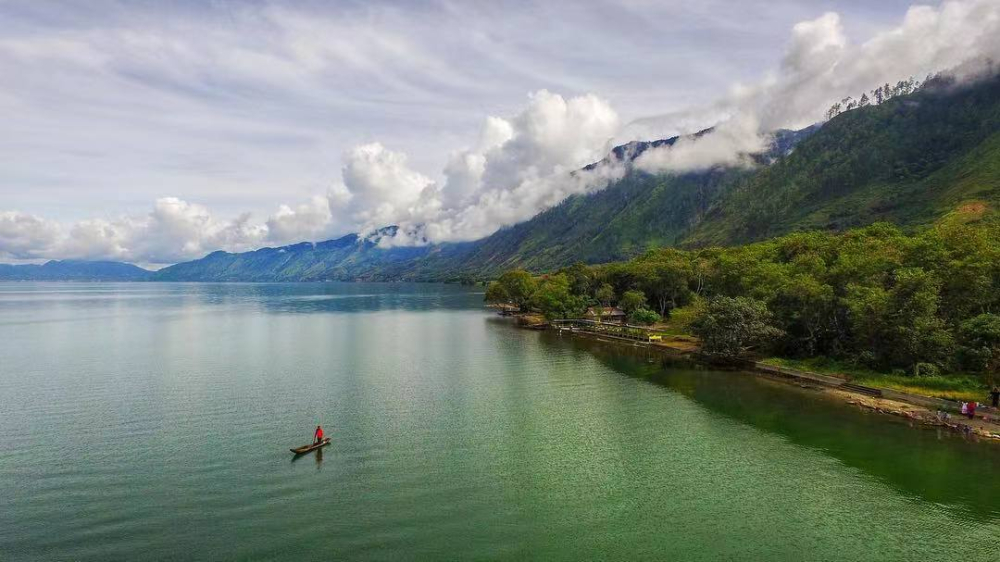
Lake Toba is the largest volcanic lake in the world and also Indonesia's largest highland freshwater lake. The average annual temperature in this area is about 22°C, with a tropical rainforest climate. The rainy and humid environment, combined with a mountain altitude of about 1,400 meters, makes it rich in spices, timber, palm oil, and other agricultural products, and coffee is naturally among them. Under the continuous rainy weather conditions, most fruit trees grow on higher-altitude slopes, with surfaces covered by various ferns, which together provide a good sunscreen barrier for coffee, so growers do not need to build additional shade facilities.
Located in central Aceh Province, Sumatra, the Gayo Mountains have very unique microclimatic conditions and are adjacent to the famous volcanic Lake Tawar. The lake water here is clear, and the natural environment is excellent. Coffee trees are planted on high mountains at an altitude of 1,200–1,800 meters, with fog all year round, significant temperature differences between day and night, volcanic soil rich in minerals and nutrients, and fallen fruit naturally turning into fertilizer. Local farmers generally grow coffee organically, and together with a long cultivation history, this makes the coffee quality and yield of this producing area relatively outstanding. Many green coffee buyers also place special importance on this place, including the well-known local Pwani Coffee Company (PWN).
From September each year to April of the following year is the period when coffee cherries mature, and scenes of busy farmers picking can be seen everywhere in the mountains. Traditional Lintong Mandheling is grown by the Mandailing and Batak peoples, while the later-emerging Lake Tawar Mandheling is cultivated by the Gayo people.
What is completely different from many coffee-producing regions is that most parts of Indonesia have humid weather, with year-round humidity maintained between 70–90%, frequent typhoons, and annual rainfall even exceeding 2,000 mm. Under such harsh conditions, it is simply impossible to carry out the 2–3 weeks of sun-drying used in African producing regions, while washed processing is not only time-consuming but also has higher labor and water costs, which Indonesia, with mass production as its goal, cannot afford. So the locals developed a unique semi-washed method—wet hulling.
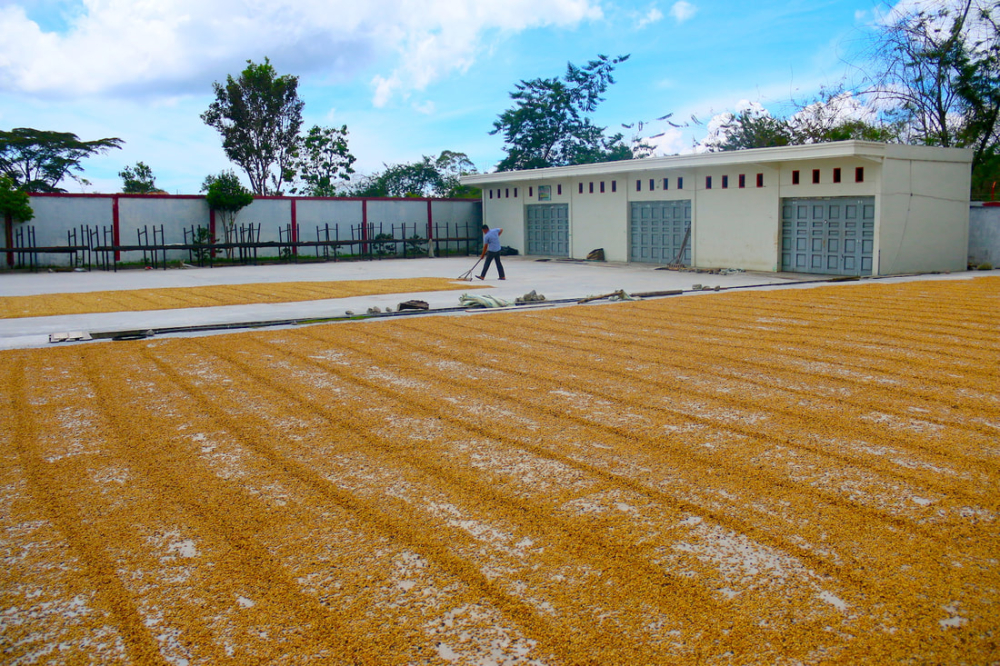
The coffee cherries with peel and pulp removed are put directly into tanks for brief fermentation of several hours. At this point, a small amount of mucilage still remains on the parchment, and the mucilage is removed by scrubbing. Then the parchment beans are spread out to dry. For the first drying, the moisture content only needs to be reduced to 30–40%, which takes about 2–3 days, and then the coffee farmers resell the green beans to collectors. The collectors directly hull the purchased semi-dried parchment beans by machine to obtain the innermost green beans.
Because the huller generates considerable friction during operation, it tears open the parchment layer tightly clinging to the green beans, and at this stage white or green viscous liquid usually flows out. After prolonged soaking in mucilage and the effect of the humid environment, the green beans eventually become soft, whitish, and swollen, taking on a grayish-green appearance. Under the stirring of friction, the green beans are also more likely to be crushed or bruised, especially at both ends, forming small notches, the so-called goat-foot beans. The "naked beans" with the parchment removed dry extremely quickly, and at the same time are directly exposed to humid air and infected by various microorganisms. This gives the coffee its unique woody, spicy, and herbal notes, which is what people commonly call the "Mandheling flavor."
Front Street Coffee (FrontStreet Coffee) barista brewing recommendations
Regarding coffee brewing, Front Street needs to remind everyone that if the coffee beans have already been ground in advance, they should be brewed as soon as possible, because coffee grounds lose aroma quickly after contact with air, and the final brewed coffee flavor will also be greatly reduced. Therefore, Front Street more strongly recommends grinding fresh and brewing immediately, so that you can better taste the coffee's best flavor.
In daily brewing of medium-dark roast Mandheling, Front Street Coffee (FrontStreet Coffee) usually uses the KONO dripper. The KONO dripper can make the coffee taste rounder and fuller, and the flavor expression is also more direct. However, the KONO dripper's exhaust effect is relatively poor, because its ribs are designed vertically, and the depth only accounts for one quarter of the dripper. Except for the area above this one quarter, the filter paper clings tightly to the cup wall, forming a sealed state.
Recommended brewing water temperature: 88–89°C. Blooming time: 25 seconds. Coffee-to-water ratio: 1:15. Grind size: medium-fine grind (75% passing a Chinese standard No. 20 sieve).
Use staged extraction. Bloom with 2 times the amount of water as the coffee grounds, that is, 30 grams of water for 30 seconds. Pour in a small stream in circles until 125 grams, then pause. Continue pouring until 225 grams and stop. After the water in the dripper has dripped through, remove the dripper. Start timing from the beginning of pouring; the extraction time is 2'00". Next, pick up the entire cup of coffee and swirl it to mix evenly, then pour it into a cup for tasting.
Front Street Mandheling pour-over flavor description
[Lintong Mandheling] Herbal, chocolate, caramel, overall relatively balanced;
[Golden Mandheling] Nuts, spices, herbs, licorice, chocolate, caramel, with a clean, gentle flavor;
The above content is compiled by CoffeeHunters, a coffee news website.


