








What Do American Coffee Beans and Other Regional Beans Taste Like?
Choosing coffee beans starts with the three main growing regions: Africa, the Americas, and Asia. African beans show bright acidity, such as the citrus and lemon notes of Ethiopia's Yirgacheffe, the berry acidity of Sidamo, and the cherry tomato and smoked plum flavors of Kenya. American coffee leans toward nutty and chocolatey notes, with Brazil offering balanced low acidity and Colombia delivering smooth richness.
Asian beans round out the map. Indonesia's Mandheling brings low acidity and a heavy body, while Yunnan Baoshan's small-bean variety offers mellow fruitiness. Processing methods also shape flavor in each region, so matching a bean's origin and processing to personal taste is the practical way to narrow a wide market down to one suitable bag.
Faced with the dazzling array of coffee beans on the market, many enthusiasts often don't know where to start. In fact, you only need to begin with the signature flavors of the world's three major coffee regions—Africa, the Americas, and Asia—to find the cup that suits you best. In this article, Front Street Coffee will guide you through the flavor characteristics of different regions: African beans are known for their distinctive acidity, such as the citrus-lemon notes of Ethiopia's Yirgacheffe, the berry acidity of Sidamo, and the cherry tomato and smoked plum flavors of Kenya; American beans are dominated by nutty and chocolatey notes, with Brazil's balanced low acidity and Colombia's smooth richness each having their own merits; among Asian beans, Indonesia's Mandheling with its low acidity and intense body, and Yunnan Baoshan's small-bean variety with its mellow fruitiness, are equally worth noting. We'll also introduce the common processing methods of each region and their impact on flavor, helping you precisely select coffee beans based on your personal taste preferences.
For more specialty coffee knowledge, please follow: Front Street Coffee ( Frontsteet Coffee )
Nowadays, there is a vast variety of coffee beans on the market, with origins all over the world, and many friends often feel at a loss when faced with such a bewildering array of choices. In this article, Front Street will discuss with you how to pick a coffee bean that best suits your taste preferences.
Looking at the distribution of the world's coffee regions, they can be broadly divided into three major sections: Africa, the Americas, and Asia. Front Street will now introduce the flavor characteristics of each of these three regions one by one.
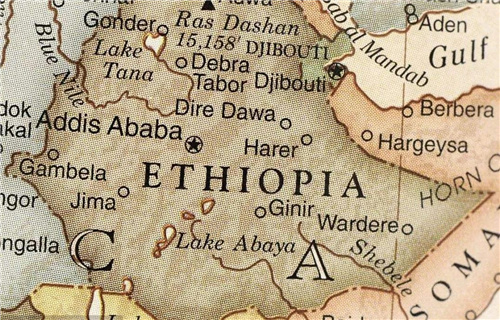
Let's start with Africa. African coffee beans are renowned for their distinctive acidity, and when talking about African regions, Ethiopia must be mentioned—this is the birthplace of coffee, from which coffee varieties spread across the globe. To this day, Ethiopia still has a large number of wild coffee tree species growing there. Because the varieties are too numerous and complex, and the Ethiopian government intentionally protects these wild resources and is unwilling to disclose specific information, locals collectively refer to these wild coffee tree species as Ethiopian heirloom varieties.
In Ethiopia, the most well-known coffee regions are Yirgacheffe and Sidamo. Front Street has acquired several coffee beans from these two regions, including washed Yirgacheffe with predominantly lemon-citrus notes, and Sidamo beans with berry acidity. For example, Front Street's Huakui coffee beans come from the Sidamo region, and they have won the favor of many coffee enthusiasts with their rich strawberry-cream flavor.
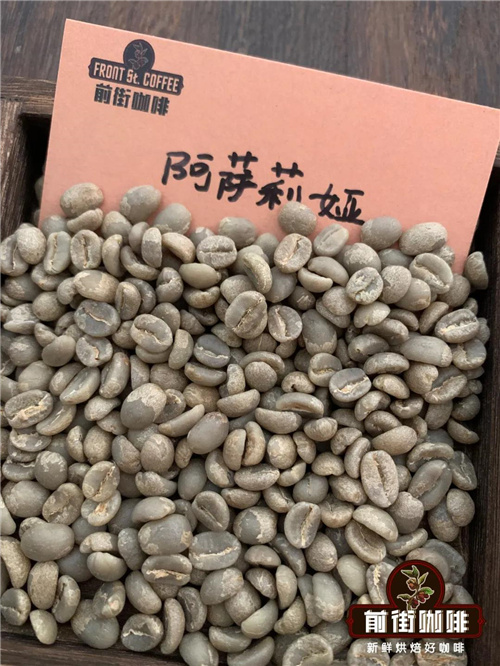
Another African country famous for coffee is Kenya, and Front Street's Kenyan coffee beans are also outstanding for their acidity. However, Kenya's acidity differs in style from Ethiopia's. To put it simply, Front Street would say that Kenyan coffee beans' acidity leans more toward the fresh, bright sensation of cherry tomatoes and berries. One of Front Street's offerings, Asalia, is a very classic Kenyan bean, with a rich, fresh cherry tomato flavor on the palate and a delightful acidity.
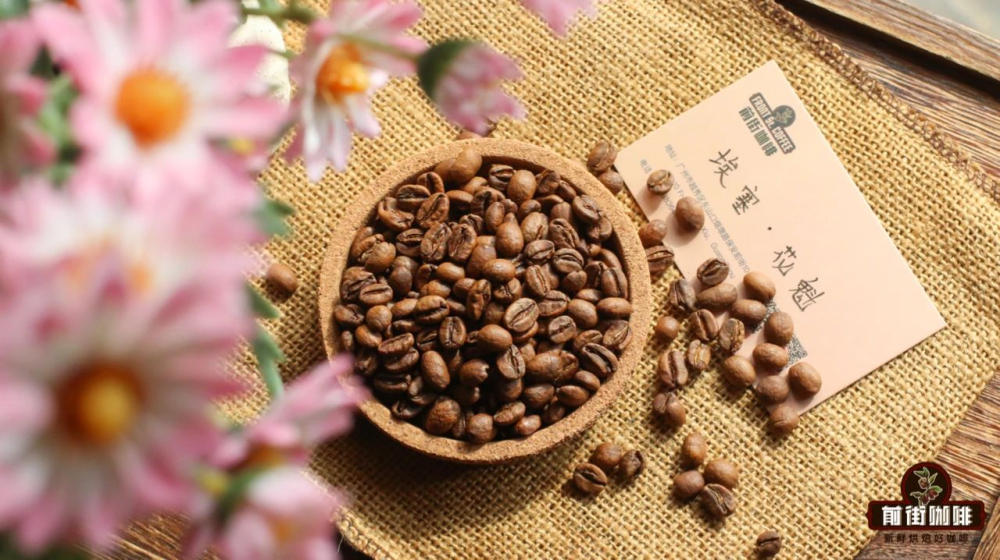
According to Front Street's understanding, African regions generally use the natural (dry) process to handle coffee beans. For example, Front Street's Natural Red Cherry uses the ancient and primitive natural processing method. This Natural Red Cherry places whole coffee cherries with the flesh and skin fully intact on raised drying beds for sun-drying, avoiding direct contact with the ground and preventing mud and off-flavors from excessive sun exposure. After more than two weeks of sun-drying, the dark brown coffee fruits are stored to allow the flavors to fully mature, and only before shipment does the processing station remove the coffee beans from the cherries. This natural processing method gives the beans lower acidity, prominent sweetness, and good body, but it falls short of washed processing in terms of cleanliness. Kenya typically uses the 72-hour washed method to process green beans, so Kenya's acidity is cleaner, leaning toward the mouthfeel of cherry tomatoes, smoked plums, and berries. You can choose the African beans that suit you based on your preferred taste.
Latin American coffee beans, on the other hand, do not possess the distinctive acidity of African coffee, but are dominated by nutty and chocolatey notes. The two most representative producing countries in the Americas are Brazil and Colombia. Brazil's coffee trees are mainly grown on two types of terrain: the Brazilian Highlands above 200 meters in elevation, and the Brazilian plains below 200 meters, primarily cultivating Bourbon varieties. Brazilian coffee's taste profile is low acidity, nutty flavors, balanced, and moderate body. Just like Front Street's Brazil Red Fruit coffee, which has rich flavors of nuts, chocolate, and cream. In addition, Brazil has a wide variety of coffees, and processing methods are basically dominated by natural (dry) processing. The coffee beans produced by Brazil's Queen's Farm are also of very high quality, and this coffee bean from Front Street comes precisely from Brazil's Queen's Farm. Queen's Farm has won championships in Brazil's Cup of Excellence (COE) competition. Many farms large and small in Brazil take pride in being able to enter this competition, and Queen's Farm has won this award for many years running, which also shows that Queen's Farm's coffee beans are of much higher quality than ordinary Brazilian coffee.
This is one of the reasons why Front Street Coffee (FrontStreet Coffee) has listed this Brazilian coffee bean. Before listing it, Front Street Coffee (FrontStreet Coffee) also conducted corresponding cupping and brewing experiments. It has obvious sweetness on the palate, with a faint lemon aroma, rich nutty flavors, and a pronounced dark chocolate note in the finish, with an overall rounded feel. It is a coffee bean that represents the overall characteristics of Brazilian coffee while also showcasing its own unique liveliness. This is the ultimate reason why Front Street decided to list this Brazilian coffee bean.
Because Brazil and Colombia are geographically close, people very much enjoy comparing the coffees of these two producing countries. Colombian coffee has a balanced flavor and a relatively smooth mouthfeel, like a gentleman among coffees—proper and refined. Colombia's Huila region is the most famous coffee-producing region in Colombia, with mountainous terrain where coffee is planted on sloped valleys and hillsides, with abundant rainfall and select Arabica varieties. The unique natural climate produces coffee with a full body, nutty and dark chocolate aromas, and smooth, pleasant fruit acidity. Because Colombia's coffee beans are mainly grown in high mountains, the flavor is much better than coffee beans from Brazil's plains, and Colombia's coffee has better body than Brazil's.
The third world coffee-producing country Front Street will introduce is in Asia. Asia also offers a great many choices of coffee beans. Among them, Mandheling coffee beans from Indonesia are excellent. If you prefer low acidity and a rich, intense body, then Indonesian coffee beans are very suitable for you.
Among them are Front Street's Indonesian Mandheling coffees, such as Front Street Lintong Mandheling, Front Street Natural Mandheling, Front Street Aged Mandheling, Front Street Tiger Mandheling, and Front Street Golden Mandheling, among others. Among these, Golden Mandheling coffee has the best flavor—low acidity, a very smooth mouthfeel, and prominent sweetness, with a relatively mild Indonesian herbal character. If you like a rich aroma, you can choose Tiger Mandheling; if you like high body and high sweetness, you can choose Aged Mandheling; and Lintong Mandheling is a very classic Mandheling flavor, famous for its rich herbal notes. The reason Mandheling has such distinctive flavors is that the processing method generally used for Indonesian green beans is the wet-hulling (Giling Basah) method. This processing method gives the coffee beans a wet-hulled flavor. We generally consider wet-hulling to carry earthy, smoky, and chocolate notes, with acidity described as "low," and a body that is rich yet quite muted.
Among them, domestic Yunnan coffee is also very famous, especially Baoshan in Yunnan, where the dry-hot valley climate is very suitable for cultivating coffee. Because Yunnan lies between 15 degrees north latitude and the Tropic of Cancer, mostly at high altitudes, with year-round high temperatures, large temperature differences between day and night, suitable rainfall, abundant sunlight, and mineral-rich red volcanic ash soil, these unique natural conditions have shaped the particular taste of Yunnan's small-bean coffee. Therefore, the coffee produced here is of excellent quality, with a mellow aroma, strong but not bitter, fragrant but not harsh, with a slight fruitiness. Front Street Coffee (FrontStreet Coffee) also has its own planting base in Baoshan, Yunnan, and is still in the continuous exploration stage, but Front Street believes that with persistence, there will certainly be results.
The above is Front Street's brief summary of coffee varieties. You can start with the three major coffee regions based on the coffee flavors you enjoy, and through continuous experimentation, you will develop your own coffee flavor preferences.
The above content is compiled by CoffeeHunters, a coffee news website.


