







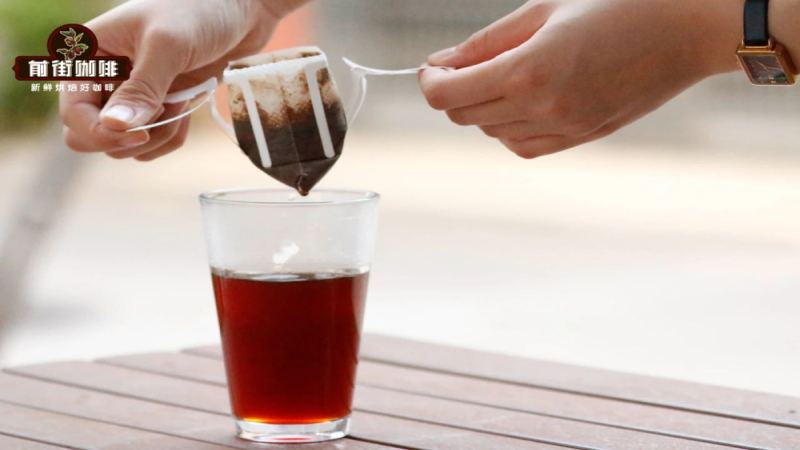
How Many Times Can a Drip Bag Coffee Be Brewed?
A drip bag coffee is designed for one brew. The ground coffee inside holds most of its soluble flavor, and a single 150-milliliter pour extracts the bulk of it. A second pour yields weak, hollow liquid with little aroma, even with a bright Yirgacheffe bag that starts with citrus and floral notes.
The one-brew rule applies across origins. Ethiopian Yirgacheffe shows tea-like florals, Kenyan beans bring berry acidity, Brazilian lots lean nutty and sweet, and Indonesian Mandheling tastes herbal and spicy. Each style is pre-ground for a single serving, so choosing a bag by origin is more useful than trying to stretch one bag across two cups.
Drip bag coffee has become the top choice for many people at home or on business trips thanks to its convenient brewing method. But how many times can a drip bag actually be brewed? Can specialty drip bags like Yirgacheffe be re-steeped? Starting from Front Street Coffee's drip bag products, this article explains in detail the structural features of drip bag coffee, the standard brewing process, and the coffee-to-water ratio, and explains why drip bag coffee is only recommended for one brew. At the same time, for different flavor preferences, it offers selection ideas for drip bags from producing regions such as Ethiopia, Kenya, Brazil, and Indonesia, helping coffee lovers quickly find the one that suits their taste among a dazzling array of products.
Coffee has long been integrated into many people's daily lives, and people's expectations of it go beyond just waking them up. The fascinating flavors that producing regions give coffee are exactly why enthusiasts never tire of it: Yirgacheffe carries citrus and floral notes, Panama Geisha presents a floral-tea-like character, washed Colombia interweaves citrus and dark cocoa, and Mandheling exudes herbal and spice aromas.
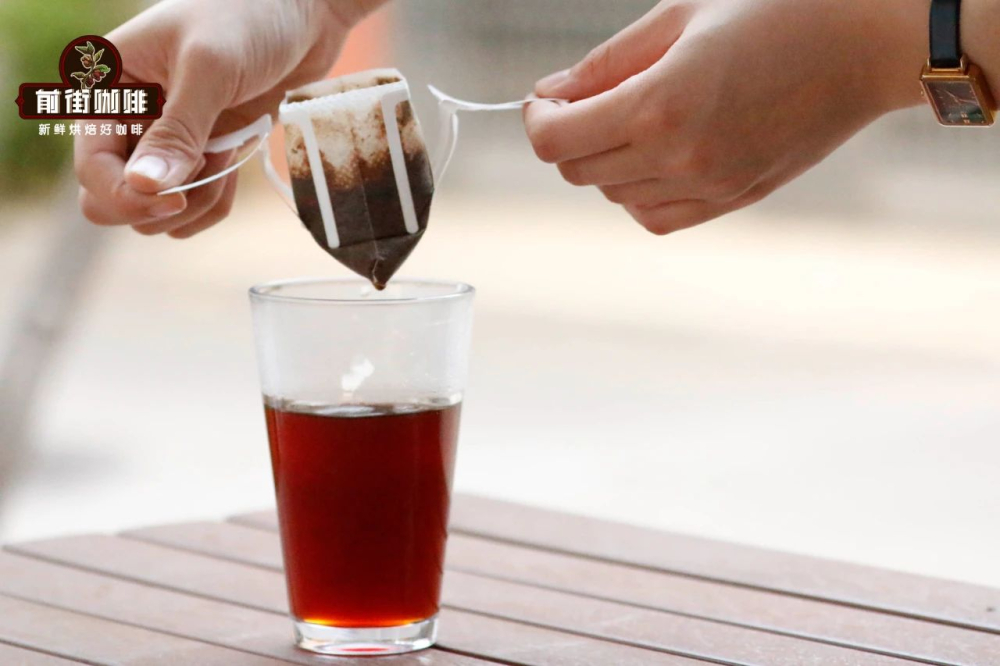
As coffee culture continues to spread, drinking coffee has become more and more routine. But it is not always possible to walk into a café and enjoy a good cup of coffee, so Front Street Coffee also strongly encourages everyone to brew pour-over coffee at home and experience the fun of it. However, today we are going to talk about another method that is more effort-saving and faster than pour-over—drip bag coffee.
What is drip bag coffee?
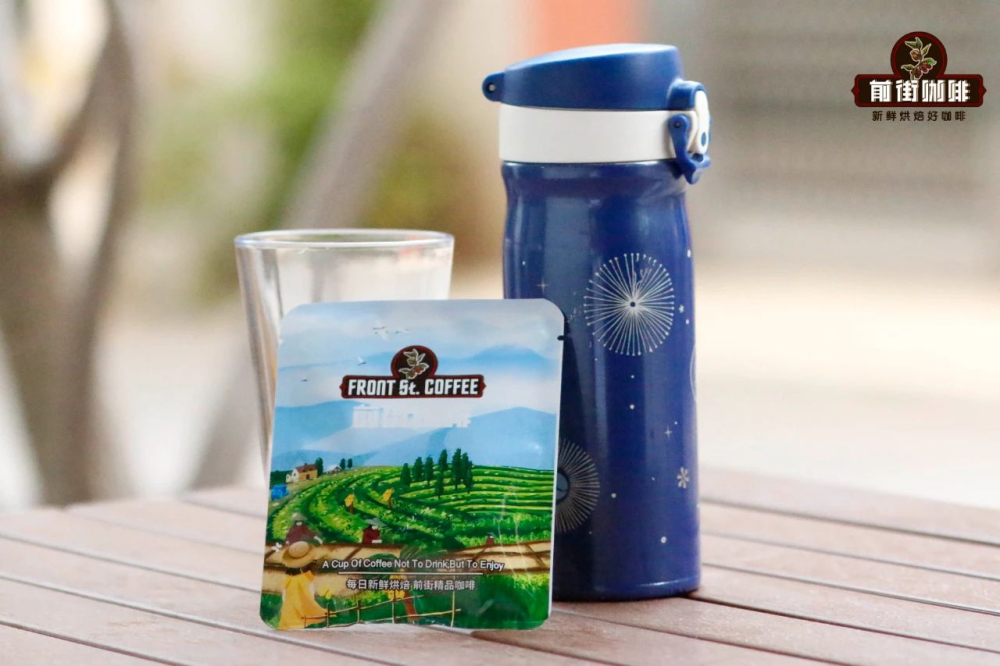
The common drip bag coffee on the market looks like a filter-bag-style coffee packet. Taking the Front Street Coffee drip bags sold by Front Street as an example, the method is to first grind coffee beans into powder, then put them into a special filter bag and seal it. Drip bag coffee gets its name from the supporting cardboard on both sides after the filter bag is unfolded, which look like two ears hanging on the rim of a cup.
The biggest feature of drip bag coffee is that it saves more time and effort than pour-over coffee. Pour-over requires a series of equipment such as a pouring kettle, thermometer, dripper, filter paper, and grinder; while drip bag coffee is already pre-ground, eliminating the need for a grinder, and the filter bag itself also serves the functions of both dripper and filter paper. Because of this convenience and the variety of flavors available, drip bag coffee is often used on business trips, travels, and similar occasions. So how exactly should pour-over coffee be operated?
How do you brew drip bag coffee?
Brewing drip bag coffee is very simple. There is no need to prepare a pile of equipment like with pour-over; you only need one pack of drip bag coffee, hot water, and a cup.
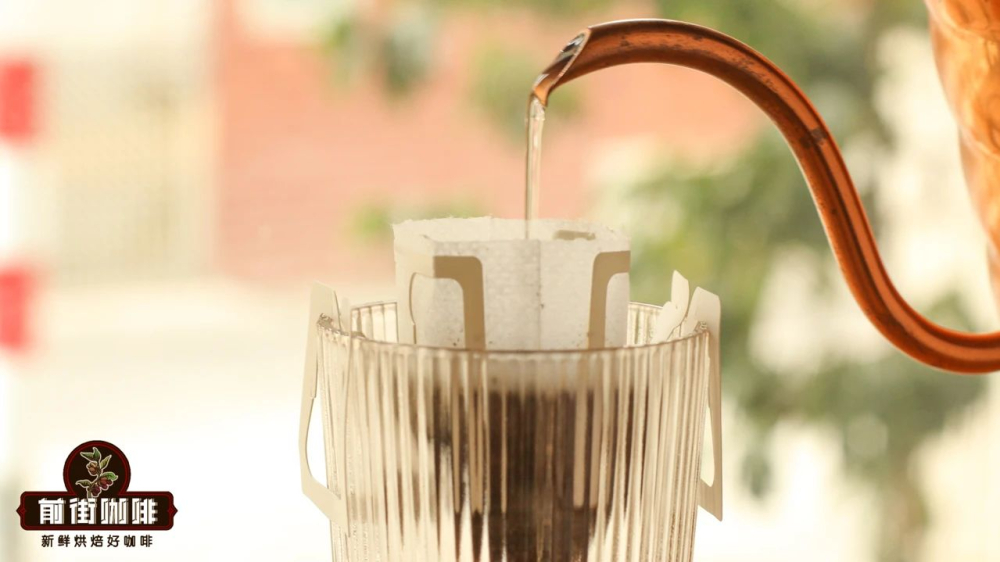
First tear open the outer packaging of the drip bag and take out the coffee filter packet inside. Then tear it open according to the instructions on the filter packet and unfold the drip bag. After that, hang the "ears" on both sides over the rim of the cup or server.
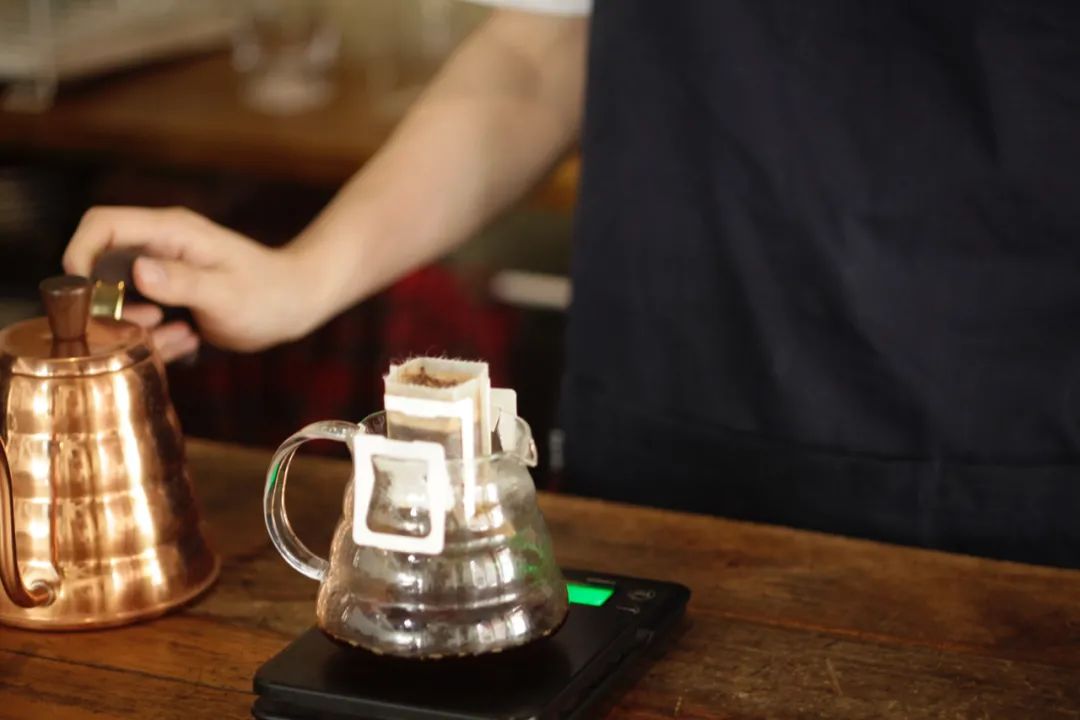
Each Front Street Coffee drip bag made by Front Street contains 10 grams of coffee powder, and the recommended brewing ratio is 1:15. In the first stage, pour in a small amount of hot water to make sure all the coffee powder is moistened, and let it bloom for 10 to 20 seconds; in the second stage, pour water until nearly full and let the coffee liquid drop naturally; finally, pour water until full. The whole process is divided into three pours, and once the remaining coffee liquid has finished filtering, it is ready to enjoy.
How many times can drip bag coffee be brewed?
Front Street Coffee believes that drip bag coffee is equivalent to a simplified version of pour-over coffee, and like pour-over, it can only be brewed once, while the ratio must also be controlled. If the ratio is too high (too much water poured), the coffee will taste weak. The reason is that the extractable substances in coffee beans account for only about 30% of the bean weight, so no matter how much more water is poured, it cannot make the coffee taste better.
In addition, pay attention to the ratio. As with pour-over coffee, the recommended range is between 1:14 and 1:18, and the ratio for drip bag coffee corresponds exactly to one pour for blooming plus two pours to fill, that is, three pours in total. Another simple method is to find a cup with a capacity of about 200 ml and fill it to eight-tenths full.
How should you choose the flavor of drip bags?
As specialty coffee becomes increasingly mature, the choices of drip bags on the market are becoming richer and richer. Facing a dazzling array of products and unfamiliar introductions to producing regions and varieties, how can you pick the one that best suits your taste? Below, Front Street will teach everyone how to identify them quickly.
For friends who prefer floral and fruity-acid coffee, Front Street will first recommend drip bag coffee made from beans from African countries such as Ethiopia and Kenya, because these beans usually show bright fruit acidity and elegant floral aromas under light-to-medium roasting. Taking Ethiopian coffee as an example, Front Street's favorite is the Front Street washed Gutingding from the classic producing region Yirgacheffe. The black coffee brewed is fresh and natural, with a slight caramel note and a green tea finish, and the layers are especially distinct.
Front Street. Ethiopia Yirgacheffe Gutingding Cooperative Coffee Region: Yirgacheffe Gedeo Zone producing area Producer: Gutingding Cooperative Altitude: 1900-2300m Variety: Local Heirloom Processing method: Washed
Grade: G1
Flavor: Citrus, berries, lemon, cane sugar, green tea
For customers who like a rich, full-bodied coffee, Front Street will immediately recommend specialty coffees from two producing regions: one is Front Street Brazil Queen Estate Yellow Bourbon, and the other is Front Street PWN Golden Mandheling from Sumatra, Indonesia. After dark roasting, both show moderate bitterness and rich caramelized aroma, and on the palate they release notes of chocolate, roasted nuts, and cocoa, making you feel especially refreshed after drinking.
Front Street. Brazil Queen Estate Coffee Beans
Region: Brazil Mogiana producing area
Estate: Queen Estate
Altitude: 1400–1950m
Variety: Yellow Bourbon
Processing method: Natural
Flavor: Dark chocolate, cream, peanut, sugarcane, nuts
The above content is compiled by CoffeeHunters, a coffee news website.


