







What do Rwandan coffee beans taste like after the genocide?
Rwandan coffee comes from smallholder farms, most with fewer than 200 trees, grown between 1350 and 1850 meters on volcanic soil. Washed Red Bourbon lots typically show bright citrus acidity with nutty chocolate sweetness. The industry was rebuilt after the 1994 genocide, moving from near collapse to specialty export status.
About 430,000 households grow coffee in this country roughly the size of Maryland. Rwanda sits on the equator, so rainfall and mild temperatures promote even cherry ripening, and most farms use no chemical fertilizers or pesticides, relying on natural ground cover. Washing removes skin, pulp and mucilage, then drying brings moisture down to around 12 percent.
Rwanda, known as the "Land of a Thousand Hills," is a prominent African coffee-producing country after Kenya and Ethiopia. However, unlike these two countries with long histories, Rwanda's coffee industry was rebuilt from the ruins of war and genocide. This article will introduce you to Rwanda's coffee-growing environment, Bourbon varieties, washed processing techniques, and the industry's revival path from the PEARL project to Starbucks' "Blue Bourbon." At the same time, Front Street Coffee will share roasting and brewing suggestions for Rwandan washed Red Bourbon, allowing you to savor the bright citrus acidity and nutty chocolate sweetness while feeling the resilience and hope of this land reborn from ashes.
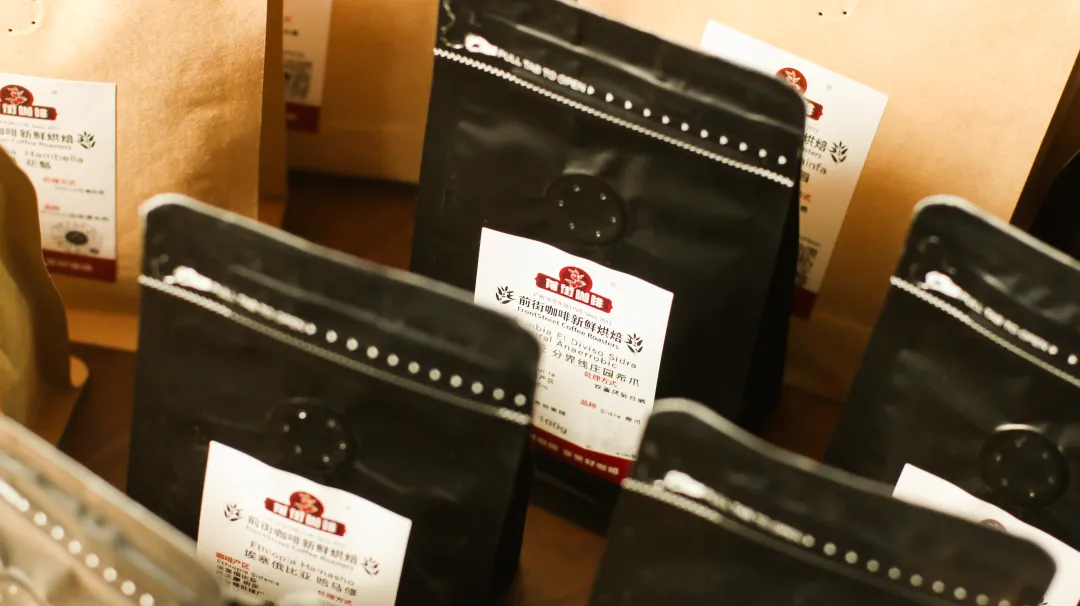
Every coffee at Front Street has a story, and we are happy to share the story behind each coffee bean, believing that this is the meaning of drinking coffee. It's not just about a cup of coffee tasting good; you also need to listen to the story behind it and feel their experiences, so you understand that every cup of coffee is hard-earned. The story of this bean we're about to share has sourness and sweetness for you to taste this kaleidoscope of life!
Front Street Rwanda coffee is the most popular African coffee after Kenya and Ethiopia. But unlike those two famous producing countries, it has no long history of cultivation, let alone native wild varieties; this small African nation is a phoenix reborn from ashes.
Rwanda is one of Africa's smallest and most densely populated countries, with an area comparable to Maryland. In this country, the average size of all family farms is less than one hectare. Rwanda's coffee production is essentially a smallholder economy; today, about 430,000 households produce coffee in Rwanda, with most farms having fewer than 200 coffee trees.
Rwanda has an ideal growing environment for Arabica coffee, with coffee grown at altitudes between 1350m and 1850m. Rwanda's fertile volcanic soil, abundant rainfall, and mild year-round climate all promote the maturation of coffee beans, and this special growing environment gives the coffee its unique flavor. Rwandan coffee basically does not use chemical fertilizers or pesticides. The nutrients in the soil come from natural ground cover and traditional fertilization methods.
Rwanda, known as the Land of a Thousand Hills, sits on the equator and is surrounded by East African countries such as Congo, Uganda, Tanzania, and Burundi. Geographically, it has conditions suitable for growing coffee, but since coffee was introduced by German missionaries in 1904, Rwandan coffee was mostly poorly processed commercial grade, with most of it exported to its colonial ruler Belgium. The push for specialty coffee production only began after the devastation of war, once the economy got back on track.
The 1994 Genocide claimed over a million lives, most of them Tutsi. Even today, Rwandan streets still have orphans who survived, memorials everywhere, and war criminals accounting for 90% of the prison population! Since 2001, the Rwandan government established NAEB (National Agriculture Export Development Board), focusing on boosting coffee exports to earn foreign exchange.
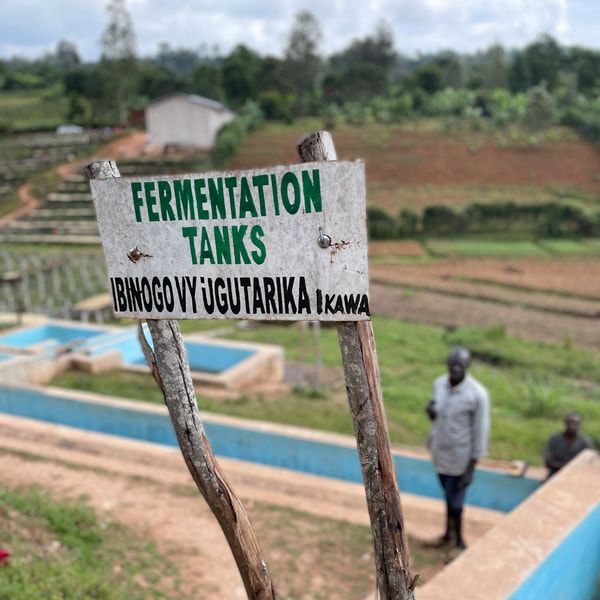
With government support, farmers shifted from rough home processing to delivering freshly harvested cherries to nearby Coffee Washing Stations for fully washed processing. In just 12 years, the number of washing stations nationwide increased from two to 220. They are now all privately owned, meaning owned by exporters or farmer cooperatives. Due to the small average farm size (each farm has fewer than 200 coffee trees on average), each station serves about 50 to 100 farms. NAEB employs 200 botanists and cuppers who regularly inspect quality at washing stations and educate farmers on soil management, organic farming, pruning, pest control, and harvesting.
Rwanda Coffee Processing Methods
In 2000, Rwanda, having just experienced internal turmoil, sought to upgrade its coffee industry. Led by Michigan State University, a group of researchers from institutions including Texas A&M University and the National University of Rwanda came together to help Rwanda upgrade its coffee industry. The project was abbreviated as PEARL (Partnership for Enhancing Agriculture in Rwanda through Linkages project).
The PEARL project aimed to promote improvements in the quality and quantity of Rwandan coffee and help farmers achieve better incomes, creating a virtuous cycle. After the PEARL project was implemented, Rwanda successively built 46 coffee washing stations, allowing Rwanda's economy to grow significantly under strong coffee bean exports. The PEARL project was also the largest and most comprehensive development plan implemented since Rwanda's independence.
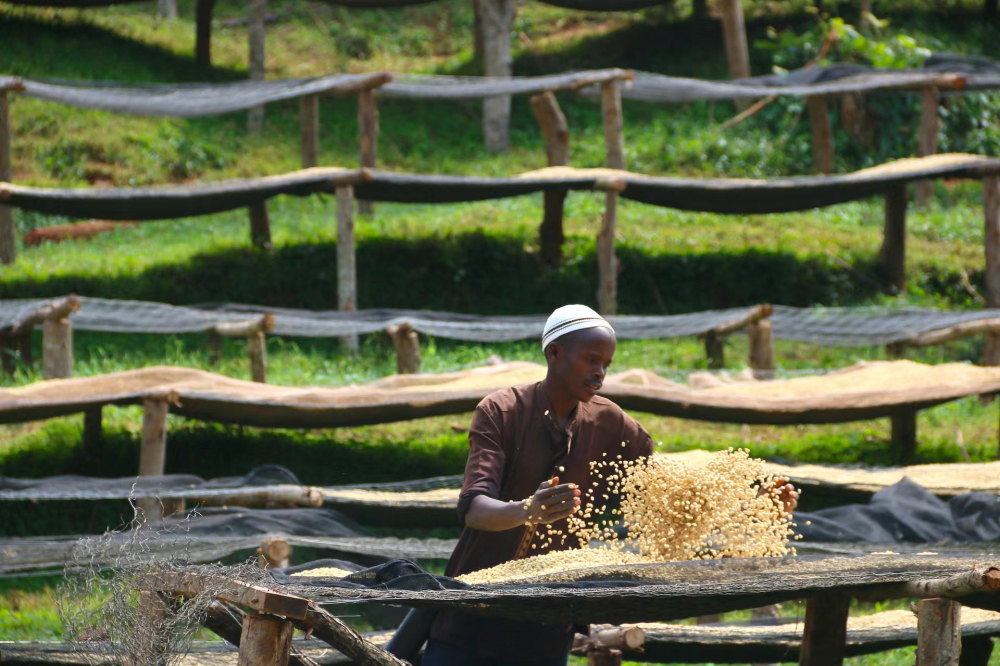
Therefore, Rwandan coffee beans currently mainly use the washed processing method. Each year during harvest season, farmers pick ripe coffee cherries and deliver them to washing stations for processing. First, manual sorting ensures no immature or damaged cherries are mixed in. Then the skin is removed, and a 12-18 hour washed fermentation process takes place in a cool, low-temperature environment, washing away the adhering mucilage in channels. During the shade-drying process, washing station members manually turn the beans, carefully tending them to ensure that under full sun exposure, the parchment beans do not lose moisture or dry unevenly, until the moisture content of the green beans stabilizes below 14%.
Strictly Controlling Drying Speed
The Bourbon variety accounts for over 90% of Rwanda's output. A small number of farmers grow Bourbon variants BM-139 and Jackson. The southern and western regions are more mountainous, and the washing stations there are also more famous. Examples include Gitesi, Huye Mountain, and Mibirizi. Compared to Central America, where coffee is commonly dried on concrete patios, Rwanda dries parchment coffee on African beds covered with canvas, controlling the drying speed and slowly reducing the bean moisture content to the target 11% over 10 to 15 days. Compared to direct sun exposure, this method helps preserve organic compounds. Rwanda was the first African country to hold a COE competition. This year is already the 5th edition. In terms of flavor, Rwandan coffee has pronounced floral and fruity notes, with a smooth, tea-like mouthfeel. Its balance is the highest among African countries.
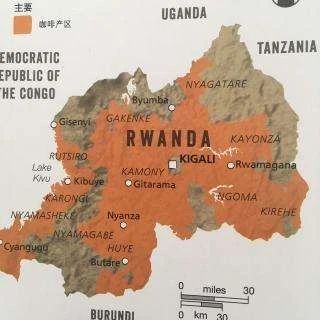
Rwanda is a small landlocked country in East Africa, with hilly terrain, fertile land, and ancient Bourbon varieties. Quality coffee beans can be seen growing throughout Rwanda. It is said that coffee was introduced to Rwanda by German missionaries in 1904. Coffee is the only crop that rural farmers can earn income from. Coffee flourished, but unlike neighboring countries with centralized auction systems, farmer cooperatives can trade directly with buyers. Traditionally, Rwandan coffee is exported to Europe via Uganda through the Kenyan port of Mombasa.
In the past decade, due to civil war and genocide, Rwanda's premium coffee could not be exported, causing coffee cultivation to plummet. The 1994 genocide claimed nearly 500,000 lives and nearly wiped out coffee cultivation knowledge and techniques. After the war, with American aid and assistance from some international organizations, cultivation gradually recovered. Due to the war and genocide, a high proportion of the surviving small coffee farmers are women or even widows. When one receives Grade A Rwandan coffee produced by these small farmers or estate cooperatives, the emotion is hard to describe, especially since its flavor is in no way inferior to Kenyan auction lot beans or Yirgacheffe — it even has its own uniquely charming qualities worth savoring...
Rwanda Coffee and Starbucks
In the early days of the SPREAD project, in 2006, Starbucks began selling Rwandan coffee beans, incorporating them into Starbucks' premium product line "Black Apron" (the name refers to Starbucks' internal "Coffee Master" certification program; regular Starbucks employees wear green aprons, and only those who pass numerous exams and competitions can wear the black apron symbolizing honor). Starbucks selected Bourbon coffee beans from two Rwandan washing stations (Abahuzamugambi Ba Kawa Cooperative Washing Station and Musasa Cooperative Washing Station), named it "Blue Bourbon," and sold it at $24 per pound.
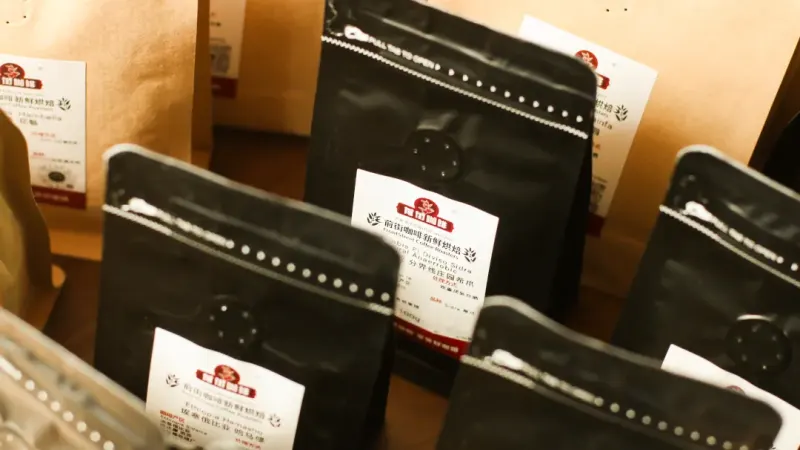
To taste the flavor of Rwandan specialty coffee, Front Street's Rwandan washed Red Bourbon is the top choice. It comes from the highest-altitude Nanshike producing region, uses traditional washed processing, and after medium-light roasting, presents bright citrus acidity with nutty and chocolate sweetness, offering a rather distinctive mouthfeel.
Front Street Roasting Suggestions
Due to the high altitude of Rwandan coffee, its density is high. Hard beans like these will present better flavor under conditions of higher drop temperature and a faster heating rate. Front Street Coffee recommends dark roasting.
Region: Rutsiro, Western Province, Rwanda Altitude: 1500-1800m Variety: Bourbon Processing Method: Washed
Machine: Yangjia 800N, 550g green beans charged
Front Street Coffee Roasting Scene
Front Street Coffee Brewing Suggestions
*Reason for choosing the Kono dripper: The Kono dripper has few ribs and they are located at the lower end. The filter paper clings tightly to the dripper, restricting airflow and extending the contact time between water and coffee grounds, allowing the coffee grounds to be fully extracted and enhancing the rich mouthfeel.
Front Street Coffee Kono Dripper Display
Front Street Coffee Brewing Method
Staged Extraction
Use 30g of water for a 30-second bloom, then pour in a small stream in circles until reaching 125g for the first stage. When the water level is about to expose the coffee bed, continue pouring until 225g and stop. When the water level is about to expose the coffee bed again, remove the dripper. (Timing starts from the beginning of the bloom.) Total extraction time is 2'00".
The above content is compiled by CoffeeHunters, a coffee news website.


