







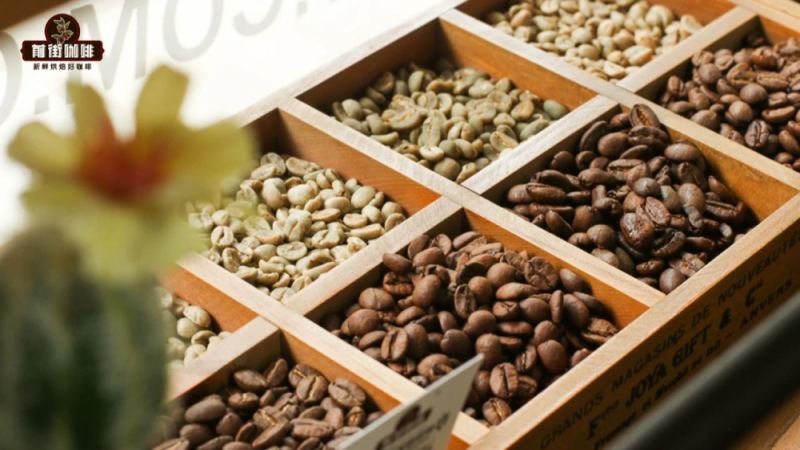
How are Brazilian coffee bean grades and flavors defined?
Brazil leads global coffee production, and its coffees are known for low acidity and full body. Cultivation began in 1729, with trees introduced from French Guiana. Bourbon Santos is a typical single-origin example: mild and smooth in the cup, low in acidity, moderate body, with a faint sweetness and no obvious faults.
Brazil's soil is acceptable and the climate humid, but altitude stays low compared with top-tier origins, which shapes the softer profile. That is why grade systems matter when buying. Grades sort green beans by screen size, defect count and cup quality, so a well-graded lot from a low-altitude farm can still deliver consistency in daily brewing.
Brazil firmly holds the top spot in global coffee production, and its low-acid, full-bodied flavor profile has a large following in the coffee world. In Front Street Coffee's product line, from the Queen's Farm single-origin beans to the high-value daily staple bean series, and to the seasonal drip coffee bags, Brazilian coffee can be seen everywhere. This article will start from the introduction history and geographical conditions of Brazilian coffee, systematically sort out the classification and characteristics of the Bourbon variety, the process and pros and cons of the semi-washed method, and Brazil's coffee bean grading system, and attach the roasting, cupping, and brewing parameters of Front Street Brazil Queen's Farm coffee, providing coffee lovers with a complete knowledge map of Brazilian coffee.
For more specialty coffee knowledge, please follow the WeChat public account: Front Street Coffee (FrontStreet Coffee)
As the country ranked first in global coffee production, Brazil's full-bodied and low-acidity flavor style has broad acceptance among coffee lovers. Among the Brazilian-origin coffee beans on Front Street Coffee (FrontStreet Coffee)'s bean list, there is the single-origin Queen's Farm, and the cost-effective Front Street daily staple bean series also includes Brazilian beans. To make daily brewing convenient for everyone, Brazilian coffee can also be found in the seasonal drip coffee bag series. It can be said that as a coffee-producing country, Brazil occupies an irreplaceable position in the dimension of classic flavor.
Brazil's coffee cultivation can be traced back as early as 1729, when it was introduced from French Guiana. Although refined cultivation, improved processing methods, and upgraded planting technology can indeed improve coffee quality to a certain extent, Brazil's natural endowment has always lagged behind those regions that produce the world's top coffee—Brazil's soil conditions are acceptable, and the climate is also relatively humid, but the altitude simply cannot rise.
However, Brazil has also produced some world-class single-origin coffees, with Brazil Bourbon Santos being a typical representative. This coffee does not have particularly outstanding advantages, but likewise no obvious shortcomings can be found. Its mouthfeel is mild and smooth, with low acidity, moderate body, and a faint hint of sweetness. These soft taste elements are interwoven together; if one wants to break them down and distinguish them one by one, it is quite a challenge for the palate, and this is precisely why many Bourbon Santos lovers are fond of it. Because its character is so gentle and plain, Bourbon Santos is suitable for medium roasting, suitable for brewing with maximum extraction, and is also an excellent base for making espresso and various fancy coffees.
Recent Developments in Brazilian Coffee
Impact of the Pandemic
The title of number one in production has brought Brazil considerable economic benefits, but it also means a huge demand for labor. Looking back at history, Brazil was once the last country in the entire Western Hemisphere to abolish slavery, and the root cause was that coffee cultivation and harvesting required a large amount of labor. Now, under the impact of the COVID-19 pandemic, Brazil is worried that the pandemic may break out on a large scale with the arrival of the coffee harvest season, thereby dragging down coffee export progress, so it is expected that this year's Brazilian coffee harvest will be delayed to some extent.
Benefits of Shade Trees
Under the trend of global warming, the areas in Brazil suitable for coffee cultivation will shrink significantly in the future. At the same time, the latest research confirms that shade trees in Brazil can play a certain role in buffering temperature increases, which is undoubtedly good news for growers. Research shows that covering 50% of the planting area with shade tree species can preserve as much as 75% of the region's production capacity.
Geographical Conditions
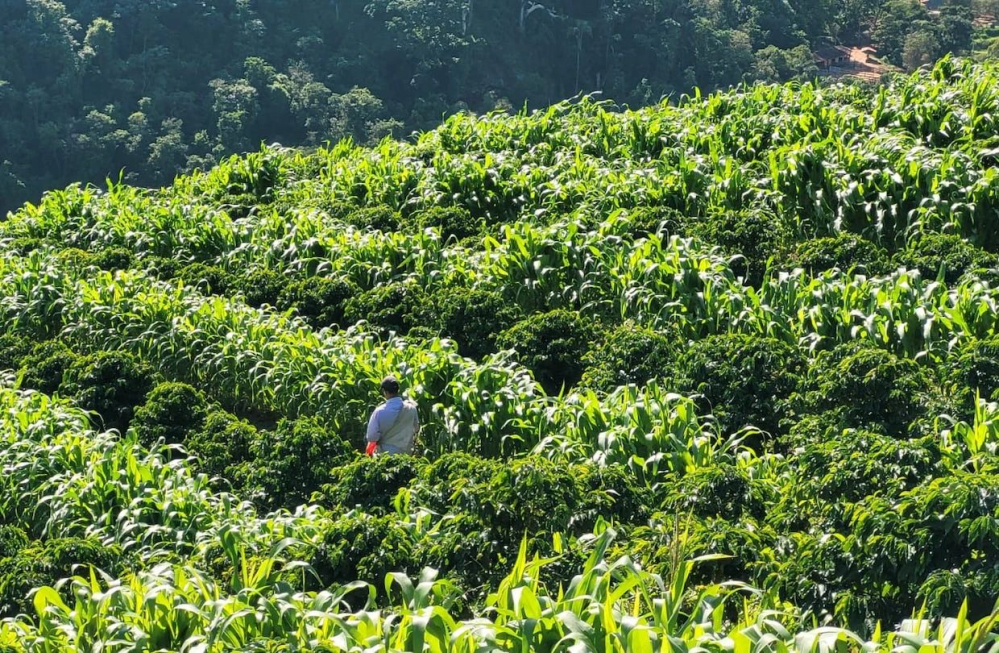
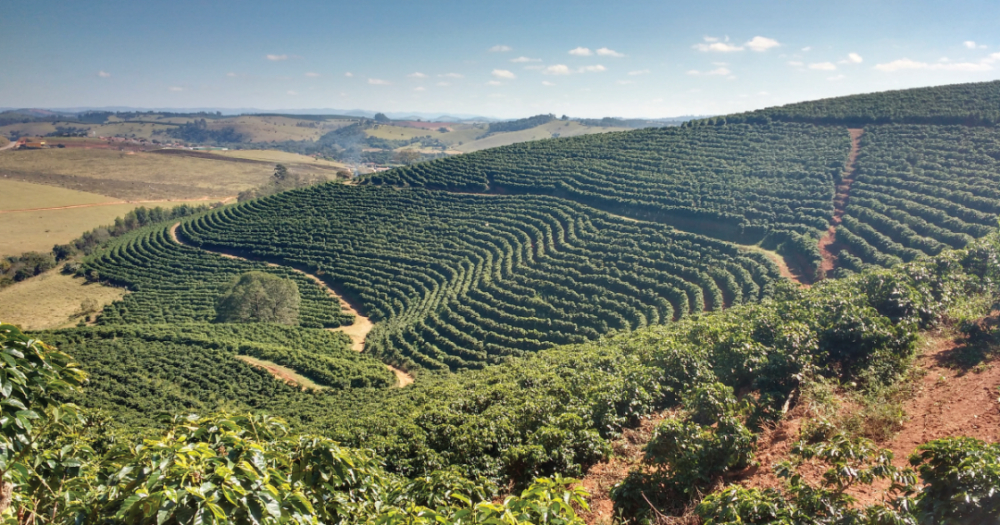
Brazilian coffee is usually planted in relatively flat areas. To adapt to local conditions, Brazilian estate operators developed improved Arabica coffee trees decades ago that do not depend on high altitude and shade environments, and can be planted on plains or grasslands directly exposed to the scorching sun, which is completely different from the traditional high-altitude shaded cultivation method.
The altitude of most Brazilian coffee farms is only a few hundred meters, and coffee is even planted on flat land without issue. This sun-exposed planting method causes coffee cherries to grow relatively quickly, flavor development is not sufficiently complete, and the bean density—that is, so-called hardness—also cannot match high-altitude beans. The fruity acidity is noticeably low, and the flavor tends to be monotonous. Rio coffee near the coast even has an iodine taste and salty taste, which is considered to be the result of some kind of microbial action, but even if the same soil is used for planting, this flavor is not necessarily produced every year. Most coffee lovers do not appreciate this kind of taste; only a few Middle Eastern countries, because they are accustomed to brewing coffee with sugar, find this Rio coffee flavor particularly suitable.
The Balance of Brazilian Coffee
Brazil's altitude is indeed low among Central and South American countries, and it also lacks microclimates. Under the combined effect of these conditions, the coffee beans grown have low but sufficiently soft acidity, prominent nutty notes, chocolatey sweetness, and excellent body. However, some coffee lovers will nitpick Brazilian coffee's acidity, feeling it is too mediocre and lacks a wow factor. This actually also illustrates a truth: coffee culture is inherently like this, with praise and criticism alike, and whether a coffee bean can become famous ultimately has to withstand the dual test of praise and criticism.
Brazilian Producing Regions
Brazil has 21 states in total, of which 17 produce coffee, but the 7 largest producing states together account for 98% of the country's total production. They are:
São Paulo State (Mogiana, Centro-Oeste)
Paraná State (Norte Pionerio do Paraná)
Bahia State (Planaltoda Bahia, Cerrado da Bahia, Atlantico Baiano)
Espírito Santo State (Montanhas do Espírito Santo, Conilon Capixaba)
Minas Gerais State (Sul de Minas, Cerrado Mineiro, Chapada de Minas, Matas de Minas)
Rondônia State (Rondônia)
Rio de Janeiro State (Rio de Janeiro)
Brazilian Coffee Varieties
Bourbon classification: Red Bourbon, Yellow Bourbon, Orange Bourbon, Pink Bourbon.
Bourbon coffee and Typica coffee both belong to the old varieties within the Arabica species. Bourbon coffee was first planted in Réunion, which was also called Île Bourbon before 1789, and the coffee variety got its name from this.
Also old-variety coffee beans, the difference between Bourbon and Typica is that Bourbon's leaves are broader than Typica's, growth is denser, and yield is about 30% higher than Typica. The beans are relatively round and short, with thick berry acidity and aroma, obvious creamy and aromatic characteristics, strong acidic aroma, and prominent fruity acidity, but it also has the weakness of relatively weak disease resistance. For Red Bourbon, after the coffee tree flowers and bears fruit, the fruit color generally undergoes the following changes: green > turning slightly yellow > turning slightly orange > turning mature red > then turning darker red as it becomes riper, so some people also call it "Red Bourbon." Red Bourbon is a coffee tree species introduced to Brazil around 1860 via Campinas in the south, and it is also a typical coffee tree species.
Simply put, Bourbon is a branch variety within the Arabica species, usually bearing red fruit, called Red Bourbon. In addition, there are also Yellow Bourbon and Orange Bourbon. Yellow Bourbon has relatively lower yield but better quality.
Brazilian Processing Method—Semi-Washed Processing
The semi-washed processing method is also called the pulped natural method. Unlike traditional natural processing, semi-washed first removes the skin and pulp of the coffee cherries, thereby allowing control over the fermentation degree of the mucilage-coated coffee beans after pulping. Traditional natural processing dries the coffee together with the skin and pulp, making it impossible to observe the fermentation degree of the mucilage. The semi-washed processing method lies between natural and washed processing, but it does not have the "tank fermentation, clean water rinsing" steps of washed processing; instead, it is directly put out in the sun to dry. Although the method appears similar, without the fermentation step, the flavor of the coffee beans is completely different.
1. First put the coffee cherries into a large water tank, remove the floating fruit, then put the sunken fruit into a pulping machine to remove the pulp. This can better eliminate unripe fruit, and more importantly, it ensures that during sun drying the coffee beans no longer carry pulp but are only coated with a layer of mucilage, which is more conducive to controlling the subsequent fermentation process.
2. After removing the skin and pulp from the fruit, yellow mucilage can be seen. The mucilage-covered coffee fruit is then sun-dried (after the coffee beans have their pulp removed, there is a sticky gelatinous substance called mucilage).
3. After drying until the beans' moisture content reaches 10.5%-12%, hulling is carried out.
4. Finally, before the beans are bagged for export, a polishing process is carried out.
Characteristics of the Semi-Washed Processing Method
1. Suitable for large-scale commercial operations (Brazil often uses this method). The semi-washed processing method is relatively simple and easy to operate, which can save water and also protect the environment.
2. During the process of removing the coffee skin and pulp, fully ripe pulp is easy to remove, while the skin of unripe green fruit is not easy to handle, so a second screening can be carried out to filter out unripe fruit and unify the maturity of the coffee fruit. Compared with the natural method, the selected coffee fruit has improved cleanliness and maturity, resulting in coffee with a more uniform taste.
3. Drying time is shortened, saving time costs and adding more added value.
4. Maturity is relatively consistent, which is more conducive to storage and unifying the quality of the green coffee beans.
Disadvantages of the Semi-Washed Method:
1. The drying process is prone to contamination and mold damage.
2. It requires strict supervision throughout the entire process and constant turning.
3. Drying is accelerated to avoid producing undesirable fermented flavors.
Brazilian Coffee Bean Grades
1. Defect rate grading: seven levels from high to low, No2-No8. The grade is distinguished by how many defective beans there are per 300g, using a deduction system. A deduction below 4 can be classified as No2 (the No1 situation with not a single defective bean is rare and cannot maintain a certain supply volume).
2. Grading by screen size: 17 screen and 18 screen are the highest grades.
3. Cup quality grading: from high to low, Fine Cup, Fine, Good Cup, Fair Cup, Poor Cup, Bad Cup. FC (Fine Cup) and GC (Good Cup) are relatively common.
4. Flavor grading: from high to low, Strictly Soft, Soft, Softish, Hardish, Rioy.
Front Street's Representative Brazilian Coffee Bean—Brazil Queen's Farm Coffee
Country: Brazil
Region: Mogiana
Altitude: 1400-1950m
Variety: Yellow Bourbon
Processing Method: Semi-Washed Processing
Roasting Suggestions
This bean has a relatively low moisture content and a solid texture, which gives the bean a strong heat absorption capacity, so the roasting time must be controlled steadily and cannot be too rushed. To achieve good flavor expression and bring out its aroma, use a medium roast.
Machine: Yangjia 800N, 550g green beans charged
Bean charging temperature: 200°C
First crack: 9'14", 188.9°C
After first crack, develop for 1'48'', discharge at 197.5°C
Cupping Report
Front Street Brewing Suggestions
Dripper: KONO
Water temperature: 88°C
Dose: 15 grams
Coffee-to-water ratio: 1:15
Grind size: white sugar size (EK43s setting 10.5)
Brewing method—staged extraction
Use 30 grams of water for blooming for 30 seconds, then pour in a small stream in circles until 125 grams for the first stage, and when the water level is about to expose the coffee bed, continue pouring until 225 grams and stop pouring. When the water level is about to expose the coffee bed, remove the dripper. (Start timing at the beginning of blooming.) Extraction time is 2'00".
Flavor description: The taste has obvious sweetness, with a faint lemon aroma, rich nutty flavor, and a pronounced dark chocolate note in the finish. The overall impression is relatively round, making it a coffee bean that can represent the overall characteristics of Brazilian coffee while also showing its own unique liveliness.
The above content is compiled by CoffeeHunters, a coffee news website.


