







What makes Papua New Guinea coffee taste different?
Papua New Guinea coffee is grown near 6 degrees south latitude, with Typica introduced from Jamaica Blue Mountain. That shared variety and similar altitude and rainfall led to the nickname Little Blue Mountain, though the cup differs: PNG lots add a layer of dark-fruit-like sweet acidity on top of the mild Blue Mountain profile.
Most of the country occupies the eastern half of the island of New Guinea, and Sigri Estate is among its recognized growing operations. Front Street bought a Bird of Paradise lot and tested it across roasting, cupping and brewing. Washed processing there keeps the cup clean, so the region's fruit sweetness reads clearly against a softer body.
Papua New Guinea coffee, because it was introduced from Jamaica Blue Mountain Typica and grown in conditions similar to Blue Mountain, is called "Little Blue Mountain" by many enthusiasts. Front Street Coffee acquired a Bird of Paradise coffee from Sigri Estate this year, and conducted a complete test from roasting, cupping to brewing. This article will take you through Papua's coffee cultivation model, main producing regions, the history and ecological philosophy of Sigri Estate, and the origin of the name Bird of Paradise, and share this bean's washed processing characteristics, roasting curve and brewing parameters, to help you more comprehensively understand the flavor profile of this rare producing region.
Many coffee enthusiasts have a strong interest in beans from rare producing regions, among which Papua New Guinea coffee, crowned with the name "Little Blue Mountain," has recently been entering everyone's field of view frequently. Front Street Coffee, with an exploratory mindset, purchased a Papua New Guinea coffee bean and conducted a relatively complete evaluation of this bean around the three stages of roasting, cupping and brewing.
Papua New Guinea
Almost all of this country's territory sits on the island of New Guinea, and a straight dividing line splits the entire island in two: the western half is under Indonesian administration, while the eastern half belongs to Papua New Guinea. Because the full name is really too long to say, people usually abbreviate it to "Papua," or directly refer to it by the English abbreviation "PNG."
The reason Papua coffee is often called Little Blue Mountain is not in the flavor itself, but in the fact that its variety originates from Typica introduced from Jamaica Blue Mountain, and its growing environment, altitude and rainfall conditions are all very similar to Blue Mountain. After introduction, Typica quickly adapted to the natural conditions of the island of New Guinea. Whether from the perspective of variety or of belonging to the same island-type environment, calling it Little Blue Mountain is entirely fitting. Papua's coffee producing region is located near 6 degrees south latitude, closer to the equator than Blue Mountain at about 18 degrees north latitude. On close tasting, the flavors of the two still differ, with Papua coffee having an extra layer of dark-fruit-like sweet acidity.
Coffee Cultivation Model
In Papua New Guinea, about 75% of coffee production comes from small local farms. Many farms clear land for planting in forest areas, and some are even hidden deep in the woods, almost isolated from the outside world. The country's coffee plantations are mostly distributed in highlands at 1,300 to 1,800 meters above sea level, so quality is generally high. Although there is a small amount of planting in low-altitude areas, the output is negligible. Local coffee basically relies on natural conditions to grow, because the transportation difficulties and costs of bringing chemical fertilizers and pesticides into the farms are high.
Coffee Producing Regions
Papua New Guinea's specialty coffee beans are mainly concentrated in the Waghi Valley and Sigri Estate in the Western Highlands, as well as Arona Estate, Kimel Estate and Arokara Estate in the Eastern Highlands, among which Kigabah Estate is the most well-known. Because the varieties differ from Indonesia's, the altitude is higher than Sumatra's, and the local area generally uses the washed processing method, Front Street believes that Papua coffee's regional flavor is clearly different from the spice, herbal and deep-toned notes common in Indonesian beans, instead showing a bright, sweet-and-sour, floral-and-fruity direction, closer to South American coffee.
Bird of Paradise Coffee
What Front Street Coffee selected this year is the Bird of Paradise coffee from Sigri Estate. Here is a bit of background on the origin of Bird of Paradise coffee. The Papua coffee circulating more widely in China mainly comes from two estates, Sigri Estate and Prosa Estate. The coffee gunny sacks they export are printed with the image of the bird of paradise, and the bird of paradise is Papua's national bird.
The earliest Papua coffee beans introduced into China came from Sigri Estate, and at that time everyone named this bean "Bird of Paradise." Later, when Prosa Estate's beans entered the domestic market, the gunny sacks also bore the bird of paradise image, so to distinguish the two, people had to switch to the estate name for the latter. This may seem unfair to the latecomer, but after years of subtle influence, Sigri and Bird of Paradise have long been firmly bound together in people's minds.
But Sigri Estate truly deserves the name Bird of Paradise; this year's green coffee beans are plump and emerald green in color, with an excellent appearance.
Sigri Estate was founded in 1950 and has a history of more than sixty years, making it a pioneer of the local coffee industry. Bird of Paradise Estate is located in the Waghi Valley of the Western Highlands Province, at an altitude of about 1,500 meters, with mineral-rich volcanic soil, a cool climate, fertile soil and ample rainfall. The estate also places great importance on ecological protection. To protect the soil and water sources, it refuses to use pesticides and insecticides, and also carefully protects the surrounding ecology and birds.
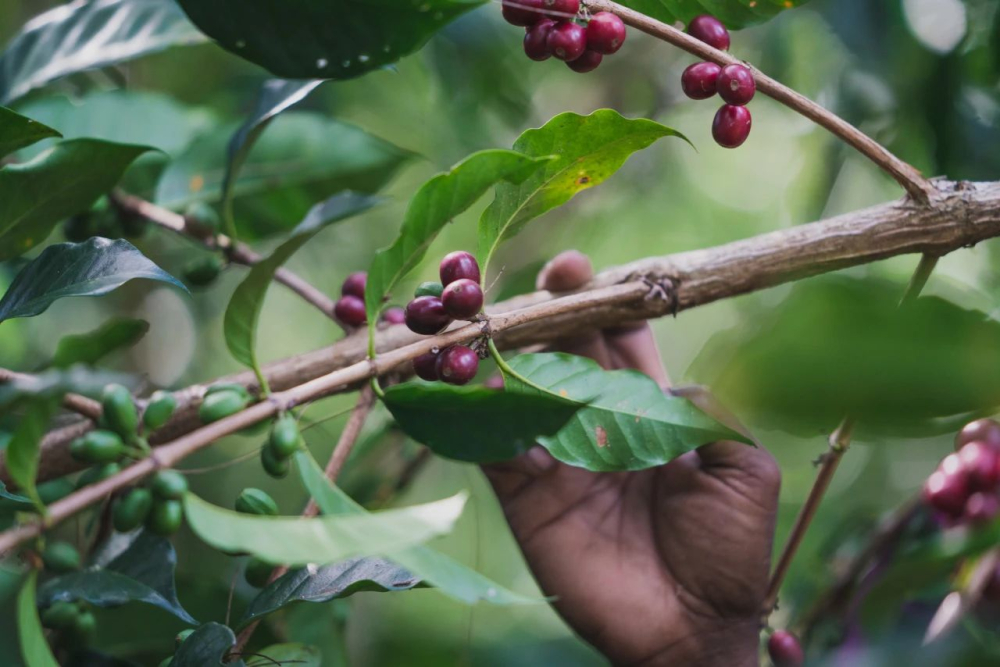
Bird of Paradise Estate has for many years consistently upheld a high-standard cultivation and processing system. During the harvest season from April to September each year, only fully ripe red cherries are hand-picked, allowing the acidity and sweetness of the coffee cherries to reach an ideal balance. The estate cups every day to ensure a stable supply of top-quality coffee of consistent quality to customers, and has therefore become a classic representative of the world's specialty coffee.
Coffee Bean Processing Methods
Papua New Guinea coffee is mainly washed, with a brighter flavor expression and more prominent fruity acidity, close to the style of Central American coffee. Large estates or farms usually build their own washing stations, while smaller individual coffee farmers are actually better able to control output quality and flavor expression.
After harvesting ripe, fully red coffee cherries, they are sent to the estate's own washing station for processing. Papua New Guinea's washing method differs from that of Central and South America, using three rounds of washing and fermentation, each soaking for about 24 hours, with clean water changed to regulate the flavor; after washing is completed, the green beans have their husks removed and are then graded into AA, AB, PB peaberry and so on. This meticulous post-processing brings the coffee a bright, delicate fruity acidity and a clean, lingering sweetness.
Front Street Coffee Roasting Analysis
When I first got this bean and put it together with the similarly washed Blue Mountain, it was actually a bit hard to tell them apart.
Guess which of the following pictures is Bird of Paradise and which is Blue Mountain.
Answer revealed
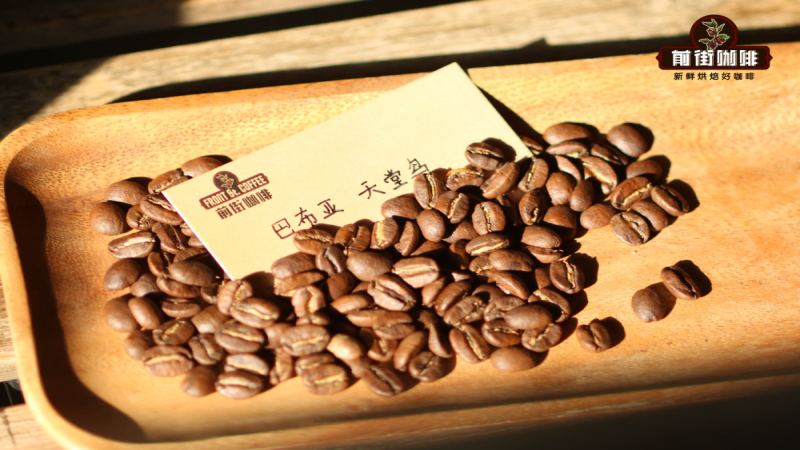
(Top) Bird of Paradise
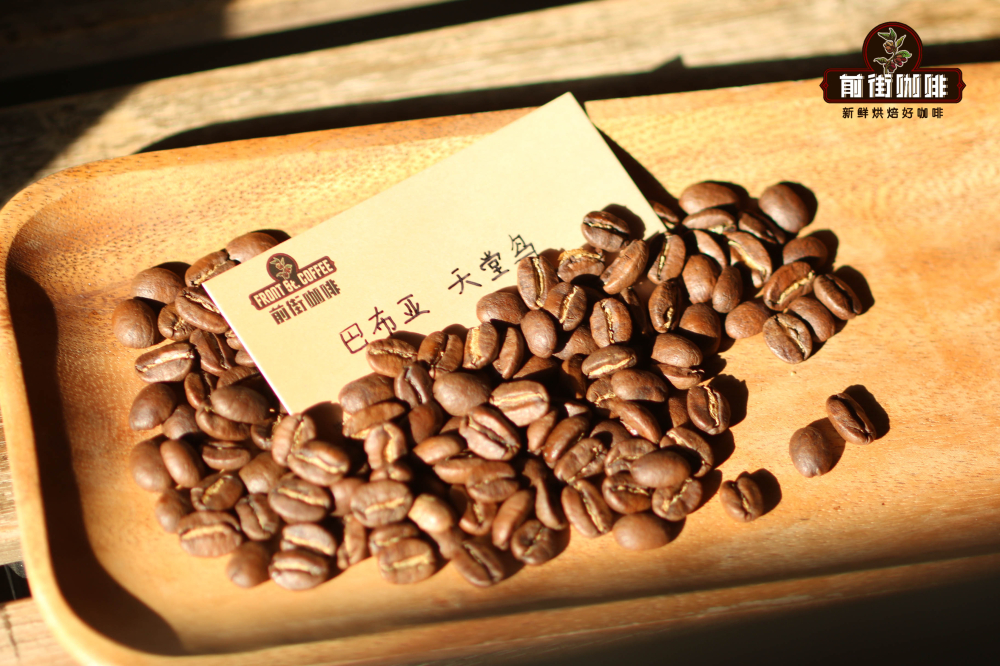
(Bottom) Washed Blue Mountain
Front Street Coffee uses a medium roast for this bean, because Typica is a green bean with relatively low density. To highlight its own refreshing acidity and fruity aroma, the focus will be on adjusting the heat after first crack. Charge when the drum temperature rises to 170°C, air damper open to 3, heat at 140 degrees, turning point at 1'36"; when the temperature reaches 140 degrees, open the air damper to 4; roast to 6'25'' at 151 degrees, the bean surface turns yellow, the grassy smell completely dissipates, dehydration is complete; when the temperature is 176 degrees, lower the heat to 110, keep the air damper at 4;
At 180 degrees, lower the heat to 90; the bean surface shows ugly wrinkles and dark spots, and the toasted-bread smell clearly turns into coffee aroma, which can be regarded as the prelude to first crack. At this point raise the heat to 183.5 degrees; at 10'08'' first crack begins, open the air damper fully; at 188 degrees, reduce the heat to 60 degrees, air damper fully open (adjusting the heat requires extra caution; it must not be so low that the cracking sound cannot be heard, and control the rate of temperature rise after first crack within 6 degrees). First crack development time 3'00", drop at 198.5 degrees.
Front Street Coffee Brewing Recipe
Taking 15 grams of coffee grounds as an example, use a 1:15 coffee-to-water ratio, grind size medium-coarse (65% passing a No. 20 standard sieve), water temperature 88°C, and use a KONO MEIMON dripper.
This time a staged brewing method is used. Slowly add the coffee grounds, and in the first stage pour 30g of water in a small circle in the center, bloom for 30 seconds; as water is poured, the dry coffee bed will slowly absorb water and expand, doming up into a "hamburger" shape.
In the second stage, pour 120g in a circle from the center outward, keeping the pouring height as close to the coffee bed as possible, slowing the motion to avoid over-agitation. In the final stage, pour 75g, bringing the total poured water to 225g. Once all the coffee liquid in the dripper has flowed into the server, extraction is finished, with a total time of about 2 minutes.
In flavor, it is dominated by the rich aroma of nuts and cocoa, accompanied by a faint berry sweetness. On the palate it is full-bodied and balanced, with a sweet taste and soft acidity.
For more specialty coffee beans, please add the private WeChat Front Street Coffee, WeChat ID: kaixinguoguo0925
The above content is compiled by CoffeeHunters, a coffee news website.


