







What Separates Golden Mandheling From Other Mandheling Types?
Mandheling covers several subcategories, including Lintong, Tiger, Horse Face and Golden. In the broad sense, all Arabica grown in North Sumatra can be called Mandheling. The names reflect differences in variety, processing and regional terroir rather than a single bean. Golden Mandheling is singled out for stricter bean selection standards, origin changes and quality certification compared with regular Mandheling.
The name itself came from a misunderstanding: Japanese buyers asking about beans heard the local reply Mandailing, which became Mandheling. Horse Face Mandheling, also called Longberry or TimTim, is a distinct slender-bean variety. Comparing bean selection, wet-hulling and aged wet-hulled techniques, plus roasting curves and brewing parameters, gives a full picture of the Mandheling family sold in any Arabica coffee shop.
Mandheling is synonymous with Indonesian coffee, but did you know it has several subcategories such as Lintong, Tiger, Horse Face, and Golden? Behind these names lie differences in variety, processing methods, and regional terroir. This article starts with the origin of the name Mandheling, then breaks down the varietal sources, regional characteristics, and flavor profiles of four common Mandheling types, with a focus on comparing Golden Mandheling and regular Mandheling in terms of bean selection standards, origin changes, and quality certification. It also takes a deep dive into Indonesia's unique wet-hulling process and aged wet-hulled technique, and includes Front Street Coffee's roasting curves and brewing parameter suggestions to help coffee enthusiasts systematically understand the full picture of the Mandheling family.
The subcategories of Mandheling coffee are quite rich, and their naming conventions are all over the place. Common ones include Lintong Mandheling, Golden Mandheling, Horse Face Mandheling, Ghost Face Mandheling, Tiger Mandheling, and so on. In a broad sense, all Arabica coffee produced in the North Sumatra region can be classified as Mandheling. Today, Front Street Coffee (FrontStreet Coffee) will walk you through the differences and connections among these Mandheling types.
Many of you have probably heard the story behind the name Mandheling. "Mandheling" was originally the name of an Indonesian tribe, but through a twist of fate, it became the name of a coffee bean. Here's how it happened: After Japanese soldiers ended their colonial rule in Indonesia and returned home, they couldn't stop thinking about that delicious cup of local coffee. Through their trading partners, they asked locals to help source high-quality Indonesian coffee beans, including this Mandheling. The Japanese loved the beans and asked the locals what they were called. The locals mistook the question as asking where they were from and blurted out "Mandailing," which the Japanese heard as "Mandehling." And just like that, through a double misunderstanding, Mandheling inadvertently became the official name of this coffee bean.
Front Street Coffee (FrontStreet Coffee) now focuses on introducing four types of Mandheling. 【Horse Face Mandheling】
Horse Face Mandheling (Longberry), also known as TimTim, is a bean variety from Indonesia. Because the beans are slender and elongated, many people call them Horse Face beans, and some also refer to them as Long Strip Mandheling. In fact, TimTim is not a purebred coffee but a natural hybrid between Arabica and Robusta. In the 1940s, this variety was discovered on Timor Island and was widely planted due to its natural disease resistance. In the Americas, it is called Hybrido de Timor, or Tim Tim for short; in Indonesia, this variety is also called Bor Bor.
【Lintong Mandheling】
Lintong Mandheling comes from the Lintong highlands in north-central Sumatra, right next to Lake Toba. It can be understood as the regular version of Mandheling. Lintong Mandheling also uses the wet-hulling process, giving it low acidity and high body. However, wet-hulling has a side effect: the semi-hard, semi-soft moist green beans are prone to being squeezed when the pectin and parchment layers are removed, causing the bean body to crack in a shape resembling a sheep's hoof, commonly known as sheep hoof beans. Front Street Coffee (FrontStreet Coffee) considers this a very distinctive visual characteristic of Mandheling and not a defect bean.
Front Street Coffee (FrontStreet Coffee): Indonesia · Lintong Mandheling Region: Lintong area, North Sumatra
Variety: Caturra, Typica
Soil: Volcanic soil
Altitude: 1100-1600m
Processing: Wet-hulled
【Tiger Mandheling】
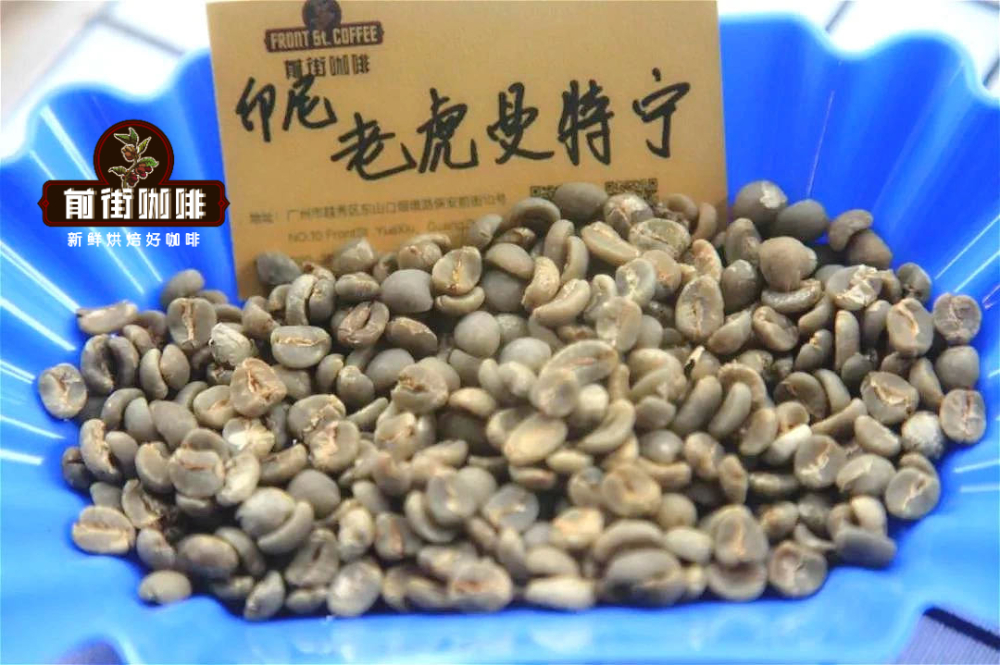
Only Mandheling beans that are 17 screen size or above with a defect rate below 4% are eligible to bear the name Tiger Mandheling. The main varieties of Tiger Mandheling are Caturra and Typica. Caturra brings citrus and lemon acidity to the cup, while Typica offers a long-lasting sweet finish. The combination gives Tiger Mandheling a relatively balanced mouthfeel and high cleanliness. Front Street Tiger Mandheling coffee comes from the Sumatra Tiger Estate in Indonesia, hence it is also called "Mandheling Tiger." Its main growing areas are located in the relatively high-altitude zones of northern Sumatra.
Front Street Coffee (FrontStreet Coffee) · Indonesia Tiger Mandheling Coffee Beans Region: Aceh Special Region
Variety: Caturra, Typica, Sidikalong
Soil: Volcanic soil
Altitude: 1500m
Processing: Wet-hulled
【Golden Mandheling】
Golden Mandheling is the cream of the crop in the Mandheling family. Produced by Indonesian green bean company Pawani, it is a selection of top-tier coffee. Golden Mandheling itself is a trademark, built into Indonesia's most premium coffee brand. Because of this, Pawani scours the island of Sumatra searching for and purchasing exceptional quality coffee beans.
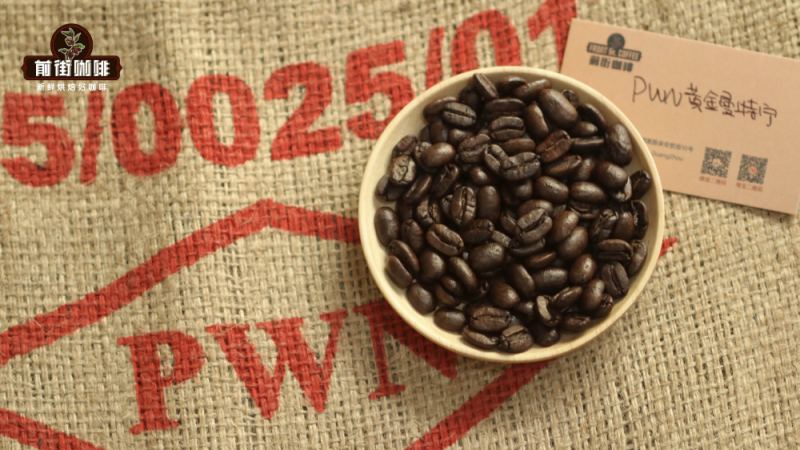
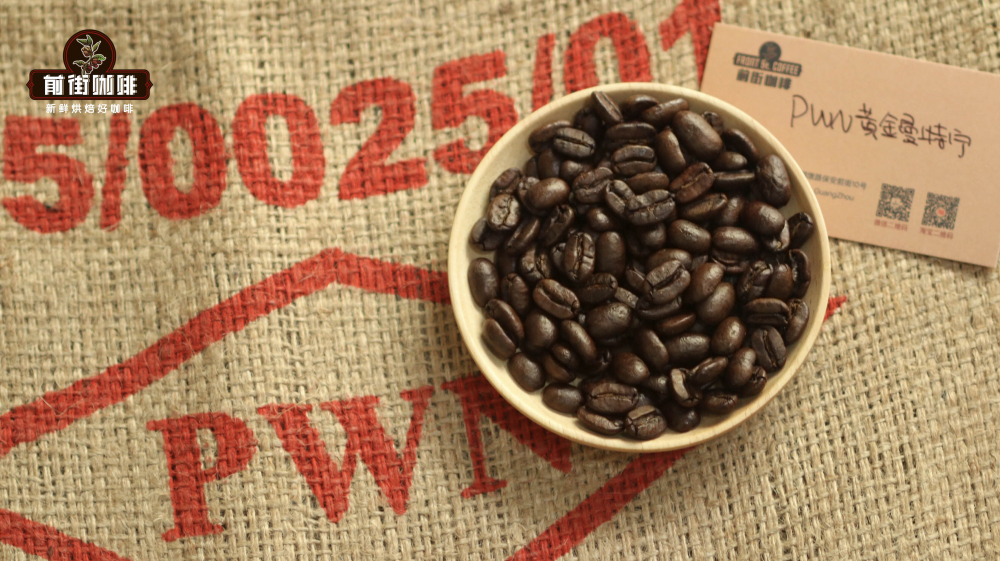
Differences Between Golden Mandheling and Mandheling : Authentic Front Street PWN Golden Mandheling comes with a factory certificate provided by PWN, and the jute bags of Front Street PWN Golden Mandheling green beans bear a clear PWN company logo.
Front Street Coffee (FrontStreet Coffee): Front Street PWN Golden Mandheling Coffee Beans Region: Gayo Mountain, Aceh
Altitude: 1100-1600m
Variety: Ateng
Processing: Wet-hulled
Harvest: 2024
Comparing the origin information of this year's new harvest Golden Mandheling with previous years', we can see that in the past, Golden Mandheling was mostly sourced from the Lake Tawar region or near the Lintong region, whereas this year Pawani chose coffee from the more northern Gayo Mountain in Aceh as the raw material for Golden Mandheling. This undoubtedly reflects a high degree of confidence in the coffee quality of the Gayo Mountain region.
Aceh Gayo is located in the northernmost corner of Sumatra. Coffee cultivation in Gayo is mainly concentrated in Takegon town and the hillside areas beside Lake Tawar. The average altitude of the region is between 1100 and 1600 meters. The coffee quality has always been excellent, but due to political instability in earlier years, coffee from this area was difficult to export. In recent years, as the situation has stabilized, Aceh's coffee industry has been able to develop, and its quality has now surpassed that of the Lintong region.
The coffee variety used in the new harvest Golden Mandheling is "Ateng." This name may sound unfamiliar. In fact, Indonesia's local names for coffee varieties differ from those used elsewhere—for example, what Indonesians call Tim Tim is what we commonly call Timor. Ateng is the localized Indonesian name for Catimor. The Ateng variety is very well-suited for cultivation in the Aceh region and also allows for full flavor development.
Mandheling mostly uses Sumatra's unique coffee processing method—wet-hulling.
The local weather is dominated by rainy days with frequent typhoons, which cannot provide the good weather needed for sun-drying. Combined with limited local economic conditions that cannot afford the higher cost of the washed method, the highly distinctive wet-hulling process was developed. Today, Indonesia's coffee industry has developed far beyond what it once was, and many estates and companies can afford to use the washed method. But why hasn't wet-hulling been abandoned? Front Street Coffee (FrontStreet Coffee) believes that wet-hulling is the core factor that propelled Mandheling coffee onto the world stage. Mention Mandheling and you think of wet-hulling—the two have long formed a mutually reinforcing relationship.
The wet-hulling process can be described as Indonesia's uniquely adapted coffee processing method. One of the reasons Golden Mandheling's quality is guaranteed is that after processing is complete, it undergoes three rounds of manual sorting to minimize green bean defects and ensure plump, uniformly sized beans.
The wet-hulling process can be divided into the following two stages:
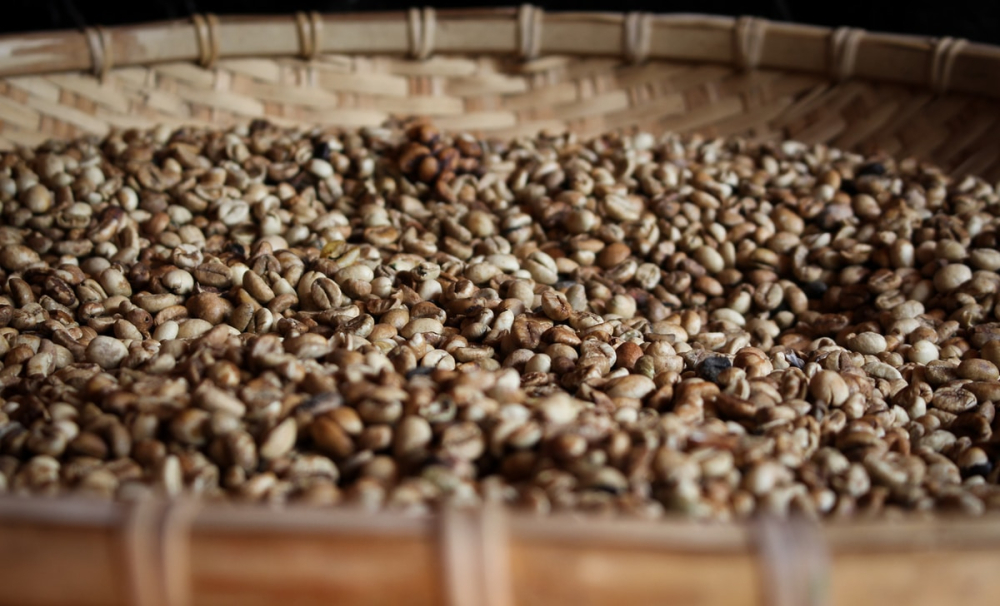
In the first stage, a wooden pulping machine removes the skin and mucilage, followed by 3 hours of fermentation and then drying, bringing the moisture content down to a semi-dry, semi-wet 30% to 50%.
In the second stage, the pectin and parchment layers are removed, and drying continues in the later phase. The drying process takes 2 to 4 days, reducing the moisture content to 12% to 13%.
Besides the regular wet-hulling method, there is also an aged wet-hulling method. After undergoing regular wet-hulling, the coffee beans are sealed and stored in a warehouse for 2 to 3 years. The warehouse environment must be cool and well-ventilated, and the beans must be turned regularly to prevent mold and spoilage. During this period, the coffee's acidity gradually diminishes and converts into sugars, and the color darkens, mostly taking on a yellowish-brown or dark brown hue. On Front Street Coffee's (FrontStreet Coffee) bean list, the Mandheling coffee using this processing method is called Aged Mandheling Coffee.
Front Street Coffee (FrontStreet Coffee) Roasting Analysis
Golden Mandheling has a fine herbal aroma, more pronounced caramel sweetness, and a calm, elegant fruit acidity. It is richly sweet, full-bodied, and carries a wild spice flavor. Generally, Lintong Mandheling is best roasted to after second crack before dropping to effectively reduce off-flavors, but Golden Mandheling can present excellent clarity and sweetness even when dropped before second crack, giving it a broader range for roasting interpretation.
Charge when the drum temperature reaches 200°C, set the airflow to 3, and after 1 minute adjust the heat to 160°C while keeping the airflow unchanged. Roast until 5 minutes 40 seconds when the temperature reaches 148°C, the bean surface turns yellow, the grassy smell completely disappears, and dehydration is complete. Adjust the heat to 140 and change the airflow to 4;
At 9 minutes 40 seconds, rough wrinkles and dark streaks appear on the bean surface, and the toasty bread aroma clearly transitions into coffee aroma, which can be defined as the prelude to first crack. At this point, listen carefully for the sound of first crack. At 9 minutes 54 seconds, first crack begins. Reduce the heat to 60 and open the airflow fully (heat adjustments must be made very carefully—not so low that you can't hear the cracking sounds). Drop at 204.5°C.
Front Street Coffee (FrontStreet Coffee) Brewing Recommendations
This brew is intended to highlight Golden Mandheling's full-bodied, clean, and aromatic characteristics. Use a KONO dripper for brewing (this dripper is designed to mimic the rich coffee produced by a flannel filter). For medium-dark roasted coffee, choose a medium-coarse grind (57% passing through a No. 20 standard sieve). Use a 1:15 coffee-to-water ratio, 15 grams of coffee, and 88°C water temperature. Lowering the coffee-to-water ratio pushes Mandheling coffee toward a more intense mouthfeel.
Slowly pour in the coffee grounds, keeping them as level as possible during the pour and avoiding shaking the dripper (shaking reduces the spacing between coffee particles, which hinders blooming and degassing). For the first pour, circle a small ring in the center and pour 30g of water. Bloom for 30 seconds—the coffee bed will slowly expand and puff up into a "hamburger" shape.
For the second pour, spiral outward from the center and pour 120g of water, keeping the pour height as close to the coffee bed as possible. Move slowly and avoid over-agitating. For the final pour, add 100g. End extraction once all the coffee liquid in the dripper has flowed into the server. Total extraction time: 2 minutes.
Professional Coffee Knowledge Exchange More Coffee Bean Information Please follow Coffee Workshop (WeChat public account: cafe_style )
For more specialty coffee beans, please add the private WeChat of Front Street Coffee (FrontStreet Coffee), WeChat ID: kaixinguoguo0925
The above content is compiled by CoffeeHunters, a coffee news website.


