







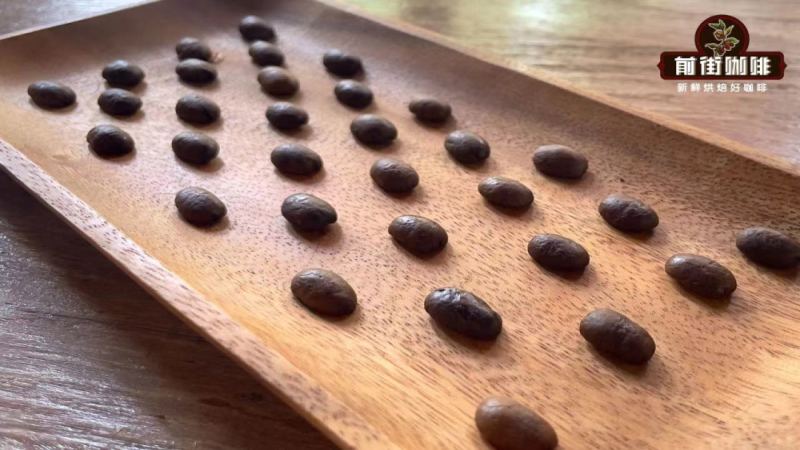
Mandheling is almost synonymous with Indonesian coffee, but behind this name lies an interesting anecdote from World War II. At the same time, the commonly mentioned "Golden Mandheling" is not actually a grading standard, but a registered trademark held by the Indonesian company PWN. This article will start with the origin of the name, outline the flavor characteristics of Mandheling, explain the certification and identification of Golden Mandheling, and use [Front Street] Golden Mandheling as an example to share a complete brewing approach covering dripper selection, coffee-to-water ratio, grind size, water temperature, and three-pour brewing.
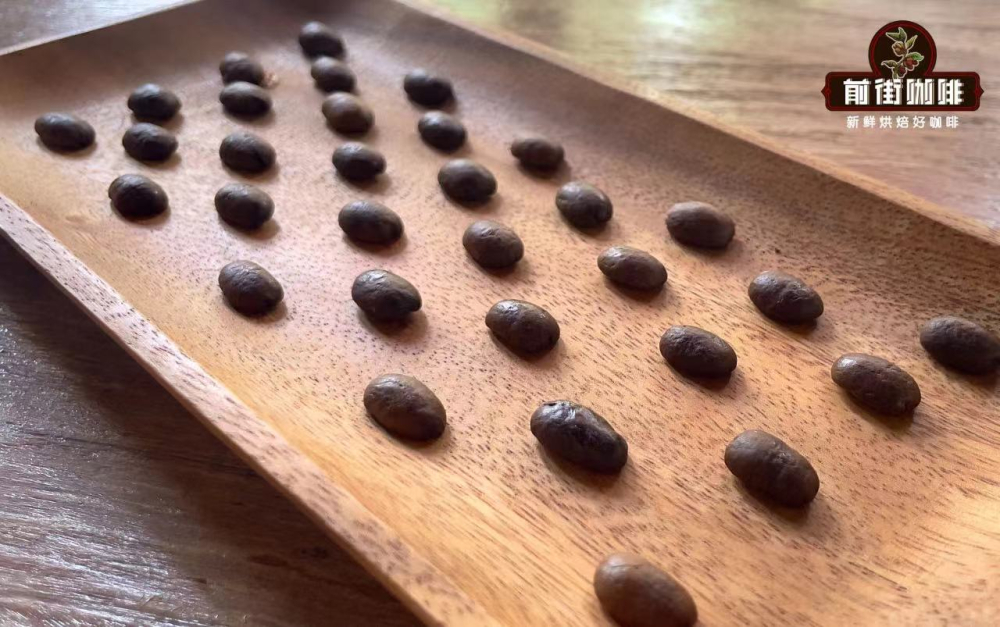
For more specialty coffee-related content, follow the WeChat public account: FrontStreet Coffee
Mandheling coffee beans are a signature item among Indonesian coffees, and in most cases these three characters alone are equivalent to a symbol of Indonesian coffee quality. Front Street currently also lists Mandheling as the representative Indonesian coffee, and its flavor profile leans toward heavy chocolate and nutty notes; more importantly, it has that thick mouthfeel, which other coffees find hard to achieve.
However, quite a few friends have never really understood why Mandheling is called "Mandheling," and what exactly this backstory is. Today Front Street will tell this story.
The name Mandheling comes from a transliteration of the Indonesian Mandailing people. During World War II, when the Japanese army occupied Indonesia, a Japanese soldier drank an extremely fragrant and full-bodied cup of coffee in a certain cafe and asked the shop owner for the name of the coffee. The owner mistakenly thought the other person was asking where he was from, so he answered: Mandheling. After the war ended, this soldier recalled the cup of "Mandheling" he had drunk in Indonesia, so he entrusted an Indonesian coffee trader to ship 15 tons to Japan, where it became very popular, and the name Mandheling spread in this way.
Mandheling coffee is recognized as one of the most full-bodied coffees in the world. When tasting it, the tip of the tongue can feel a distinct smoothness; its acidity is on the low side, but it is not undetectable—that lively slight acidity interweaves with the richest aroma, making it easy to catch that lively note within the gentle richness. In addition, this coffee also carries a faint earthy fragrance, which some people also describe as an herbal aroma.
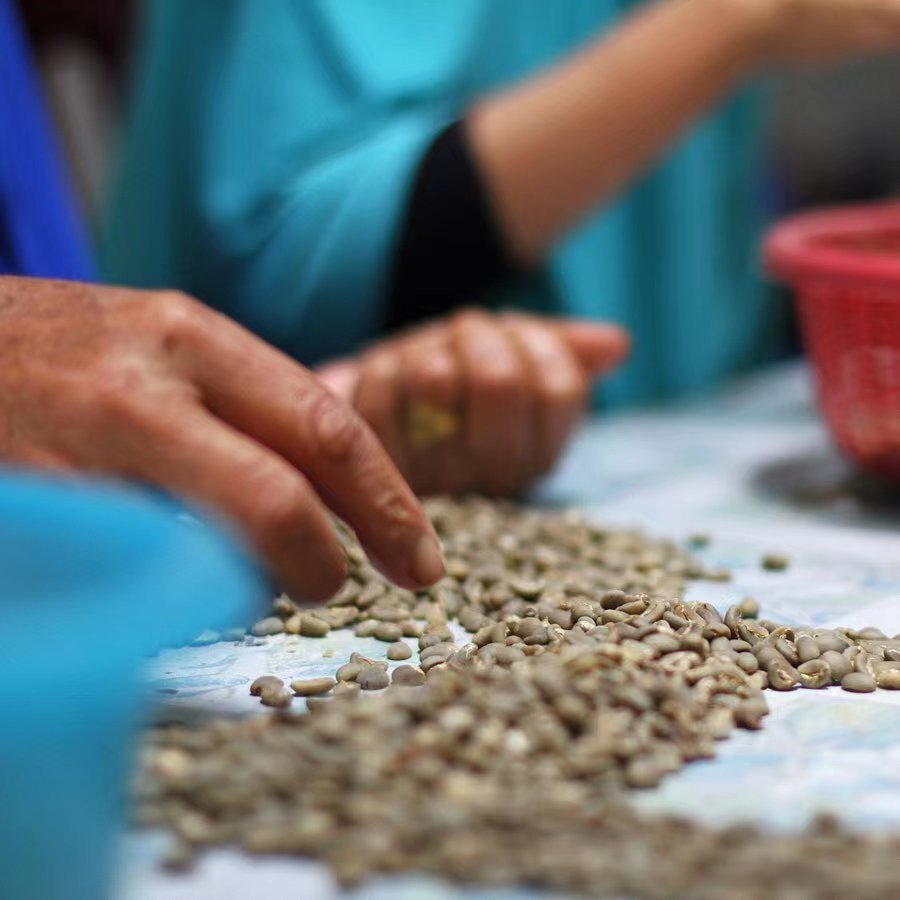
Golden Mandheling is not a grade, but a trademark registered by the Indonesian company N.V. Pawani Medan, abbreviated as PWN. The company was founded in 1957 and deals in the export of Indonesian products such as coffee, rubber, cinnamon, cloves, and patchouli oil. It was the first Indonesian company to export coffee from North Sumatra and the earliest company to make "Mandheling coffee" famous in Japan. Since 1977, the company has focused on exporting high-quality coffee beans, including Sumatra Arabica coffee Mandheling Grade 1 and Robusta coffee AP-I Grade 2, mainly to Japan, Taiwan region of China, and the United States, with exports to Japan and Taiwan region of China accounting for more than 95%; locally, "PWN" is synonymous with quality assurance. Pawani holds the "Golden Mandheling" trademark, so the Japanese company had to register a separate "Gold Top Mandheling" trademark. Mandheling refers to semi-washed or natural beans from the mountainous area of Lintong on the southwestern shore around Lake Toba in north-central Sumatra, at an altitude of 900-1200 meters; Front Street Golden Mandheling has undergone four rounds of hand sorting, is graded higher than ordinary Mandheling, and also has larger beans; the uniform bean appearance of Golden Mandheling created another wave of market demand, and even Europe and America went crazy for it.
Because Front Street Golden Mandheling is exceptionally outstanding in quality, its price is naturally much higher than ordinary Mandheling, which is also the reason counterfeit Golden Mandheling keeps appearing on the market.
Front Street believes that authentic Golden Mandheling must be a product of Indonesia's PWN Coffee Company (the Golden Mandheling trademark belongs to PWN). When importing Golden Mandheling green coffee beans, a PWN company certificate is attached (used to verify authenticity). If the seller cannot provide source information for the Golden Mandheling green beans (certificate or burlap sack), then one should carefully verify it.
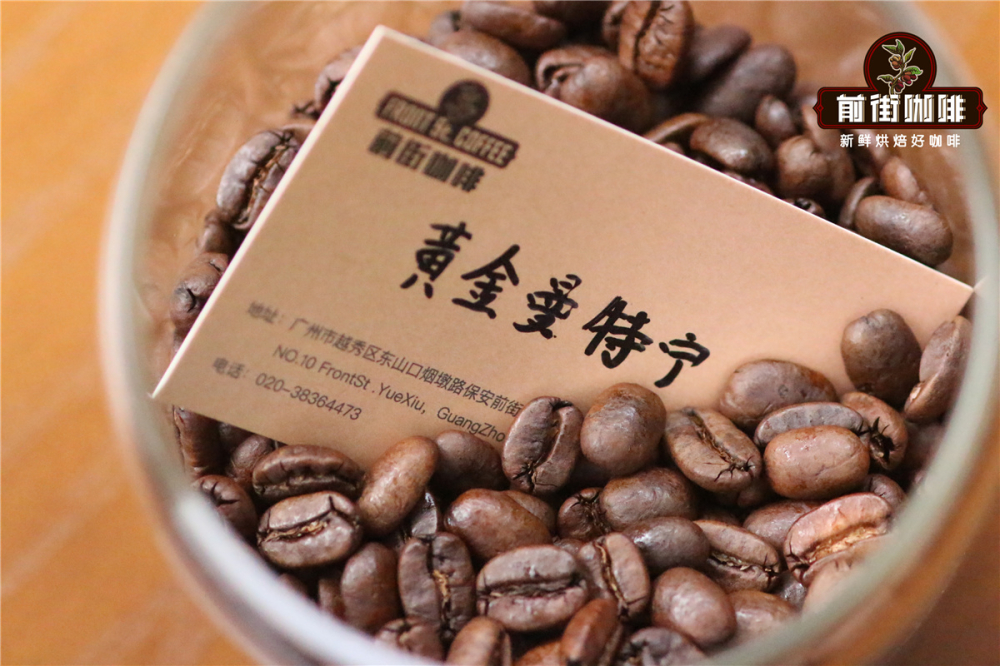
Front Street Golden Mandheling coffee beans are produced in the Gayo Mountains of Aceh, Grade G1, and use 3 rounds of hand sorting to ensure large, plump beans (19 screen size) with few defects. They present a very clean and full-bodied mouthfeel with high sweetness, making them a high-quality Mandheling coffee.
So how should Front Street Golden Mandheling coffee be brewed to taste good?
Front Street's brewing approach for Mandheling coffee is to present a full-bodied yet clean result, highlighting caramel, chocolate, and its signature herbal aroma, while not wanting Mandheling coffee to show unpleasant bitterness. Front Street will explain one by one from equipment selection and various important brewing parameters, and the demonstration uses Front Street Golden Mandheling.
Front Street recommends using freshly roasted coffee beans for brewing, as this allows you to experience the coffee's rich flavors to the greatest extent. The coffee beans shipped by FrontStreet Coffee are all roasted within 5 days, because Front Street deeply understands that coffee bean freshness has a great impact on flavor. Front Street's roasting principle is "freshly roasted good coffee," so that every customer who places an order receives the coffee in the freshest condition. The resting period for coffee is about 4-7 days, so when customers receive it, it is exactly at its best flavor.
For the dripper choice, Front Street uses the Kono Meimon dripper. The biggest feature of the Kono dripper is that the ribs extend from the bottom to the middle, while the upper part is a smooth dripper wall, so after the filter paper fits the dripper, water cannot "secretly" bypass the coffee grounds and slip away, thereby enhancing the fullness of the mouthfeel.
The dose Front Street uses is still 15g. More coffee grounds are not necessarily better, nor are fewer necessarily better; the specific amount depends on the dripper size. Front Street uses a 1-2 cup dripper, and a dose of 15-20g is a reasonable brewing range; brewing outside this range will be somewhat difficult.
For the brewing coffee-to-water ratio, Front Street recommends 1:15. Although some may suggest 1:13 or a smaller coffee-to-water ratio, Front Street has also mentioned in previous articles that there is no necessary connection between concentration and fullness, and that too strong a brew can make people uncomfortable. Therefore, a 1:15 coffee-to-water ratio can also very well showcase Mandheling's full-bodied mouthfeel.
For the coffee grind size, Front Street uses a 70% pass rate on a No. 20 sieve as the standard. The grind size for brewing Front Street Golden Mandheling should be coarser than for light-roast coffee beans, because Front Street Golden Mandheling uses a deep roast, has a looser structure, and more easily absorbs water and releases coffee substances; if it is ground to the fineness of light-roast beans, it is easy to brew out burnt bitterness; if ground coarser, the coffee will become thin and tasteless, with a mouthfeel as thin as water.
For the water temperature selection, Front Street recommends brewing at 87-88°C. For the same reason as with grind size, too high a water temperature easily produces burnt bitterness, while too low a water temperature makes the coffee seem flat and also produces unpleasant sourness.
The brewing method uses three-pour brewing; pouring in three stages can better present the full-bodied mouthfeel and caramel sweetness of Front Street Golden Mandheling coffee. The specific water distribution is: the first stage is a 30ml bloom pour, which wets all the coffee grounds and allows them to degas, preparing for better extraction of the coffee's flavor substances afterward; the second stage pours 100ml; the final stage pours 95ml to improve the coffee's sweetness.
The Front Street Golden Mandheling coffee brewed this way presents an overall thick, full-bodied mouthfeel, along with caramel sweetness and chocolate and nutty flavors.
The above content is compiled by CoffeeHunters, a coffee news website.


