








Does water temperature change coffee extraction and flavor?
Water temperature decides how much of the coffee's compounds dissolve during coffee extraction, and it directly shapes the final flavor. In practice, the water in contact with the grounds should stay around 91-94C. A controlled comparison used Front Street Yirgacheffe Gedingding Cooperative washed beans brewed at 80C, 86C, 90C, 93C, and 96C to track acidity, sweetness, tea-like notes, and astringency.
The test used a Hario V60, a medium-fine grind passing 75 percent through a 0.85mm sieve, 15g of coffee, and a 1:15 ratio. A staged pour began with 30g of water for a 30-second bloom, then 125g poured in a small center circle from a 4cm height with gentle force. Lower temperatures risk under-extraction and blandness, while higher ones push toward over-extraction bitterness, so roast level should guide the choice.
Water temperature is a crucial part of pour-over coffee extraction—it determines how much of the coffee's compounds are dissolved and directly shapes the final flavor profile. This article uses a comparative experiment with Front Street Yirgacheffe Gedingding Cooperative washed beans, brewing at five temperatures: 80℃, 86℃, 90℃, 93℃, and 96℃, to observe changes in acidity, sweetness, tea-like notes, and astringency, and to offer practical advice on choosing water temperature by roast level. It also explains, from the structure of coffee beans' lignocellulose and soluble aroma molecules, why different water temperatures produce such distinct flavor layers, helping you avoid over-extraction bitterness or under-extraction blandness in your daily brewing.
Water temperature is closely tied to brewing and extraction. It affects not only the degree of extraction but also the quality of extraction. In theory, throughout the brewing and extraction process, the hot water in contact with the coffee grounds should remain at 91–94℃, the so-called optimal extraction temperature (The Best Water Temperature Throughout Extraction).
Many people don't use a thermometer when brewing pour-over coffee day to day—they just brew a coffee bean at a rough water temperature, and because the taste differs every time, they start to wonder whether the beans are stale or simply not good. How much difference can water temperature make to a coffee's flavor? In this article, Front Street discusses how water temperature affects pour-over coffee extraction.
This time, Front Street used washed coffee beans from the Front Street Yirgacheffe Gedingding Cooperative for a comparative experiment. The generally recommended water temperature for pour-over coffee is 86–93℃, so this brewing was divided into 5 groups: 80℃, 86℃, 90℃, 93℃, and 96℃ to brew this coffee bean.
Front Street's brewing parameters are as follows: Dripper: Hario V60 Grind size: medium-fine (75% pass-through rate on a 0.85mm mesh sieve) Dose: 15g Coffee-to-water ratio: 1:15 Brewing water temperature: 80℃, 86℃, 90℃, 93℃, 96℃
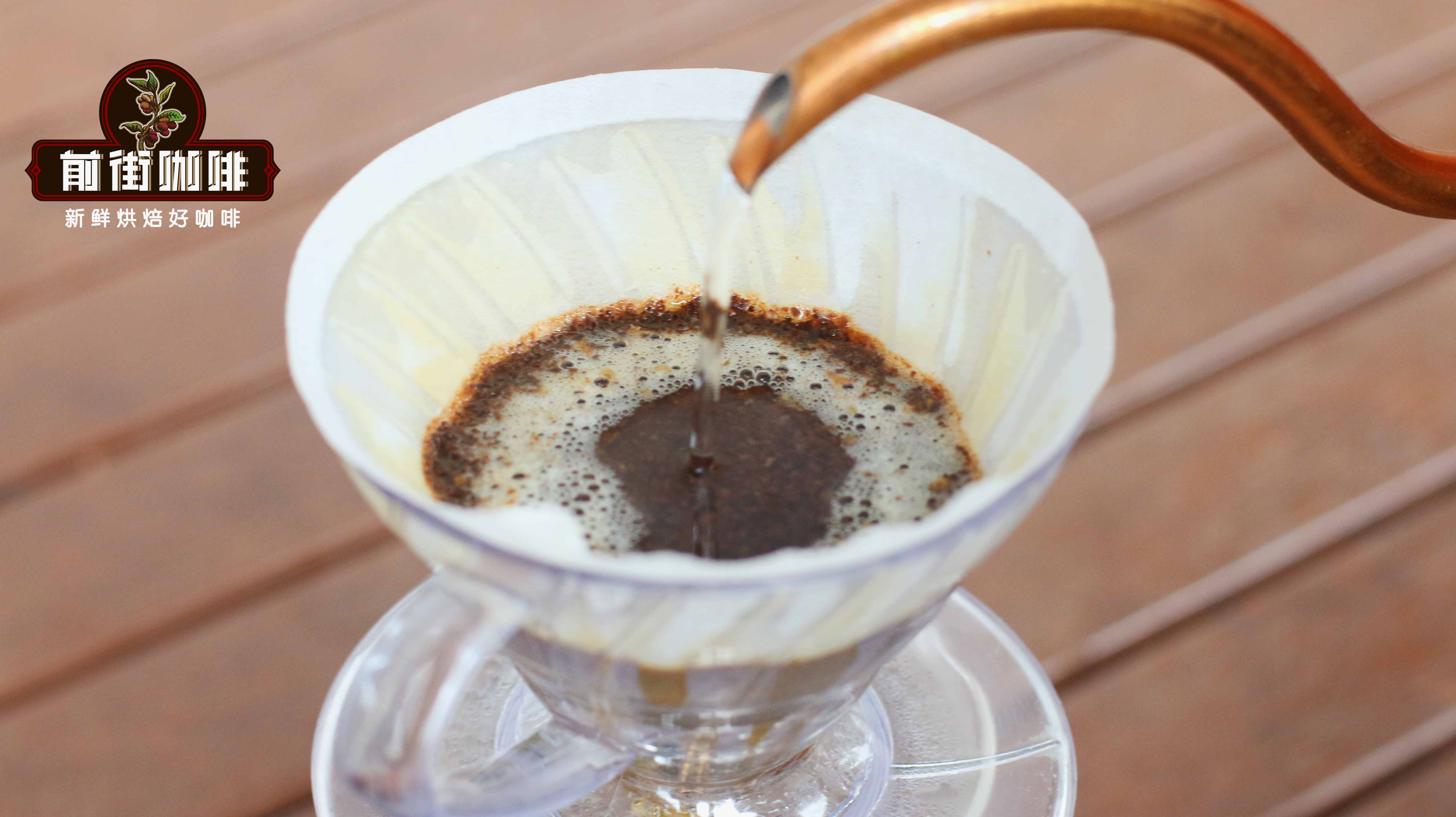
Front Street's staged extraction: A staged pour was used this time. First, 30g of water was poured for a 30s bloom, during which the coffee swelled into a "hamburger" shape. In the second stage, 125g of water was poured in a small circle at the center. The pouring height was 4cm, with a gentle force to minimize agitation of the coffee bed, and the flow rate was 4g per second. When the water level dropped to half of the coffee bed, the third stage began; this pour also gently circled from the center outward until reaching 225g, at which point pouring stopped. Extraction ended when all the coffee liquid had dripped through the dripper, at 2'01". After extraction, gently swirl the coffee to fully homogenize it before tasting.
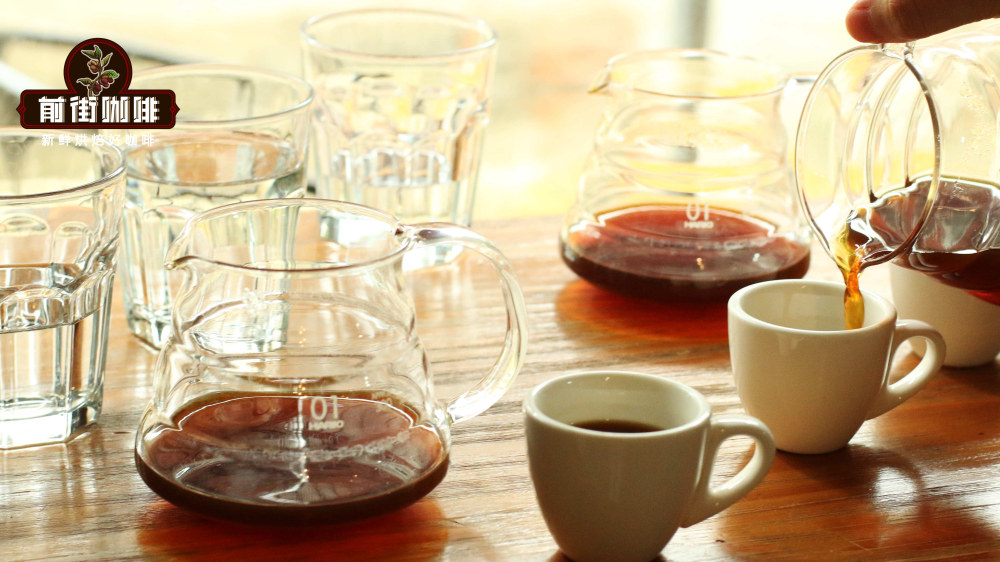
Through 5 brews at different water temperatures, the results were: 80℃: slightly sour and astringent, lemon peel, pronounced tea-like notes, with a tea sweetness as the main note. 86℃: kumquat acidity, slightly sharp. 90℃: bright citrus acidity, noticeable fruity sweetness. 93℃: bright citrus acidity, with black tea notes in the finish. 96℃: fruity tea, with tea astringency, concentrated flavor.
So what water temperature should be used for everyday brewing?
Based on practical experience, the recommended water temperature for pour-over coffee is generally controlled between 86 and 93 ℃ , and the specific temperature can be decided according to the bean's roast level.
For lighter-roasted coffee beans, such as Front Street. Washed Yirgacheffe coffee beans or Front Street. Sun-dried Huakui coffee beans, you can use 91–93 ℃ ;
For medium-roasted coffee beans, which usually have a more balanced mouthfeel and a softer flavor profile, such as Front Street. Bird of Paradise or Front Street 2013 Typica, you can use 90 ℃;
For darker-roasted coffee beans, such as Front Street. Front Street PWN Golden Mandheling coffee beans, a lower water temperature of 86–88 ℃ is recommended, which effectively avoids bitterness while making the coffee richer and more aromatic.
What effect does water temperature have on coffee extraction?
The data from Front Street's brewing experiments shows: the higher the water temperature, the more coffee compounds are extracted and the higher the concentration; the lower the water temperature, the fewer coffee compounds are extracted and the lower the concentration. In terms of flavor, with other parameters held constant (for light-roasted coffee), the lower the water temperature, the more acidity-leaning the extracted coffee; the higher the water temperature, the more bitterness- and sweetness-leaning the extracted coffee. Coffee is not better the higher its concentration, nor is more extracted material always better, so an appropriate water temperature can prevent over-extraction that makes coffee bitter and astringent during brewing, and can also reduce under-extraction that makes coffee taste bland.
Why do different water temperatures produce different coffee flavor expressions?
During pour-over brewing, water and coffee undergo a series of complex chemical reactions, with different reactions occurring at different stages. Water temperature directly affects the extraction rate of different components in the coffee during brewing, extracting the quinic acid, amino acids, tannic acid, caffeine, oils, and other substances contained in the coffee.
Two-thirds of a coffee bean is made up of lignocellulose, and the other third consists of soluble aroma molecules, which, upon contact with water, dissolve out in order according to molecular size. The first small molecules to dissolve out include acids and aromas, then medium-sized molecules for sweetness, and finally large molecules for roasted bitterness—this is how coffee's different layers of flavor come about.
Water temperature is the key to accelerating the release of aroma molecules. Too high a temperature makes the aroma molecules release too quickly; extracted within the same extraction time, the aroma molecules will have been fully released before extraction is complete, and the remaining extraction time will then release the taste of lignocellulose, giving the coffee woody notes, woody astringency, and so on. If the temperature is too low, the aroma molecules will release too slowly; extracted within the same extraction time, the aroma molecules will not have been fully released by the time extraction is complete, so the resulting coffee will only have acidity and sweetness, lacking a rich, mellow flavor and tasting thin overall.
The above content is compiled by CoffeeHunters, a coffee news website.


