







What Does the Raw Coffee Bean Meaning Tell Us About Drip Bags?
Drip bag coffee and pour-over coffee share the same drip extraction mechanism: hot water passes through coffee grounds by gravity and carries out soluble compounds. The difference lies in the ground coffee. Pour-over uses freshly ground beans and manual flow control, while drip bags hold pre-ground coffee, so aroma fades faster and there is less room to adjust.
The raw coffee bean meaning here points to the green, unroasted state before the roast that builds flavor. Once ground and sealed in a drip bag, that potential is fixed. The article recommends options such as Front Street Coffee Huakui, Blue Mountain No. 1, Strawberry Candy, and a Classic Five Origins drip bag set to match different needs.
Drip bag coffee and pour-over coffee both use drip extraction, where hot water flows through the coffee grounds by gravity to bring out flavor compounds, but the two are completely different in terms of their goals and suitable scenarios. Pour-over emphasizes manual flow control, flexible equipment, and grinding and brewing on the spot, offering both high freedom and a sense of ritual; drip bag coffee is a convenient derivative of pour-over, trading pre-ground coffee powder for the convenience of brewing anytime and anywhere, at the cost of faster aroma loss and less room for adjustment. This article will sort out the core differences between the two from the perspectives of definition, extraction principles, and coffee powder state, and recommend products such as Front Street Coffee Huakui, Blue Mountain No. 1, Strawberry Candy, and the Classic Five Origins drip bag coffee, to help coffee lovers choose according to their needs.
It is generally understood that drip bag coffee, like pour-over coffee, falls under the category of drip extraction. The principle of drip extraction is not complicated: hot water passes through the coffee grounds by its own gravity, and during the flow it carries out the soluble substances in the coffee grounds. In other words, pouring water and the seepage of coffee liquid happen simultaneously.
Because the extraction mechanism is the same, these two types of coffee are often discussed together. However, many people may not realize that drip bag coffee and pour-over coffee are not really comparable, because the core demands they target are different, and their strengths are also different.
No worries. Next, Front Street Coffee will briefly discuss what exactly the difference is between pour-over coffee and drip bag coffee. Before that, let us first get to know what these two types of coffee actually are.
What Is Pour-Over Coffee
Pour-over coffee refers to a brewing method in which extraction is completed through manually controlled water flow, using various tools such as a dripper, filter paper, and electronic scale. After the concept of specialty coffee became widespread, pour-over quickly became popular because, compared with other extraction methods, it can present the coffee's own flavors more excellently and more easily.
In addition, pour-over coffee offers great flexibility. Parameters and equipment can all be adjusted and replaced freely, creating completely different brewing plans. The final flavor of the cup will also show subtle differences as a result, leaving plenty of room for experimentation. This is precisely why pour-over has become many people's first choice when exploring coffee aromas.
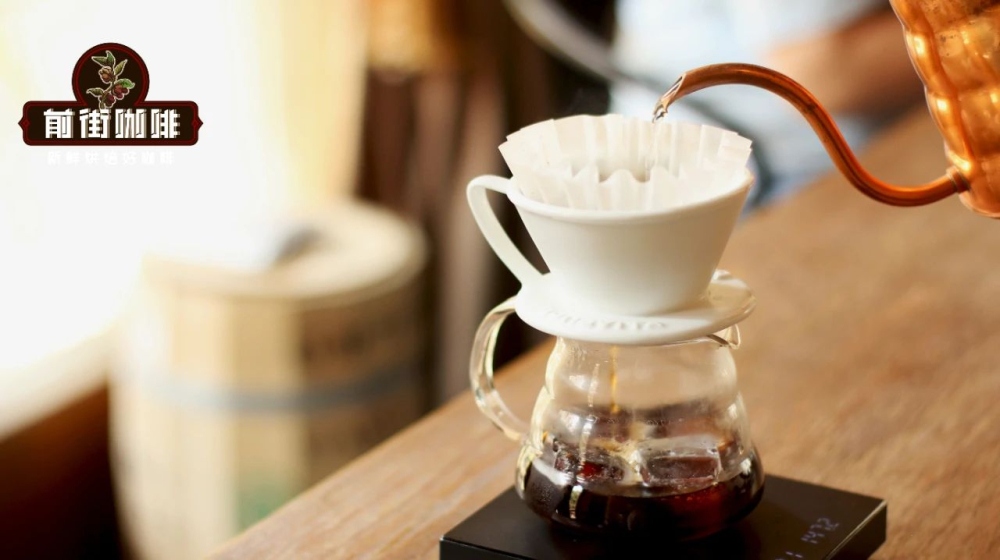
Pour-over usually uses single-origin beans of outstanding quality. Baristas will recommend popular choices such as Front Street Coffee Huakui, Front Street Coffee Blue Mountain No. 1, and Front Street Coffee Strawberry Candy. Even beginners can relatively easily grasp the flavor and mouthfeel.
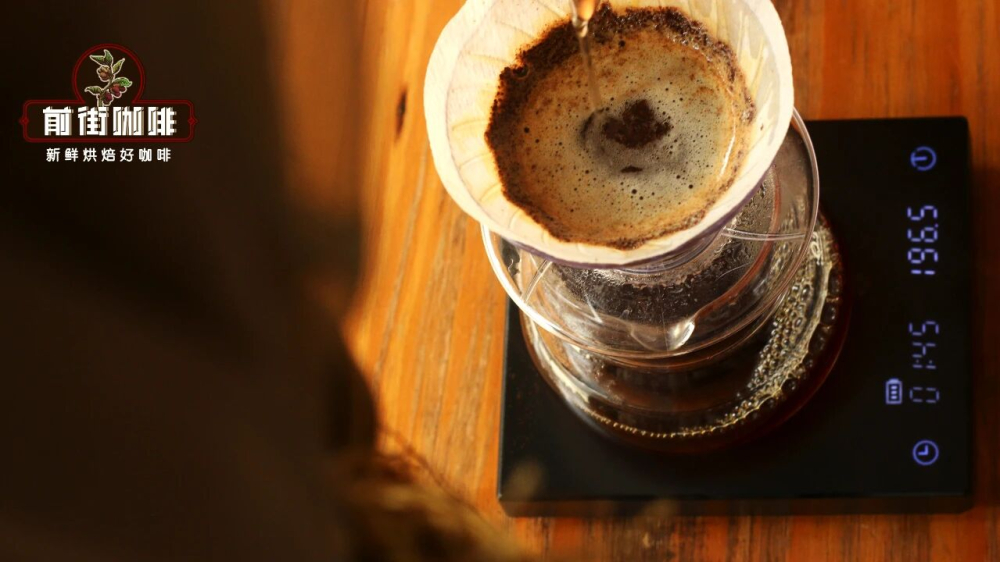
Pour-over coffee has another attractive aspect: from weighing beans, grinding, folding filter paper, rinsing the dripper, and adding grounds, to boiling water and brewing, this whole series of actions basically has to be done by hand. These steps give the entire coffee-making process a sense of ritual.
Because the equipment is generally quite affordable, many people keep a professional set at home, and when they have free time, they pick a bean they like and grind and brew it on the spot.
If you want to experience multiple flavors at once, you can buy Front Street Coffee Classic Five Origins Drip Bag Coffee, which includes globally renowned coffee origins such as Ethiopia, Kenya, Brazil, Panama, and Indonesia, covering light roast to dark roast and washed to natural. Each one has a unique flavor expression and is very suitable for beginners to try.
What Is Drip Bag Coffee
Drip bag coffee can be said to be the product of pour-over coffee moving toward convenience. In the late 1990s, Japan's UCC took the lead in launching drip bags and applied for a patent in 2001. The drip bag contains pre-ground coffee powder and a non-woven drip filter bag. The extraction method is the same as pour-over, both being drip extraction. Tear open the outer packaging, take out the drip bag and hang it up, and you can directly pour water and brew. The operation is very easy.
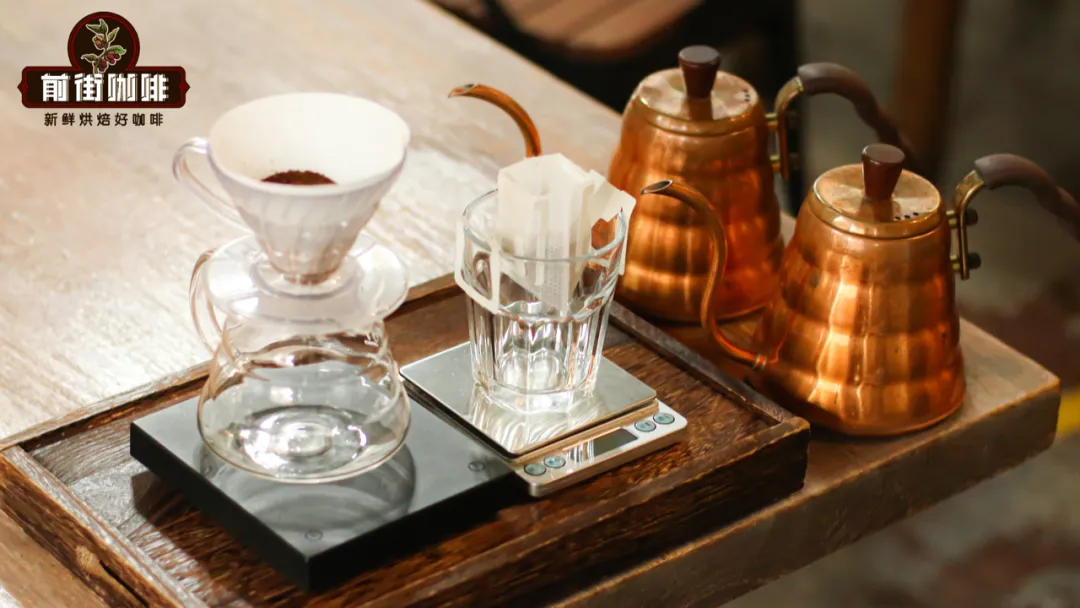
It is called a "drip bag" because there is a paper tab on each side of the non-woven filter bag. As shown in the picture above, when unfolded, they can be hooked onto the rim of a narrow-mouthed cup, replacing a dripper for brewing coffee. The name comes precisely from those two paper tabs that hang on the cup rim and look like "ears."
Compared with pour-over, the convenience of drip bag coffee is very prominent: there is no need to grind powder yourself, nor to prepare tools such as a dripper or filter paper. All you need is a cup and a pouring kettle to complete the brewing. In addition, because it is small in size, the drip bag is easy to carry, making it a regular choice for travel and daily office use.
What Is the Difference Between Drip Bag Coffee and Pour-Over Coffee?
From the introduction above, it can be summarized that the most fundamental difference between drip bag coffee and pour-over coffee lies in the state of the coffee powder used. Pour-over uses freshly ground powder, meaning the coffee beans are ground into powder only before brewing; drip bag coffee uses pre-ground powder, which has already been ground before being sealed into the drip bag. It is precisely this point that creates the essential divide between the two. Why? Because the taste of the brewed coffee changes as a result.
As everyone knows, coffee flavor mainly comes from aromatic substances, and most of these substances are volatile. After coffee beans are roasted, the aroma continuously escapes and dissipates from the inside out, just like carbon dioxide. The speed of loss is mainly affected by storage method, environment, and the structural integrity of the coffee itself.
When storage conditions and methods are suitable and the structure of the coffee beans is relatively intact, the dissipation rate of aromatic substances slows down. Usually, under the premise that all the above conditions are met, the aromatic substances in coffee beans can be preserved until about two months from the roast date; once storage conditions are poor, or the coffee beans have already been ground into powder, aroma loss accelerates noticeably, and the tasting period shortens from two months to one month or even less than one month.
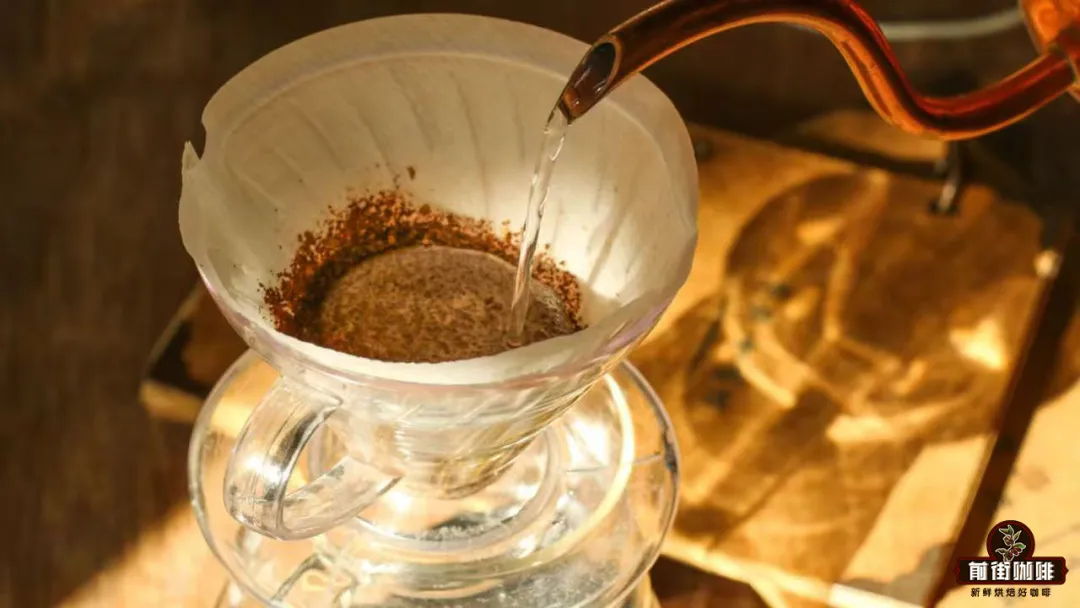
Therefore, even for the same bean and the same roast date, the taste brewed from a drip bag is not as richly layered as pour-over. The reason is that it uses pre-ground powder, and the flavor dissipates faster than freshly ground powder, and the longer the powder has been ground, the more obvious the difference becomes.
At the same time, because the coffee powder is ground in advance, the grind size is already fixed, making it difficult to make many adjustments to the brewing framework. This makes drip bag coffee less flexible than pour-over, with relatively limited room for experimentation.
However, it should be understood that the strength of drip bag coffee has never been flavor, but simplicity and convenience. It is precisely because convenience is sought that drip bags use pre-ground coffee powder. Conversely, if you use a drip bag to brew freshly ground coffee powder, you can also achieve excellent flavor expression.
From this, a conclusion can be drawn: although pour-over and drip bag both use drip brewing, the goals they pursue are completely different. Pour-over pursues a more complete and higher-quality coffee experience, so freshly ground powder is the main brewing material; drip bag coffee pursues convenience, sacrificing part of the flavor in exchange for convenience. Each has its own strengths and suitable scenarios, so there is no need to compare them with each other.
The above content is compiled by CoffeeHunters, a coffee news website.


