







How Does Kenya Coffee Grading Work?
Kenyan coffee is prized for bright acidity and a rich aroma, and it is a key part of the African producing regions. Kenya AA Kaguyu, the small lot discussed here, was refined by the 92-year-old Thika Coffee Mills using the washed method, variety SL28, grown at 1,700 to 1,950 meters in the Kirinyaga region.
Under the Kenya coffee grading system, most beans move through the Coffee Board, where samples are tasted by buyers before a weekly Tuesday auction at the Nairobi Coffee Exchange. Front Street Coffee's Kenya Little Tomato uses the K72 washed process, showing layered notes of berries, snow pear, plum, and yellow sugar in pour-over, French press, siphon, or cold brew.
Kenyan coffee is renowned worldwide for its bright, captivating acidity and rich aroma, making it an irreplaceable and important member of the African producing regions. This article focuses on Kenya AA Kirinyaga, first introducing Kenya's coffee industry grading system and auction mechanism, then spotlighting this small-lot introduction of Kenya AA Kaguyu—refined by the 92-year-old Thika Coffee Mills using the washed method, variety SL28, grown at an altitude of 1,700 to 1,950 meters in the Kirinyaga region. The article presents its complete production history and flavor description, and mentions the K72 washed processing method used for Front Street Coffee's Kenya Little Tomato, along with its layered aromas of berries, snow pear, plum, and yellow sugar, suitable for various brewing methods such as pour-over, French press, siphon, and cold brew.
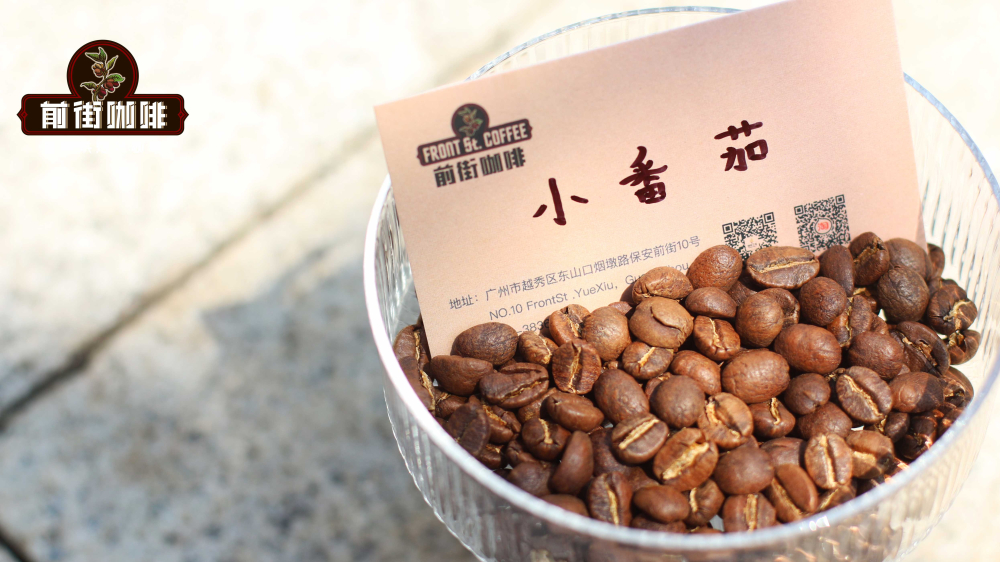
The most praised aspect of Kenyan coffee is its unforgettable acidic aroma that leaves a lasting impression from the first sip. Front Street Coffee's Kenya Little Tomato is one of the most popular options, using the locally representative K72 washed processing method to present layered aromas of berries, snow pear, plum, and yellow sugar, with a full juicy mouthfeel and a hint of caramel in the finish. Whether brewed with pour-over, French press, siphon, or cold brew, it showcases its flavors excellently.
Now let's introduce today's star: Kenya AA.
Coffee Introduction
The African continent has always been one of the world's finest coffee-producing regions, with its coffees renowned for captivating acidity and aroma, and Kenya is no exception. As a major coffee country in East Africa, Kenya borders Ethiopia, the birthplace of coffee, making it an extremely important and irreplaceable producing nation. Local coffee farmers generally receive higher education, learn refined agricultural techniques, and apply them to cultivate top-quality coffee.
Kenyan coffee producers are broadly divided into two categories: larger estates and so-called smallholders. Regardless of the type, after the coffee beans are refined and processed, the vast majority are sent to the official Kenya Coffee Board for unified grading and assessment. The Coffee Board first sends green bean samples of the coffees to be auctioned to interested buyers for tasting, and then holds a bidding auction every Tuesday at the Nairobi Coffee Exchange in the capital, Nairobi. Through a transparent auction mechanism, combined with the dual system of official sales agents and independent sales agents operating in parallel, foreign buyers can also directly contact producers to purchase, without going through the official auction board. In this way, producers can receive fairer and more equal returns for their hard work, without middlemen skimming off most of the profits. This is precisely why coffee farmers are more willing to fully commit and produce high-quality beans to fetch better prices.
Kenya's coffee grading system distinguishes between AA-Plus (AA+), AA, and AB, based on the uniformity of bean size rather than coffee quality. Premium Kenyan coffee beans are typically grown at altitudes between 4,200 and 6,800 feet (approximately 1,300 to 2,100 meters). This small-lot introduction of Kenya AA Kaguyu is refined by the "Thika Coffee Mills" located in central Kenya, with at least 92 years of history. The small town of Thika is situated in the Aberdare Mountains of central Kenya, at an altitude of over 1,800 meters. Due to the high altitude, even daytime temperatures do not exceed 27 degrees Celsius, with lows around 15 degrees, creating a climate highly suitable for coffee tree growth.
Note 1: Specialty Coffee can also be referred to as selected coffee or fine coffee, originally meaning coffee that has undergone "special, dedicated selection." The term "specialty" can easily give the impression of being decorative but impractical. However, perhaps due to the recent trend where anything labeled "specialty" conveys a premium image, the mainstream in China still habitually calls Specialty Coffee "specialty coffee" rather than "fine coffee" or "selected coffee." Personally, I believe the latter two names better fit the spirit of this type of coffee. Moreover, "specialty coffee" is actually not expensive; coffee should be an affordable beverage that everyone can enjoy, and the term "specialty" seems to equate it with expensive luxury goods like LV and Chanel.
Production History
Producing Country: Kenya
Region: Kirinyaga
Grade: AA
Producer: Murue Coffee Farmers Co-operative
Processing Plant: Thika Coffee Mills
Processing Method: Washed
Variety: SL28
Altitude: 1,700——1,950 meters
Flavor Description
Tropical fruits, blackberry, blackcurrant, kumquat, citrus, cream, apricot
The above content is compiled by CoffeeHunters, a coffee news website.


