







How Does Cold Brew Coffee Extraction Work?
Cold brew coffee covers two low-temperature methods: ice drip and cold immersion. Because the water stays cold, the resulting liquid carries less bitterness than hot extraction and leans toward a sweet-and-sour profile with a noticeable fermented aroma, though the process takes far longer than brewing with hot water.
Cold brewing has roots in 17th-century Japan, where cold-brewed tea was already a custom. Dutch sailors later adopted the technique to avoid open flames on long sea voyages. The article compares ice drip and cold immersion on equipment, recipes, steps, flavor, storage time for concentrate, and caffeine levels against iced Americano.
In the height of summer, if there's no pitcher of cold brew coffee in the fridge, it feels like something is missing. But with such a dazzling array of coffee beans, which one is actually suited for cold brew? How should cold brew concentrate be stored, and how long can it keep? This article draws on Front Street Coffee's hands-on experience to systematically break down the two main categories of cold brew coffee—ice drip and cold immersion—covering equipment components, parameter recipes, operating steps, and flavor profiles. We'll also answer a common question: between cold brew and iced Americano, which has more caffeine? In addition, the performance of Huakui and Sherry beans under low-temperature extraction will be presented one by one, helping you find your own cup of summer iced coffee.
In the height of summer, if there's no pitcher of cold brew coffee in the fridge, it seems you're not living up to your identity as a coffee lover. However, with so many varieties of coffee beans, which one is actually suitable for cold brew? How should cold brew concentrate be stored, and how long can it keep at most? Below, Front Street responds to these questions one by one.
So-called cold brew is simply letting coffee particles complete extraction in low-temperature water. Because the water temperature is low, the resulting coffee liquid doesn't carry the bitterness of hot-water extraction; instead it leans toward a sweet-and-sour profile with a fairly noticeable fermented aroma. Also because the water temperature is low, cold brew takes far longer than hot-water extraction.
Legend has it that in the 17th century, Japan already had a custom of drinking cold-brewed tea. At the time, the Dutch—one of the representatives of Western maritime civilization—in order to avoid the risk of using open flames during long sea voyages and to solve the difficulty of obtaining hot water, learned the technique of cold brew coffee from Japan's cold-brewed tea.
Today, many specialty coffee shops, including FrontStreet Coffee, keep a dedicated set of cold brew equipment on hand. Cold brew coffee is smooth in mouthfeel with a prominent sweetness, delivering a very pleasant experience to drinkers in the scorching heat, and is therefore much talked about.
What FrontStreet Coffee calls cold brew coffee actually covers two extraction methods: one is called ice drip coffee, and the other is called cold immersion coffee. To cater to different taste preferences, FrontStreet Coffee stores produce both kinds of iced coffee.
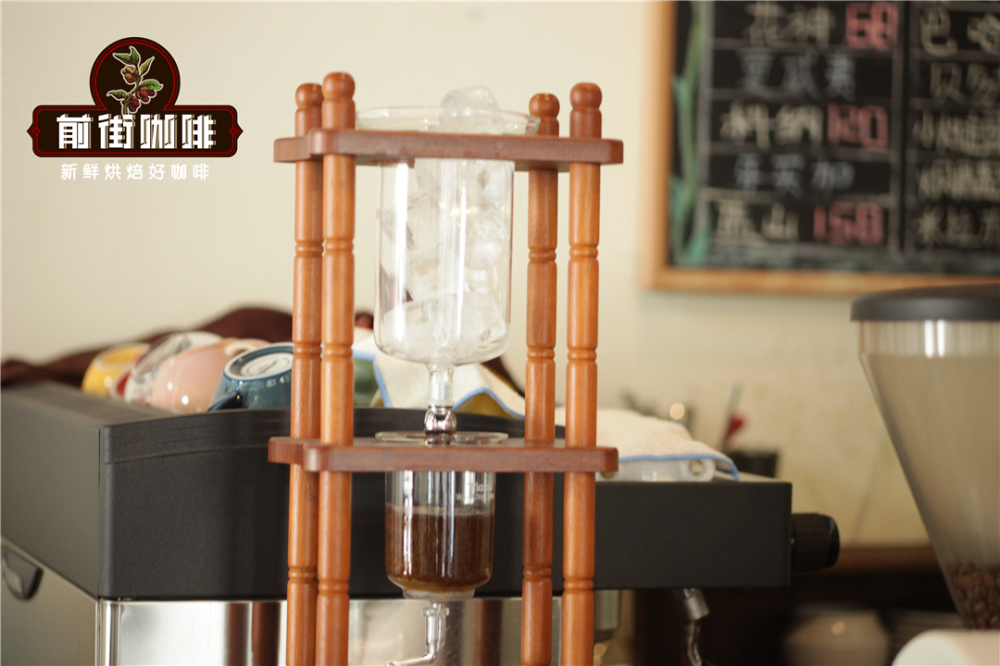
In FrontStreet Coffee stores, right next to the espresso machine sits a set of ice drip coffee equipment. This setup consists of several parts: a water container, a regulating valve, a coffee powder cup, a serpentine tube, and a coffee liquid container.
When Front Street makes ice drip coffee, it usually selects beans with brighter acidity, such as Huakui coffee beans.
FrontStreet Coffee Ice Drip Coffee Brewing Guide
Dose: 60 grams
Coffee-to-water ratio: 1:10
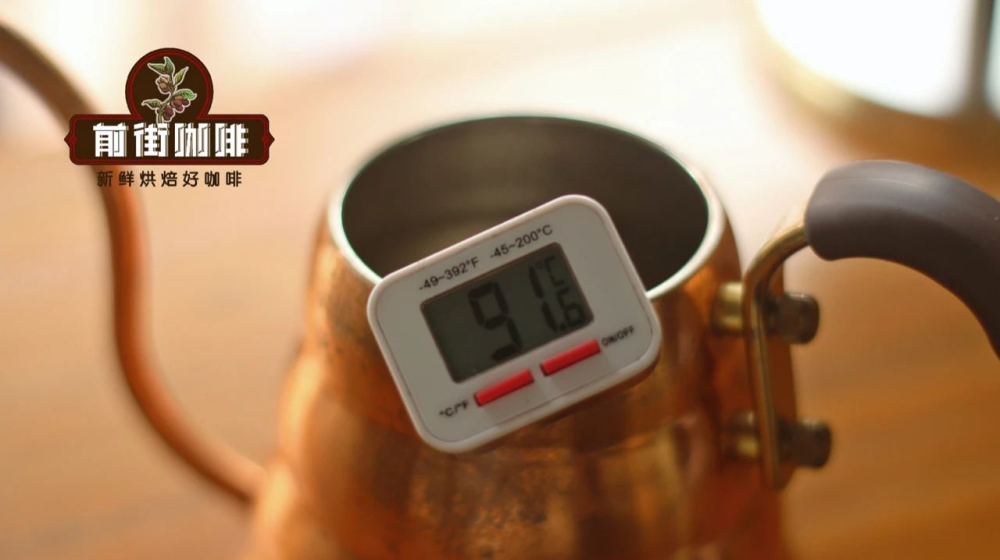
Water temperature: 0°C——4°C
Grind size: 80% passing through a Chinese standard No. 20 sieve
Extraction time: 6——8 hours
1. Place a circular filter paper in the coffee powder cup and wet it
2. Fit the edge of the circular filter paper against the cup wall, then pour in the coffee powder and shake it level
3. Lay another circular filter paper on top of the coffee powder surface
4. Pour a small amount of ice water from the center of the circular filter paper for "pre-infusion"
5. Add an ice-water mixture to the water container and adjust the drip valve to about 7 drops per 10 seconds
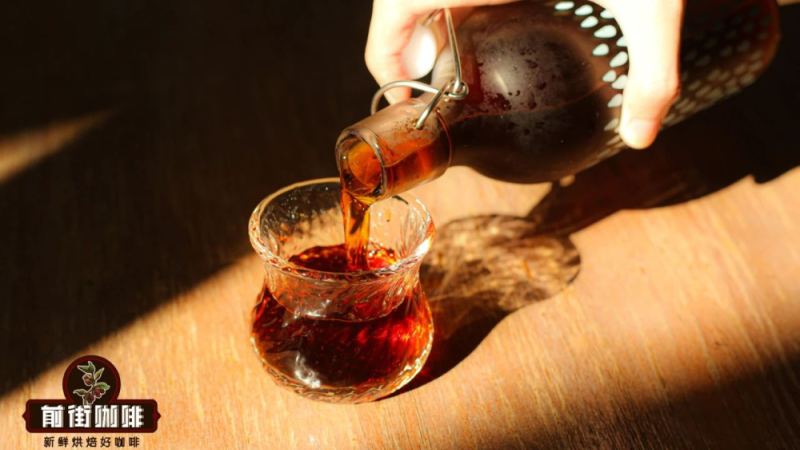
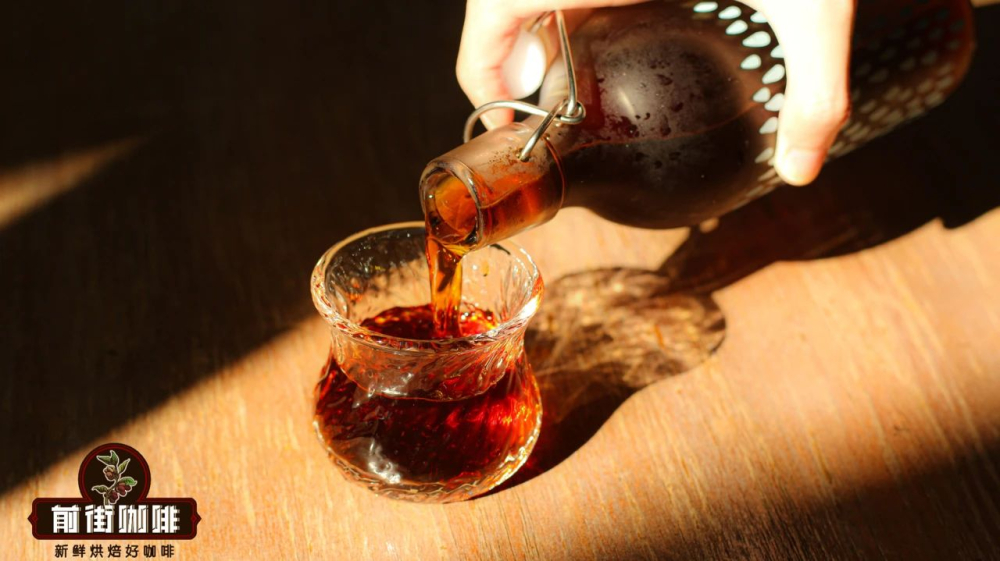
6. After brewing is complete, pour the ice drip coffee into a sealed glass bottle and place it in the fridge to ferment overnight, so the flavors integrate better and the mouthfeel becomes thicker and smoother.
Some friends may be puzzled by FrontStreet Coffee's use of a 1:10 coffee-to-water ratio. This is because tastes vary—some prefer it strong, others prefer it light. Front Street uses a 1:10 ratio to accommodate, to a certain extent, those who like a rich flavor; and when serving, Front Street generally adds one or two ice cubes to the cup, and as the ice melts, the coffee's concentration drops. So the 1:10 ratio balances both groups to some degree.
Additionally, when Front Street makes ice drip, the reason for laying a circular filter paper on top of the coffee bed is to prevent the dripping ice water, under gravity, from forming craters in the powder and thereby causing uneven extraction of the coffee grounds.
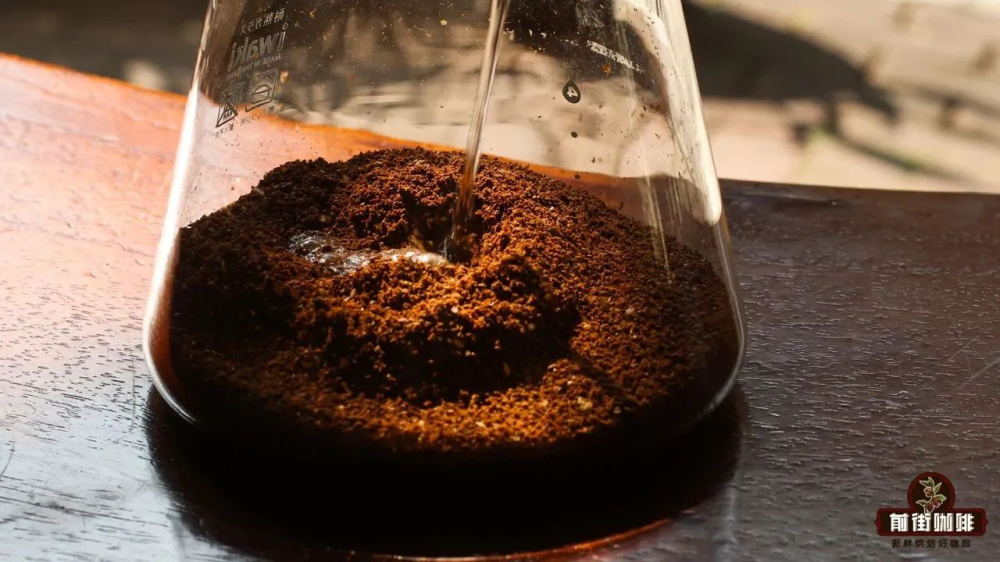
Of course, limited by a lack of equipment at home, many friends don't have the means to make ice drip coffee. Actually, wanting to drink iced coffee isn't hard—cold immersion coffee is the first choice.
FrontStreet Coffee Cold Immersion Coffee Brewing Guide
1. Pour the ground coffee powder into a sealable glass bottle
2. At a 1:10 coffee-to-water ratio, pour in an appropriate amount of room-temperature water or ice water, and mix until fully wetted
3. Seal the glass bottle and place it in the fridge for 8 to 12 hours
4. After extraction is complete, filter it, put it into a sealable glass bottle, and store it in the fridge
Many friends visiting FrontStreet Coffee stores ask: between cold brew coffee and iced Americano, which has higher caffeine content? In fact, many people hold a misconception: they think that because cold brew extracts at a low temperature, its caffeine content is lower. This is not the case—longer contact time between water and coffee grounds means a longer extraction time, and under prolonged extraction, the amount of caffeine released is likewise not to be underestimated. So cold brew coffee's caffeine content is higher than that of iced Americano.
When FrontStreet Coffee selects coffee beans for making ice drip, it generally chooses beans with a lighter roast level and fuller acidity, because at low temperatures the fruity sweet-and-sour sensation is more delightful. Of course, you can also choose beans with a more prominent flavor, such as Sherry coffee beans. The ice drip made from these beans fermented in Sherry whisky barrels leans toward a rich fermented wine aroma, offering a distinctive flavor of its own.
If you want something more refreshing, Front Street recommends using Huakui coffee beans. The ice drip made from Huakui coffee beans carries a flavor reminiscent of berry juice, mixed with some unique fermented aromas such as passion fruit, overall like a glass of ice-cold mixed berry juice, so refreshingly tart it's addictive.
However, the coffee beans that create such a unique flavor cannot be separated from Huakui's growing origin—the Buku Abel processing station in the Sidamo production region. Coffee beans from the Sidamo region usually use the natural sun-dried processing method and carry rich berry flavors.
Huakui coffee beans were once sent by DW Company in 2017 to compete in that year's TOH competition and won the championship in the natural group of the Ethiopian division that year. They were subsequently introduced to the mainland by a Beijing green bean trader. Because of their long, unique strawberry-cream flavor and the high hopes placed on them, they were named Huakui, meaning "chief of a hundred flowers." That same year, in the China division of the World Brewers Cup, competitor Li Jianfei used Huakui coffee beans to compete, overpowering many Geisha competitors and achieving a good result of second place, making Huakui instantly famous.
The ice drip coffee Front Street makes with Huakui coffee beans has a complex berry-juice sensation on the palate, with a very long creamy finish. As the ice cubes melt, the concentration drops slightly and the fermented note is somewhat diluted, but the sweet-and-sour berry-juice sensation remains outstanding.
For more coffee bean information, please follow Coffee Workshop (WeChat official account: cafe_style) For professional coffee knowledge exchange, please add WeChat ID: kaixinguoguo0925
The above content is compiled by CoffeeHunters, a coffee news website.


