







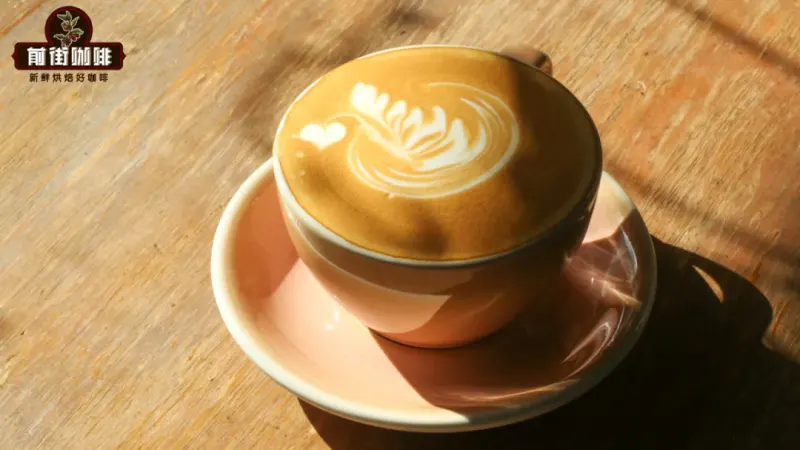
Barista Coffee Origin and Its Role in Latte Art Etching Results
Rippled latte art comes down to three controls: milk foam thickness, how far the foam is incorporated into the espresso, and the distance between the pitcher spout and the liquid surface. Thin, over-stretched foam spreads instead of holding a line, while foam that is too thick sits on top and refuses to sink. Swinging the pitcher while pouring presses white lines into arcs.
Bean choice supports the pour. An espresso with fine, smooth, rich crema gives the foam something to sit on, and blends that include a small amount of Robusta pour a denser, more golden crema. Start by fixing foam texture, then work on swing rhythm and spout height, and the layered lines appear on their own.
Latte art is the original passion that draws many coffee lovers into the craft, and rippled patterns are the advanced technique that baristas dream of mastering. It works by continuously swinging the milk pitcher while pouring milk foam, pressing white lines into elegant arcs that make the pattern more artistic. However, many people practicing rippled patterns just can't seem to produce clearly layered lines. This article draws on Front Street's hands-on experience to break down the three key areas for creating rippled latte art: controlling milk foam thickness, managing the degree of incorporation, and the distance between the pitcher spout and the liquid surface. It will also share espresso bean recommendations suitable for latte art, helping you practice beautiful rippled patterns at home.
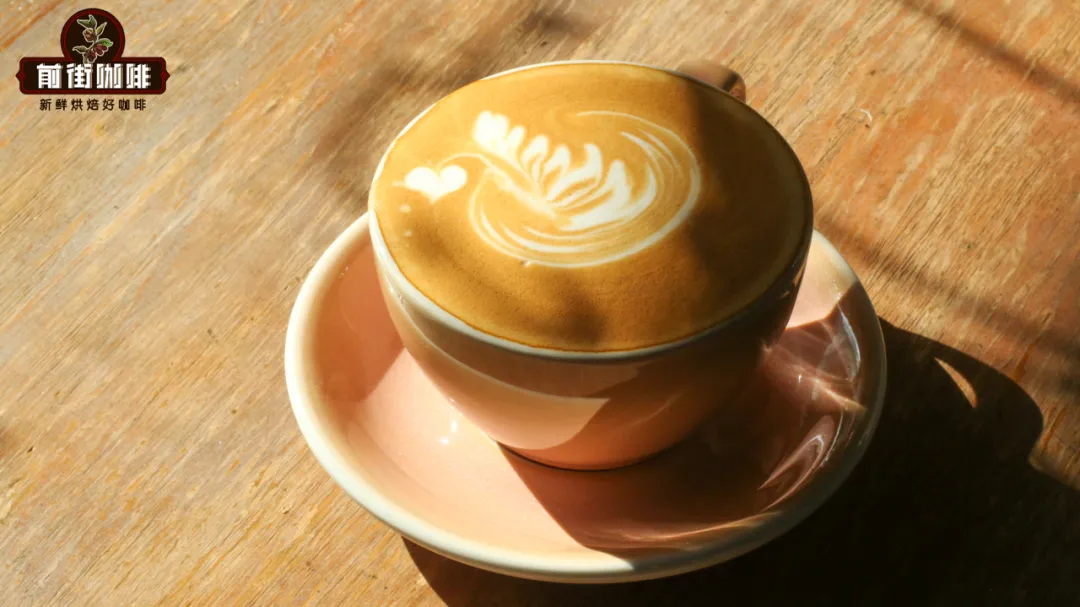
A cup of coffee with exquisite latte art often makes passersby stop to take a sip, and it has led many people into the coffee industry. Front Street once asked many friends why they chose to make coffee in the first place, and quite a few answered: they hoped that one day they too could pour those beautiful patterns. That is the appeal of latte art.
Among all latte art techniques, if there is one that baristas most want to master, it is undoubtedly the "rippled" pattern. Unlike conventional pouring methods, rippling involves continuously swinging the milk pitcher while pouring foam, pressing white lines into arcs that make the pattern more graceful and artistic. That is why it has become the technique so many baristas dream of mastering.
However, no matter how much many people practice, they still can't pour clearly layered lines. Today Front Street will share the key points you need to master to create rippled latte art.
It must be emphasized that beautiful latte art starts with a perfect espresso, so bean selection is crucial. Front Street believes that an espresso with fine, smooth, and rich crema is the best standard, and you can use two of our bestsellers: Front Street Classic Blend and Front Street Commercial Blend. The former combines the wild character of Brazil and Mandheling, while the latter is rich in various nutty aromas and adds a small amount of Robusta to enhance the richness of the crema and its golden color.
Technique One: Milk Foam Thickness
Many friends can't produce fine lines when pouring latte art, and the biggest reason often lies in the milk foam. Rippling has very high demands on the thickness and fineness of the milk foam. Unlike a big white heart, rippling requires constantly swinging the pitcher to draw fine lines, so the milk foam must have relatively high fluidity.
The thicker the foam, the lower the fluidity; the thinner the foam, the higher the fluidity. So when making rippled patterns, you need to keep the foam at a relatively thin thickness to ensure fine lines can be drawn.

But it can't be too thin either. When the foam is too fluid, the latte art pattern easily shifts during creation, ruining the entire design. At the same time, a latte also needs a certain foam thickness to improve mouthfeel. So we can't endlessly reduce foam thickness. Front Street recommends keeping it at around 0.4 cm, slightly thinner than a regular latte.
Technique Two: Degree of Incorporation
Many times, just as you're about to pour the lines, the latte is already full, and you end up with an unfinished piece. This is a common situation for many people, and the problem is actually simple: over-incorporation.
When making conventional latte art patterns, we're used to incorporating the coffee until the cup is five or six tenths full, because this helps the pitcher spout get closer to the liquid surface, making it easier to draw patterns and lines.
But rippling is different. It requires continuously pouring foam to push the previous lines forward, so if you incorporate too much, the space for drawing is reduced. Moreover, when too much is incorporated, the coffee surface actually becomes less fluid, and even with thin foam, it's hard to push out fine minimalist lines.
Therefore, when making rippled patterns, Front Street recommends stopping incorporation at four tenths full, then starting to pour directly. Of course, the amount of milk poured out can't be ignored either. Pouring too much milk not only easily fills the cup but also makes it hard to create slender lines, so the amount poured during latte art should also be relatively controlled.
Technique Three: Pitcher Spout Too Close
As everyone knows, latte art requires the pitcher spout to be close to the liquid surface to draw lines. But for rippling, it actually can't be too close. This is almost the mistake everyone makes when learning rippling and failing to produce lines.

Although keeping the spout close to the liquid surface stabilizes the pour, it limits the range of motion of the pitcher. Rippling requires continuously swinging the pitcher with a larger amplitude to create lines. If you pour with the spout close to the surface, not only is the swing range limited, but the lines also come out thick and lack elegance. So when rippling, we can appropriately raise the spout, keeping it slightly away from the liquid surface, to help us better press out beautiful lines.
These are the three areas you need to master for rippling. Once you can handle them proficiently, the skill of rippling will be second nature. After all, latte art ultimately relies on muscle memory. As long as you practice diligently, any kind of latte art can be mastered.
The above content is compiled by CoffeeHunters, a coffee news website.


