








How does most expensive coffee compare with homemade cold brew?
Homemade cold brew needs only beans, a refrigerator, and a simple container. A practical starting point is 30 grams of coffee to 360 milliliters of room-temperature water, a 1:12 ratio. Grind slightly finer than for pour-over, about the texture of fine granulated sugar, with roughly 85 percent passing a No. 20 standard sieve.
Stir the grounds and water, seal the bottle, and refrigerate for 12 to 24 hours, then filter through paper for a clear liquid and store it sealed in the cold. Lower temperature and longer extraction are what define cold brew. While rare lots such as most expensive coffee beans poop draw headlines, everyday beans work well here, and the method suits any roast level.
Cold brew coffee, with its refreshing sweetness and low acidity, has become a highly favored drink in summer. In fact, with just coffee beans, a refrigerator, and simple containers, you can easily replicate it at home. This article, based on the practical experience of Front Street Coffee, will explain in detail the cold brew production process, coffee-to-water ratio, grind size, extraction time, and bean selection suggestions for different roast levels and flavor preferences. It will also share practical information such as various ways to enjoy cold brew and its shelf life, helping coffee enthusiasts make a clean, smooth, and richly layered iced coffee at low cost.

Cold brew coffee can be seen on many cafe menus. It is iced coffee made by soaking coffee grounds in cold water and then filtering out the grounds. Because it is cold on the palate and has weak acidity, it tastes naturally sweet, thus having a broad consumer base.
In a broad definition, all coffee extraction completed under low-temperature conditions can be classified as cold brew, such as cold steep, ice brew, and ice drip methods. Lower temperature and longer extraction time are the two core characteristics that distinguish cold brew coffee from other brewing methods. Today, Front Street Coffee will sort out the many advantages of cold brew coffee and see why this type of drink has become popular.
How is cold brew coffee made?
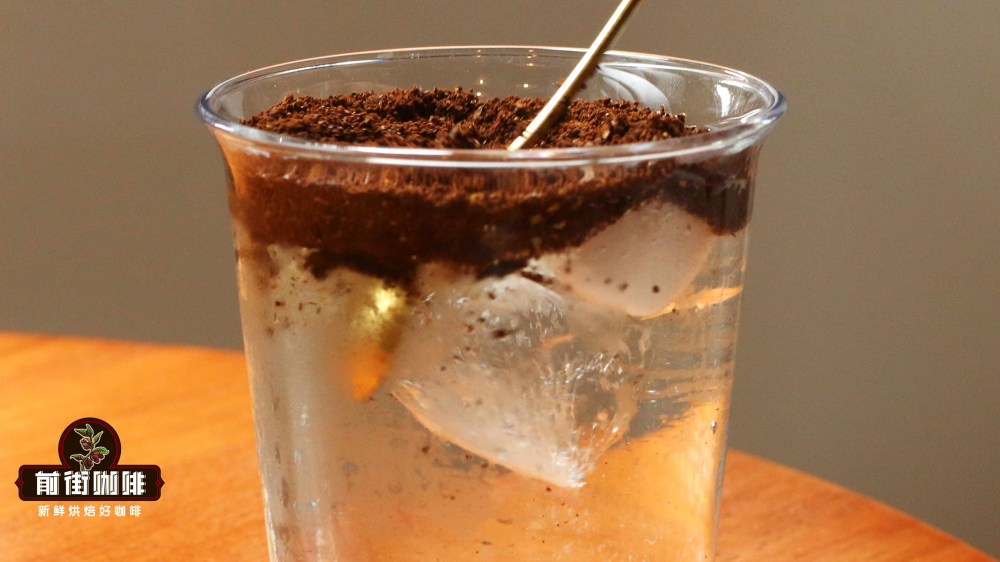
The operational threshold for cold brew coffee is not high, making it easy to get started. Front Street Coffee's cold brew method uses 30 grams of coffee grounds as the baseline. In the grinding step, it should be noted that because the soaking water temperature is much lower than regular pour-over, a slightly finer particle size than pour-over should be chosen, roughly comparable to fine granulated sugar, with a passing rate of about 85% through a No. 20 standard sieve.
First, pour the coffee grounds into a glass bottle, then add 360 milliliters of room-temperature water, keeping the coffee-to-water ratio at 1:12. Use a stirring rod to mix the coffee grounds and water evenly, then seal the bottle mouth and place it in the refrigerator to chill.
After letting it sit in the refrigerator for 12 to 24 hours, filter out the coffee grounds with filter paper to obtain a clear coffee liquid. Transfer the filtered coffee liquid into a clean sealed bottle and continue refrigerating for about 4 hours before drinking.
Here Front Street Coffee would like to remind everyone that cold brew coffee is not necessarily better the longer it soaks, and taste is inherently very subjective. Some people prefer a fresh and clean style, while others favor a heavy, fermentation-like coffee, all depending on personal preference.
For drinkers who prefer a pronounced fermented flavor, Front Street Coffee suggests appropriately extending the extraction time. The longer the time, the more prominent the fermented feel of the coffee liquid, and the higher the concentration, making the mouthfeel layers more complex. If it feels too strong when drinking, you can add two ice cubes and wait for them to melt, and the concentration will naturally decrease.
Friends often ask Front Street: which coffee beans are suitable for cold brew? According to Front Street's production experience, to make cold brew coffee perform better, medium-light roasted beans can be given priority. If you prefer floral notes, Front Street Panama Geisha coffee is recommended, and it is also one of the most expensive coffees in the world;
If you like coffee that is fresh and slightly acidic, Front Street Ethiopia Huakui coffee beans are recommended, showing notes of black tea and berries, or choose Front Street Little Tomato with a prominent juicy feel; there are also Front Street Sidra coffee beans with passion fruit and fermented flavors. The above selected single-origin coffee beans can all be ordered and purchased from Front Street's Tmall flagship store or Front Street's Taobao store.
Why has cold brew coffee become a breakout coffee?
1. Cold brew is simple to make and has few requirements for equipment or space. As long as you have coffee beans and a refrigerator, plus a clean container, you can easily make a refreshing and delicious iced coffee at home;
2. Cold brew coffee has many ways to be enjoyed. In addition to changing different coffee beans, you can also add various ingredients to the cold brew according to personal preference, making the iced coffee's mouthfeel layers richer. Front Street Coffee has tried preserved plum cold brew, little tomato cold brew, and blueberry cold brew, all of which are novel and tasty methods;
3. Compared with other coffees, cold brew coffee has a longer drinking window. Once made, as long as it is sealed and refrigerated, it can be enjoyed slowly without easily spoiling. Front Street Coffee recommends finishing it within 5 days, which better preserves the flavor.
For more specialty coffee knowledge, please follow: Front Street Coffee (Frontsteet Coffee)
The above content is compiled by CoffeeHunters, a coffee news website.


