








Why does iced pour-over coffee taste so different?
Adding ice before extraction and adding it after both start with identical parameters: the same coffee-to-water ratio, water temperature and grind size. Using Ethiopian Natural Red Cherry beans and a Hario V60, the two methods still produce clearly different cups, because when the ice goes in changes how the brew cools and how the V60's layered extraction finishes.
The V60's spiral ribs send water along a longer path than a straight-flow dripper. The ridges extend contact time between grounds and water, then guide water toward the center as the level drops, so falling water presses on the coffee bed. That geometry shapes how each iced pour-over coffee method develops sweetness and layers.
As the weather warms up, iced pour-over coffee is back in the spotlight for coffee lovers. In this article, Front Street Coffee uses Ethiopian Natural Red Cherry coffee beans and a Hario V60 dripper to compare two iced pour-over brewing methods—adding ice before extraction versus completing the extraction first and then pouring in ice. With all parameters identical—coffee-to-water ratio, water temperature, grind size—the final flavor profiles turned out worlds apart. The article documents in detail the brewing steps and flavor descriptions for both methods, and analyzes the reasons behind the differences from the perspective of the V60 dripper's layered extraction. If you'd also like to make a cup of iced pour-over with rich layers and full sweetness at home, why not follow along with Front Street and see exactly how these two methods differ.

For more specialty coffee knowledge, please follow: Front Street Coffee (Frontsteet Coffee)
In January in Guangdong, while other provinces are still blanketed in heavy snow, this place has already stepped into the rhythm of spring. Temperatures are gradually rising, flowers and plants are beginning to bloom, and friends who are used to drinking hot pour-over are turning their thoughts to the taste of iced pour-over. Today, Front Street will talk about two methods of making iced pour-over, comparing how adding ice first and then brewing, versus completing the pour-over extraction first and then pouring in ice, differ from each other.
This time, Front Street selected Front Street Natural Red Cherry coffee beans from Ethiopia and made iced pour-over using the two methods respectively.
Front Street Coffee (FrontStreet Coffee) · Ethiopian Natural Red Cherry Coffee Beans Region: Yirgacheffe, Ethiopia Estate: Aletalend Estate Altitude: 1700-2200m Variety: Ethiopian heirloom varieties Processing: Natural process
For this iced pour-over comparison, Front Street used a Hario V60 dripper The Hario V60 dripper's spiral rib design, compared with the straight water-flow path of the Kono dripper, means the water travels a noticeably longer distance. The spiral ridges not only extend the contact time between coffee grounds and water, but also guide the water along the spiral ridges toward the center of the dripper as the water level drops, using the gravity of the falling water to press against the coffee grounds, thereby creating a richer sense of layering.
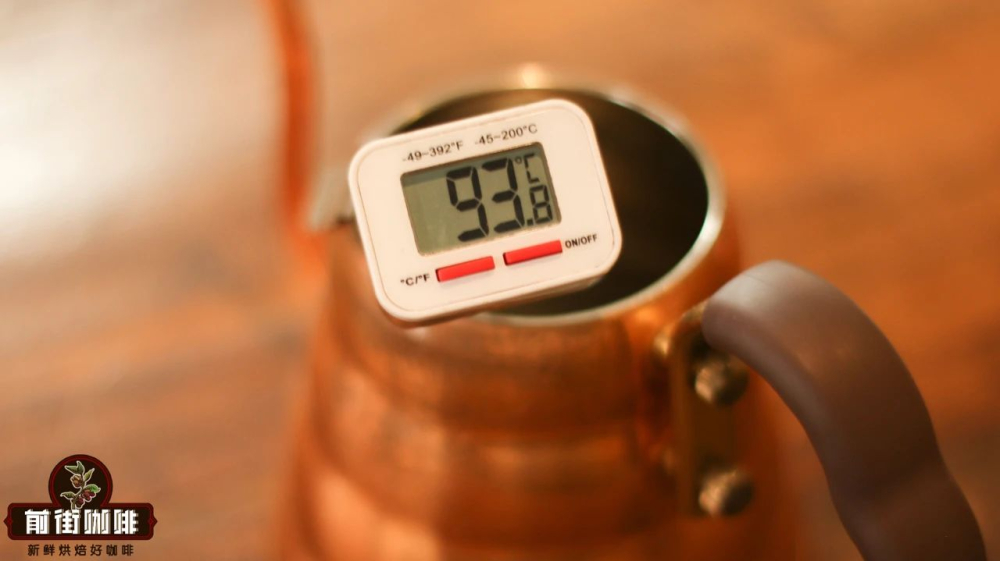
Water temperature for iced pour-over If the water temperature is too low, only sourness can be extracted, and the body will be insufficient; if the water temperature is too high, over-extraction easily occurs, bringing out bitterness. This Front Street Ethiopian Natural Red Cherry has outstanding sweetness. To more fully extract the sweet-tasting substances, Front Street used a water temperature of 91–92°C for this comparison. This temperature suits medium-light roasted coffee beans; for medium-dark roasts, 88–89°C is recommended.

Coffee-to-water ratio for iced pour-over Since ice is needed to dilute the coffee, Front Street uses a 1:10 coffee-to-water ratio when making iced pour-over, plus 100g of ice, with 15g of coffee grounds. Grind size for iced pour-over According to SCAA cupping standards, the cupping grind size is 70-75% passing through a No. 20 standard sieve. When Front Street Coffee (FrontStreet Coffee) brews hot pour-over with light-roasted coffee, the grind size is usually between 75-80%, while for medium-dark roasts it falls within the 70%-75% range. For iced pour-over, medium-light roasts generally use 80%, and medium-dark roasts use 75%.
Iced pour-over brewing method one : First place 100g of ice into the sharing pitcher, without preheating the dripper or rinsing the filter paper. Pour the coffee grounds directly into the dripper lined with filter paper, pour in 30g of hot water to fully wet the coffee bed, forming a hamburger shape, and let it sit for 30 seconds, then begin the second stage of extraction. Pour in circles from the center outward, keeping the stream steady and vertical; when the water column hits the coffee bed, foam will form. This stage of brewing lets the coffee foam release and cover the entire surface of the coffee bed, with the liquid level rising to the base of the short ribs. Pour up to 90g in this stage, at which point the timer reads 50 seconds.
When the water level drops to half the height of the coffee bed, proceed to the third stage of pouring. Similarly, pour from the center outward in an "aroma-gathering" pattern up to 150g. The originally dark brown foam gradually turns into pale yellow coffee foam, and the liquid level also returns to the height it was at during the second pour. After all the coffee liquid has flowed into the lower pitcher, remove the dripper and end the extraction, at a time of 1 minute 40 seconds. After extraction is complete, stir the coffee liquid and ice in the pitcher thoroughly to mix, then taste. Flavor of iced pour-over brewing method one: Faint berry acidity, almond-nutty flavors, smooth mouthfeel, honey-like finish, but overall lacking in layering and somewhat flat. Iced pour-over brewing method two: Preheat the dripper and sharing pitcher and rinse the filter paper. Pour the coffee grounds into the preheated dripper lined with filter paper, pour in 30g of hot water to fully wet the coffee bed into a hamburger shape, and let it sit for 30 seconds, then proceed to the second stage of extraction. Pour in circles from the center outward, keeping the stream steady and vertical; when the water column hits the coffee bed, foam will appear. This stage of brewing lets the coffee foam release and spread across the entire surface of the coffee bed, with the liquid level rising to the base of the short ribs. Pour up to 90g in this stage, at which point the timer reads 50 seconds.
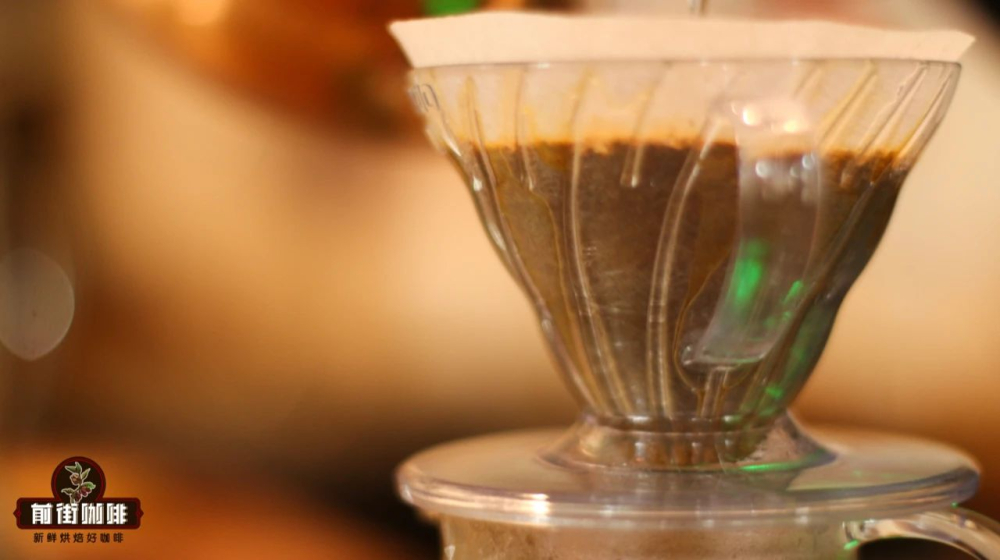
When the water level drops to half the height of the coffee bed, proceed to the third stage of pouring. In this stage as well, pour from the center outward in an "aroma-gathering" pattern up to 150g. The originally dark brown foam transforms into pale yellow coffee foam, and the liquid level likewise returns to the height it was at during the second pour. After all the coffee liquid has flowed into the lower pitcher, remove the dripper and end the extraction, at a time of 1 minute 40 seconds. Take another sharing pitcher, add ice to fully pre-chill it, then pour out the ice. Add 100g of fresh ice, then shake the first pitcher of coffee liquid evenly and pour it into the second pitcher with ice and stir. Wait until the ice is fully mixed before tasting.
Flavor of iced pour-over brewing method two: A full-bodied berry juice sensation, pronounced acidity, smooth mouthfeel, honey-like sweetness roaming in the mouth, with rich overall layering. Why is there such a huge difference in flavor between iced pour-over made by adding ice first versus adding ice later? Earlier, when Front Street introduced the V60 dripper, it specifically mentioned that the V60's design allows the brewed coffee to have a higher sense of layering, which means that each stage of dripping coffee liquid extracts different flavor molecules. For example, the first stage "awakens" the flavor molecules, the second stage mainly extracts acidity and sweetness, and the third stage extracts body-giving substances.
If ice is added first, no matter which stage of coffee liquid drips onto the ice surface, it will immediately be diluted, and a clearly layered effect cannot form. Instead, by letting the coffee liquid complete all extraction at a uniform temperature, then shaking it so the coffee liquid is completely uniform before pouring it into ice to dilute, this ensures that the coffee molecules come into contact with the ice evenly and better release the strengths of each flavor molecule.
The above content is compiled by CoffeeHunters, a coffee news website.


