







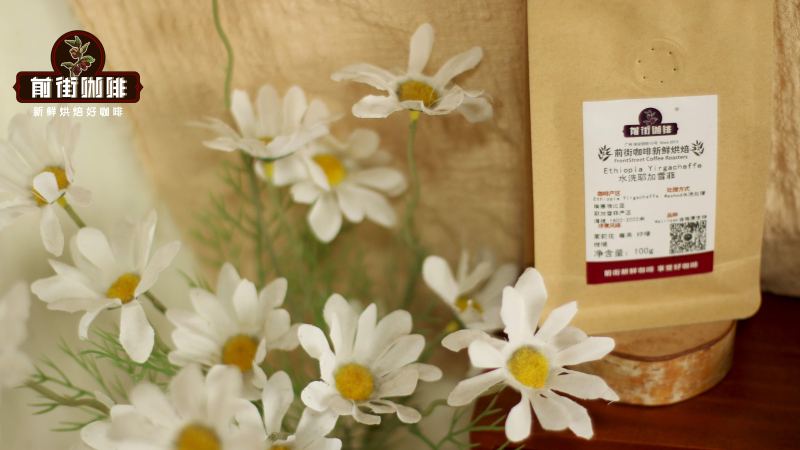
How does the coffee bean process shape Yirgacheffe flavor?
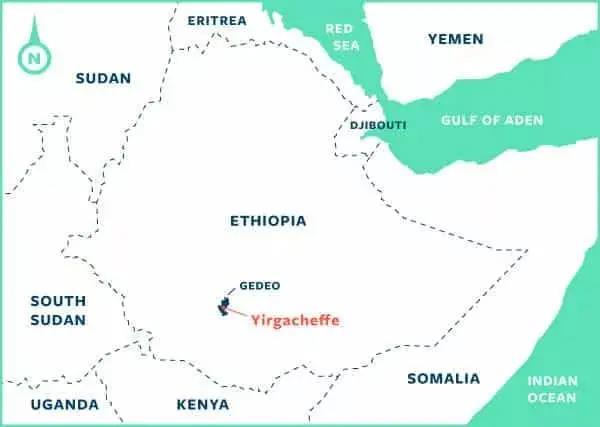
Yirgacheffe sits around 2,000 meters in Ethiopia, where cool, misty conditions and garden-style cultivation produce coffee with bright acidity and floral aromas. The washed and natural versions of the same region taste quite different, so the processing method matters as much as the coffee bean origin when choosing a lot.
Washed Yirgacheffe tends toward citrus, tea-like clarity, and a lighter body, while natural lots push strawberry, blueberry, and heavier sweetness. At high altitude with limited output per household, smallholders deliver cherry to cooperatives such as Gutingding, whose Red Cherry Plan sorts ripe fruit before processing to lift cup quality.
Yirgacheffe is Ethiopia's most iconic specialty coffee region, renowned worldwide for its bright acidity and rich floral aromas. This article will start from the region's history, geographical environment, and processing method differences, providing a detailed analysis of the flavor characteristics of washed and natural Yirgacheffe, and offering pour-over parameter suggestions for different roast levels and processing methods. It will also introduce the background of the Gutingding Cooperative and the Red Cherry Plan, as well as the brewing approaches for two classic Yirgacheffe coffees in Front Street Coffee's bean lineup, helping coffee enthusiasts find the cup of Yirgacheffe that suits them.
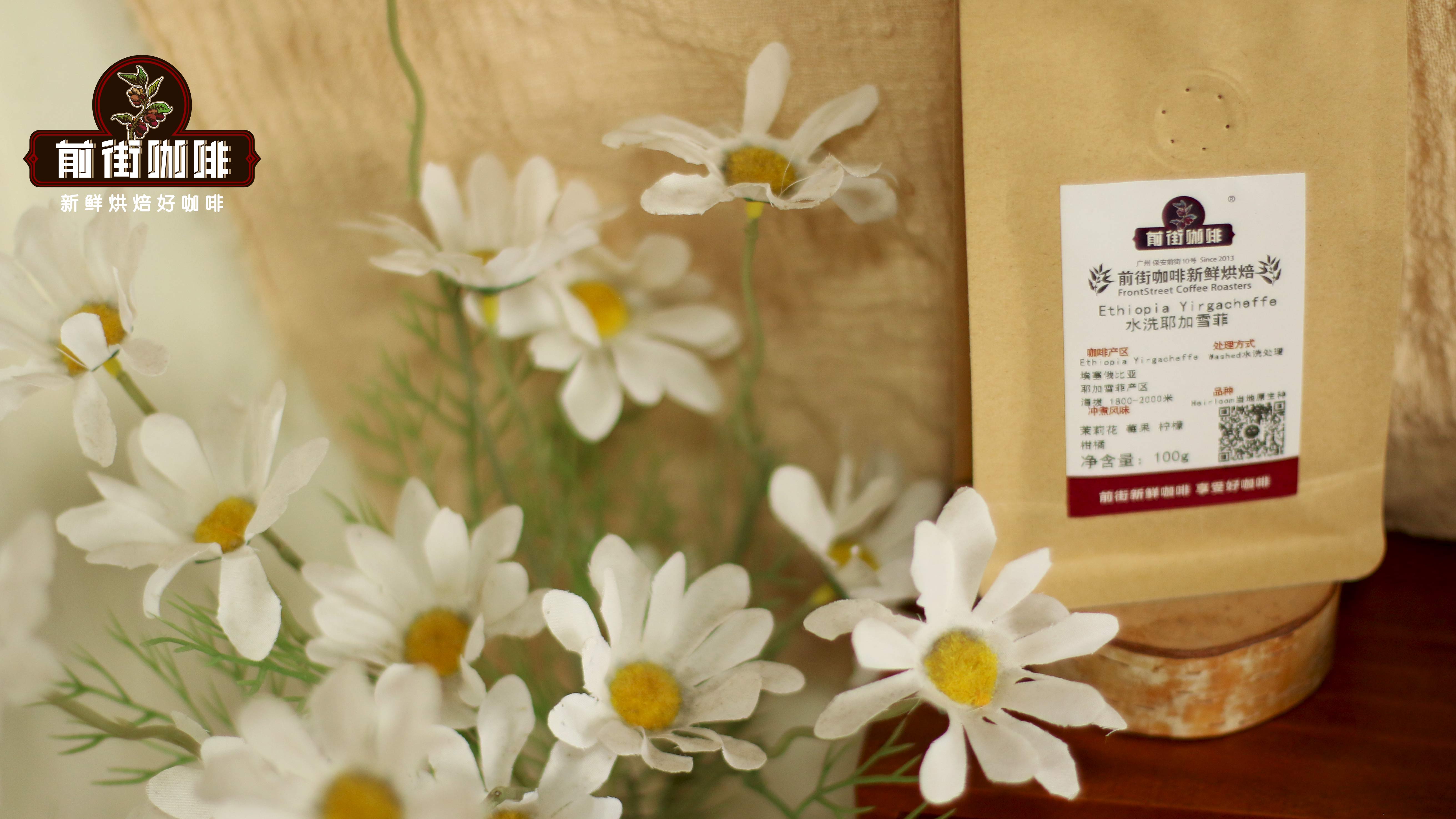
For coffee lovers, when Ethiopia is mentioned, the first thing that comes to mind at Front Street Coffee is its coffee, and the benchmark of specialty coffee—Yirgacheffe. This bean is a classic representation of Ethiopia's fruity flavor profile, attracting coffee hunters from around the world to venture deep into the region each year to discover outstanding cooperatives. In Front Street Coffee's product line, Yirgacheffe alone covers five or six different lots. Next, Front Street Coffee will take you into this world-renowned specialty coffee region.
Introduction to the Ethiopian Yirgacheffe Coffee Region
The Yirgacheffe region is located in one of the highest coffee-growing zones in the world, at an altitude of around 2,000 meters. The area is home to over forty cooperatives, with coffee cultivation managed on a household basis.
Yirgacheffe is not only a calling card for Ethiopian specialty coffee, but also benefits from its high altitude, year-round cool and misty climate, and spring-like conditions throughout the four seasons, combined with its unique cultivation system, creating ideal conditions for growing high-quality coffee beans. Most coffee trees in the region are planted in farmers' own yards or intercropped with other crops, with limited output per household—a typical garden coffee model. Mountain villages are shrouded in mist, summer breezes are gentle, the climate is mild year-round without dryness, rainfall is abundant but not humid, and there is no risk of frost damage in winter. It is precisely this terroir that nurtures the unique regional flavor of intertwined citrus and floral notes.
Within the Yirgacheffe region, there are also many well-known micro-regions, such as Kochere, Misty Valley, and Gedeb. These micro-regions all have excellent cooperatives, producing Yirgacheffe coffee beans with distinct flavor personalities. Washed Yirgacheffe presents a fresh, clean texture and bright acidity, while natural processing brings a juicy mouthfeel and sweetness.
The Ethiopian Yirgacheffe region was originally part of the Sidamo region, as a sub-region. The coffee beans here have a bright flavor and delicate acidity, forming a distinctive style within the Sidamo region. Due to its high recognizability, coffee farmers took pride in their beans having a "Yirgacheffe flavor," and it eventually became independent from Sidamo, becoming the now-famous Yirgacheffe region.
The small town of Yirgacheffe was historically a wetland. In the ancient language, "Yirga" means "to settle down," and "Cheffe" refers to "wetland."
In the early days, the Yirgacheffe region used the most traditional natural drying method to process coffee beans. Later, the Ethiopian government introduced washed processing technology from Central and South America, and the quality of Yirgacheffe coffee beans improved significantly. Its bright, uplifting acidity and white floral flavor characteristics were quickly remembered by many coffee lovers.
Gutingding Cooperative
The Gutingding Cooperative is located in the Worka region at the southeastern end of Yirgacheffe, and was originally part of the Worka Cooperative under the Yirgacheffe Coffee Farmers' Cooperative Union (YCFCU). As the market's demand for traceability of green coffee beans increased, these excellent "single-origin" lots were discovered one by one by coffee hunters around the world.
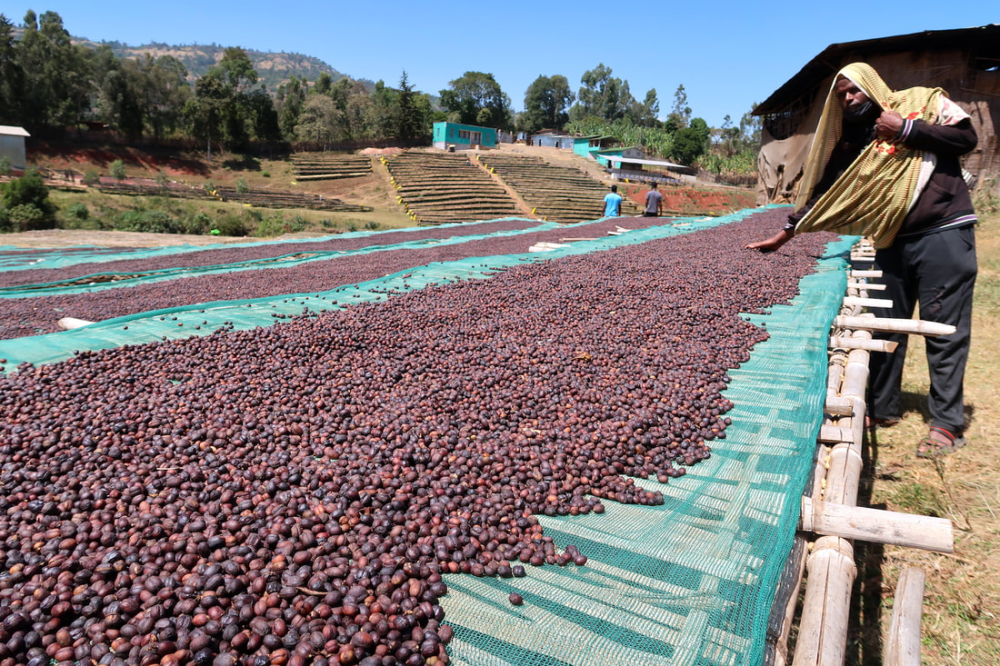
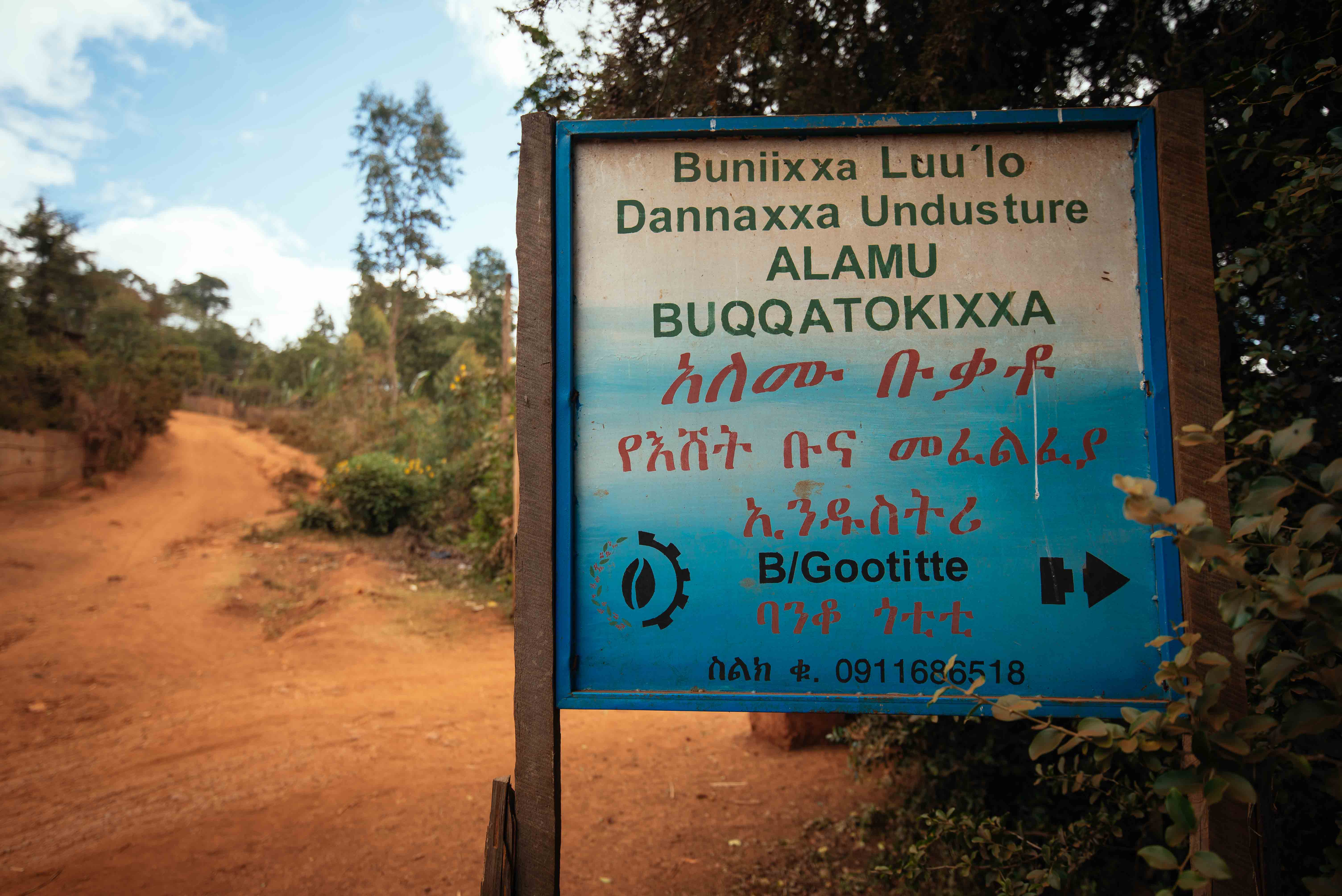
In 2012, the Gutingding Cooperative officially became independent, with about three hundred farmers as its first members. Gutingding Village was the first village area to become independent, and many smallholder farmers were originally members of the Worka Cooperative, so their coffee cultivation techniques were quite mature. The Gutingding Cooperative is known as "the last pure land of Yirgacheffe," and its green bean processing methods also follow tradition.
Front Street Coffee. Washed Gutingding Coffee Beans
Country: Ethiopia
Region: Yirgacheffe Gedeo Zone
Altitude: 1900-2300m
Variety: Heirloom
Processing Method: Washed Grade: G1
Flavor: Jasmine, citrus, blueberry, honey, green tea
Now let's talk about coffee bean processing methods.
Washed processing method. The Front Street Coffee Gutingding Cooperative coffee beans use traditional washed processing.
First, the pulp and skin of the berries are removed with a depulper, then the beans are placed in fermentation tanks for 18 to 36 hours to allow the mucilage layer to break down (the specific duration depends on local temperature and humidity conditions). After that, the parchment beans are washed through washing channels for 30 to 60 minutes. Through the channel design and water flow, low-density, poor-quality beans are removed, and the remaining high-quality parchment beans are placed on African-style raised beds to dry for about 14 days. After drying is complete, they are first stored in the processing plant warehouse, and before export they are transported to a dry processing plant for hulling, and undergo a series of complicated steps including foreign matter removal, silver skin polishing, gravity sorting, and color sorting, before finally being bagged for export.
Natural processing method. The Front Street Coffee Red Cherry coffee beans are a specialty Yirgacheffe using traditional natural processing.
"Natural," as the name suggests, uses sunlight to dry the coffee beans. Many people may not know that as the most primitive coffee bean processing method, the quality of naturally dried coffee beans was once an unspeakable pain for coffee farmers. Why? Because in the past, equipment was simple, and coffee cherries were often spread directly on the ground (or on a tarp in slightly better conditions) to sun-dry. The harsh environment and rough handling allowed coffee beans with originally outstanding flavor to freely absorb the scent of the earth, developing an earthy taste. It must be said that this ancient method relied entirely on weather; once it encountered rain, the coffee cherries were highly prone to mold, then rot, and produce a spoiled odor.
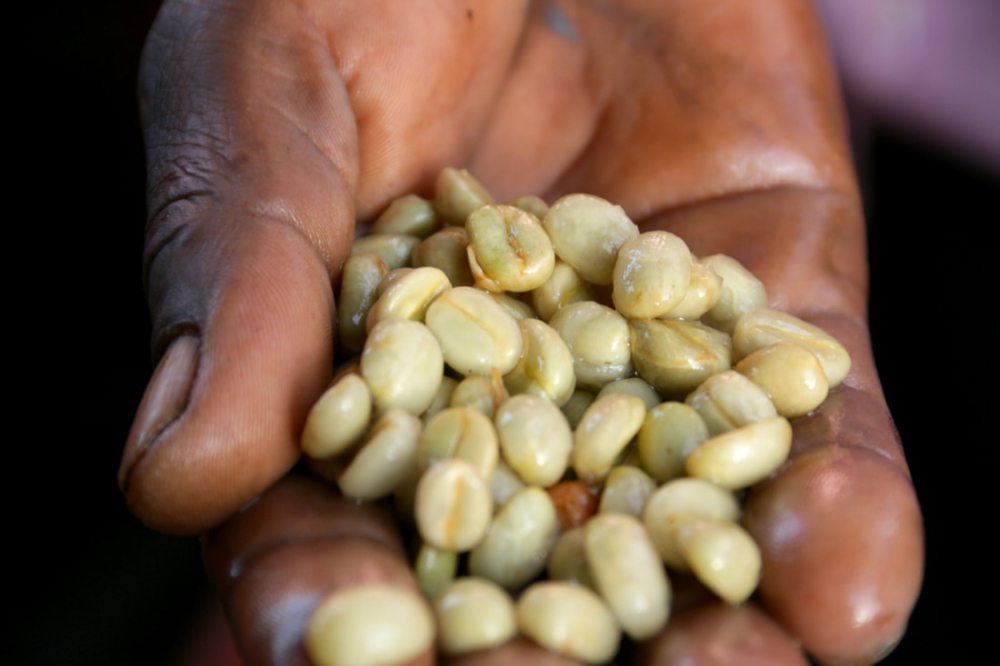
However, with the spread of the specialty coffee concept, natural processing equipment in many regions has now been upgraded. Places with better economic conditions build "drying canopies" (netting supported by frames to create a drying device with ventilation above and below, also called African raised beds). Those with ordinary conditions lay concrete floors to prevent coffee cherries from absorbing earthy flavors. During the drying process, people also pay attention to turning the coffee cherries so they lose moisture more evenly.
How is natural processing done?
The harvested coffee cherries are sorted, then placed on concrete floors or drying racks for 3 to 4 weeks of sun drying, reducing the moisture content of the coffee cherries to about 11% (at which point the outer shell is hard and dark red-black). After drying is complete, the outer shell is crushed and removed, and the coffee beans are stored with parchment, which is only removed before export.
Introduction to the "Red Cherry Plan"
The core of the "Red Cherry Plan" is to process only fully red coffee cherries, thereby improving coffee quality.
Today, processing only fully red cherries may not seem like anything new, but in 2007, it was a landmark innovation. That year, Trabocca, the largest green bean trader in the Netherlands, in pursuit of higher-quality Ethiopian beans, proposed the "Operation Cherry Red"—a project aimed at improving quality on small-scale farms.
Before this, whether local processing stations or green bean traders, both would try to keep the purchase price of coffee cherries as low as possible to obtain higher profits. For coffee farmers, the number of coffee cherries sold determined their income, so they did not care about bean quality. Traders pushing prices down and farmers chasing quantity led coffee bean quality into a vicious cycle.
Trabocca saw this problem and believed the vicious cycle had to be broken, and thus the "Red Cherry Plan" was born. Picking coffee cherries not only required fully red fruit, but also required fully manual harvesting throughout. But this was only the most basic requirement. The main purpose of the plan was to encourage coffee farmers to improve coffee bean quality and thereby increase their income.
Trabocca, the largest coffee bean trader in the Netherlands, before the harvest season invites all Ethiopian farms to produce small batches of about 1,500 to 3,000 kilograms (25 to 50 bags) of beans for them. Women select only 100% ripe red cherries, and fully red cherries have a huge impact on coffee flavor quality.
The coffee beans produced in this way are of better quality and taste better, and can more easily gain recognition in the end market, thereby balancing the relatively high coffee purchasing price.
Introduction to Yirgacheffe Natural Red Cherry Coffee Beans
Front Street Coffee Red Cherry coffee beans use fully red cherries from the Aletaland farm with natural processing. The green coffee beans are pale yellow, plump, complete in appearance, with a low defect rate, reaching G1 grade.
As a single-origin pour-over coffee, Front Street Coffee uses a medium-light roast for this Red Cherry coffee. After roasting, the Red Cherry coffee beans have an even color and a distinct berry aroma. The dry fragrance of this bean shows full berry sweetness and acidity. When sipped at different temperatures, you can perceive soft berry sweetness and acidity, fermented ripe fruit, obvious honey sweetness, and a black tea sensation, with a smooth mouthfeel.
Front Street Coffee. Natural Red Cherry Coffee Beans
Country: Ethiopia
Region: Yirgacheffe
Altitude: 2300m
Variety: Local heirloom
Processing Method: Natural
Grade: G1
Flavor: Floral, lemon, mango, berry, cream, slight fermented note
How to Brew Yirgacheffe Coffee Beans for the Best Taste
Brewing Approach for Washed Yirgacheffe
This time, Front Street Coffee chose medium-light roasted Yirgacheffe Gutingding Cooperative washed coffee beans for brewing. During cupping, the dry fragrance of this bean presented fresh citrus and white floral notes. When sipped at different temperatures, you can perceive bright citrus notes, honey, a clean mouthfeel, interspersed with floral and tea notes.
Front Street Coffee recommends using freshly roasted coffee beans for brewing, as this allows you to experience the coffee's rich flavors to the greatest extent. Front Street Coffee beans are all within 5 days of roasting. Front Street Coffee's roasting philosophy is "freshly roasted good coffee," so every customer who places an order receives coffee in its freshest state. The resting period for coffee is about 4 to 7 days, so when customers receive it, it is exactly at its best flavor.
In terms of grind size, Front Street Coffee recommends medium-fine grinding (78% passing through a Chinese standard No. 20 sieve). Too coarse and it cannot extract rich substances, making the brewed coffee seem thin. Too fine and it is prone to over-extraction at high water temperatures, making the brewed coffee prone to bitterness.
To highlight the fresh and charming aroma of washed Yirgacheffe, Front Street Coffee uses a V60 dripper for brewing. The dripper's spiral rib design allows coffee grounds to degas better, maximizing the release and dissolution of aromatic and acidic substances.
During cupping, Front Street Coffee noticed that this bean exhibited different flavors at different temperatures, so the brewing method uses three-stage extraction, allowing different flavor substances to express themselves better as the coffee bed heats up in stages.

Regarding brewing water temperature, two aspects can be considered. If you want bright, uplifting acidity and a tea-like aftertaste, you can brew at 90°C to 91°C; if you want fuller acidity and increased body, you can brew at 92°C to 93°C.
Regarding the brewing ratio, washed Yirgacheffe has a relatively fresh flavor. To more clearly perceive the floral and honeyed sweetness, you can use 1:16, slightly reducing the overall acidity of the cup and giving other lighter flavors a chance to express themselves.
For the pouring technique, Front Street Coffee recommends a three-stage pour: first pour 30ml for a 30-second bloom, then pour 120ml in a circular motion from the center outward, and finally, when the liquid level drops halfway, pour 90ml. Total extraction time is 2 minutes 10 seconds.
Brewing Approach for Natural Yirgacheffe
This time, Front Street Coffee chose medium-light roasted Yirgacheffe Aletaland Cooperative natural processed Red Cherry coffee beans for brewing. During cupping, the dry fragrance of this bean showed full berry sweetness and acidity. When sipped at different temperatures, you can perceive soft berry sweetness and acidity, fermented ripe fruit, obvious honey sweetness, and a black tea sensation, with a smooth mouthfeel.
The grind size and brewing dripper still use medium-fine grinding (80% passing through a Chinese standard No. 20 sieve) and a V60 dripper. Another feature of the V60 dripper is its 60-degree angle design, which extends the contact time between water and coffee, fully extracting the coffee's sweet and acidic substances.
During cupping, Front Street Coffee noticed that this bean had a full overall mouthfeel, with obvious juiciness and sweetness, so the brewing method uses center-pour extraction, allowing the coffee bed to stably and fully extract sweet and acidic flavor substances at the same temperature.
Regarding brewing water temperature, to highlight the sweetness and full juiciness of natural Yirgacheffe, Front Street Coffee brews at 91°C to 92°C to enhance the overall body.
Regarding the brewing ratio, natural Yirgacheffe has a fuller flavor. For a fuller, smoother juicy mouthfeel, you can use 1:15, concentrating all the sweet and acidic flavor substances.
For the pouring technique, Front Street Coffee recommends a three-stage pour: first pour 30ml for a 30-second bloom, then pour 100ml in a circular motion from the center outward, and finally, when the liquid level drops halfway, pour 95ml. Total extraction time is 2 minutes.
Yirgacheffe Pour-Over Flavor Description
Yirgacheffe Gutingding: White floral, lemon, citrus, honeyed, green tea
Yirgacheffe Red Cherry: Berry, fermented fruit aroma, brown sugar
The above content is compiled by CoffeeHunters, a coffee news website.


