







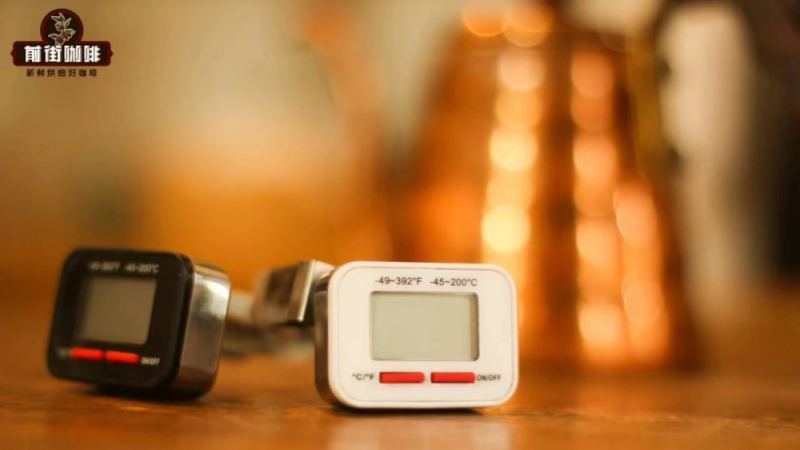
What water temperature should you use for brewing coffee?
Use roughly 86°C to 89°C for dark-roasted beans and 90°C to 93°C for light roasts. Temperature controls how fast water dissolves soluble material from the grounds: hotter water speeds extraction, cooler water slows it. Higher temperatures are not automatically better, and competition baristas sometimes use 94°C or above because their beans and grind differ.
Before touching temperature, fix grind, brew time, and the coffee-to-water ratio. Also note that the kettle reading is not the temperature at the coffee bed, since the water cools as it leaves the spout and meets the grounds. Adjust one variable at a time and taste, because what does coffee contain and how it dissolves shifts with every bean.
What temperature should the water for pour-over coffee actually be set at? Some people brew dark roasts at 86°C, others brew light roasts at 95°C, and in competitions there are even higher choices. This article starts with the thermal motion of water molecules and dissolution speed to explain how temperature influences extraction efficiency, and gives Front Street Coffee's commonly used recommended ranges of 86–89°C for dark roasts and 90–93°C for light roasts. The article will also explain how to fix the grind, time, and coffee-to-water ratio before fine-tuning the water temperature, as well as the difference between the water temperature in the kettle and the actual temperature contacting the coffee bed, helping you find the cup that suits your current beans better at home.
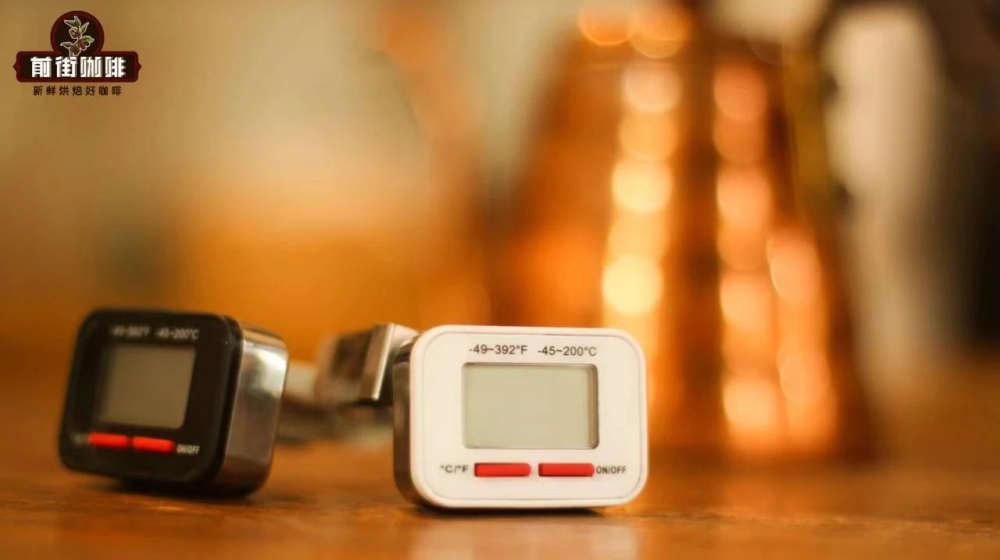
When it comes to the variables in everyday coffee brewing, water temperature is probably the one most often discussed apart from grind size. Whenever a customer asks Front Street Coffee what temperature we usually use, Front Street Coffee basically gives one line: 86°C–89°C for dark-roasted beans, 90°C–93°C for light-roasted beans.
But this also leaves quite a few friends scratching their heads—they see some competition baristas or coffee experts using water temperatures that are not in this range at all, some at 94°C, some at 95°C, or even higher. So yesterday a customer asked Front Street Coffee: "Why do people's brewing water temperatures differ so much? Which temperature actually brews the best-tasting coffee?"
This is a question almost every beginner runs into. To answer it, we first need to understand what role temperature actually plays in extraction.
The effect of water temperature on coffee extraction
Extraction, put simply, is using water to dissolve the soluble substances in coffee grounds. The water temperature determines how fast dissolution happens, because as temperature rises, the thermal motion of water molecules becomes more intense. When the water temperature is high, substances dissolve quickly; when the water temperature is low, the dissolution speed is naturally slowed down.
Front Street Coffee uses an everyday example to explain: when mixing a powdered drink or instant coffee, if you use boiling water, the granules basically dissolve instantly; with warm water, perhaps only a small portion dissolves right away and most of the rest needs to be stirred with a spoon; switch to cold water, and even if you stir desperately, it may not fully dissolve.
This example is very intuitive, so we can see that water temperature affects extraction efficiency. If you are brewing purified products like powdered drinks or instant coffee, temperature actually does not matter, as long as it dissolves in the end; 100°C is fine too, the faster the better, at most it burns your mouth.
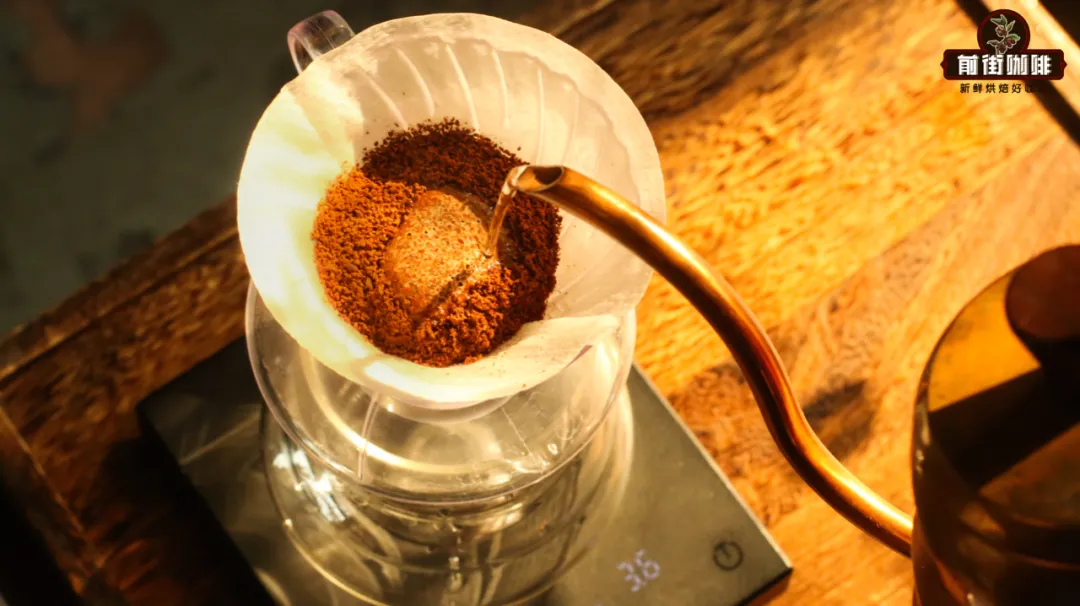
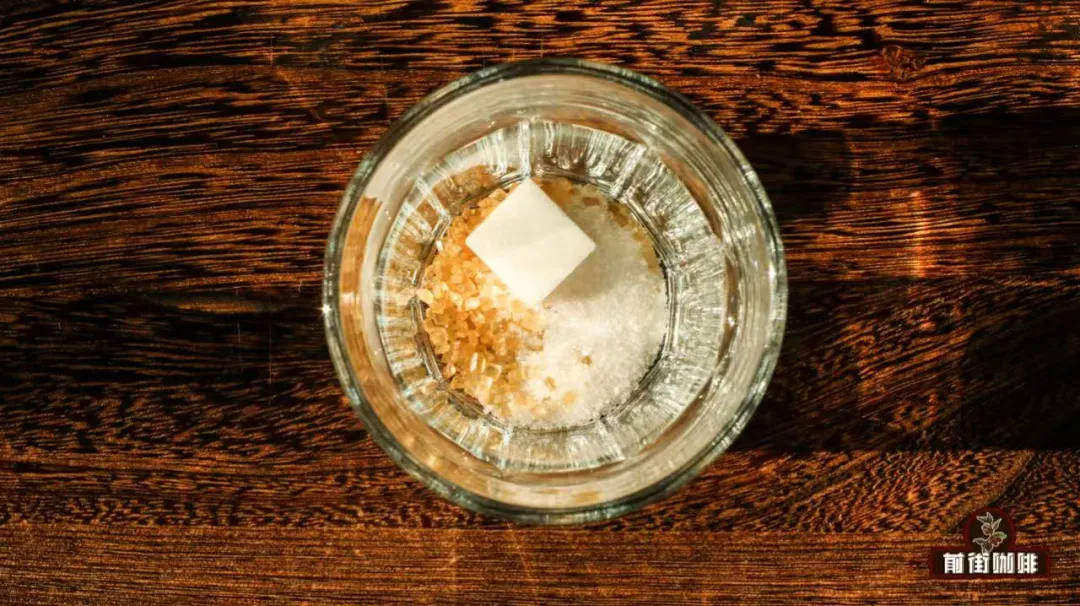
(Sugar: pretending to be powdered drink granules)
But coffee extraction cannot be so casual. Coffee beans contain both pleasant good flavors and unpleasant things like bitterness, off-flavors, and astringency. To brew something tasty, you have to reasonably control the parameters and try not to dissolve the negative substances, or at least keep them covered up.
And different beans can withstand different extraction efficiencies. The core parameters affecting efficiency are not only water temperature, but also grind size, water amount, and time. So Front Street Coffee does not recommend stubbornly sticking to the same temperature for all coffees; that creates too many limitations and makes brewing tiring.
If you want to find the water temperature suitable for your current beans, Front Street Coffee's method is to first fix the other parameters: grind, time, and water amount. Then try different temperatures, and finally decide the most suitable level based on taste. However, try not to go below 84°C, because the extraction efficiency is too low and the substances in the coffee are hard to dissolve out.
Front Street Coffee's coffee beans are roughly divided into two categories: dark roast and light roast. Dark roasts are heated longer, have more caramelized substances, are fluffier in texture, and absorb water better. For example, medium-dark roasted Front Street Coffee. Front Street PWN Golden Mandheling and Front Street Coffee. Colombia Huila, Front Street Coffee uses 86–88°C hot water to brew them, avoiding too many bitter substances entering the cup.
Conversely, medium-light roasted beans such as Front Street Coffee. Yirgacheffe, Front Street Coffee. Gutingting, and Front Street Coffee. Sun-dried Huakui are heated for a shorter time, are harder in texture, and absorb water poorly, requiring higher water temperature to bring out the floral and fruity aromas. Based on Front Street Coffee's experience, 91–93°C is most suitable.
When designing a brewing plan, whether for dark roast or light roast, the parameters other than water temperature are completely identical: grind set to 80% pass-through rate on a No. 20 sieve (the setting will differ because bean brittleness varies), extraction time 2 minutes, coffee-to-water ratio 1:15, and then only the water temperature is changed for brewing.
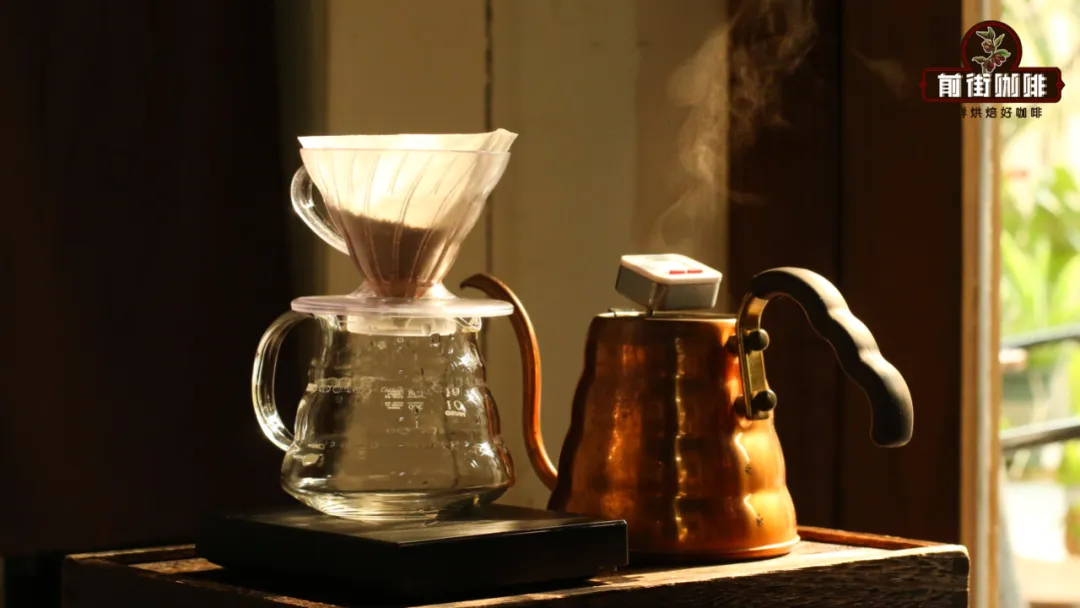
These two temperatures are the parameters best suited to the current formula (80% pass-through rate on a No. 20 sieve, 2 minutes, 1:15). Everyone can also use the same approach to find their own water temperature, because grinders differ, so even with the same bean, the particle size produced will vary.
At this point it becomes clear why competition baristas use 94°C, 95°C, or even higher to brew—this is directly related to the beans they use and the other parameters.
Of course, you can also do the opposite and fix the target while looking for a suitable grind size. For example, fix all parameters except grind, then adjust the grind based on taste. But as Front Street Coffee said earlier, adjusting the grind requires attention to more details, which we covered in detail before, so we will not expand on it here.
Finally, a reminder: the water temperature we are discussing refers to the water temperature in the kettle, that is, the temperature of the hot water in the pour-over kettle, not the temperature of the water actually contacting the coffee grounds. After hot water is poured from the spout, some of its heat is absorbed by the air, the dripper, and the coffee grounds, so the water temperature that actually reaches the coffee bed will be somewhat lower.
Some friends may think this is no big deal, but in fact it is the opposite. If you are not careful, heat loss will worsen, and the extraction efficiency of the hot water will also be pulled down.
For example, when brewing coffee with a ceramic dripper, if you do not preheat it, the dripper will absorb more heat to warm itself; another example is that many people like to raise the pouring height to increase the impact force of the water stream and thereby improve extraction efficiency. But if the height is too high, the hot water contacts more air, and temperature and extraction efficiency are actually lost more quickly.
So besides the water temperature in the kettle, you should also pay attention to the water temperature when it contacts the coffee grounds. There is no need to go to great lengths to measure the temperature of the coffee bed, but you should control the pouring height well (this is the biggest factor affecting water temperature), and try not to let the pouring height exceed one fist. This can effectively prevent the hot water from losing too much heat and causing deviations in extraction.
The above content is compiled by CoffeeHunters, a coffee news website.


