








Bolivia is a landlocked country in South America. Although it possesses high-altitude growing environments and unique floral and fruity aromas, it has long ranked among the countries with the lowest coffee production in the world. Factors such as coca leaf cultivation policies, leaf rust infestations, and the suspension of the COE competition have collectively led to the decline of its coffee industry. This article reviews the historical context of Bolivian coffee, its main producing regions and cultivated varieties, and focuses on the Valliqi Estate Coco Natural Java beans selected by FrontStreet Coffee, covering estate management, processing methods, roasting and brewing parameters, and flavor performance, providing a comprehensive reference for coffee enthusiasts.

For more specialty coffee knowledge, please follow the WeChat official account: FrontStreet Coffee
In the coffee landscape of South America, Brazil and Colombia have always been the focus, but today FrontStreet Coffee wants to introduce another South American country that also produces excellent quality coffee beans—Bolivia. Unlike Brazil's common low-altitude growing conditions, Bolivian coffee mostly grows at high altitudes. FrontStreet Coffee has always believed that altitude plays a key role in shaping coffee flavor. Bolivian coffee has rich and highly recognizable aroma layers. Whether it is the dry aroma after grinding or the wet aroma after extraction, it performs quite distinctly and intensely, with faint interwoven floral and fruity notes, leaving an unforgettable impression after one sip.
Bolivian Coffee History
Bolivia is located in the heart of South America. It is a landlocked country with no coastline, bordering Brazil and Colombia. The capital, La Paz, sits at an altitude of over 3,600 meters, making it the highest capital in the world. Bolivia can be considered the poorest coffee-producing country in the world, with an economic situation even more constrained than Ethiopia's. The lack of a port is only one reason; the local government's serious corruption also leaves the country's finances stretched thin.
Coffee cultivation in Bolivia can be traced back as early as 1880, when production activities were basically controlled by several large farm owners north of La Paz. In 1991, the government implemented a plan to encourage indigenous people to participate in coffee cultivation, but quality was not included as a key consideration.
For Bolivian coffee farmers, the most fundamental dilemma is that growing coffee makes it difficult to make a living. To make up for the income gap, they have to grow other crops as well, the most important of which is coca leaf—coca leaf can be used to extract cocaine, and in Bolivia, growing coca is legal. With government encouragement, the profit from coca leaf reached four times that of coffee, and it was far less labor-intensive than growing coffee, so a large number of farmers abandoned coffee to grow coca, and some even completely stopped farming.
Growing coca requires the application of large amounts of chemical pesticides and fertilizers, causing extremely serious damage to the soil. In other words, after several years of growing coca, the land becomes so barren that no crops can be planted again. In the early 2000s, the United States provided substantial aid to Bolivian agriculture. However, as the Bolivian government shifted toward supporting coca cultivation, relations between the two countries deteriorated, and coffee farmers became the biggest victims. Afterward, against the backdrop of Bolivia restoring limited anti-drug operations, many aid programs were restarted. For example, the COE (Cup of Excellence) was held with support from USAID.
To make matters worse, leaf rust struck in 2013—a fungus that erodes coffee leaves and prevents coffee trees from carrying out photosynthesis. In that year alone, Bolivia lost 50% of its coffee production. With the combined impact of the government's coca policy and leaf rust, Bolivia's coffee production declined by 70% over the past decade, reducing it to a small coffee-producing country.
Bolivian Coffee Producing Regions
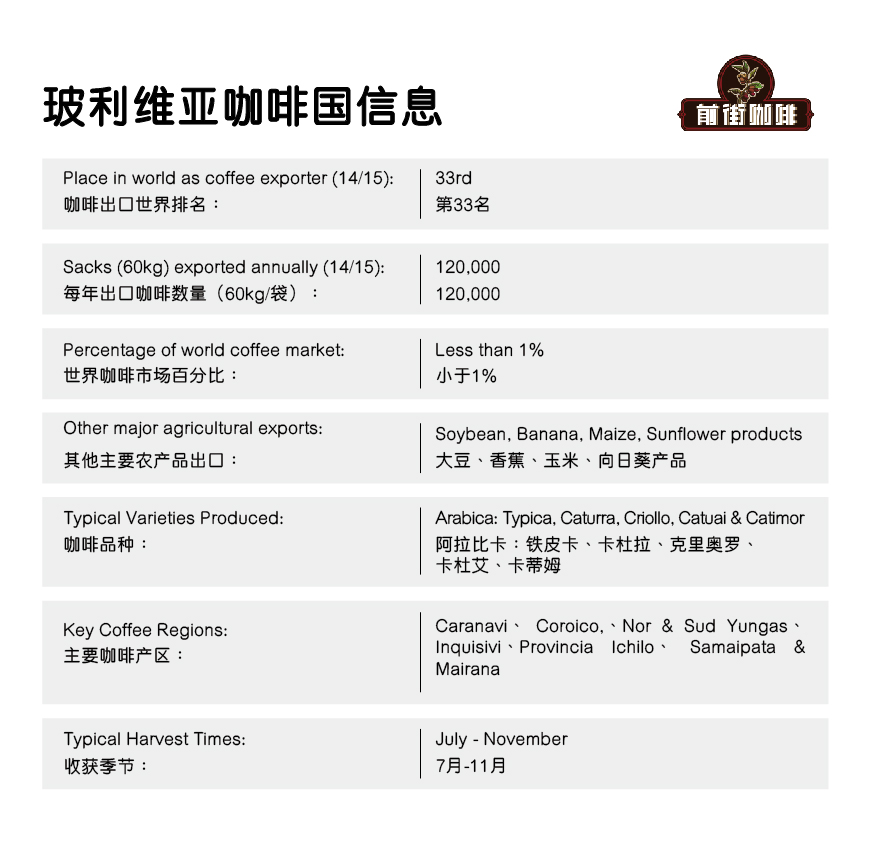
Bolivia's most renowned producing region is La Paz, covering areas such as Caranavi, Yungas, and Inquisivi.
Yungas is located in Caranavi Province, northeast of La Paz. 95% of Bolivia's coffee comes from here. The vast forests extending along the eastern slopes of the Andes have fertile soil, and the rainy, humid, and warm climate provides favorable conditions for coffee cultivation. The region's altitude ranges from 800 to 1,800 meters. It is best known for Yongas Road, reputed to be one of the most dangerous roads in the world, also known as the "Death Road."
Coffee Cultivation
Coffee production in Bolivia is mainly based on a smallholder farmer system, with 23,000 small farms nationwide ranging from 2 to 9 hectares. What is rather unique is that about 40% of Bolivia's coffee culture is domestic consumption. In addition, nearly all of Bolivia's cultivation is organic.
Cultivated Varieties
The main varieties are Arabica, including Typica, Caturra, Catuai, and Catimor. The harvest season runs from July to November.
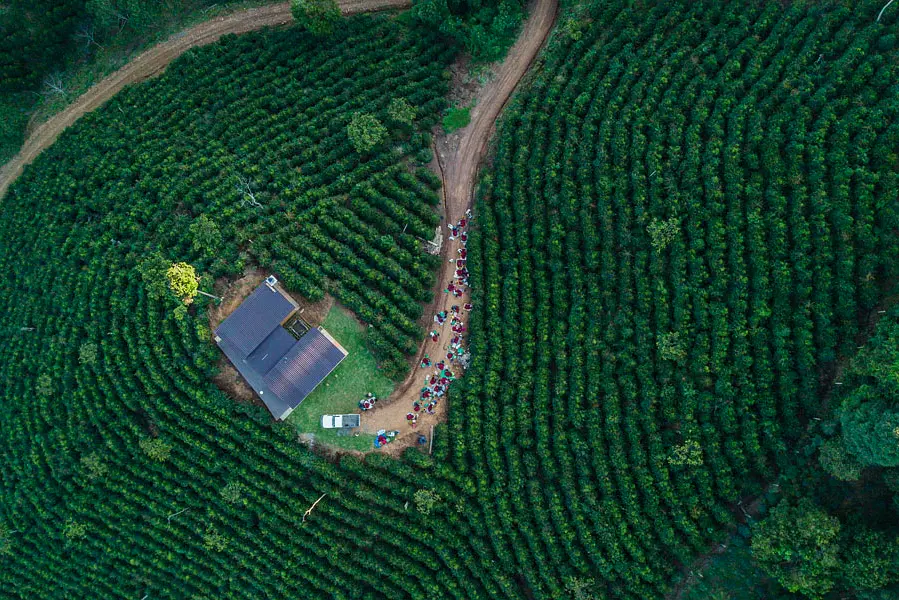
Catimor
This is a hybrid of Timor and Caturra, discovered in Portugal in 1959. It has a distinct and easily recognizable taste, with a bit of astringency amid bitterness and acidity, and a finish often accompanied by saltiness. It has high planting density, strong resistance to leaf rust, and is a high-yield variety. In the past, Latin America planted Catimor in large quantities under the advice of agricultural experts.
Processing Methods
Bolivian farmers mainly use the washed method to process green beans, and occasionally use natural or honey processing. It is worth mentioning that because Bolivia's climate is colder than that of most coffee-producing countries, many farmers choose machine drying rather than sun drying.
Tomorrow's Sun Project
The Tomorrow's Sun Project is an initiative to comprehensively improve Bolivian coffee. It requires substantial funding and effort to guide smallholders, covering key technical areas such as technical support, breeding, pruning, and harvesting, and purchases smallholders' coffee at relatively high prices, allowing farmers' income and quality to enter a virtuous cycle of sustainable operation.
COE
From the 1990s to the 2000s, development projects funded by foreign aid established coffee washing stations and provided farmers with training on properly harvesting and drying coffee so that only high-quality beans were selected, preventing fermentation and maintaining quality. These trainings allowed coffee farmers at the time to participate in the COE competition, but only between 2004 and 2009.
After 2009, Bolivia's COE competition was canceled because the Bolivian national government was strongly anti-American and did not want USAID to provide funding for more development programs in Bolivia, and afterward there was no other source of funding to support the COE program.
Bolivia Valliqi Estate Coco Natural Java
Coffee region: La Paz
Growing altitude: 1,600 meters
Coffee variety: Java
Processing method: Coco natural
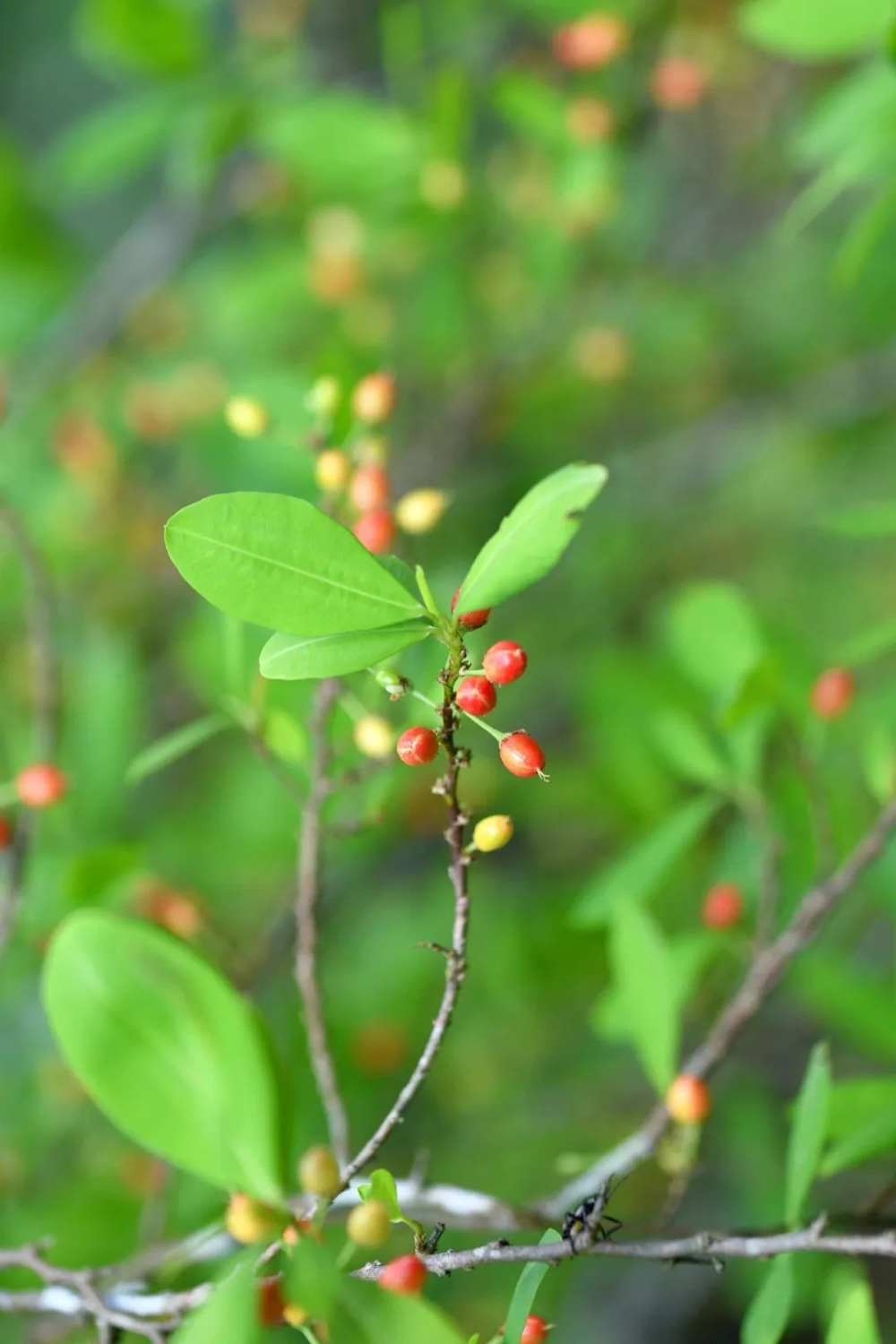
This Bolivian coffee bean comes from a small estate called Waliki. The name is inspired by a local greeting meaning "How is everything?", to which the answer is "All good" or "Hakuna Matata." Valliqi Estate is located in a dense, steep valley about 10 kilometers outside Caranavi in La Paz, Bolivia, in a colony called Bolinda.
The Bolinda colony was established 52 years ago and was once called Bolivia Linda or Beautiful Bolivia. Years later, the name was shortened to Bolinda, and today it is one of the larger settlements in the area.
Valliqi Estate is owned by the Rodriguez family. The family owns a family business called Agricafe, which both produces coffee from its own estate and purchases high-quality small-lot crops from small producers in the Yungas region.
Valliqi Estate covers 3.62 hectares at an altitude of 1,600 meters. The high altitude helps the coffee cherries mature slowly, and the slow ripening process increases the concentration of sugars in the fruit, making the coffee sweeter.
Valliqi Estate
As mentioned earlier, Bolivia does not place enough emphasis on coffee cultivation, resulting in scarce production. However, FrontStreet Coffee specifically selected this Java coffee bean from Valliqi Estate, partly because it values the uniqueness of the coffee variety, and partly because FrontStreet Coffee has seen the professionalism and dedication of the estate.
During the harvest season, the estate hires pickers from the Bolinda community to carefully select coffee cherries during picking. These pickers are trained to select only ripe cherries, and the estate picks in multiple passes during the harvest season to ensure the cherries are at optimal ripeness. The estate uses crates for transport, which avoids damaging the coffee in transit while maintaining air circulation to prevent unnecessary early fermentation. After selection and weighing, the coffee cherries are carefully washed and placed on raised African drying beds to dry, being turned once per hour. After about a week, the coffee cherries are then placed in a cocoa dryer.
FrontStreet Coffee found that the estate uses a cocoa dryer for coffee bean processing. The Rodriguez family has been innovating and experimenting with different processing techniques. They discovered that a cocoa dryer can dry coffee beans slowly and consistently at low temperatures, thereby reducing the impact of weather conditions. The coffee beans are placed in large steel drums at a temperature not exceeding 40°C for about 35 hours, being turned once every 30 minutes. After drying is completed, the coffee beans are transported to La Paz to rest, and then hulled at Agricafe's drying facility La Luna. The facility uses machinery for fine hulling and sorting, and in addition, manual sorting under ultraviolet and natural light is required.
Java Coffee Beans
Java coffee beans are locally called long beans in Bolivia because of their elongated shape, and their formal name is Java. Java is a very interesting bean variety. From the name, it clearly has a strong connection to Indonesia. But in fact, Java was originally a coffee tree species growing in the primitive forests of Ethiopia, collected by local ethnic groups, and later introduced to Indonesia through Yemen, where it was named Java. People originally generally thought Java was a variety of Typica, but after genetic comparison, it was found that Java actually originates from the Ethiopian coffee variety Abysinia.
After being introduced to Indonesia, the Java variety first spread to the nearby Timor island group, and then to Cameroon in East Africa, where it was first released for farmers to grow in 1980. As for its introduction to Central and South America, under the leadership of breeding expert Benoit Bertrand, it was introduced to Costa Rica in 1991 through CIRAD (the Centre de Cooperation Internationale en Recherche Agronomique pour le Développement). The first Central American country to officially recognize the Java variety was Panama.
Java's fruit and seeds are both very long, the young shoots are brass-colored, and the plant is quite tall, but yields are low. It has stronger resistance to leaf rust and coffee berry disease, making it very suitable for smallholder cultivation. Through cupping, FrontStreet Coffee found that this Java coffee bean, due to its outstanding flavor, is not inferior to Geisha.
Roast Curve
Brewing Parameters
Coffee dose: 15 grams
Ratio: 1/15
Water temperature: 90°C
Grind size: 80% passing through a 0.85 mm sieve
Dripper: Hario V60 #01
Brewing Process
First pour: 30 grams of water for a 30-second bloom
Second pour: pour 95 grams of water (scale reads 125 grams), finishing in about 1 minute 5 seconds
Third pour: pour 100 grams of water (scale reads 225 grams), finishing in about 1 minute 45 seconds
Extraction time: remove the dripper at 2 minutes to finish brewing
Brewing Flavor
Slight fermented note, grape, light nuttiness, floral aroma, medium acidity, juicy mouthfeel
The above content is compiled by CoffeeHunters, a coffee news website.


