








Venezuela Coffee Production and South American Flavor Gaps
Brazil and Bolivia both grow coffee in South America, yet the cups differ. Brazil produces softer beans with nut, cocoa and brown sugar sweetness, while Bolivia, at higher altitude and with smaller output, shows deep sweetness and berry notes. The comparison walks through cultivation history, variety traits and a hand-brewed side-by-side of Brazil Cerrado Red Bourbon against Bolivia Java.
Brazil borders ten countries, including Venezuela, and drought in recent seasons has cut yields in some regions by 30 to 50 percent, with a few estates reporting total loss. That damage is expected to lift Brazilian bean prices. Brazil has roughly 3.97 billion coffee trees, and smallholders now account for about 75 percent of national output, so altitude and variety remain the clearest explanations for the flavor gap.
Brazil and Bolivia are both coffee-producing countries in South America, but the coffee flavors of the two countries each have their own merits. As the "giant" of the coffee world, Brazil has huge production, softer beans, and flavors dominated by nuts, cocoa, and brown sugar sweetness; while Bolivia, although limited in production, presents deep sweetness and berry notes due to its high altitude and unique varieties. In this article, Front Street Coffee will take you through the cultivation history and variety characteristics of the two countries' coffee, and through hand-brewed comparison, analyze the flavor differences between Brazil Cerrado Red Bourbon and Bolivia Java coffee beans, helping you gain a deeper understanding of the impact of altitude and variety on coffee taste.
For more specialty coffee knowledge, please follow the WeChat public account: Front Street Coffee (FrontStreet Coffee)
Brazil borders ten countries: Uruguay, Argentina, Paraguay, Bolivia, Peru, Colombia, Venezuela, Guyana, Suriname, and French Guiana. Everyone has probably heard a little about neighboring Bolivia's coffee, so will Brazilian coffee beans and Bolivian coffee beans have similar flavors? In this article, Front Street will compare the flavor characteristics of coffee beans from the two producing countries.
2020 Latest news from Brazil's coffee-producing regions!! According to a report cited by Coffee Finance Network, Brazil's drought weather in recent years may cause major losses to Brazilian coffee production. In many regions, this proportion has reached 50%. Although it is still impossible to estimate the specific output of Brazilian Arabica coffee next year, at the estates I visited, some places may suffer 30% damage, some places 50%, and some places as high as 100%. This drought in Brazil will affect the price of Brazilian coffee beans in 2021.
Those Things About Brazilian Coffee
Brazil is vividly compared to the "giant" and "monarch" of the coffee world. There are about 3.97 billion coffee trees there, and coffee planted by small farmers now accounts for 75% of the country's total output. Brazil has twice or even three times as many people engaged in coffee production as Colombia, and Colombia is the world's second-largest coffee producer. Unlike before, Brazil's economy now relies less on coffee, and Brazilian coffee accounts for only 8% to 10% of GDP. Before World War II, Brazil's total coffee production accounted for 50% or more of the world's total, and now it is close to 30%, but the country's influence on global coffee, especially on coffee prices, is decisive. For example, the two frosts in 1994 once caused global coffee prices to soar.
Since the opening of the free market in 1990, the former "Brazilian Coffee Institute" (IBC) has been replaced by the country's non-investment administrative agency, the National Economic Association, which pursues a policy of non-interference and allows producers to negotiate directly with exporters. The business activities of exporters are supervised by government legislation, and relevant departments register legal exporters. The vast majority of Brazilian coffee is unwashed and sun-dried, and it is classified according to the state of origin and the port of shipment. Brazil has 21 states, and 17 states produce coffee, but 4 of them have the largest output, together accounting for 98% of the country's total output. They are: Parana, Sao Paulo, Minas Gerais, and Espirito Santo. The southern state of Parana has the most astonishing output, accounting for 50% of the total output.
Those Things About Bolivian Coffee
Coffee cultivation in Bolivia can be said to have a long history. In the past, coffee trees in Bolivia were often planted around gardens as hedges, serving as ornamental flowers and trees. Real commercial production began only in the early 1950s. The great frost of 1957 severely damaged Brazil's coffee industry, while Bolivia benefited from it and developed rapidly. At that time, production basically operated in the mode of large farms. In the subsequent period from 1932 to 1983, Bolivia suffered internal and external troubles and political turmoil, causing the coffee planting industry to stagnate or even regress. In 1991, after stabilization, the Bolivian government, in order to revitalize the national economy, encouraged indigenous people to join coffee planting programs, but at that time it did not pay attention to coffee quality. Due to poor national infrastructure, transportation difficulties restricted the development of the Victoria coffee industry.
Bolivia's famous Yungas is located in the Andean foothills directly east of La Paz and is a rugged agricultural production area. The roads leading to Yungas are rough and dangerous, making it difficult to transport coffee out. Although this region is rich in coffee, the facilities for processing green coffee beans are very backward, resulting in the coffee cherries produced in Yungas needing to be transported to areas even higher than the Yungas production area for green bean processing. Because the mountains are steep and the roads wind repeatedly, the transportation time is long, which also leads to the coffee cherries not being well stored during transportation and being prone to rot and mold. The rot and mold of one cherry can be said to affect more than half of the cherries, so very few cherries can finally become coffee beans, which also leads to the reason why Bolivian coffee beans are expensive. Flavor of Brazilian Coffee Beans Brazil has low altitude, and the cultivation altitude of Brazilian coffee is only 900-1100m. Front Street often says that only in high-altitude places will coffee beans have better flavor and hardness. At the same time, the terrain is flat, lacking microclimates, and coffee trees are still cultivated using the sun-drying method. Brazilian coffee beans that have not been well cared for have grown into the soft bean texture unique to Brazil. Front Street Coffee (FrontStreet Coffee), through cupping Brazilian coffee beans from different producing regions, believes that Brazilian coffee beans have low acidity, with nut and cocoa flavors relatively obvious, and because the planted coffee is Bourbon, the beans have obvious sweetness, with a brown-sugar-like sweetness.
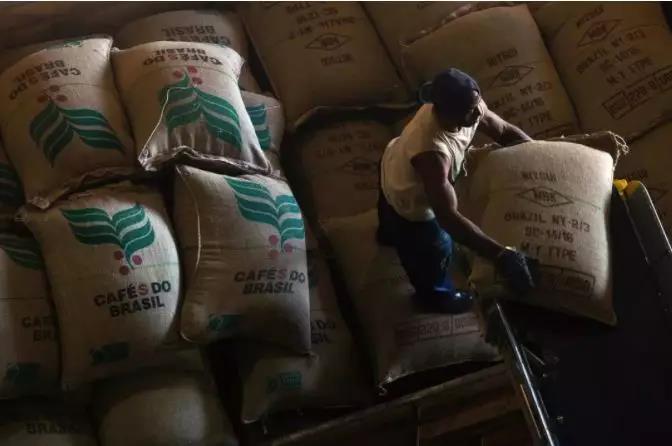
Front Street Brazil Cerrado Natural Red Bourbon Coffee Beans Region: Brazil, South Minas Altitude: 1000m Variety: Red Bourbon Processing Method: Semi-washed processing
Flavor of Bolivian Coffee Beans
The altitude of the Yungas production area is as high as 2500m. Front Street believes that coffee produced in this production area usually has a deep and full sweetness, soft citrus acidity, and rising and falling black fruit and berry flavors. Compared with coffee produced at lower altitudes elsewhere in Bolivia, it shows a balanced taste, excellent chocolate sweetness, soft acidity, and malt and dried fruit flavors.
Front Street Bolivia Java Coffee Beans Region: La Paz, Waliki Estate Altitude: 1600m Variety: Java Processing Method: Cocoa natural
From the above description of coffee flavors, it becomes even clearer how important altitude is to the expression of coffee flavor!!! Of course, the premise is that the planted coffee variety must also be an Arabica coffee bean variety.
Brazilian Coffee Bean Varieties
Bourbon is a secondary variety produced by a mutation of Typica. Together with Typica, it belongs to the oldest existing coffee varieties. The green fruit turns bright red when ripe. Bourbon planted at high altitude usually has better aroma, while the acidity is relatively bright, and it even tastes somewhat like red wine. Bourbon planted at low altitude gives play to its sweetness advantage, bringing coffee beans a clear brown-sugar-like sweetness.
Bolivian Coffee Bean Varieties Locally in Bolivia, it is called the long-shaped bean, named for its long bean appearance. Its formal name should be Java. Java is a very interesting bean variety. At first, everyone generally thought that Java was a variety of Typica, but after genetic comparison, it was found that Java is actually a coffee variety from Ethiopia, Abysinia. Java's fruit and seeds are both very long, the young buds are brass-colored, and the plant is quite tall, but the yield is low. Because of its outstanding flavor, not inferior to Geisha, and its stronger resistance to leaf rust and coffee berry disease, it is very suitable for smallholder cultivation.
Front Street Coffee (FrontStreet Coffee) Brewing Comparison In order to make the comparison meaningful, Front Street Coffee (FrontStreet Coffee) uniformly uses the Kono dripper for brewing. The short-rib design of the Kono dripper slows the flow rate during the extraction process, thereby achieving an immersion extraction process and enhancing the coffee's body. Because there is an immersion extraction process, the brewing water temperature should not be too high. Front Street Coffee (FrontStreet Coffee) this time used water at 89 degrees Celsius for brewing. The coffee-to-water ratio is 1:15, and the grind size used is medium-coarse (coarse sugar size).
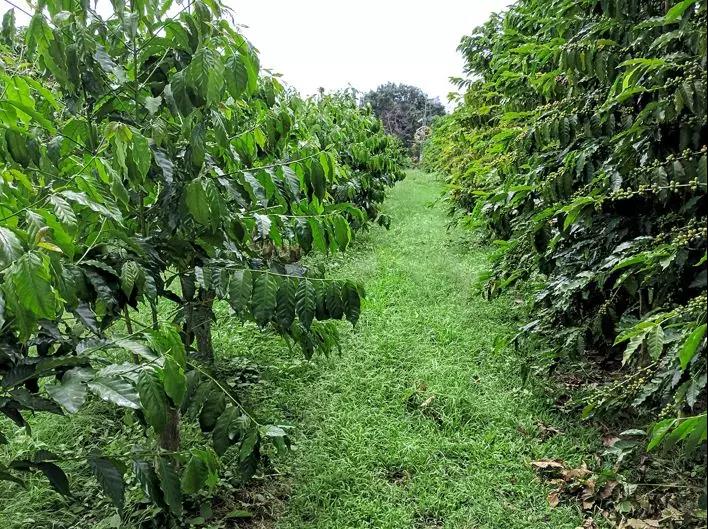
Front Street Coffee (FrontStreet Coffee) staged extraction method: first use 30g of water to fully wet the coffee bed into a "hamburger" shape and bloom for 30s (if you do not see the "hamburger" shape, we should note that the coffee beans are not fresh enough / the grind is too coarse); then proceed to the second stage of brewing. In the second stage, when the timer reaches 54s, pour water until it reaches 125g, then stop and wait for the water level to drop to 2/3 of the coffee bed before pouring the third stage (this stage of brewing is to extract the sweet and sour flavor substances in the coffee grounds); in the third stage, when the timer reaches 1'40", pour water until it reaches 225g, and the total extraction time is 2'10". (This stage is to extract the mellow flavor substances in the coffee grounds.) After the coffee extraction is completed, shake gently, and wait until the coffee liquid is fully uniform before tasting.
Front Street Brazil Cerrado Red Bourbon Coffee Bean Brewing Flavor: There is an obvious sweetness on the palate, accompanied by a faint lemon aroma, containing rich nutty flavors, and the finish shows obvious dark chocolate notes, with an overall relatively rounded feeling.
Front Street Bolivia Java Coffee Bean Brewing Flavor: At high temperature there is a slight fermented feeling, the sweet and sour taste of grapes, and after slowly cooling, nut and white flower aromas can be felt. The coffee has overall medium acidity and a juicy mouthfeel.
The above content is compiled by CoffeeHunters, a coffee news website.


