







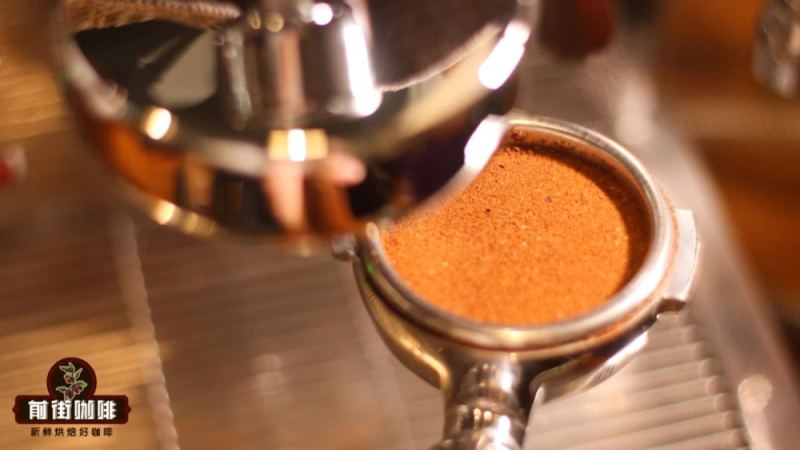
Many coffee enthusiasts who make espresso at home often run into problems like fast flow, thin crema, and weak flavor—and the root cause is often an improperly set grind size. Starting with how to choose fresh coffee beans and the right type of grinder, this article explains in detail how flat burr grinders work, along with their pros and cons, and offers a method for judging grind size based on the golden ratio and golden time. It also shares Front Street Coffee's espresso extraction parameters and the flavor performance of their classic espresso blend, helping readers systematically grasp the approach and techniques for adjusting grind size.
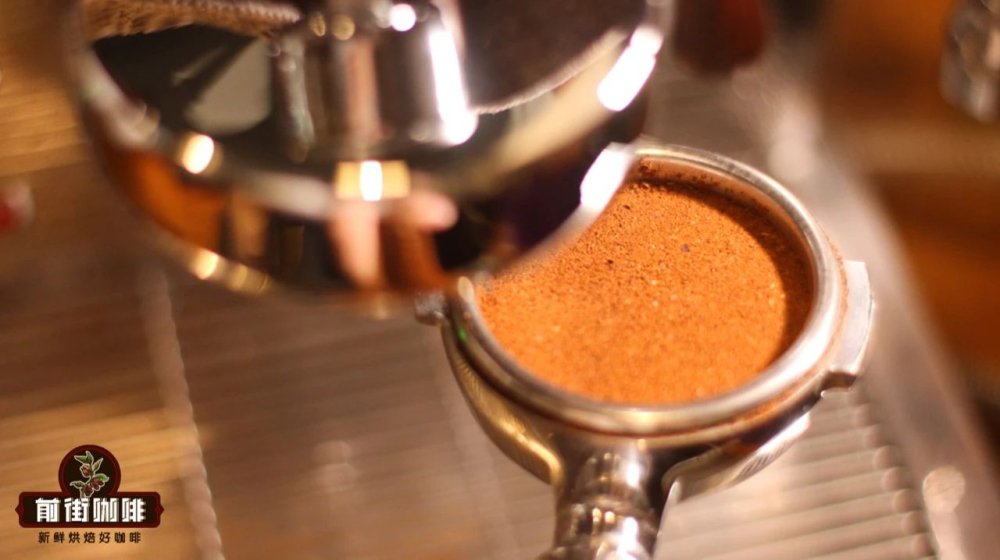
For more specialty coffee knowledge, please follow: Front Street Coffee (Frontsteet Coffee) Quite a few friends have reported that after buying an espresso blend and grinding and extracting it, they simply can't get any crema, and the resulting espresso is as bland as water. When this happens, Front Street's baristas usually suggest starting by checking the grind size. This article will discuss how to determine the grind size suitable for espresso.
Before adjusting the grind size, the first step is to make sure the espresso beans on hand are freshly roasted. When purchasing, prioritize specialty roasters that clearly label the roast date (rather than a best-by or shelf-life date), have a good brand reputation, and focus on fresh roasting.
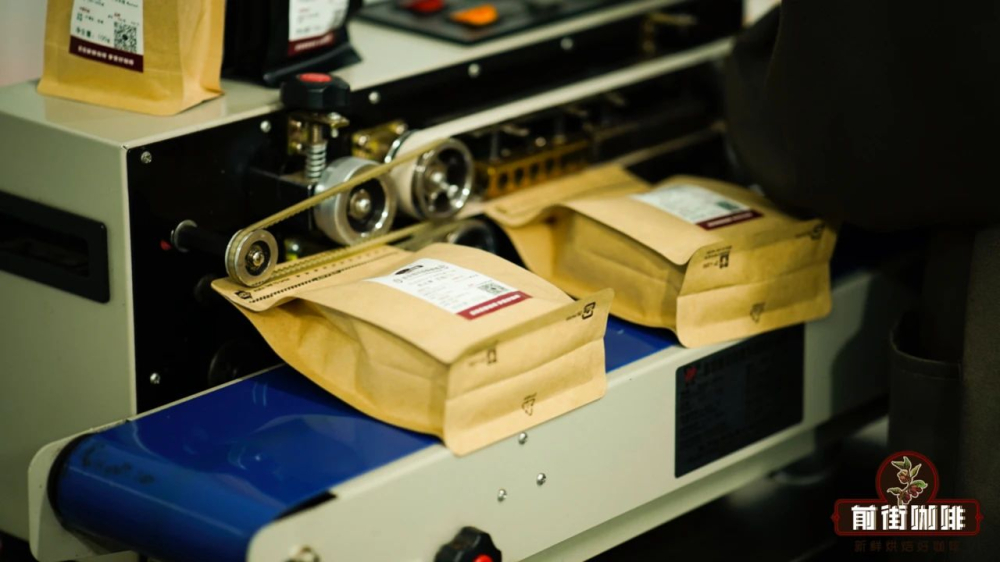
In addition, a quality coffee bag will generally be equipped with a one-way degassing valve—that little button-like hole near the top of the bag—whose purpose is to let the carbon dioxide released by the coffee beans escape smoothly. Bring the valve close to your nose, gently squeeze the bag, and sniff the gas being released: if it gives off a rich, enticing coffee aroma, the freshness is fine; if the smell is flat or even has a rancid, oily stench, then the bag of beans has long gone bad and is not recommended for purchase. Every bag of coffee beans produced by Front Street Coffee (FrontStreet Coffee) uses packaging with a one-way degassing valve, ensuring it is still in peak freshness when it reaches the consumer. Choose a grinder that can grind espresso coffee grounds For commercial settings, you can directly buy an espresso-specific grinder. The core advantages of this type of equipment are extremely fine grinding, fast output, and large burrs—and uniformity is the key hard metric for measuring grinder performance, which ordinary grinders often cannot reach the extremely fine grinding level required by espresso machines. If it's for home use and you want espresso-grade fine grounds, it's recommended to choose a flat burr grinder. Front Street Coffee (FrontStreet Coffee) currently uses a Feima 600N flat burr grinder to grind espresso coffee grounds.
Why does Front Street recommend flat burr grinders? First, let's look at how a flat burr grinder works: it consists of two burrs, upper and lower, with the base fixed to the motor; when the motor starts, it drives the upper and lower burrs to produce a cutting motion. When coffee particles fall from the center, the rotating lower burr flings the beans outward and then pushes them into the toothed burr area for grinding. Because the upper and lower burrs are arranged in parallel, the coffee beans must rely on the force generated by the rotation of the lower burr to be pushed into the burrs, so the weight of the beans above affects how evenly the beans feed in, which in turn affects grind uniformity; at the same time, the number of collisions between beans due to pushing and squeezing increases, and the proportion of fines rises accordingly. This is the common reason why flat burr grinders have slightly poorer particle uniformity and more fines. However, they can quickly raise the coffee liquid's concentration and extraction yield in a short time, allowing aromas to be released rapidly.
The advantage of flat burr grinders lies in their clear positioning, with output quality proportional to the machine's grade and the burr diameter; the shortcoming is slightly poorer particle uniformity and more fines. Because flat burrs cut the coffee beans arbitrarily, it's easy to cause under-extraction or over-extraction during brewing; in addition, the friction of flat burrs generates heat, especially after long periods of continuous operation, which brings out noticeable burnt and bitter flavors. What is the grinding principle of a coffee grinder? After coffee beans enter the grinder, the internal blades crush them into powder. The smaller the gap between the blades, the finer the ground particles. The finer and denser the particles, the harder it is for water to pass through, and the extraction time is greatly prolonged. Conversely, as the blade gap increases, the particles become coarser, water penetrates more easily, and the extraction speed becomes faster.
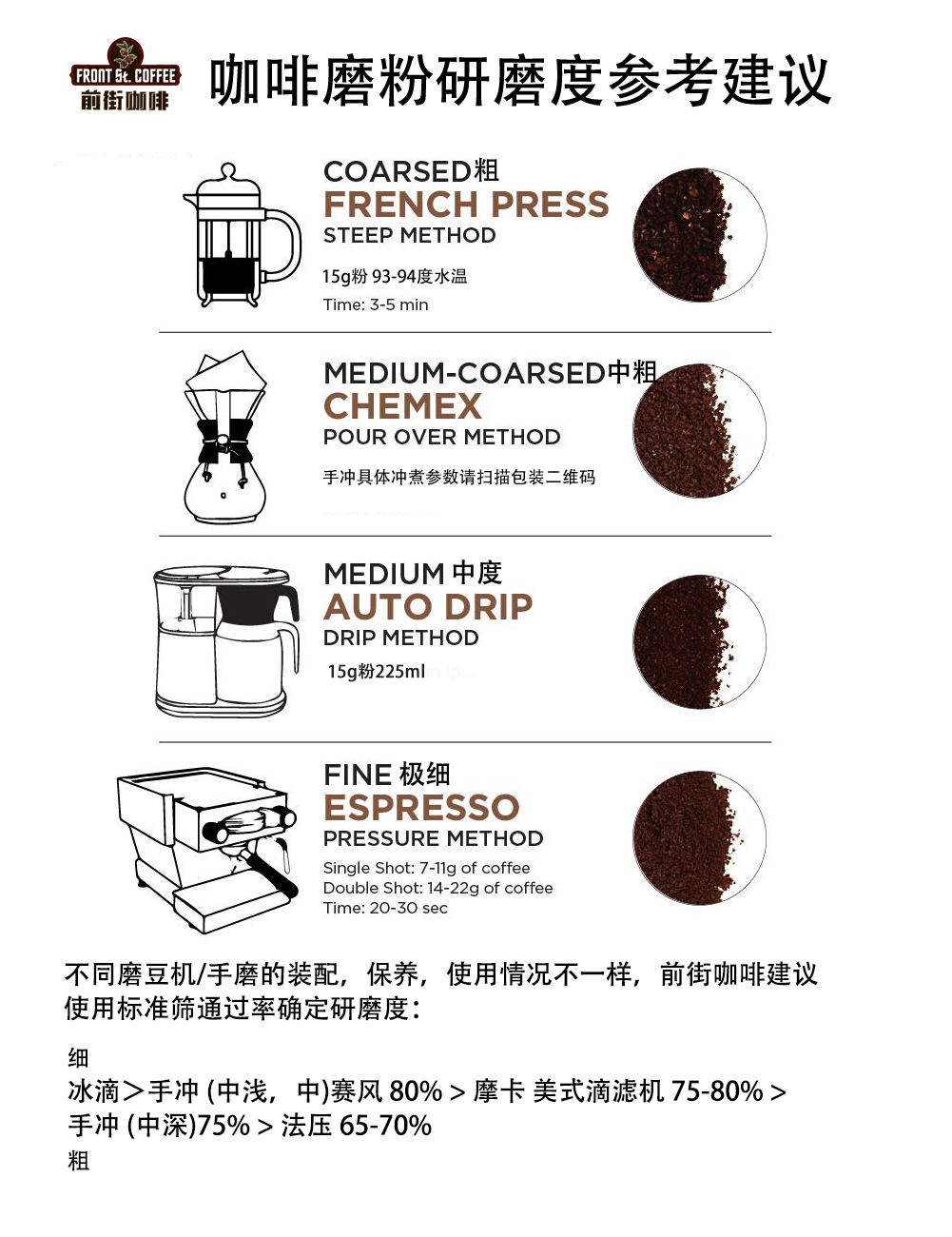
How to find the grind size that suits your espresso machine? When Front Street adjusts grind size, it first sets baseline parameters using the golden ratio and golden time for espresso extraction: a coffee-to-liquid ratio of 1:2 (20g of coffee extracting 40ml of coffee liquid), with extraction time controlled at 25 to 28 seconds, and then combines observation and tasting to judge whether the grind size needs fine-tuning. If the grind is too coarse, water will pass through the portafilter too quickly, the stream will be thick, extraction will be shallow, the crema will be pale, and the flavor will be sharp and sour, because extraction is incomplete and only the surface and easily soluble acidic substances have been brought out. If the grind is too fine, it will clog the filter holes, water won't come out or the stream will be extremely thin, the crema will be dark, the surface will be over-extracted while the interior is under-extracted, showing sharp acidity because sweetness is missing, followed by burnt bitterness and off-flavors.
If you want to verify more rigorously whether this espresso meets the standard, you can first calibrate with a concentration tester; the vast majority of espresso falls in the 7%–12% concentration range. Zero it with pure water as a baseline. Then stir the extracted pour-over coffee, use a titration tube to extract the coffee liquid, place it in the concentration tester, press the measurement button, and measure repeatedly until the reading stabilizes. Front Street Coffee (FrontStreet Coffee)'s espresso extraction parameters To make espresso, use Front Street's classic espresso blend. This recipe is composed of three origins—Brazil, Indonesia, and Vietnam—so it combines the caramel sweetness of American coffee with the wild character of Asian coffee. To maximize the coffee's rich, full-bodied aroma and let everyone easily extract abundant, dense crema, Front Street Coffee uses a dark roast. It works well whether made into an Americano diluted with water or a latte paired with milk. You can place an order at Front Street's Taobao store or Front Street's Tmall flagship store.
Front Street espresso extraction parameters: Grinder: Galileo Q18 Grind size: 2.0 setting Pressure: 10 bar Temperature: 94°C Time: 25–30 s Dose: 20g (double espresso)
Extraction yield: 40ml Extracted espresso flavor: smooth mouthfeel, medium body, with a clear chocolate aroma and a faint caramel note on the nose, on the palate it has a silky texture like nutty cookies, and the flavor is very rich.
The above content is compiled by CoffeeHunters, a coffee news website.


