







How Do Sumatra Coffee Farms Shape Mandheling?
Mandheling comes from Sumatra, Indonesia, and is known for full-bodied layers of pine, herbs, spices, caramel and dark chocolate after a deep roast. Its name, the Sumatran terroir and the wet-hulling process together create the recognizable Mandheling taste, and Golden Mandheling adds strict screening and authentic labeling standards on top of the regular grade.
Indonesian coffee farming dates to 1696 and remains dominated by smallholder coffee farms using mostly organic cultivation with manual harvesting and sorting. Arabica grows mainly in northern Sumatra, Sulawesi and Java's highlands, and accounts for only about one-tenth of national output, yet Mandheling, Golden Mandheling, Sulawesi and Aged Mandheling have kept the origin prominent in specialty circles for decades.
Mandheling is one of Asia's signature coffees and a classic symbol of full-bodied flavor. It originates from Sumatra, Indonesia, and has long been favored by coffee lovers for its deep-roasted layers of pine, herbs, spices, caramel, and dark chocolate. This article will trace the origin of the name Mandheling, the terroir of the Sumatra region, and how the unique wet-hulling process shapes the iconic "Mandheling taste"; it will also explain in detail the difference between Mandheling and Golden Mandheling, including PWN's strict screening standards and authentic labeling. Front Street will also share cupping performance and practical brewing steps for drip bag coffee, helping you fully understand this legendary coffee, from an entry-level daily bean to specialty grade.
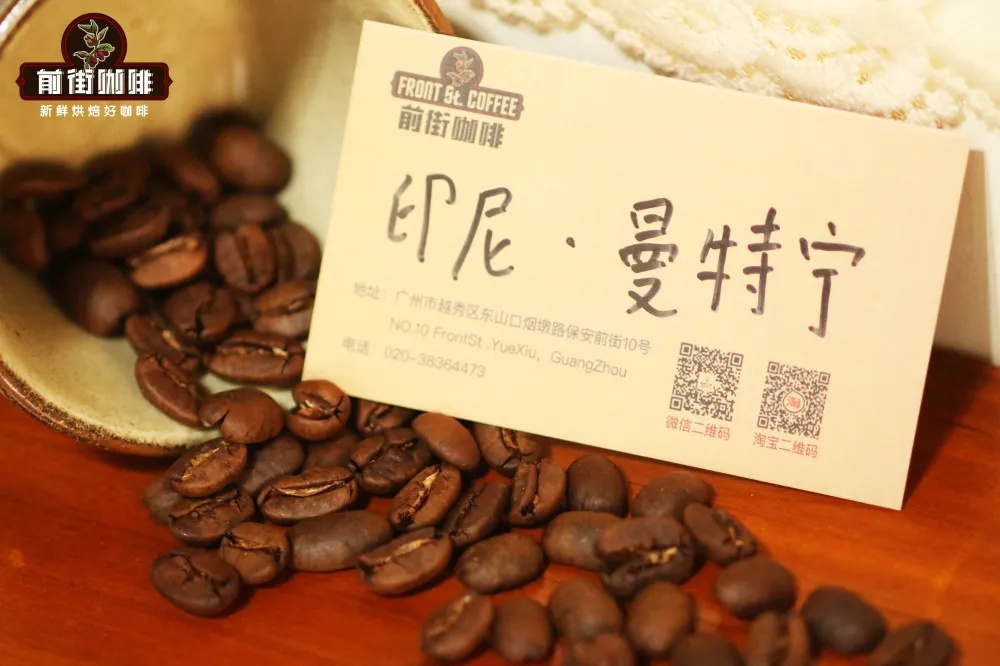
When it comes to Asian coffee, the first thing that often comes to mind at Front Street is Sumatra Mandheling. It was not only one of the few high-quality categories that stood out in the last century, but has also become almost synonymous with a full-bodied mouthfeel. After deep roasting, this bean often shows the quiet aromas of pine and herbs, the rich sweetness of spices and caramel, and a finish reminiscent of dark chocolate, with quite rich layers, which is why it has won many loyal fans. Next, Front Street will guide everyone through a closer look at this once enormously popular "top-tier coffee" and see where its unique character comes from.
The Origin Story of Mandheling Coffee
Indonesia has long been known as the "Country of a Thousand Islands," and its coffee-growing history can be traced back to 1696. After more than three hundred years of evolution, local coffee production is still dominated by smallholder farmers, mostly using organic cultivation and relying on manual harvesting and sorting to ensure quality. Coffee farms are scattered across Indonesia's islands, and different geographical environments give coffee different flavor profiles. Elegant Arabica is mainly grown in northern Sumatra, Sulawesi, and the high-altitude areas of Java. Although production accounts for only about one-tenth of Indonesia's total coffee output, outstanding reputations such as Mandheling, Golden Mandheling, Sulawesi coffee, and Aged Mandheling have kept Indonesian coffee famous in the specialty circle for decades.
Indonesian coffee first began on Java, but today the focus of cultivation has shifted to other islands. Sumatra, Bali, and Sulawesi, which we often hear about, are all important coffee-producing regions. Sumatra coffee is something of a legend in the coffee world and is one of the earliest places in the world to grow coffee on a large scale. The vast majority comes from Aceh Province in the north and North Sumatra Province (North Sumatra for short) south of Aceh. These two main producing areas are distributed around well-known local volcanic lakes, namely Lake Toba and Lake Tawar, and are traditionally called the Lintong producing area and the Aceh producing area. Volcanoes have brought fertile soil to Sumatra, and the coffee produced here usually carries aromas of cream, chocolate, and earth. It was discovered and favored by the Japanese many years ago.
According to Front Street's understanding, the name "Mandheling" is a transliteration of the English word "Mandheling." It is said that during World War II, when Japan occupied Indonesia, a Japanese soldier drank a cup of extremely rich and aromatic coffee in a coffee shop and asked the owner the name of the coffee. The owner mistakenly thought he was asking where he was from, so he answered: "mandheling (Mandailing people)." After the war ended, the soldier returned home and remembered that the delicious coffee from back then seemed to be called "Mandheling." In 1968, a Japanese businessman visited the Indonesian company N.V. Pawani Medan company and imported 15,000 kilograms of Sumatra Mandheling coffee. After being launched on the Japanese market, it became very popular. Since then, Mandheling coffee and Pawani Coffee Company became famous, and later people collectively referred to Arabica beans produced in Sumatra as Mandheling coffee.
Why Is Sumatra Mandheling Coffee Famous?
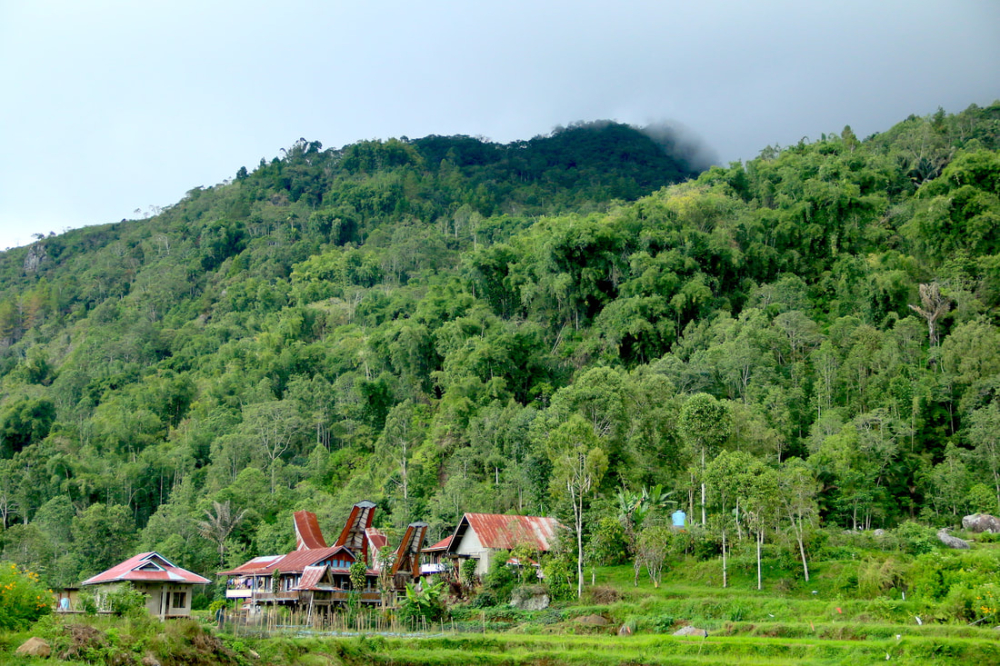
Sumatra has a tropical rainforest climate, with frequent rainfall throughout the year and relatively high air temperature and humidity. Here, coffee is mainly grown on slopes at altitudes of 1,200 to 1,800 meters, widely using organic cultivation. Combined with a long history of cultivation, this makes the quality and yield of local coffee relatively ideal. In addition, volcanoes also provide Sumatra with fertile planting soil, giving the coffee beans here a flavor profile that often includes spices, chocolate, herbs, and wood, along with a full-bodied yet smooth mouthfeel.
Wet hulling is the most common green bean processing method in Indonesia, and its emergence was actually forced by the local weather. Indonesia's humidity throughout the year is between 70% and 90%, typhoons can arrive at any time, and annual rainfall even exceeds 2,000 mm. Such harsh climatic conditions make it impossible to carry out two to three weeks of sun-drying as in Africa, while washed processing is not only time-consuming but also more costly in labor and water consumption, which Indonesia, aiming for mass production, simply cannot afford. So locals developed a unique semi-washed method—wet hulling.
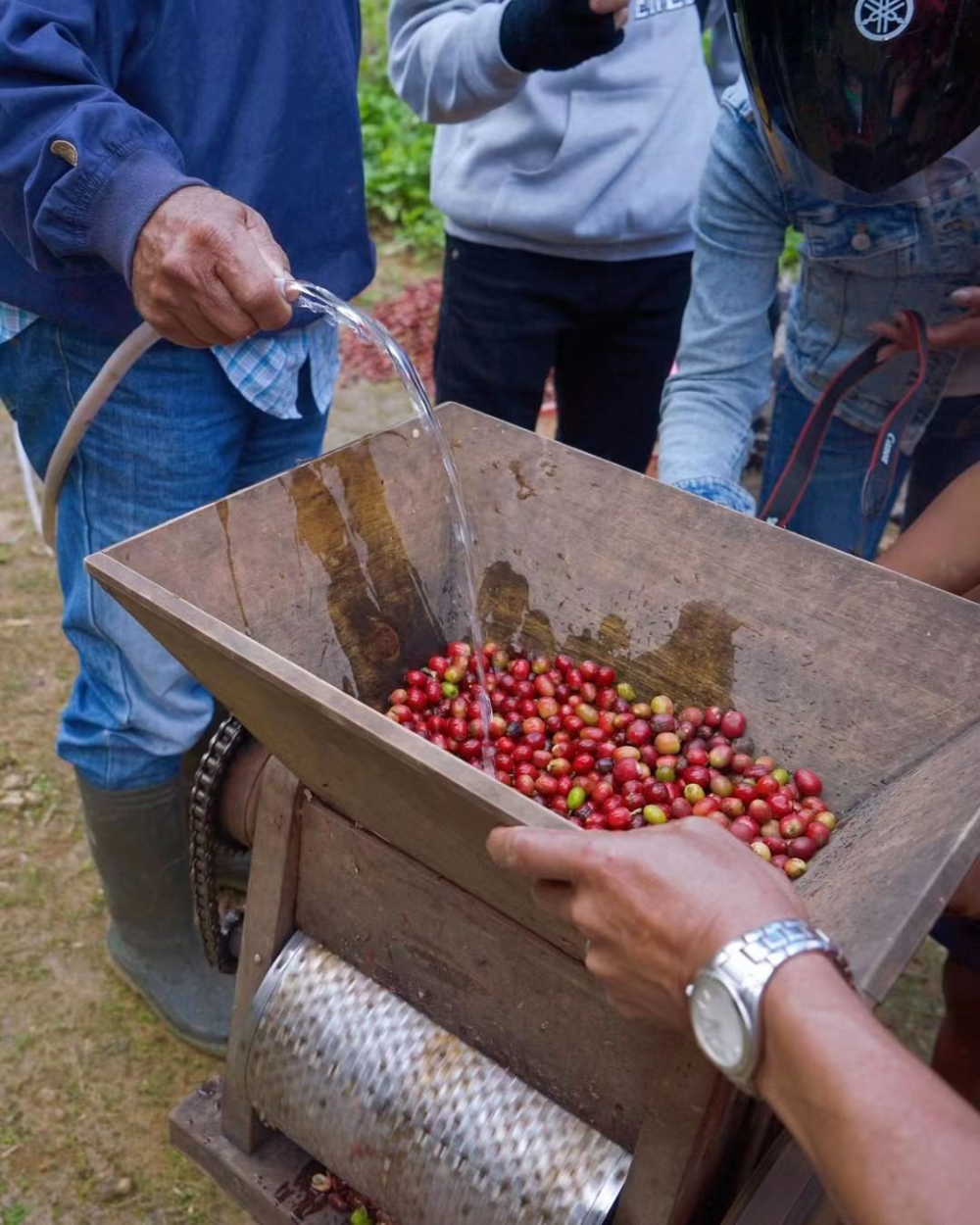
Coffee cherries with the skin and pulp removed are poured directly into a pool for a short fermentation of a few hours. At this point, a small amount of mucilage still remains on the parchment. The mucilage is removed by scrubbing. Then the parchment beans are dried. The first drying only needs to reach a moisture content of 30% to 40%, about two to three days, after which the coffee farmers sell the green beans to collectors. The collectors directly hull the semi-dry parchment beans they buy by machine to obtain the innermost green beans.
Because the hulling machine uses relatively strong friction, it tears open the parchment layer clinging tightly to the green beans. At this stage, white or green viscous liquid usually flows out. After long soaking in mucilage and the influence of a humid environment, the green beans eventually become soft, pale, and swollen, forming a gray-green color. Under the friction and stirring, the green beans are also more likely to be crushed or damaged, especially at both ends, forming small gaps and causing peaberry-like defects. The "naked beans" with the parchment layer removed dry very quickly, while also being directly exposed to the humid environment and the growth of various microorganisms, giving the coffee its unique woody, spicy, and herbal notes, which is what we call the "Mandheling taste."
I believe some friends are already curious about what this Southeast Asian flavor is really like. If you have not yet tasted Mandheling coffee, Front Street suggests starting with a small-package, wet-hulled Lintong Mandheling daily bean. It presents the classic Mandheling flavor and is convenient for trying at home. If you are a "veteran coffee drinker" who wants to taste the excellent aroma of Mandheling, Front Street believes specialty-grade Golden Mandheling is just perfect.
What Is the Difference Between Mandheling and Golden Mandheling?
As Front Street mentioned at the beginning, Mandheling's rise to fame came from Pawani Coffee Company (PWN for short) successfully bringing Mandheling to the Japanese market. The first person to export the first batch of Mandheling coffee beans to Japan was the coffee shop owner in the story. He discovered the business opportunity in Mandheling coffee and therefore founded PWN Pawani Coffee Company in 1957. Pawani mainly purchases local higher-quality coffee lots and has established a strict multiple screening system to ensure that the coffee beans sold are neat and uniform, and large and plump.
Pawani is a trading company engaged in export business, founded by an overseas Chinese family from Quanzhou, Fujian, and located in Medan, an important port in Sumatra. It began export operations in 1957, dealing in products such as rubber, cassia seed, cloves, and patchouli oil, and of course also exporting Sumatra coffee beans to Japan. Unlike many local Indonesian green bean traders, PWN is the exclusive supplier of Golden Mandheling coffee and has contracted Sumatra's best coffee-producing regions, with all Mandheling beans produced being top-grade.
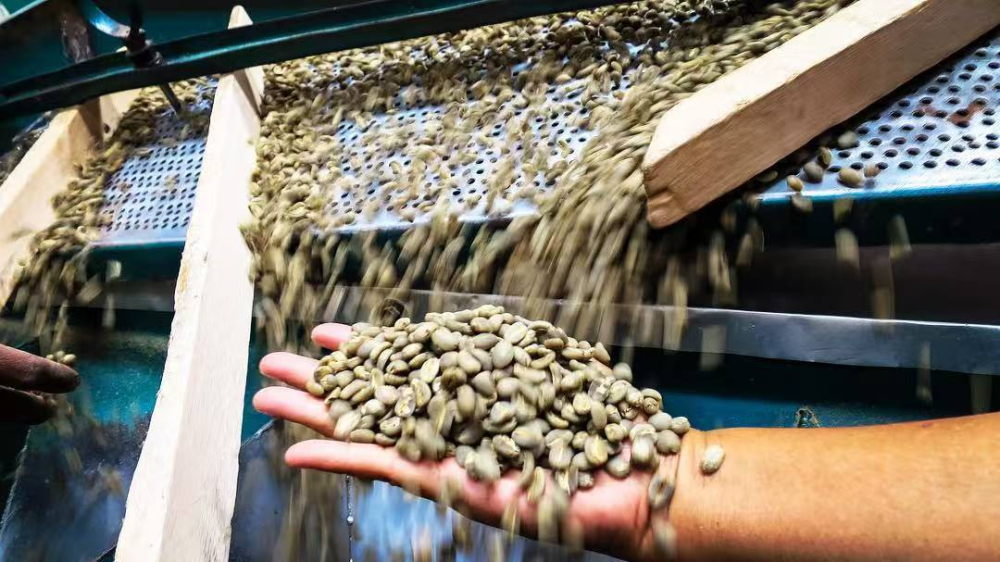
Wet hulling saves a great deal of time and labor costs in green bean processing; however, the rapid process also brings a higher defect rate, so only strict hand sorting can remove defects that machines cannot screen out. PWN gives the purchased Mandheling green beans one machine sorting plus three hand sortings, and the quality is far higher than Indonesia's local highest G1 grade. Meeting Front Street's PWN Golden Mandheling production standards requires satisfying the following points:
1. Green bean screen size: first hand sorting of 18-19 mesh and above
2. Fewer than 3 defective beans in a 300-gram green bean sample
3. Green coffee bean grade is G1
4. Darker green in color, uniform in size, neat in shape
As the specialty Mandheling coffee market grew larger, PWN also realized the importance of trademarks and registered the English name "Golden Mandheling" as an exclusive trademark one step ahead of the Japanese. Therefore, only Golden Mandheling produced by PWN can be considered truly "Golden Mandheling," while that produced by the Japanese can only be renamed "Dingshang Mandheling." The Golden Mandheling obtained by Front Street is of course the authentic product from PWN. Everyone can identify authentic Golden Mandheling by the green bean sack bearing the PWN mark and a certificate of origin signed by PWN. Front Street displays these two identifiers in the Dongshankou store.
Observing the green bean sack of Golden Mandheling, we can see the words "Triple pick" and "GRADE 1," meaning it belongs to Indonesia's highest grade of green beans. During production, PWN conducted three hand sortings on the basis of purchased GRADE 1 green beans.
Before launching a coffee bean, Front Street tastes it in the form of cupping. Cupping is an evaluation of coffee bean quality and flavor. A unified standard can more objectively identify the advantages and disadvantages of the flavors presented by the beans, as well as their characteristics. After cupping at Front Street, the Lintong Mandheling daily bean shows a rich nutty tone, with a hint of melon aroma in the aftertaste. As the temperature drops, herbal notes appear, the mouthfeel is full-bodied, and the aroma is saturated. Front Street PWN Golden Mandheling not only has the aromas of dark chocolate, nuts, and caramel, but also the flavors of herbal spices and pine, the sweet finish of dark chocolate, a full aftertaste, and high cleanliness. As the temperature drops, it carries gentle fruit acidity.
How Many Times Should You Pour Water When Brewing Mandheling Drip Bag Coffee?
For the love of Mandheling, many customers prefer the convenient and quick drip bag coffee. However, because drip bag coffee needs to be ground in advance, the coffee grounds have more contact area with air than whole beans, and the aroma is more likely to be lost. Therefore, Front Street suggests choosing freshly roasted Blue Mountain No. 1 coffee beans for preparation, so that the brewed coffee has a fuller aroma. Front Street hopes every guest can taste the refined flavors in coffee, so it only ships coffee beans freshly roasted within 5 days, and when customers receive them, they are still within the best-tasting period. If you need pre-grinding or drip bag production, just contact Front Street customer service.
Many customers have reported that after buying drip bags, no matter what they do at home, they cannot brew out the flavors described above, so they ask Front Street what exactly is going on. Everyone knows that whether a cup of coffee tastes good is largely related to factors such as the freshness of the coffee beans, parameters, and brewing technique. If we confirm that there is no problem with the beans, and the grind size has already been fixed, then if the drip bag coffee does not taste good, the problem is usually the water temperature and technique.
Before brewing, Front Street first boils water and prepares a pouring kettle, a coffee cup, and a packet of your favorite drip bag coffee. Front Street's drip bag coffee packets are made at 10 grams per packet. Excluding the water absorbed by the coffee grounds themselves, each packet can brew about one cup of 120–130 ml of coffee liquid.
First, boil the water in the kettle and find a taller coffee cup, such as the mug that Front Street likes very much.
Next, tear open the sealed outer packaging, take out the coffee drip bag, tear open the non-woven bag along the dotted line above, pull apart the two ears, gently shake so that the coffee grounds inside the drip bag gather at the bottom, and then hang them on the edge of the cup.
For the first stage, pour in a small amount of hot water first to wet all the coffee grounds, and wait about 10–20 seconds to let it bloom for a while, helping release the gas in the coffee grounds, with the aim of making the later extraction more stable.
For the second stage, pour steadily in a small stream until the drip bag is almost full, then wait for the coffee liquid to drop. After all the coffee liquid has flowed through, pour the final stage of water, again filling the filter bag. Front Street has measured that the total amount of water poured at this time is about 150 g, so no electronic scale is needed throughout the process. When all the coffee liquid has finished dripping, extraction is complete.
Before drinking, Front Street gently swirls the coffee liquid to mix it evenly, then drinks it directly to taste the pure flavor of black coffee.
The above content is compiled by CoffeeHunters, a coffee news website.


