







What Makes Panama Geisha Coffee Beans So Highly Priced?
A cup of Geisha coffee generally costs between 30 and 75 yuan, while a full bag of beans ranges from 85 to 380 yuan, depending on the producing region. Panama Geisha coffee beans are not automatically the priciest option; the variety is simply a member of the Arabica family, and entry-level lots suit everyday pour-over brewing.
The variety was discovered in Ethiopia's Geisha forest in 1931, sent to the Kenya Coffee Research Institute, then moved to Uganda and Tanzania in 1936 and Costa Rica in 1953 before reaching Panama. Grading runs through Red, Green and Blue Label tiers, and the recommended pour-over recipe comes from Front Street Coffee.
Geisha coffee is often called the "Hermès" of the specialty coffee world, but its price is not necessarily out of reach. From entry-level everyday beans to competition-grade Red Label, the world of Geisha has rich layers and stories. This article will walk you through the price range of a cup of Geisha coffee, the price differences across different origins, trace the legendary journey of this variety from the forests of Ethiopia to Hacienda La Esmeralda in Panama, explain the Red Label, Green Label, and Blue Label grading system, and share the pour-over brewing recipe recommended by Front Street Coffee. Whether you are a beginner just discovering Geisha or an enthusiast wanting to understand the variety's background in depth, you will find practical reference information here.
The first time many people hear the name "Geisha," they are drawn in by its distinctive name, and then get the impression that "this coffee must be outrageously expensive." In fact, Geisha does belong to the higher-priced category among specialty coffee beans, but not all Geisha is prohibitively expensive.
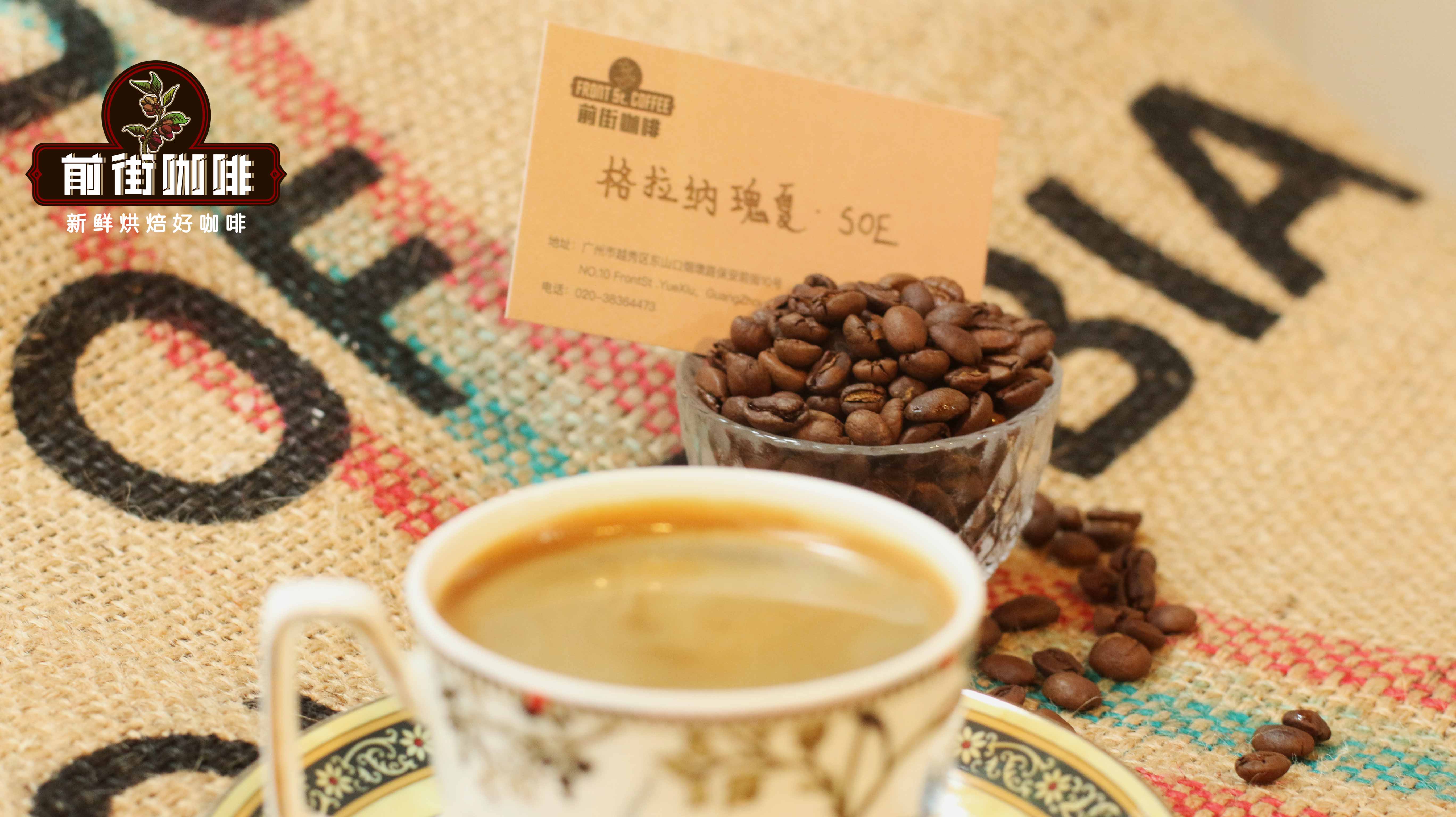
If you are looking for a Geisha suitable for everyday drinking, you might try Front Street Granja Estate Geisha. This bean uses the natural process and displays layers of apricot, berry, white floral, and orange flavors in the cup. For beginners, it is well suited for practicing pour-over or other brewing methods, and it also helps you quickly build an understanding of this variety's flavor characteristics.
The Panama Geisha coffee beans sold by Front Street cover different price ranges. The price of a single cup of Geisha coffee varies by bean origin, roughly falling between 30 and 75 yuan; the price of a whole bag of Geisha coffee beans also depends on the producing region, ranging from 85 yuan to 380 yuan.
It should be made clear that Geisha is not synonymous with any specific producing region; it is essentially a variety within the large Arabica coffee family. Interestingly, this variety was not initially noticed for its signature floral and fruity notes. So what series of circumstances led Geisha step by step onto the altar of specialty coffee?
Geisha's place of origin is Ethiopia. In 1931, it was discovered in the Geisha forest and subsequently sent to the Kenya Coffee Research Institute; in 1936 it was introduced to Uganda and Tanzania, and in 1953 it reached Costa Rica. Panama began cultivating it in the 1960s, when Hacienda La Esmeralda introduced it from CATIE's seed bank in Costa Rica and began planting it, while also distributing it to neighboring estates. At first, people planted Geisha to improve the disease resistance of other varieties, and because of its low yield, this variety was long overlooked.
The turning point came at Hacienda La Esmeralda. The owner's son noticed the alluring aroma this variety gave off and decided to separate it, process it on its own, and send it to competition. In 2004, Geisha won the Best of Panama (BOP) green bean competition in one fell swoop, and its stunning performance in the competition immediately attracted widespread attention in the specialty coffee industry. From its discovery to its moment of fame, Geisha had lain dormant for nearly half a century. In subsequent green bean competitions large and small, Geisha was almost invincible, with varieties such as Bourbon, Caturra, and Catuai falling by the wayside. To ensure fairness, later green bean competitions specifically created a separate category, ruling that Geisha could only compete against Geisha, otherwise it would be simply too brutal for other varieties.
After Geisha rose to fame, Hacienda La Esmeralda pointed out that only Geisha grown above 1,600 meters in elevation can display more captivating flavors. Although Geisha grown at around 1,500 meters also carries aroma, its complexity is clearly lacking. Most coffee estates in Panama happen to enjoy the advantage of high elevation, so they invested in Geisha cultivation one after another.
However, even within Panama, Geisha from different estates and different plots still varies in flavor quality. Geisha's price is also affected by multiple factors such as estate reputation, whether it has won awards, and overall flavor performance. The most expensive Geisha coffee beans known to date come from Hacienda La Esmeralda's competition-grade Red Label, with auction prices reaching more than 20,000 yuan per kilogram.
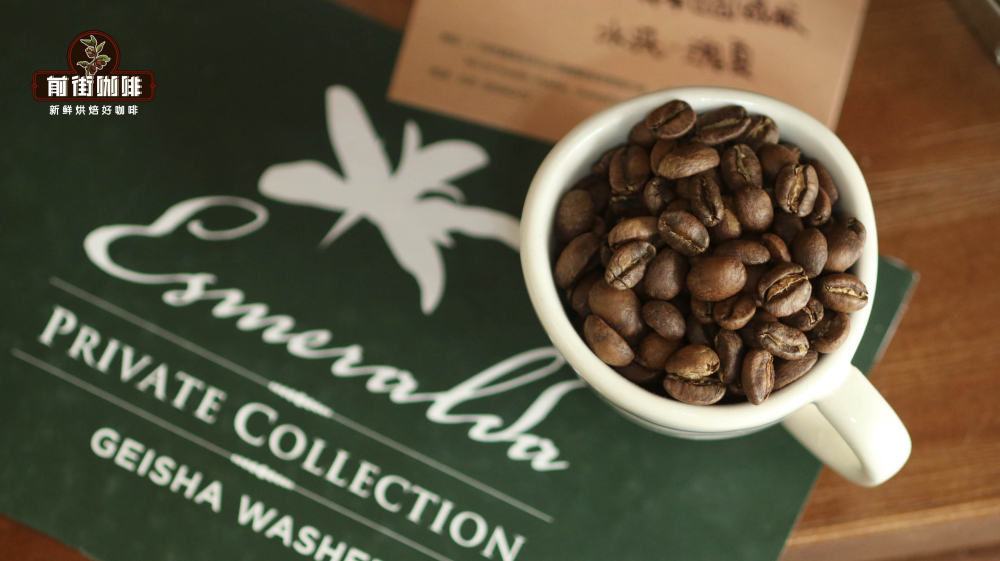
In Hacienda La Esmeralda's product system, Geisha is divided into three grades: Esmeralda Special (Red Label), Private Collection (Green Label), and Geisha 1500 (Blue Label). Starting in 2022, the Blue Label grade was discontinued, and the coffee beans originally classified under it were purchased in full by a green bean company and named Volcanic Rock Geisha. Through cupping comparisons, FrontStreet Coffee found that the flavor profile of Volcanic Rock Geisha is very close to that of Hacienda La Esmeralda's Blue Label Geisha, so it can be confirmed that Volcanic Rock Geisha is essentially Hacienda La Esmeralda's Blue Label Geisha.
Among the three grades, Red Label is the most expensive. Geisha's planting plots are divided with extreme precision: Jaramillo, Cañas Verdes, El Velo, and other plots, with each estate further subdivided into smaller plots. Take the Cañas Verdes plot at an average elevation of 1,700 meters as an example. As Hacienda La Esmeralda's most original plot, after Geisha became famous, planting scale expanded outward from it in all directions. Green Label is a blend of Geisha grown in multiple plots at elevations between 1,600 and 1,700 meters; Blue Label corresponds to a blend of Geisha from several plots at around 1,500 meters.
Hacienda La Esmeralda's Red Label, Green Label, and Volcanic Rock Geisha can all be purchased at FrontStreet Coffee's Tmall flagship store or physical stores. In addition to Hacienda La Esmeralda's product line, Front Street also offers 90+ Estate Geisha, Finca La Esperanza Geisha, Boquete Geisha, and a Geisha blend from the same producing region — Front Street Butterfly coffee beans.
The coffee beans sold by FrontStreet Coffee are all freshly roasted and usually shipped within 5 days after roasting is completed. Geisha grows in high-altitude areas with large temperature differences between day and night, giving the coffee beans ample time to grow and accumulate flavor compounds. As a result, the beans are relatively hard and tend to sink and clog the drainage holes during brewing. Front Street recommends controlling the grind size to about 78% passing rate on the Chinese standard No. 20 sieve (roughly the texture of fine granulated sugar), with a brewing water temperature of 90 to 91 degrees Celsius.
The specific brewing recipe is as follows: take 15 grams of coffee grounds, use a small Hario V60 dripper, and brew at a 1:16 coffee-to-water ratio. Use a three-stage pouring method: after starting the timer, pour for the first time to 30 grams and let it bloom for 30 seconds; then in the second stage, pour in a slow circular stream to 125 grams, and after the water level in the coffee bed drops by half, continue pouring; in the third stage, still using a slow circular stream, pour to 225 grams. Once dripping is complete, keep the total extraction time at around 2 minutes 10 seconds to 2 minutes 20 seconds.
The above content is compiled by CoffeeHunters, a coffee news website.


