







How Do Arabica Coffee Varieties Differ in Mandheling?
Golden Mandheling and Lintong Mandheling differ in flavor and brewing behavior, though both come from the same Indonesian region and go through wet-hulling. Front Street Coffee stocks five Mandheling beans, with PWN Golden Mandheling the most popular for its spice, herbal notes and full body.
The name itself came from a misunderstanding: after Japanese soldiers left Indonesia, they asked a local supplier what the beans were called, and he answered with the Mandailing region, which they heard as Mandheling. That supplier owned PWN, the company behind the Golden label. Mandheling sits within arabica coffees, not a separate species.
Mandheling coffee is deeply favored by coffee lovers for its unique spice and herbal notes and full-bodied taste. Front Street Coffee currently offers five Mandheling coffee beans in-store, among which Golden Mandheling is the most popular. This article will guide you through the origin of the name Indonesian Mandheling coffee, its producing regions, variety differences, and the wet-hulling process, with a key comparison of the flavor characteristics and brewing parameters of PWN Golden Mandheling and Lintong Mandheling. Whether you are a beginner just getting to know Mandheling or a seasoned coffee enthusiast, you will find practical reference information here.
For more specialty coffee knowledge, please follow our WeChat official account: Front Street Coffee
Mandheling coffee has won the favor of many coffee lovers with its distinctive spice and herbal aromas and its thick, full body. Front Street Coffee currently offers five Mandheling coffee beans in-store, each with its own flavor characteristics, among which Golden Mandheling is the most popular. So, what exactly makes it different from regular Mandheling? In this article, Front Street Coffee will explain the flavor characteristics of PWN Golden Mandheling coffee beans.
The Origin of the Name Indonesian Mandheling Coffee Beans
Most coffee enthusiasts know that coffee beans are usually named after their producing region or estate, such as the Costa Rica Monster Estate coffee beans recently launched by Front Street Coffee, or Ethiopian Yirgacheffe coffee beans. But the origin of the name Mandheling is tied to an interesting story.
According to Front Street's research, the story goes like this: After Japanese soldiers ended their colonial presence in Indonesia and returned to Japan, they kept fondly remembering the delicious local coffee. Through their trading partners, they asked the locals to help collect high-quality coffee beans, including this Mandheling. The Japanese loved these beans so much that they asked what they were called. The local person mistakenly thought they were asking where he was from, and blurted out "Mandailing." The Japanese heard "Mandailing" as "Mandehling." Because of this double misunderstanding, Mandheling accidentally became the name of this coffee bean. And this local person was none other than the owner of PWN Company (Pwani Coffee Company), which Front Street will mention below as the producer of Indonesian Golden Mandheling.
Indonesian Mandheling Coffee Producing Regions
Front Street Coffee has mentioned in previous articles that the three major factors determining coffee flavor are producing region, variety, and processing method. Below, Front Street Coffee will discuss Mandheling coffee around these three points.
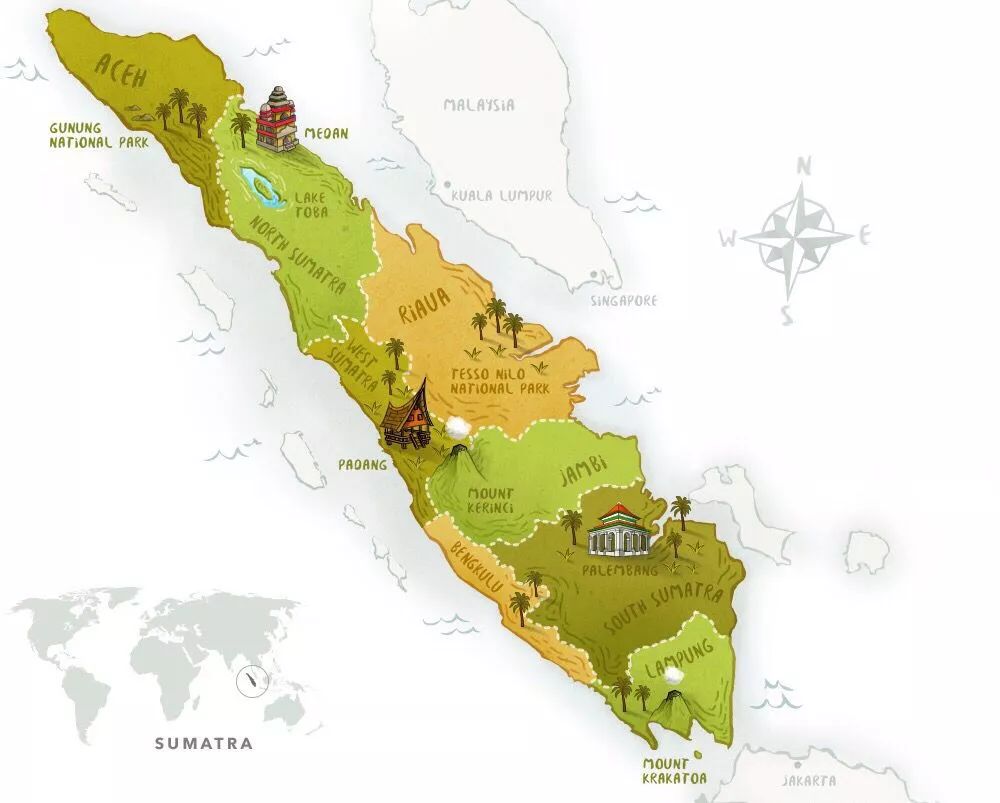
Mandheling is mainly produced in Sumatra, Indonesia. This island is the largest in Indonesia, located near the equator with a typical tropical rainforest climate—high temperatures, humidity, and abundant rainfall—making it very suitable for growing high-quality Arabica coffee beans.
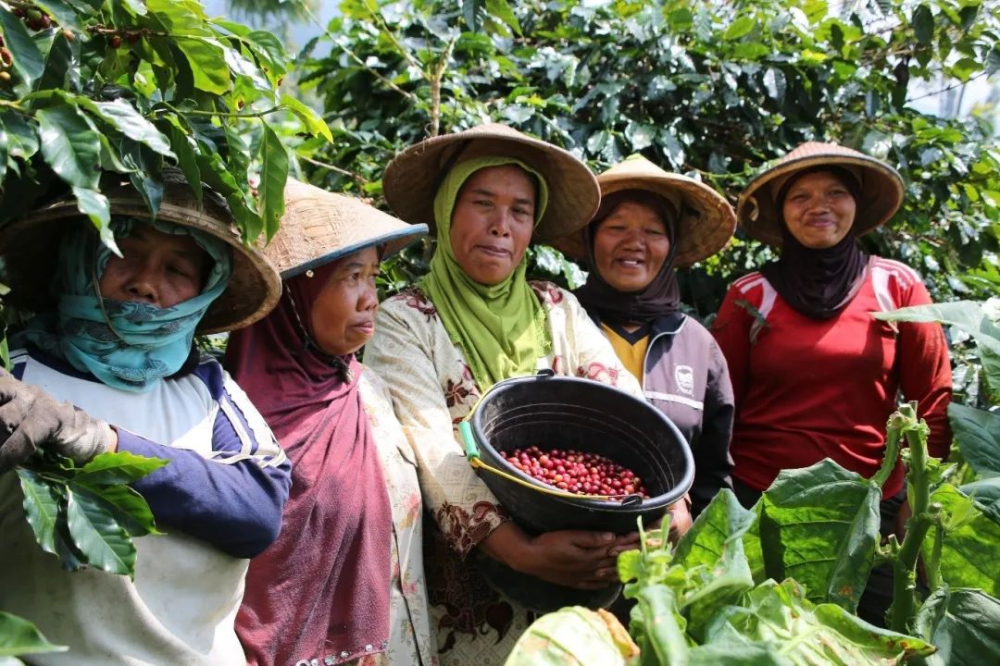
However, Indonesia's altitude conditions are limited, and the space available for growing high-quality Arabica coffee beans is correspondingly restricted. Of the coffee beans produced in Indonesia, only 25% are Arabica, because Arabica only shows its best flavor when grown at high altitudes. The remaining 75% consists of Robusta coffee trees adapted to low-altitude environments. And the highest-altitude areas in Indonesia are precisely in Sumatra.
Among the traditional Arabica coffees produced in northern Sumatra, the highest quality ones are sold on the market under the name Lintong Mandheling. To be precise, Lintong Mandheling coffee beans refer to coffee grown in a small area southwest of Tobahu in the Lintong administrative district.
Indonesian Mandheling Coffee Varieties
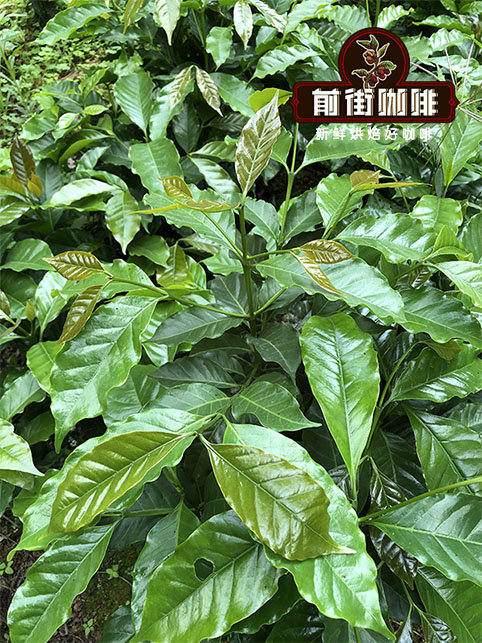
As mentioned above, Mandheling coffee is mainly cultivated on the island of Sumatra, with varieties primarily consisting of pure Arabica coffee beans. However, Arabica coffee beans have weak pest resistance, so in October 2020, Indonesian PWN Company abandoned the original Typica variety of Golden Mandheling and switched to the Ateng variety for Golden Mandheling production. The Ateng variety is actually the Catimor variety widely planted in the Yunnan producing region. Next, Front Street Coffee will explain the characteristics of Typica and Catimor.
Typica
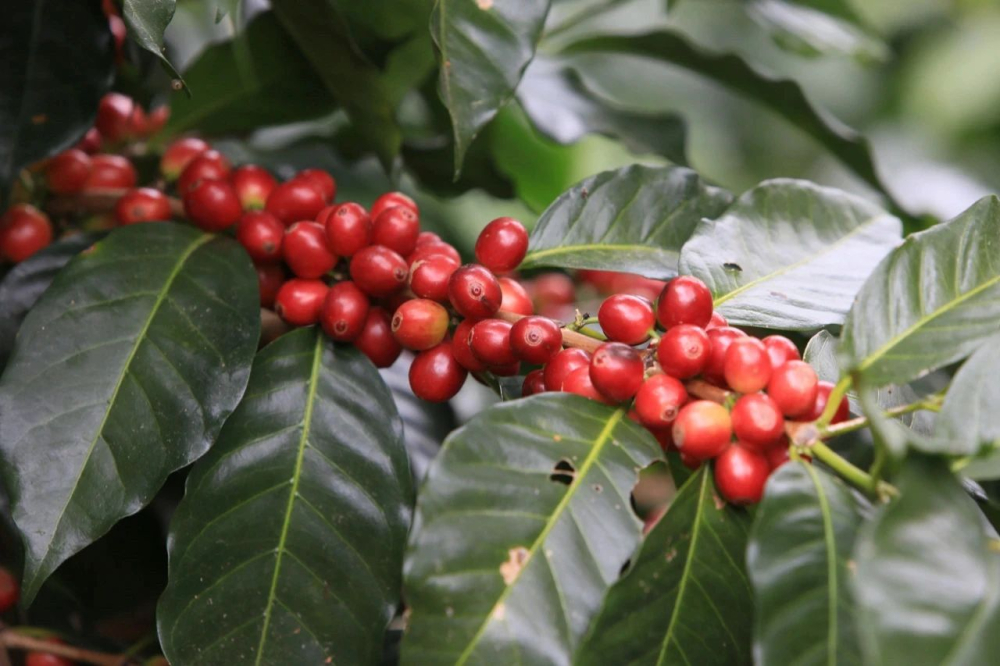
Typica is the oldest native variety from Ethiopia, and virtually all Arabica coffee varieties today are derived from Typica. Typica has an elegant flavor, but the plant is weak and has poor disease resistance, being susceptible to leaf rust, resulting in low yields that are difficult to make economically viable. In recent years, Typica in Central and South America has gradually been replaced by Caturra and Catuai, and Typica is becoming increasingly rare. Although Typica has an elegant flavor, its popularity does not match that of Bourbon.
Ateng (Catimor)
Catimor is a hybrid of the Robusta subspecies Timor and Caturra, initially developed in 1959 and promoted in Brazil in the 1970s and 1980s. With its disease resistance and high yield, Catimor has secured a place among Central and South American coffee varieties. The recurring coffee leaf rust crises in Central and South America also drove the adoption of Catimor coffee beans.
Catimor is characterized by high yield and short plants that can be densely planted, with new leaves appearing reddish-brown. However, due to its fast maturation and high yield, it requires adequate fertilizer supply and shade conditions. According to Front Street's research, Catimor has a rather short lifespan, averaging only ten years.
Indonesian Mandheling Coffee Processing Method
As Front Street Coffee mentioned earlier, Indonesian Mandheling coffee is widely loved for its unique flavor, which is actually thanks to Indonesia's distinctive coffee processing method—wet hulling. It is precisely this processing method that gives Mandheling coffee its unique earthy, herbal, and spicy notes.
It should be noted that with the wet-hulling method, the semi-hard, semi-soft moist green beans are easily crushed during the removal of mucilage and parchment layer, causing the beans to crack open into a shape resembling a sheep's hoof, commonly known as sheep-hoof beans. Front Street Coffee considers this a distinctive characteristic of Mandheling, not a defect bean.
The Origin of Indonesia's Wet-Hulling Method
According to Front Street Coffee's research, the reason Indonesia adopted the wet-hulling method for processing coffee cherries is that the local weather is rainy with frequent typhoons, unable to meet the good weather conditions required for sun-drying. Combined with poor local economic conditions and the inability to afford the higher cost of the washed method, the locally distinctive wet-hulling method was developed.
Of course, today Indonesia's coffee industry is no longer the impoverished scene of the past, and there are quite a few estates and companies capable of using the washed method, but wet hulling has still not been abandoned. Front Street Coffee believes that wet hulling is the factor that brought Mandheling coffee to the world stage—mention Mandheling coffee and one thinks of wet hulling; the two have clearly formed a mutually reinforcing relationship.
The specific steps of wet hulling can be divided into the following two stages:
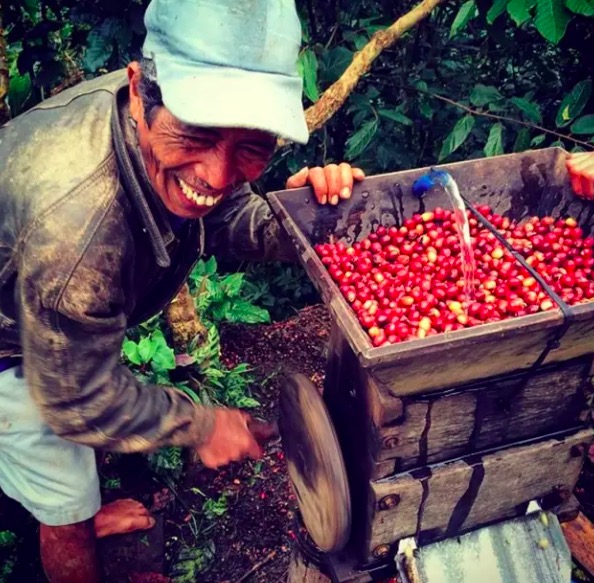
In the first stage, a wooden de-pulper is used to remove the skin and fruit pulp, followed by 3 hours of fermentation and then drying to reduce the moisture content to a semi-dry, semi-wet 30-50%. In the second stage, the mucilage and parchment layer are removed, and drying continues, requiring 2-4 days to bring the moisture content down to 12-13%.
In addition to the conventional wet-hulling method, there is also an aged wet-hulling method. After the coffee beans undergo regular wet hulling, they are sealed in a warehouse for 2-3 years. The warehouse environment must be cool and ventilated, and the beans must be regularly turned to prevent mold and spoilage. During this period, the acidity of the coffee beans slowly diminishes and converts to sugars, and the color becomes darker, mostly yellowish-brown or dark brown. The Mandheling coffee beans on Front Street Coffee's menu that use this processing method are called Aged Mandheling coffee beans.
Indonesian Mandheling Coffee Bean Grading
Coffee enthusiasts who have visited Front Street Coffee know that Indonesian Mandheling coffee beans are particularly large and plump. Indonesian Mandheling coffee grading is mainly based on the number of defect beans, supplemented by size. According to Front Street's research, Indonesia's requirements for general-quality coffee beans are: no live insects, no moldy or rotten-smelling beans, maximum moisture content of 12.5%, and impurity rate less than 0.5%.
The following are Indonesia's Mandheling coffee bean defect-based grading standards (based on 300g):
Front Street's Indonesian Golden Mandheling is graded G1, and G1 is a very rare product, a grade originally tailor-made for Japanese trading companies. G1 requires a maximum of only 3 defect points per 300 grams.
The above is the relevant information about Indonesian Mandheling coffee beans. Next, Front Street Coffee will introduce to coffee enthusiast friends who exactly PWN Company is, and what the difference is between the Golden Mandheling they produce and Lintong Mandheling.
PWN Company
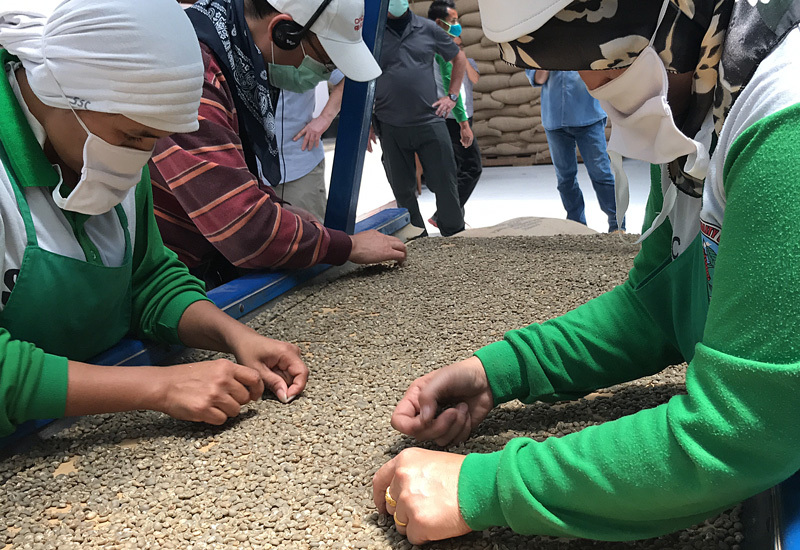
Seasoned coffee enthusiasts know that Japanese people are particularly fond of Mandheling coffee, so they paid special attention to Mandheling from a very early stage and established strict coffee cherry screening standards—the coffee produced must undergo four rounds of hand sorting, with defect beans removed before processing, packaging, and sale. The reason Golden Mandheling is called Golden Mandheling is that by chance, a Mandheling producer, while sorting flawless green coffee beans, noticed the green beans gleaming with a golden light in the sunlight, hence the name Golden Mandheling.
Unfortunately, however, despite the Japanese being so devoted to Mandheling coffee, "golden mandheling" had already been trademarked by the Indonesian Pawani Coffee Company, making Golden Mandheling exclusive to PWN Company. At the same time, PWN was also one of the first companies to sell Mandheling coffee beans to Japan.
Through cupping, Front Street found that Golden Mandheling, compared to Front Street's Tiger Mandheling or Lintong Mandheling, has a stronger sweet aftertaste and sucrose-like quality, appearing especially distinctive, with a very clean mouthfeel. Therefore, Front Street decided that no matter what, it had to bring this coffee to Front Street's coffee enthusiast friends to taste.
Secondly, PWN Golden Mandheling is actually not easy to procure, as annual production is limited, so there are quite a few unscrupulous coffee vendors on the market selling regular Mandheling under the banner of Golden Mandheling. In fact, identifying Mandheling produced by PWN Company is quite simple—just ask the vendor to provide the green bean burlap sack bearing the PWN mark or the certificate accompanying the beans, and you can confirm whether it is Front Street's PWN Golden Mandheling.
Moreover, among Golden Mandheling, only the Mandheling produced by PWN Company is truly Golden Mandheling in the true sense. PWN's Golden Mandheling undergoes three rounds of hand sorting and one round of machine sorting, giving the beans a beautiful appearance and uniform size, so that the roasted coffee is cleaner.
Aceh Gayo Mountain Producing Region
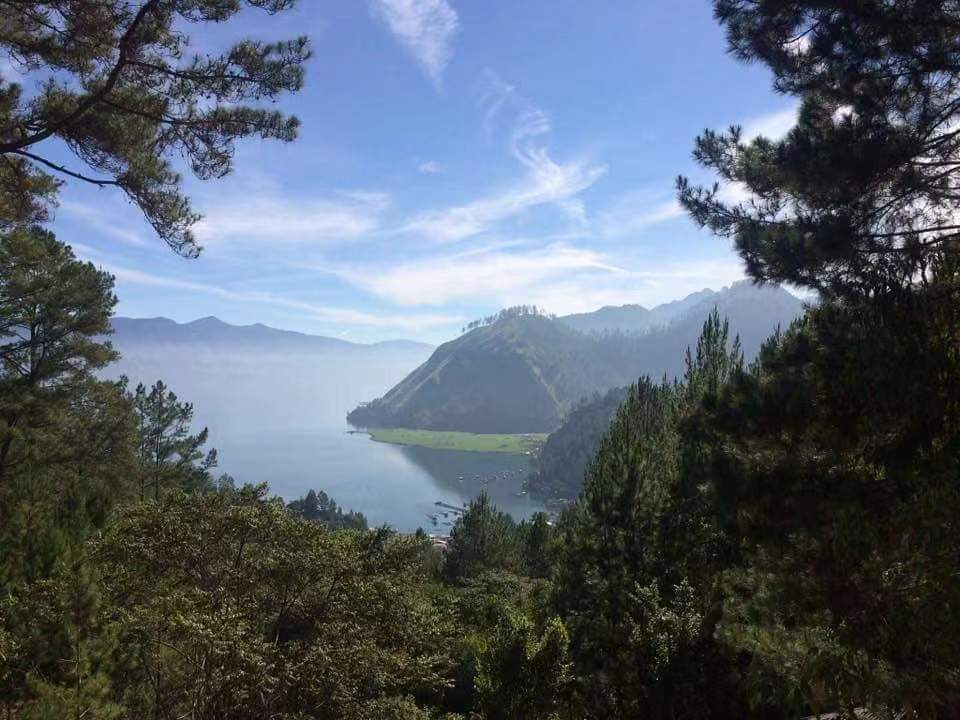
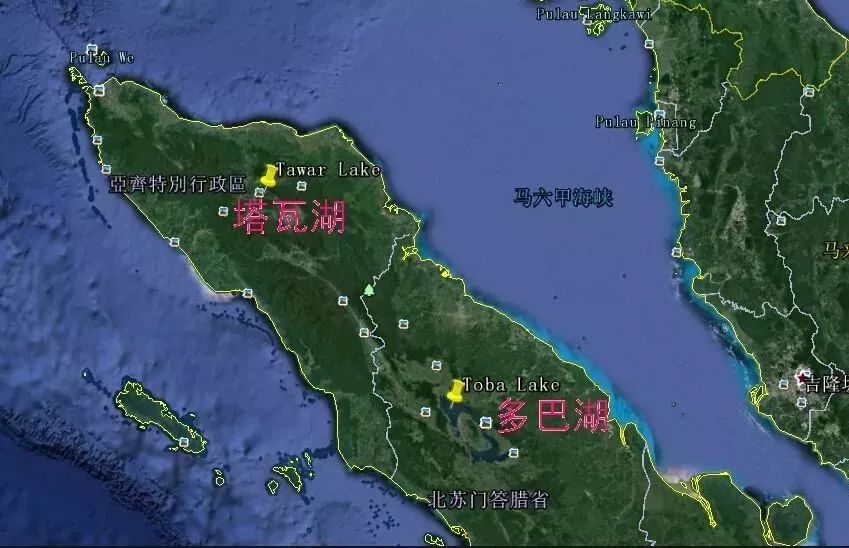
According to Front Street Coffee's research, PWN Company chose a new producing region in 2020—Aceh Gayo Mountain within the Sumatra producing region, located at the northernmost corner of Sumatra island. Coffee cultivation in Gayo Mountain is mainly concentrated around Takegon town and the hillsides by Lake Tawar, with the production area averaging 1,100-1,600 meters in altitude. The coffee quality in this region has always been excellent, but due to previous political instability, coffee was difficult to export. In recent years, with the situation stabilized, Aceh's coffee cultivation has also developed, with quality superior to the Lintong region. This move is undoubtedly an affirmation of Gayo Mountain's coffee cherry quality. Front Street's PWN Golden Mandheling, as Indonesia's top coffee brand, will naturally not disappoint coffee enthusiasts.
The above is the relevant knowledge about PWN Golden Mandheling coffee beans. Before launching any new coffee bean, Front Street Coffee conducts extensive roasting and brewing tests, and selects the optimal one to hand-brew for coffee enthusiasts to taste. Next, Front Street Coffee will share the flavor differences and pour-over parameter comparison between Golden Mandheling and Lintong Mandheling.
Front Street Coffee PWN Golden Mandheling Coffee Beans
Country: Indonesia Producing Region: Sumatra, Aceh, Gayo Mountain Altitude: 1100-1600m Variety: Ateng Processing Method: Wet Hulling Flavor: Baked toast, nuts, pine, caramel, herbs
Front Street Coffee Indonesian Lintong Mandheling Coffee Beans
Country: Indonesia Producing Region: Sumatra (Lintong) Altitude: 1100-1600m Variety: Typica, Caturra Processing Method: Wet Hulling Flavor: Baked toast, nuts, caramel, pine, herbs
Front Street Coffee Brewing Sharing
When brewing Mandheling coffee beans, Front Street Coffee tries to keep the brewing parameters as consistent as possible for fairness. Medium-dark roasted coffee beans are used.
Mandheling Brewing Parameters
Kono dripper, 1:15 coffee-to-water ratio, 15g coffee dose, 88°C water temperature, grind size (70-75% passing through No. 20 standard sieve)
Brewing Method:
Multi-stage extraction: bloom with 30g of water for 30 seconds, then pour in a slow circular stream until reaching 125g, pause, and when the water level is about to expose the coffee bed, continue pouring until reaching 225g and stop. When the water level is about to expose the coffee bed again, remove the dripper. (Timing starts from the beginning of the bloom.) V60 dripper extraction time is 2'00", while the Kono dripper takes slightly longer at 2'10".
Golden Mandheling: Layered and complex, full-bodied and clean, high balance, rich nut and caramel aromas, with chocolate notes, and a long-lasting finish.
Lintong Mandheling: Herbal and medicinal notes on entry, dark chocolate, caramel, sweet aftertaste.
Summary: The difference between Golden Mandheling and Lintong Mandheling actually lies in the bean selection. Golden Mandheling has undergone four rounds of sorting, eliminating defect beans, resulting in a cleaner flavor expression with fewer earthy off-notes.
Lintong Mandheling, on the other hand, is the most original Mandheling from the Lintong producing region. It is slightly inferior to Golden Mandheling in quality, and its sorting is not as strict, but it still has a very good local Indonesian coffee flavor. Therefore, Front Street Coffee also uses Lintong Mandheling as an everyday coffee to help beginner coffee enthusiasts get to know Indonesian coffee beans.
The above content is compiled by CoffeeHunters, a coffee news website.


