







How does an espresso machine extraction actually work?
An espresso machine uses pressure to push hot water through a finely ground coffee puck, completing extraction in a short time. Commercial machines typically deliver stable pressure above nine atmospheres and water hotter than 90 degrees Celsius. Grind size, dose, yield, and time all constrain one another, so changing any single variable shifts the flavor in the cup.
Before espresso existed, people relied on immersion brewing, grinding fine and waiting through long extraction. Italians tried using steam pressure to speed up that process, and after generations of iteration it became today's semi-automatic and automatic machines. In practice, fix the dose first, then adjust grind to reach a target yield within a set time, and taste before changing another variable.
Espresso, with its golden crema and intense flavor, is attracting more and more coffee lovers, but to consistently recreate an ideal cup at home requires not just an espresso machine, but a thorough understanding of extraction logic. Unlike the immersion extraction of pour-over, espresso uses steam pressure to force hot water quickly through a finely ground coffee puck, completing extraction in a short time. Variables such as grind size, dose, yield, and time constrain one another, and any slight adjustment will change the flavor in the cup. This article will break down each parameter affecting extraction one by one, explain their interconnected relationships, and combine them with actual tuning cases from Front Street Coffee stores to provide actionable adjustment ideas, helping readers build their own extraction judgment framework.
For more specialty coffee knowledge, please follow our WeChat official account: Front Street Coffee (FrontStreet Coffee)
Front Street Coffee has noticed that many friends have fallen in love with espresso that has golden crema and hope to make it at home too. Compared with pour-over, making espresso uses steam pressure, with scalding hot water passing through coffee grounds to brew a small serving of coffee liquid with a rich texture and strong flavor. Although the operation looks simple, changes in parameter details will affect the quality of the brewed coffee, so every step needs to be handled rigorously and every parameter needs careful consideration.
In the era before espresso existed, people basically relied on immersion methods to brew coffee, which required grinding the coffee beans very finely and going through a long extraction process, with a considerable waiting time. To shorten this process, Italians tried using steam pressure to make high-temperature, high-pressure water pass through a coffee puck, thereby improving the efficiency of the original drip extraction. After generations of improvement and iteration, it gradually evolved into the semi-automatic and fully automatic espresso machines commonly seen today.
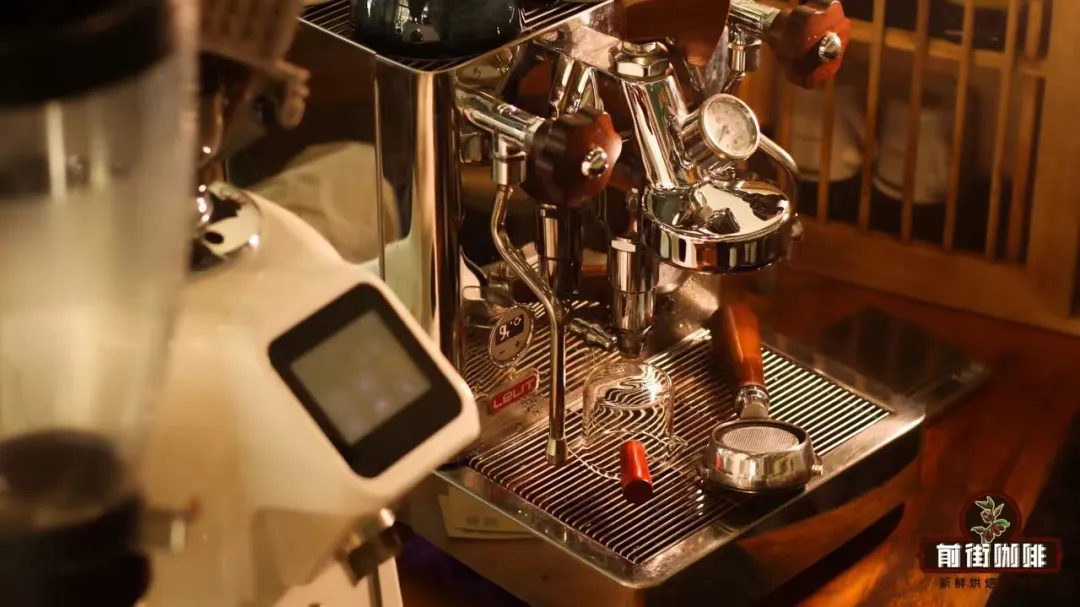
Commercial espresso machines on the market can usually output stable pressure above nine atmospheres and hot water above 90 degrees Celsius. Driven by high pressure, hot water quickly penetrates the finely ground coffee layer, bringing out oils, aroma, and a rich mouthfeel together. To obtain an espresso in an ideal state, the barista's job is to figure out the variables that influence flavor and find the best extraction range among them.
From a coffee bean to a cup of coffee liquid, quite a few factors are involved, covering many details such as grind size, boiler pressure, water temperature, distribution and tamping force, dose, extraction duration, and yield. Generally speaking, the machine's pressure and water temperature are not changed frequently once set; distribution and tamping force vary according to the barista's personal habits. What is truly used frequently in daily adjustments are the four items: dose, time, yield, and grind size.
The coarseness and uniformity of the grind are the most important factors affecting the flow rate changes between each cup of espresso. With just a 1-gram difference in dose, the total flow time used to extract the same amount of espresso liquid can differ by several seconds. When coffee particle size is uneven, the denser areas after tamping create greater resistance to water passing through, making the extraction distribution inconsistent. Grinding directly affects the coffee liquid's flow rate, time, and flavor changes.
The ratio between dose and extracted liquid weight, commonly called the brew ratio, is a relatively intuitive extraction parameter. The dose is limited by the specification of the basket in the portafilter, which comes in double and single versions. Taking Front Street Coffee stores as an example, the espresso machine uses a double dose of 20 grams of coffee powder, and adjustments are made around this value, accurate to 0.1 grams. Since the brew ratio is not fixed, the final yield must be judged based on the coffee's flavor performance.
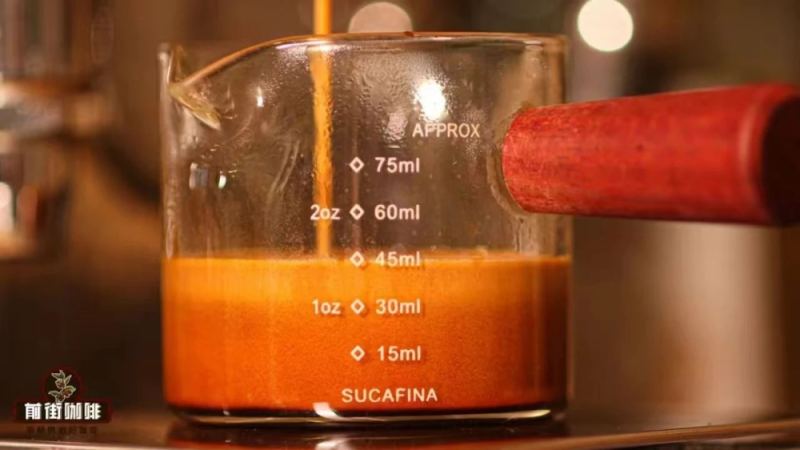
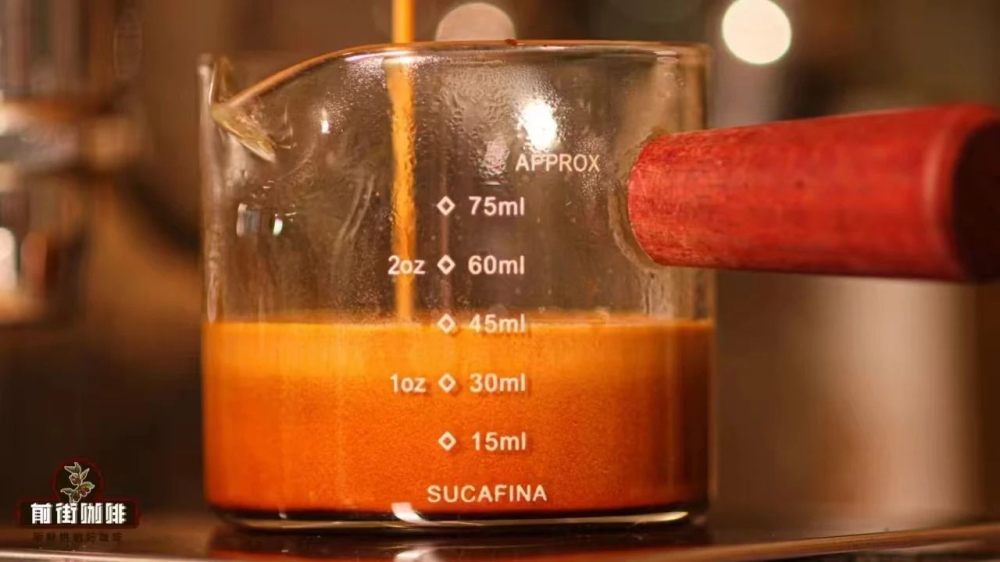
Early baristas did not have precise weighing tools, so they judged the yield by observing the gradual color change of the crema: the liquid just flowing out was dark brown with a rich texture; as extraction progressed, the color gradually turned golden yellow, then transitioned to light yellow; when the crema began to turn white, it usually meant extraction should stop. Today, espresso extraction standards have become much more rigorous, various data tend to be stable, and the brew ratio also has a relatively fixed reference value—1:2. Taking Front Street Coffee stores as an example, 20 grams of coffee powder corresponds to extracting 40 grams of coffee liquid.
Extraction time is affected by the several key factors above interacting with one another. Generally, espresso extraction time is between 25 and 30 seconds. When the brew ratio is determined, the shorter the extraction time, the fewer coffee substances are dissolved, and the longer the extraction time, the more coffee substances are dissolved. With the same brew ratio, if you want to change the extraction time, you can only do so by adjusting the coffee's grind size and dose.
Once we understand the relationships among the various influencing factors, we can make adjustments based on the condition of the coffee liquid and the feeling after tasting. The coffee's flavor performance depends on the espresso beans we use. Front Street Coffee stores use our own roasted "Sunflower Warm Sun Blend," made from 30% naturally processed Yirgacheffe Red Cherry coffee beans and 70% Honduras Sherry coffee beans. In an ideal state, the espresso presents whiskey aroma, vanilla, cream, and berry acidity.
Take actual tuning as an example: the parameters for Front Street Coffee's first espresso were 19.8 grams of powder, 40 grams of yield, and extraction completed in 26 seconds, with the flow rate on the fast side. After tasting, the body was thin, the whiskey aroma and fruit aroma were not prominent, and there was still astringency in the finish,推测是萃取不足且后段过度萃取所致。So Front Street Coffee increased the dose and reduced the yield to make the flavor more concentrated. After adjustment, the astringency disappeared and the whiskey aroma became stronger, indicating the direction was correct.
If the flow rate is still on the fast side and the aroma remains insufficient, it means the extraction is not sufficient enough. At this point, the grind should be made finer and the extraction time extended. Conversely, if the flow rate is too slow and the taste is strongly bitter or sharply sour, then it is most likely over-extraction, and the extraction rate needs to be reduced. This can be done by reducing the dose and making the grind coarser so that more yield is produced in the same extraction time.
Front Street Coffee believes that as long as we straighten out the relationships among extraction parameters, tuning a delicious espresso is not difficult. But we need to be clear that most home espresso machines are not as stable in function as commercial machines and brew very few cups, which also tests our grasp of the parameters. Front Street Coffee suggests recording the parameters and flavor performance of daily extractions that taste good, and comparing and summarizing more, which is more helpful for improving our adjustment efficiency.
The above content is compiled by CoffeeHunters, a coffee news website.


