







How Does Matcha Coffee Whisking Work?
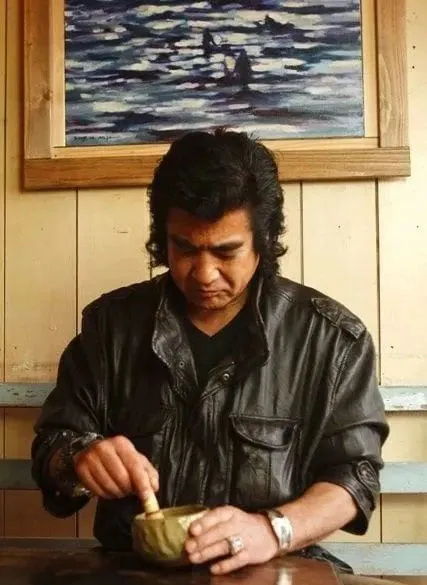
Matcha coffee is a method that borrows the whisking motion of Japanese tea ceremony: a small amount of coffee liquid is stirred vigorously with a chasen to build a dense, fine foam. The approach was popularized by actor Hiroshi Fujioka, who picked up coffee ideas while traveling and adapted his mother's tea ceremony technique after returning to Japan.
The whisking step mirrors traditional matcha preparation, in which powder is first blended with a little warm water, then more water is added and whisked hard to raise foam. Applied to coffee, the same vigorous motion creates a thick layer of bubbles that amplifies aroma and improves mouthfeel. Bean choice, brew parameters and whisking technique all shape the final cup.
Recently, matcha lattes have become popular again, which reminded Front Street of a rather unique coffee-making method we shared in the early years. This method was inspired by the matcha preparation in Japanese tea ceremony, using a chasen to whisk the coffee liquid to create a dense foam, thereby enhancing the aroma and mouthfeel. The creator was not a professional barista, but the actor Hiroshi Fujioka. While traveling the world, he was inspired by coffees from various places, and after returning to Japan, inspired by his mother's tea ceremony, he incorporated the whisking technique into coffee making. This article will provide a complete introduction to this distinctive method: from matcha basics, bean selection, brewing parameters, to whisking techniques and tasting comparisons, along with Front Street's hands-on experience and suggestions, suitable for coffee enthusiasts to try in their leisure time.
For more specialty coffee knowledge, please follow: Front Street Coffee (Frontsteet Coffee)
Recently, matcha lattes seem to have become popular again, frequently appearing in everyone's view, which reminds Front Street of a very interesting coffee-making method we shared in earlier years. This method is quite fun, so today we'll bring it up again. If you have nothing to do at home, you might as well give it a try.
Since the preparation process involves matcha whisking techniques, before the formal introduction, Front Street will briefly talk about matcha and its preparation method.
Matcha originated from the tea-whisking method of the Song Dynasty in China, and later underwent localization and evolution, forming the uniquely characteristic Japanese tea ceremony culture. Unlike the tea-whisking method, matcha places more emphasis on the tea ceremony spirit of "harmony, respect, purity, and tranquility." Traditional matcha preparation involves first taking a small amount of matcha powder, adding a small amount of warm water in a bowl, and using a chasen to initially blend it. Then, a certain amount of warm water is added, and by whisking vigorously to create foam, a thick, fine layer of foam is produced.
The method Front Street is sharing today uses exactly the whisking motion from matcha preparation to stir the coffee. With this motion added, the coffee gains a dense, thick foam, and not only is the aroma amplified, but the mouthfeel is also improved. Interestingly, the inventor of this distinctive method is not a professional barista, but Hiroshi Fujioka, whose main profession is acting.
It is said that his interest in coffee arose because, while traveling the world for work and volunteer activities, people in many places would share their local specialty coffee with him. This gave him the opportunity to taste coffees of various styles and gradually developed his interest in coffee. After returning to Japan, he began to think about how to make coffee with Japanese local characteristics.
Ultimately, inspired by his mother's tea ceremony, Mr. Fujioka came up with the idea of applying the whisking method from matcha preparation to coffee. This not only improves the texture of the coffee but also incorporates Japanese local characteristics—killing two birds with one stone, so to speak. Now, Front Street will share the specific steps of this distinctive coffee-making method!
First, we need to extract the coffee. The coffee beans Mr. Fujioka used in the video clip were traditional Japanese dark roast, paired with the drip method for brewing. It's not hard to imagine that this cup of coffee would have good strength and mouthfeel. So Front Street here chose a method that can also produce a rich mouthfeel for brewing, and used relatively lighter-roasted Blue Mountain beans, because Blue Mountain performs better in aroma. The parameters are as follows:
Dose: 15g
Coffee-to-water ratio: 1:12
Grind size: Ek43 setting 10.5, with 75% passing through a No. 20 sieve
Brewing water temperature: 88°C
Dripper used: kono
First, bloom the coffee with twice the amount of water as the dose, for 30 seconds.
After the bloom, brew the coffee with a slow, small stream of water throughout. Divide the remaining 150ml of water into three pours, 50ml of hot water each. After each pour of hot water has fully drained through, proceed to the next pour.
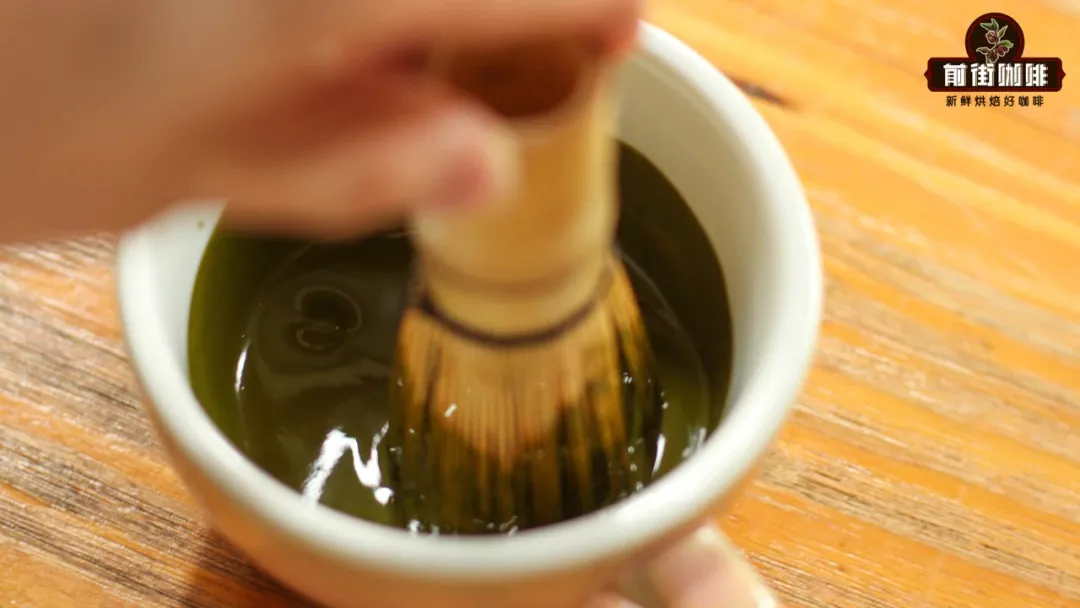
After extraction is complete, pour the coffee into a bowl with a wide mouth and fairly deep height. Since Front Street's shop doesn't have a professional matcha bowl, we'll use the "all-purpose" cupping bowl as a substitute.
The amount of coffee poured depends on the size of the bowl. Since the cupping bowl isn't very large, Front Street only poured 80ml here. Then, we use a chasen to whisk the coffee.
It's important to note that you cannot stir the coffee clockwise or in a circular motion. Because we need to create foam, you should whisk the coffee back and forth or up and down to bring air into the coffee, which is how the foam is produced.
When you've whisked until the foam completely covers the coffee, and you can feel obvious resistance while whisking, it's basically ready. Of course, you can also choose to continue whisking—the longer you whisk, the thicker and denser the foam becomes.
Front Street first tasted the coffee without whisking. Because the strength is relatively high, it tastes quite intense. For those who don't prefer such a strong taste, it's not very easy to drink without dilution with water.
Based on the impact of the former, Front Street tasted the whisked coffee with the mindset of testing poison. Unexpectedly, hey! It was pretty good. Although the strength is relatively high, this cup of coffee doesn't taste as intense as the former; instead, it's very soft. As Front Street introduced earlier, the coffee's aroma is very rich, the mouthfeel is mellow and full-bodied, with a very dense texture—a very nice experience.
So if you have nothing to do at home, you can give it a try~ But to be honest, it's a bit hard on the hands. If Front Street were to make it again, Front Street would definitely, definitely choose to use an electric milk frother!
The above content is compiled by CoffeeHunters, a coffee news website.


